



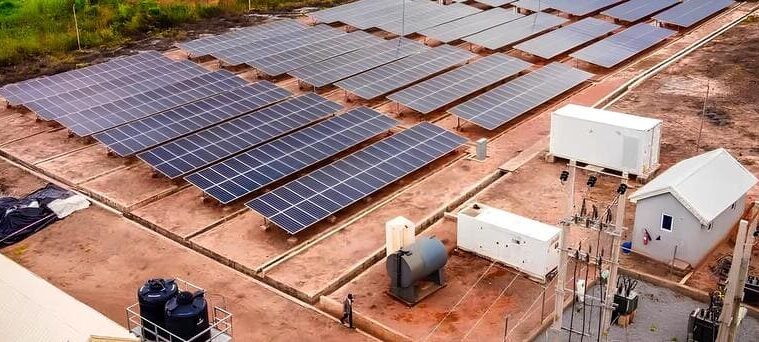
World Geostrategic Insights interview with Nene Kodjoe on current progress and challenges in sustainable development in Africa, and how to raise the financial resources needed to achieve the Sustainable Development Goals (SDGs) set for 2030, and strengthen local African institutional and technical capacities for managing sustainable investment projects.
Nene Kodjoe is the founder and chairman of SIA-Africa, a New York-based organization dedicated to sustainable initiatives and alliances for Africa. Nene currently also serves as director of Integrity Review at the New York City Department of Housing Preservation and Development (HPD). Previously, Nene worked as a special investigator at the Office of the Inspector General, where he successfully investigated and closed numerous cases involving corruption and unethical behavior. He also has experience as a sheriff’s detective with the New York Sheriff’s Office. Nene holds a master’s degree in Public Administration from John Jay College.
Q1 – The Africa Sustainable Development Report 2025 highlights progress on the SDGs but notes that the current pace is insufficient, citing financing gaps, uneven economic growth, and climate change as major barriers. What is your assessment of Africa’s sustainable development landscape?
A1 – Africa’s sustainable development story is one of both promise and paradox. Across the continent, we have seen transformative commitments to renewable energy, digital infrastructure, and education. However, the challenge lies in execution at scale. The gaps in financing, policy coherence, and institutional accountability continue to slow progress.
At SIA-Africa, we believe that sustainable development in Africa must be rooted in regional collaboration, private sector participation, and long-term infrastructure planning. By linking human capital development with direct impact investments—particularly in clean energy, agriculture, and logistics—we can bridge the gap between policy ambition and community outcomes.
Africa is not short of potential; it needs structured systems that translate potential into measurable, scalable progress.
Q2 – How can Africa effectively bridge its significant annual financing gap (estimated at over $1.3 trillion) to achieve the Sustainable Development Goals by 2030?
A2 – Bridging Africa’s SDG financing gap requires a shift from aid dependency to blended finance ecosystems—where public, private, and philanthropic capital align toward measurable outcomes.
SIA-Africa advocates for a three-pillar approach:
1. Mobilizing Domestic Capital – Governments should de-risk sustainable projects through guarantees, special-purpose vehicles, and infrastructure bonds that attract local investors.
2. Strengthening Public-Private Partnerships (PPPs) – Projects like the IWT Waste-to-Energy initiative demonstrate how international technology providers and local authorities can co-invest to generate both returns and impact.
3. Leveraging Diaspora Investment Networks – The African diaspora remains an underutilized source of financing, innovation, and mentorship. Structuring clear investment vehicles and accountability systems will help unlock that capital sustainably.
In short, Africa must finance development not through charity, but through structured, value-driven partnerships.
Q3 – What strategies can strengthen local institutional and technical capacity to manage sustainable investment projects while reducing risk and the cost of capital?
A3 – The foundation of effective project management lies in capacity, governance, and confidence. At SIA-Africa, we believe that Africa’s institutions can build resilience through:
Structured Training Partnerships – Working with local universities and global industry partners to develop technical programs in engineering, waste management, and sustainable infrastructure.
Transparent Project Oversight – Leveraging digital tools for real-time project tracking and accountability, to give investors confidence in delivery and reduce perceived risk.
Public Sector Empowerment – Training civil servants and local authorities in risk assessment, contract negotiation, and PPP management.
Additionally, through our Community Land Trust (CLT) collaboration with Civil Corps, Ghana, we are developing models that train students to embrace the culture of well-planned cities and towns following Grid Traffic-Oriented Designs. This approach integrates sustainability, mobility, and urban efficiency—key elements of Africa’s long-term development vision.
Q4 – Can you share examples of successful sustainable projects implemented by SIA-Africa and key lessons learned?
A4 – One of our most promising prospective partnerships is with Integrated Waste Technologies (IWT), an organization that transforms solid waste into clean energy. The model we’re advancing in Africa integrates waste management, environmental protection, enhanced energy production, job creation, and economic opportunity.
Through this initiative, a 30-acre plant will process up to 2,000 tons of waste daily, converting it into power, fuel, and industrial energy sources—while creating hundreds of jobs across engineering, logistics, and plant operations.
Another success is our education and skills development partnership with The Parris Foundation and Achimota School, which connects young African students to STEM training programs abroad. This aligns directly with our belief that human capital development is the cornerstone of sustainable economic growth.
Our lesson has been clear: Sustainability begins with systems—when education, infrastructure, and energy align, they create an ecosystem that attracts investment and drives inclusive prosperity.
Nene Kodjoe -Chairman, SIA-Africa (editing assistance: Emmanuel Sasu).
Image Source: African Development Bank/PowerGen.