



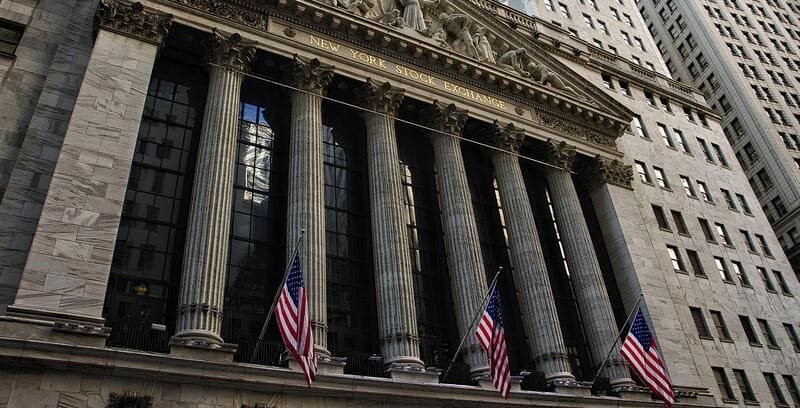
The financial unease that rippled through Wall Street last week has begun to settle, but the aftershocks are still being felt across Europe and the USA. What started as a spate of bad-loan disclosures at a handful of U.S. regional banks quickly evolved into a global talking point, reviving memories of financial contagion, credit opacity, and the fragility of investor confidence. Yet, as markets regain composure, a more balanced picture emerges and that is one of local misjudgment rather than systemic failure, of nervous oversight rather than global panic.

At the centre of the latest tremor lie Zions Bancorp and Western Alliance Bancorporation, two mid-sized U.S. lenders whose names rarely make international headlines. Both disclosed losses tied to alleged loan frauds in California initially rattled investors and wiped billions from banking stocks. But as the dust clears, the scandal seems to trace back to a single real estate investor, Andrew Stupin, whose complex web of companies reportedly misrepresented collateral on roughly $270 million of debt across multiple institutions.
According to reports, Stupin’s entities shifted promissory notes and property titles to affiliated firms before defaults, exposing weak due diligence in non-depository financial institutions (NDFIs), the fast-growing lenders that now originate nearly a third of all U.S. commercial and industrial loans. Zions, which provisioned $50 million in bad loans at its California unit, and Western Alliance, which sued over $100 million in alleged fraud, are among several banks caught in the same web.
That shared exposure explains why the term “credit cockroaches,” coined by JPMorgan’s Jamie Dimon, quickly resurfaced. Dimon’s warning “where you find one, there are usually more”captured Wall Street’s instinctive anxiety that hidden risks seldom remain isolated. Yet, by this week, even he conceded that the latest losses appear manageable. Goldman Sachs CEO David Solomon called the incidents “idiosyncratic rather than systemic,” and market indicators support his view.
The panic of mid-October has given way to cautious calm. The Dow Jones Industrial Average closed up 0.52% at 46,190.61, the S&P 500 rose 0.53% to 6,664.01, and the Nasdaq added a similar 0.52%. Regional banking ETFs, which had plunged over 6%, recovered nearly 4%, while the VIX volatility index eased to 20.5 from its brief spike above 25. Safe-haven assets followed suit: gold, which surged to a record $4,371.78 per ounce on October 20 amid de-dollarisation and geopolitical tension, slipped to $4,075 as investors took profits. Treasury yields, meanwhile, stabilised near 3.99%, signalling that the stampede into bonds has slowed.
This rebound was reinforced by solid earnings from major U.S. banks—JPMorgan, Citigroup, and Wells Fargo—all of which reported healthy balance sheets and robust deposit inflows. That resilience contrasts sharply with the 2023 collapse of Silicon Valley Bank, which had exposed both concentration risk and digital-era contagion dynamics. Today’s credit jitters appear, by comparison, less about structural fragility and more about human misjudgment—overzealous lending, lax verification, and an underestimation of moral hazard.
Still, Europe has reason to pay attention. The continent’s financial institutions remain deeply interconnected with U.S. markets. The European Banking Authority (EBA) estimates that EU banks hold about $1.2 trillion in dollar assets, including €20 billion in U.S. commercial real estate exposure at Deutsche Bank alone. While these positions are well-collateralised, they remain sensitive to shifts in American credit conditions. A prolonged tightening in U.S. lending could dampen transatlantic liquidity, strengthen the dollar, and complicate the European Central Bank’s (ECB) delicate effort to balance disinflation with growth.
China, meanwhile, continues to play a stabilising role in this entire challenging times. Beijing’s RMB 2 trillion fiscal stimulus has steadied commodity markets—lifting iron ore by 3% this week—and supported industrial demand that benefits both Asian suppliers and European exporters. The IMF’s latest outlook keeps global growth at 3.2%, attributing much of that stability to Asia’s resilience. With central banks like the People’s Bank of China purchasing 225 tonnes of gold this year, Beijing’s cautious fiscal activism has quietly anchored confidence amid the West’s financial jitters.
This global interplay, U.S. credit strain, European vigilance, and Chinese steadiness—highlights how financial stability today is less about isolation and more about interdependence. The G20 meetings next month are expected to address precisely that: the risks lurking in non-bank lending, the rise of private credit funds, and the need for shared regulatory oversight. Europe, drawing lessons from its post-2008 reforms, is better positioned to manage such risks but cannot afford complacency.
Financial stability is not the absence of shocks; it is the capacity to absorb them without collapse. The events of October 2025, from Utah’s loan scandals to gold’s record highs, have once again tested that resilience. For now, the system holds. Europe’s markets remain composed, America’s banks appear solvent, and China’s policy hand keeps global flows steady. But as any seasoned banker knows, confidence, like credit, is a delicate asset as it is once shaken, it must be rebuilt with transparency, discipline, and cooperation. For Europe, the latest tremor across the Atlantic is a reminder. In a world where financial risks travel faster than ever, the real strength lies in readiness, not reaction.
Author: Muhammad Asif Noor – Founder Friends of BRI Forum, Advisor to Pakistan Research Center, Hebei Normal University.
(The views expressed in this article belong only to the author and do not necessarily reflect the views of World Geostrategic Insights).