



By Zara Mansoor
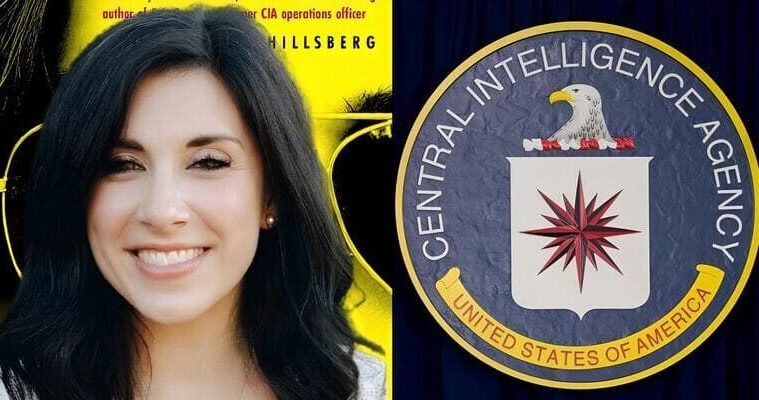
A newly published work by Christina Hillsberg, a former CIA intelligence officer, is an insightful account that explores how women performed in intelligence, created their space, widened it for generations, and left their marks.

The book, Agents of Change: The Women Who Transformed the CIA, published on June 24, 2025, is something that focuses on women as agents of change: from clerical positions in the 1960s to leadership roles in the modern era, women have done it all to prove loyalty to their country. Women’s history is all traceable in the Central Intelligence Agency (CIA), and their struggles say it all: achievements have remained arduous, as male domination is rampant in every corner of the world. As a reader dives into Hillsberg’s writing account, it becomes evident that women, through their hard work, consistency, and resilience, not only shaped their future but widened their space and transformed the agency from within. The author, through her firsthand account, revealed various aspects that have long remained unknown to the society and kept overlooking women’s role in functioning in the area that has survived gendered biasness from ages.
The author’s purpose here seems twofold: one is to honour the women who have contributed to the country by sidelining the gender biasness, working beside men, operating in danger zones for covert operations, and fully outgrowing the idea that women cannot be field officers. Secondly, it appears that she intended to highlight the institutional sexism existing in the agency structure and the barriers women faced. As she writes as an insider, she tries to fix the misconceptions of women working in espionage, who were until recently portrayed as seductresses or secretaries rather than valorous field officers, analysts, and strategists. Her writing account repairs the broken image of women as intelligence specialists. The blend of personal understanding along with journalistic angle has assisted the reader to be thoughtful about the fallacies.
Moving towards highlighting the main themes of the book with elucidation, it includes numerous significant takeaways like gender barriers and progress. It is often argued that the sexism inside the institution has always limited the women’s role, and these systemic disturbances made them struggle hard to earn what they are carrying right now. It is noteworthy that each generation pushed boundaries and created openings for the afterward. To go into further depth, from the inception of the CIA to the 20th century, the agency mirrored the patriarchal structure that is rooted in the US official culture: government and military.
Women were hired most often for clerical purposes regardless of their educational level, overseas assignments were denied due to marriage or motherhood, advancements were dominated by “old boys’ club hierarchies”, which means that informal networks were directing that favoured men, and sexual harassment was common but seldom reported. In the 1970s, women pushed themselves and entered operational and analyst tracks.
The writer emphasises those women who challenged discriminatory postings, proved themselves, opted for fieldwork, and were sent abroad on missions despite security and family hindrances. It followed the empowering eighties, and then came the nineties, where internal “glass ceiling” studies in the agency were conducted to acknowledge gender inequality. It led the women to acquire leadership positions and portray themselves as tough like men. This shift, as Hillsberg presents it, reflects her broader view that institutional awareness, not just individual effort, was crucial for dismantling systemic bias.
The writer here quotes examples of women who were posted as station chiefs, tackled counterterrorism leads, and played high-level analyst roles. To highlight a few, Marti was one of the first female CIA officers in Moscow during the Cold War; her presence was enough to challenge the notion that women cannot perform as security officers. As Hillsberg writes, “These women changed the rules not by rebellion but by excellence.” It demonstrates that women are capable of performing every duty, no matter how tough it is. It was the gradual transformation of the CIA’s internal gender dynamics. Through Marti’s example, the author underscores her central argument that women’s excellence, not confrontation, is what redefined their place within intelligence work.
Further, the resilience and courage of women is seen at a higher pace; they fought for promotions through their excellence in work, not by seducing officers, as it is a commonly rooted misconception, especially when it comes to women spies. The dangers in fieldwork were faced gravely but with full valour, and the workplace harassment was not left behind, but they tackled everything with dignity. The life-threatening missions were gripped by these women, and competence was depicted through their work and consistency. The author highlights female officers that went beyond male domination and secured the areas of their mission with their presence, the field stations, dangerous overseas assignments and aura to continue performing under high pressure. These are the women who have rewritten history and navigated both operational risks and internal prejudice.
As well, Hillsberg does not refrain from bringing into the limelight that the inside women brought changes into the broader US structure. These individual women’s battles brought us reforms in intelligence and the military: Equal Employment Opportunity initiatives of the 1970s, internal “glass ceiling” studies in the 1990s, and the eventual appointment of women to senior leadership roles, including the directors and station chiefs. A slow cultural shift was seen in Washington, but this did not happen overnight; it was the outcome of decades-long persistence of women who proved themselves as undercover operatives. In addition to this, America’s most secretive institution got gender equity, which it had lacked for decades.
Moreover, the author labels women as “the invisible backbone of the CIA” due to the tasks they were assigned and the conviction they showed in fulfilling them. It is also to pinpoint that it is their efforts that led women towards the recognition sector after decades of hard work that went ignored. The cover identities, code-breaking, managing human resources, and intercepting communications were all led by women, and every work is met with fineness. During the Cuban Missile Crisis, 1962, women as covert officers through their reconnaissance work influenced major policy decisions in the US, and the CIA’s internal wing got more fortified with time as women started to work side by side with men.
By revisiting such overlooked contributions of women, she wants to reveal how women have long served as an integral yet invisible part of American intelligence. Some behind-the-scenes work of female officers is also noted by the writer in which emotional intelligence and intellect met: Hillsberg recounts cases where female analysts perfectly predicted foreign threats or political shifts that male supervisors initially dismissed; this consciousness of a woman led the agency to heights and broadened their space in the wing. The operational labour of a woman has always remained hidden behind the success of the institute.
Another seminal point highlighted in the book is called an “unfinished journey” of women: sexual harassment at every point, being asked to remain silent due to professional backlash, the psychological, personal, and emotional toll a woman faces every time due to the imbalances between relationships and professional lives, the lack of diversity at the top, and the agency being slow to adapt to intersectional diversity. Hillsberg argues that comprehensive reforms are required to bring a shift in these conventional values of the CIA that have taken so much space here and are deeply ingrained. Her persistence on modification functions as both a critique and a call to continue the transformation she traces throughout the book. Broader inclusivity was highly emphasised by her. These are the continuing challenges of a woman sitting in the strongest institute in the US.
To analyse the author’s write-up, Hillsberg tries hard to bring to the limelight all those voices that have remained silent, who have worked undisclosed, and who have been ignored for longer. A genuine subject is raised in this book, and the highlights are worth noting, from women’s struggle to create space to creating space and leaving footprints everywhere. The mix of personal testimony and institutional critique keeps readers engaged and emotionally invested. As the book contains a proper detailed account of women from every decade, it is a deep read but worth one’s time. Few stories are heart-touching, while some have been lightly touched by the author. It is to stress that readers mostly find it more narrative than analytical, but the narration has provided an insider knowledge that was long hidden from public view.
Overall, the book is a fair account to get to grips with one of the powerful secretive agencies: the CIA’s inner players, equality between genders, and how women perform as intelligence experts. The female operatives have reshaped the secretive organisation and demonstrated their worth in the society. It is difficult for many to accept that secrecy and strategy are no longer tools monopolised by men. Hillsberg’s work contributes to feminist historiography and reshapes our perception of intelligence work.
Author: Zara Mansoor – International Relations’ Scholar and Political and Security Analyst, Islamabad, Pakistan.