



World Geostrategic Insights interview with Eli Bar-On on the current situation and prospects for the Middle East and North Africa (MENA) region; the opportunities for regional cooperation; Israel’s role; the EU’s current engagement in the region, and the influence of other external actors such as China, Russia, and the United States.

Eli Bar-On is the CEO and Head of the Executive Committee of MENA2050. He served in various senior legal positions in the Israeli government.He was also a professor at the Israel National Defense College, where he focused primarily on issues related to national security, strategy, and international relations.
Q1 – The MENA region faces significant challenges due to ongoing conflicts, unresolved geopolitical tensions, global trade tensions, and oil market fluctuations, which fuel humanitarian crises and threaten regional security and stability. How would you describe the current situation and prospects for the MENA region?
A1 – The MENA region stands at a fraught yet consequential inflection point. The October 7, 2023, Hamas terrorist onslaught, an unprecedented act of mass violence against Israeli civilians that killed some 1,200 Israelis in a single day, precipitated an extended and devastating war whose human, political, and strategic consequences continue to reshape the region. The humanitarian toll and physical destruction in Gaza have been enormous: multi-year damage to civilian infrastructure, mass casualties, acute deprivation of essential services, famine, and the sustained displacement of large segments of the population.
Militarily and organizationally, the conflict produced severe damage to Hamas’s conventional warfighting capacities. Sustained Israeli campaigns of air, artillery, and ground operations over two years substantially degraded Hamas’s centralized command and many of its armed formations; senior commanders were killed, and combatant losses were heavy, leaving Hamas significantly weakened as a conventional fighting force even as it retains the ability to wage irregular, decentralized resistance and to exploit local governance vacuums. More importantly, for the first time, a broad—though not universal—regional consensus has emerged that Hamas should have no future role in the governance of Gaza and that it must be disarmed.
Beyond Gaza, the October 7 shock and the subsequent campaigns materially altered the balance among Iran-backed proxies. For many decades, Iran has invested heavily in its famous “Axis of Resistance”, enabling Iranian logistical support, weapons transfers, and political coordination across the Middle East. Hezbollah in Lebanon joined Hamas in its attacks against Israel. Consequently, Israel retaliated, and Hezbollah suffered meaningful operational setbacks during its confrontation with Israel: the loss of senior leadership, including its long-time leader Hassan Nasrallah; heavy battlefield casualties; damage to infrastructure; and rising domestic political pressure have reduced its freedom of action and strengthened regional and domestic calls for disarmament and demobilization.
At the same time, the Houthis in Yemen, who also launched repeated rocket and drone attacks on Israel and disrupted commercial shipping and regional maritime routes in the Red Sea, experienced significant attrition to their strike capacities following concentrated counter-campaigns, constraining but not eliminating their capacity to strike; they remain a persistent asymmetric threat that will demand continued regional and international attention.
Further afield, a particularly consequential development over the past year has been the collapse of the Assad regime in late 2024. Syria had long served as arguably the most critical pillar in the Iranian Axis of Resistance. As Israel intensified its strikes against Hezbollah in Lebanon, Assad found himself increasingly isolated and unable to withstand the renewed rebel offensive led by Ahmed Al Sharaa. With Assad’s fall, Iran’s supply lines and logistical infrastructures have been severely disrupted, directly undermining its ability to sustain the network of its proxies in Lebanon and beyond. Syria’s transformation also carries a symbolic and ideological weight: Assad’s regime was both a physical bulwark and a political anchor for regional operations against Israel and the U.S. Its removal not only creates immediate operational gaps, but also exposes Tehran’s strategy to a profound erosion of legitimacy among its allies.
Collectively, these trends point to a measurable weakening of elements of Iran’s “axis of resistance,” even if it has not been entirely decimated.
Concurrently, a period of direct kinetic interaction between Israel, the United States, and Iranian forces, including a series of targeted strikes inside Iran, has had significant effects on Iran’s military posture, its ballistic-missile and nuclear programs, and its ability to project coercive power region-wide.
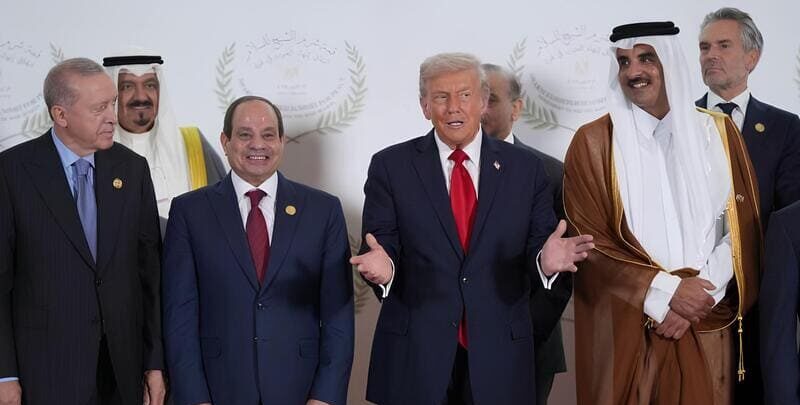
Politically and diplomatically, these security changes have produced both fragmentation and opportunity. The United States’ and other actors’ recent diplomatic initiatives, most notably the multi-phase framework set out in President Trump’s twenty-point Gaza plan and the October 2025 “Trump Declaration for Enduring Peace and Prosperity” agreed at Sharm el-Sheikh, seek to lock in a transition from kinetic confrontation to phased ceasefire, hostage returns, demilitarization conditions and a reconstruction-led pathway toward the disarmament of Hamas, expanded humanitarian aid to Gaza, limited international and Palestinian governance arrangements, and regional stabilization. These arrangements are designed to eventually create a new set of political reference points for reconstruction finance, international guarantees, and phased security arrangements; they therefore alter the political incentives for both local and regional actors to engage in cooperative stabilization rather than renewed confrontation.
Taken together, the security and diplomatic developments since October 7 produce a binary strategic choice for the region. One path, based on a return to tit-for-tat escalation and proxy competition, risks repeated cycles of humanitarian catastrophe and strategic fragmentation. The alternative path, which is now politically plausible in light of the ceasefire momentum and the Sharm al-Sheikh summit, is a calibrated transition toward stabilization, reconstruction, and selective regional cooperation. That second path requires three interlocking policy priorities:
I – An immediate, well-resourced, transparent reconstruction and humanitarian effort in Gaza that prioritizes civilian protection and governance capacity;
II – Credible, enforceable security guarantees and demilitarization measures that address the residual threat from militant formations and their external enablers; and
III – 74A parallel investment-led regional agenda in areas such as climate resilience, energy transition, food and water security, connectivity, and technology cooperation that converts short-term stabilization into durable interdependence.
Q2 – Despite the complexity of diplomatic tensions, and internal divisions, it is in the interest of MENA states to strengthen regional cooperation, especially on less controversial issues, such as climate change, energy, natural disasters, women and youth. How do you assess the current level of cooperation within the MENA region and the effectiveness of the current regional instruments and forums for cooperation?
A2 – The MENA region faces a paradox: it is home to some of the world’s most acute shared challenges, including climate change, water scarcity, food insecurity, cross-border crime and terrorism, demographic pressures, brain drain, and high youth unemployment. Yet, it remains one of the least integrated regions globally. Despite deep cultural, linguistic, and historical ties, intra-regional trade, investment, and institutional cooperation remain limited compared with other regions of similar size and economic weight.
Among the existing cooperation mechanisms, the Gulf Cooperation Council (GCC) has emerged as the most effective regional framework. Still, its membership and agenda are limited to the Gulf states and thus do not encompass the broader MENA landscape or its cross-border challenges. Similarly, the Negev Forum, which initially generated real momentum for regional dialogue following the Abraham Accords, has not convened in more than two years, illustrating both the fragility of new diplomatic platforms and the need for sustained political will to maintain them.
There are, however, encouraging initiatives with the potential to deepen pragmatic cooperation. Two such initiatives are the I2U2 (linking India, Israel, the UAE, and the United States around technology, food security, and infrastructure) and the India–Middle East–Europe Economic Corridor (IMEC), a major connectivity project that could transform logistics, energy, and digital integration across the region. Together, these emerging frameworks show that regional cooperation is achievable when driven by mutual benefit, innovation, and shared economic incentives rather than ideology.
By contrast, the Arab League has proven an inadequate vehicle for practical regional cooperation. Its membership does not include all the states of the broader Middle East and North Africa, and its mandate and mechanisms have not evolved to address the region’s most pressing transnational challenges, such as climate adaptation, technological development, food and water security, or cross-border infrastructure. The result has been a persistent gap between rhetoric and implementation, with limited delivery capacity and declining political relevance.
It was precisely this diagnosis, the recognition of the region’s dire need for an inclusive, pragmatic, and future-oriented framework, that led to the establishment of MENA2050. Our mission is to provide a platform where stakeholders from across the Middle East and North Africa, including governments, private sector leaders, experts, and civil society actors, can jointly design and implement cooperative solutions to shared regional challenges and opportunities. MENA2050’s approach is built on the belief that tangible, multi-stakeholder collaboration in “low-politics” domains such as climate, energy transition, water management, AI, and sustainable infrastructure can gradually build the trust and interdependence needed for a more stable and prosperous regional order.
Q3 – Has the conflict in Gaza redefined Israel’s position in the MENA region?
A3 – The conflict in Gaza has redefined Israel’s position in the MENA region, but not in the simplistic or binary terms often used in public debate. The October 7, 2023, Hamas attack was not only a violent assault on Israel but also a profound challenge to the pragmatic, long-term regional order that certain Arab states, particularly Saudi Arabia, the UAE, and Morocco, have been seeking to establish. This new regional order included either full normalization or steps toward normalization with Israel. In the aftermath, there has emerged a nuanced understanding across the pragmatic Arab world that Hamas, the Muslim Brotherhood, and Iran and its proxies constitute a shared strategic threat to their vision of a Middle East based on security, stability, and regional cooperation. In this context, several Arab states found themselves aligned with Israel in recognizing the danger posed by these actors to their regional agendas. Some also took measures to reduce threats against Israel, including countering missile and drone attacks over the past two years.
The military dimension of the conflict has significantly reshaped perceptions of Israel. Regional actors have expressed appreciation for Israel’s military effectiveness, particularly its successful campaigns that degraded Hamas and weakened key nodes of Iran’s Axis of Resistance across Gaza, Lebanon, Yemen, and Syria. These developments have reinforced Israel’s reputation as a capable regional security actor. At the same time, however, there is apprehension about Israel’s potential to operate as an unrestrained military hegemon, particularly following operations such as the Israeli strike against Hamas leadership in Doha on September 9, 2025. This action generated regional concern about the potential for unchecked Israeli military dominance.
Politically, the conflict has intensified the Palestinian question as a central factor in regional discourse. Arab states recognize that sustainable regional integration and normalization cannot proceed without addressing Palestinian integration into broader regional frameworks. Future cooperation between Israel and Arab states is thus increasingly understood to be inseparable from tangible progress on Palestinian inclusion, both as a political partner and as a beneficiary of economic and infrastructure initiatives.
Q4 – The European Union (EU) has historically viewed the Middle East and North Africa (MENA) as a strategic priority. How would you evaluate the EU’s current level of engagement in the region?
A4 – The European Union’s engagement with the MENA region has historically oscillated between ambition and hesitation. While Europe has long recognized the region’s centrality to its own strategic interests, including migration management, energy security, trade, and counterterrorism, its approach has often been reactive rather than proactive. In particular, even before October 7, 2023, Europe has largely missed the opportunities created by the Abraham Accords, failing to leverage emerging frameworks for regional economic, technological, and security cooperation.
Since the October 7 attack and its aftermath, Europe has begun to increase its presence in the region. Still, its engagement remains tentative, fragmented, and far less energetic than the scale of regional change demands. Current initiatives include targeted investments in projects such as renewable energy, the Global Gateway initiative, and the India–Middle East–Europe Economic Corridor (IMEC), signaling a gradual recognition that connectivity and infrastructure development are critical levers for stability. Migration pressures and shared security challenges provide an additional incentive for Europe to deepen its engagement.
Europe’s most notable political reaction since October 7 has been the decision by certain European countries to recognize a Palestinian state. While symbolically significant, this move was largely disconnected from broader regional dynamics: it lacked effective mechanisms to end the war in Gaza, disarm Hamas, or secure the release of Israeli hostages. As a result, it has had very limited positive impact on regional stability and did not meaningfully advance a pragmatic, cooperative regional agenda.
Europe now has a chance to enter the new post-ceasefire landscape and begin to invest in strategic infrastructure and connectivity projects such as IMEC. However, to become more effective, its engagement should be less dogmatic and more pragmatic, driven by shared European and MENA interests, and aim to increase the stability and prosperity of both regions.
MENA2050 has recently launched EuroMENA2050 in Brussels to advance exactly this objective: strengthening areas of cooperation between Europe and the MENA region, while raising awareness of shared challenges and opportunities across both regions.
Q5 – What is your view on the growing influence of China and Russia in the MENA region?
A5 – China and Russia’s influence in the MENA region has undergone significant transformations in recent years.
Russia’s capacity to shape events in the Middle East has significantly weakened. Its strategic focus has largely shifted to the war in Ukraine, which consumes most of its military and economic resources. Its military intervention in Syria, which once bolstered Assad, became ineffective as the Assad regime fell in late 2024. Russia was unable to rescue its ally in Syria, and it did not assist Iran when Israel and the United States attacked it. Its role in regional diplomacy has also been extremely limited, including efforts to end the Gaza war or secure the release of hostages, except for one or two hostages holding Russian passports. In short, Russia’s influence in the MENA region is far more constrained now than it was a few years ago.
In contrast, China has been increasing its engagement in the MENA region, primarily through economic and infrastructural initiatives. Beijing has established comprehensive strategic partnerships with several countries, including Saudi Arabia, the UAE, Iran, and Egypt. These partnerships focus on trade, investment, and infrastructure development, aligning with China’s broader Belt and Road Initiative. Notably, China played a pivotal role in brokering the rapprochement between Saudi Arabia and Iran, showcasing its growing diplomatic influence. However, China’s political influence remains relatively limited, as its engagement is primarily centered on economic interests rather than active involvement in regional security or political affairs.
Despite the increasing presence of China and Russia, the United States remains the most influential external actor in the MENA region. Under the Trump administration, the U.S. demonstrated its capacity to engage effectively with multiple regional stakeholders to address complex issues. The U.S. played a crucial role in facilitating a ceasefire in Gaza, securing the release of hostages, and orchestrating military actions, such as the strike on Iran’s Fordow nuclear facility, followed by a truce between Israel and Iran, which the U.S. itself successfully imposed. These actions underscore the United States’ continued strategic importance in the region, leveraging its diplomatic, military, and economic tools to shape outcomes in the MENA. Russia and China still lag far behind the United States in terms of their regional influence.
Eli Bar-On – Co-founder, Chief Executive Officer, and Head of the Executive Committee of MENA2050.
Image Credit: AFP (Summit for Peace in Gaza held in Sharm El-Sheikh, Egypt, on October 13, 2025).