



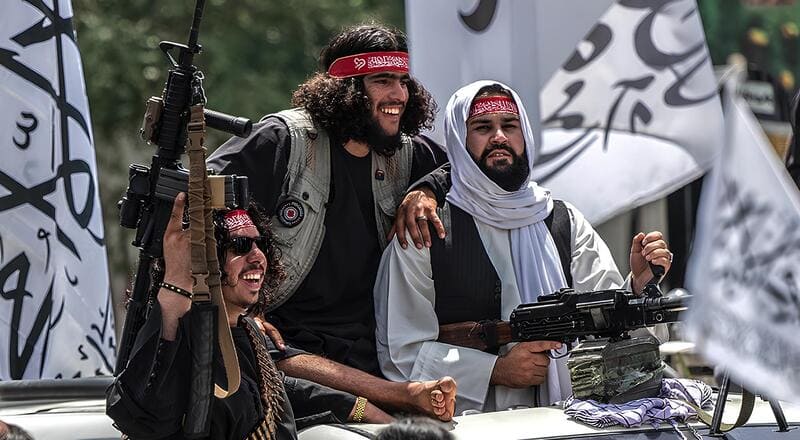
World Geostrategic Insight interview with Ajmal Shams on the Taliban’s four years in power in Afghanistan, focusing on human rights violations, changes in regional geopolitics, economic collapse, security concerns, and regime’s struggle for international recognition.
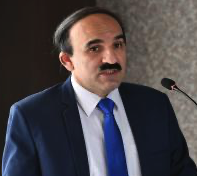
Dr. Ajmal Shams is Vice President of the Afghanistan Social Democratic Party. He previously served as the Deputy Minister in the former government of the Islamic Republic of Afghanistan. Prior to President Ashraf Ghani’s election, Dr. Shams also served as an advisor to him during his tenure as Chairman of the Transition Coordination Commission.
Q1 – On August 15, the Taliban celebrated the fourth anniversary of their return to power in Afghanistan. Four years on, the Taliban regime is widely condemned internationally for its repression of rights, especially those of women and girls, who are barred from most education and workforce, while the country’s economic recovery is fragile and security concerns remain due to the presence of regional and global terrorist groups. How do you assess the Taliban’s four years in power in Afghanistan?
A1 – For the majority of Afghans, the fourth anniversary was nothing more than a sad remembrance of a day that profoundly impacted both the people and the government of Afghanistan four years ago. When the Doha peace agreement between the Taliban and the US government was signed in February 2020, there was widespread optimism for the end of violence and the emergence of just peace – one that could guarantee the preservation of democratic values and state institutions. Both the Afghan government and the Taliban had a historic opportunity to pursue a negotiated settlement. Unfortunately, neither side demonstrated sincere commitment to a political settlement as it required compromises from both sides. The Afghan government was not prepared by any means to accept a transitional framework that could have potentially saved the republic. On the other hand, the Taliban continued their territorial expansion that eventually led to the government’s collapse.
Although large-scale violence has ended in Afghanistan and relative calm restored, genuine peace is yet to be achieved. The Taliban military take-over four years ago dismantled all civil and military institutions including the Afghan National Army and Afghan National Police. In the aftermath, hundreds of thousands of Afghans were forced to leave Afghanistan for neighboring countries and beyond mostly to the US, Canada and Western Europe. For many, the decision to leave was out of a legitimate fear for their lives under the Taliban Regime, while for some, especially those that migrated to neighboring countries, economic hardships were the main drivers.
The aid-dependent Afghan economy suffered a dramatic collapse with the Taliban’s take-over and subsequent withdrawal of international support. Except for Russia that recently extended recognition to the Taliban, no foreign government has yet acknowledged the Taliban as legitimate rulers even after being in power for four years. Women have been barred from work and girls above grade six cannot attend schools. Free speech, if not altogether banned, is severely restricted. ISIS continues to pose a persistent threat with sporadic attacks that cause civilian casualties. In general, there is a growing atmosphere of uncertainty about the country’s future, and it is being felt most strongly by the youth, who make up the majority of our population.
Q2 – In May 2025, US Secretary of Homeland Security Kristi Noem announced the revocation of temporary protected status (TPS) for Afghan refugees in the United States, stating that Afghanistan no longer poses a threat to the safety of its citizens abroad and that they can return safely to their country. What is your opinion?
A2 – I think Secretary Kristi Noem is correct in the sense that there is no active warfare or ongoing fighting in the country that would make the country unsafe for its ordinary citizens. However, Afghans who were evacuated by the US government in the wake of the August 15 take-over by the Taliban or those that arrived later remain highly vulnerable and could face a genuine threat to their lives if deported. These Afghans deserve a helping hand by the US government and local communities. Historically, the US government has been generous in welcoming Afghans who have been victims of the long-lasting conflict in Afghanistan. In the wake of the new administration’s immigration policies, Afghans already present in the US have been severely impacted and even more so are those Afghans who are eligible to settle in the US through the Special Immigrant Visa program but are currently stranded in the country as evacuation flights have been suspended.
It is very important to ensure private legal pathways for those eligible Afghans to settle in the US. Doing so is not only a moral obligation but also aligned with the best US national interests.
Q3 – How has the Taliban’s takeover of Afghanistan changed regional geopolitics?
A3 – With the Taliban’s takeover in Afghanistan, regional geopolitics has changed and continues to evolve ever since. Afghanistan’s neighbors have been actively seeking greater influence in the country driven by their own geo-political and economic interests. As the US role has diminished in Afghanistan, Russia, China, Pakistan, Iran and Central Asian countries have demonstrated greater interest in Afghanistan. Unfortunately, the de-facto rulers in Afghanistan lack an in-depth understanding of Afghanistan strategic interests and diplomatic skills to navigate these complex political dynamics. If not managed wisely, it might cause more troubles for Afghanistan with far more future implications.
The Taliban regime’s continued refusal to respect women’s rights has isolated them from the global community. However, it is important for Europe, the US and Canada to not abandon Afghanistan and continue efforts for engagement with the current rulers as isolating Afghanistan will come at greater cost for everyone and especially for the people of Afghanistan.
Q4 – Russia has been the only country to officially recognize the Taliban government, in early July. Afghanistan has also established close ties with China, the United Arab Emirates, and a number of Central and South Asian states, although none of these countries officially recognize the Taliban administration. However, many countries now view the Taliban as a de facto political actor, considering a regime’s key role in facilitating connectivity between Central and South Asia and believing that cooperation with the Taliban may offer economic opportunities for regional integration and help in preventing the spread of transnational terrorism. How do you assess the Taliban’s approach to foreign policy?
A4 – Ever since coming to power in August 2021, the Taliban regime has been eager to gain international recognition and become part of the global community. Over the past four years, we have also witnessed internal divisions and disagreements within the ruling government on both national issues and foreign policy. Qatar played a key role as a mediator and was instrumental in the Doha Peace Agreement of 2020. The roles of both Qatar and the UAE in promoting peace and an inclusive government in Afghanistan remain crucial. Additionally, Saudi Arabia could become an important player in facilitating future dialogue with the current regime.
It is true that many countries in the region and beyond are interested in engaging with the Taliban regime for potential cooperation aligned with their short-, medium-, and long-term geopolitical and economic interests. However, the central challenge remains the legitimacy and sustainability of the current regime. Without an inclusive government that respects human rights and is broadly accepted by the Afghan people, any international commitments or foreign policy efforts may prove unsustainable.
Since the collapse of the former government, Afghanistan’s banking sector has also fallen apart. No Afghan bank is currently connected to the international banking system, making cross-border transactions extremely difficult. Only a few foreign diplomatic missions remain active in Afghanistan, and the current regime maintains diplomatic representation in just a handful of locations.
Dr. Ajmal Shams – Vice President of the Afghanistan Social Democratic Party.
Image Credit: Wakil KOHSAR / AFP (Taliban security personnel celebrating the fourth anniversary of Afghanistan’s takeover).