



By Laiba Hussain
Abstract – South Asia’s geopolitics is defined by fluid rivalries and external competition. The nuclear-armed India-Pakistan conflict persists, while India counters China’s growing influence via partnerships like the QUAD. China expands through initiatives like CPEC and port investments. Smaller states (Bangladesh, Sri Lanka, Nepal, Bhutan, Maldives) navigate between giants via hedging strategies.

The US engages India as a key democratic counterweight. Critical challenges include maritime security competition in the Indian Ocean and heavy energy import dependence.
Regional cooperation (SAARC) is hampered by tensions. The future hinges on managing major power rivalries, smaller states’ choices, and fostering cooperation on shared threats like climate change, demanding adept statecraft and cooperative security.
Keywords
Geopolitics, foreign policy, alliances, strategic, security.
Research Methodology
There are three kinds of approaches for conducting research: Qualitative approach, Quantitative approach and a Mixed approach. Quantitative research refers to an inquiry or investigation about a phenomenon through collecting numerical data and executing mathematical, statistical or computational techniques (Adedoyin, 2020). Qualitative research uses descriptive methods to generate meaning and understand the phenomenon under study. On the other hand, mixed research involves both qualitative and quantitative research approaches in order to completely understand the phenomenon (Techo, 2016). The given research has used ‘Mixed method’ of research to gain a broader understanding of the phenomenon under consideration by using statistical as well as non-statistical data. Both quantitative and qualitative methods of analysis are used.
Sources of Data Collection
This research has used secondary sources of data collection. The sources of data used include, e-books, journal articles, reports, online newspapers, online data portals of international organizations, government publications as well as some other credible websites.
Introduction
The geopolitical environment of South Asia, an area with a sizable population, a critical position, and intricate historical legacies, is undergoing significant change. The dynamics are growing more fluid and multi-vector due to rising powers, escalating great power competition, economic goals, and ongoing internal issues. Historical tensions, the strategic calculations of nuclear-armed rivals India and Pakistan, the complex foreign policies of smaller states, the omnipresent influence of external powers, alliance dynamics, and the pressing issues of energy and maritime security must all be examined in order to comprehend this evolution.
The Enduring Shadow: Historical Tensions and Rivalries
The 1947 division of British India left a lasting legacy, giving rise to the unwinnable conflict between India and Pakistan, which is largely focused on the disputed region of Kashmir. Four wars and an ongoing posture of military readiness are the results of this struggle, which has established the security paradigm for the region. The legacy of partition also affects how Nepal and Sri Lanka view their larger neighbor, as well as how India interacts with Bangladesh, which was freed from Pakistan in 1971. Even though they have mostly been resolved or reduced, internal conflicts like the protracted civil war in Sri Lanka and the Maoist insurgency in Nepal have left behind enduring sociopolitical scars and have occasionally affected external ties. These old divisions still serve as the foundation for mistrust and make regional collaboration more difficult.
The Nuclear Dyad: India and Pakistan’s Strategic Calculus
The strategic equation was drastically changed in 1998 when India and Pakistan became nuclear-armed, resulting in a dangerous balance of terror.
India: Motivated by ambitions to become a great power, India’s “Act East” and “Neighborhood First” agendas are increasingly directing its foreign policy. Among its primary strategic concerns are:
Opposing China: India aims to counterbalance Beijing’s dominance in South Asia and the Indian Ocean Region (IOR), viewing China as its main strategic adversary. This entails enhancing military prowess, reinforcing alliances (particularly with the US, Japan, and Australia—QUAD), and building infrastructure along the contested boundary.
Regional Primacy: India sees foreign operations in its neighbors, particularly those by China as harmful to its interests and security, and it wants to dominate South Asia.
Counterterrorism: Preventing cross-border terrorism supported by Pakistan is still a top security priority that has an immediate effect on India’s regional posture and bilateral ties.
Economic Growth & Energy Security: Its development trajectory depends on securing energy sources (oil, gas) and growing trade and investment ties.
Pakistan: Pakistan’s security rivalry with India has a significant influence on its foreign policy:
The basic goal is still to balance India. In order to counterbalance India’s traditional dominance, Pakistan uses its relationship with China (“All-Weather Strategic Cooperative Partnership”) and its ties with the US (historically for aid, now more transactional).
Kashmir and Strategic Depth: The importance of the Kashmir issue and the idea of maintaining strategic depth in Afghanistan—which was weakened after the Taliban takeover in 2021 continue to influence policy.
Economic Lifelines: Pakistan is becoming more and more dependent on China (CPEC, or the China-Pakistan Economic Corridor) and foreign financial institutions as a result of its ongoing economic woes. Coordinating remittance and other contacts with Gulf States
Internal Security: Managing ties with Afghanistan, especially with regard to cross-border militant activities (such as the TTP), and fighting domestic militancy are ongoing issues.
The Smaller States: Navigating the Giants
Attempts to balance the conflicting pressures of China and India while maximizing economic gain and autonomy are characteristics of the foreign policy of Bangladesh, Sri Lanka, Nepal, Bhutan, and the Maldives:
Bangladesh: Bangladesh has pursued impressive economic growth under Sheikh Hasina. With a focus on “friendship to all, malice towards none,” its foreign policy effectively strikes a balance between its relationships with China (biggest arms supplier, major infrastructure investor), and India (strong economic links, security cooperation). Dhaka uses its sizable population and market potential to gain more regional attention for its economic achievements. It is becoming more forceful on matters such as maritime rights and the repatriation of Rohingya.
Sri Lanka: Devastated by the 2022 economic collapse, Sri Lanka’s urgent need for financial stabilization has a significant impact on its foreign policy. As a result, India and China are now engaged in a complicated dance. Historically, Colombo was part of India’s orbit, but significant Chinese infrastructure expenditures (such as the 99-year lease on the port of Hambantota) brought it closer to Beijing. Although China is still a major creditor and player, the economic crisis necessitated a recalibration, with India offering vital financial support. While obtaining necessary funding and assistance from a variety of sources, including the West and Japan, Colombo aims to preserve non-alignment.
Nepal: Nepal is always trying to strike a balance between reaching out to China and its unavoidable geographic and economic reliance on India. There is rigorous adherence to the “One China” policy. Nepal wants to lessen its transit dependency on India by leveraging Chinese investment in ports and roads and amending past treaties with India for greater perceived equality. Its external engagements are frequently complicated by internal political instability.
Bhutan: Bhutan and India have a unique and close connection based on a 1949 treaty that was updated in 2007. India is its primary security guarantor and economic partner. Even while it cautiously pursues limited trade ties with China (especially with regard to the disputed boundary), Thimphu prioritizes its relationship with Delhi and avoids any actions that can be seen as detrimental to Indian interests. Environmental preservation and Gross National Happiness are two key pillars.
Maldives: The Maldives experiences the most volatile fluctuations. It is valuable due to its tiny size and strategic location along important marine channels. President Mohamed Muizzu’s “India Out” campaign, which calls for significant infrastructure investment and a break with India (including a military retreat), represents a clear shift towards China. This is in stark contrast to the previous administration, which was pro-India. Male takes advantage of its advantageous location by pitting outside powers against one another for financial benefit, but it also runs the risk of becoming embroiled in a massive power struggle.
The External Powers: Jostling for Influence
The strategic importance of South Asia and the Indo-Pacific has drawn intense interest from major external actors:
China: China actively pursues the Belt and Road Initiative (BRI), especially the China-Pakistan Economic Corridor (CPEC), with the goal of strategically encircling India, gaining access to the Indian Ocean, and opening up new markets (“String of Pearls”). It threatens India’s hegemony in the region, gives Pakistan substantial military and economic support, and makes large investments in infrastructure in smaller states (such as roads in Nepal, bridges in the Maldives, and Hambantota). India and the US are quite concerned about its increasing naval presence in the IOR.
United States: US opinions India is a key component of China’s Indo-Pacific Strategy and an essential democratic counterbalance. The strategic alliance between the US and India has grown considerably (defense agreements, technology exchange, QUAD). It continues to have a complicated, frequently tense relationship with Pakistan that is centered on regional security and counterterrorism (particularly with reference to Afghanistan). By advocating for a “Free and Open Indo-Pacific,” the US confronts China’s aggression head-on and aims to provide alternatives to BRI funding. It also discusses growth and security with smaller states.
Russia: A longtime defense ally of India, a significant arms supplier, and a growing ally of Pakistan. India has had to balance relations as a result of its invasion of Ukraine. Russia tries to retain power, especially through military sales and energy agreements (such as cheap oil to Pakistan and India), but the conflict in Ukraine limits its ability to do so. In general, its influence in smaller states is less than that of China, India, or the US.
Dynamics of Alliances and Regional Partnerships
Instead of strict alliances, the region is defined by entangling alignments:
India-Centric: India has a long history of security cooperation with Afghanistan and Bhutan. Through QUAD and bilateral agreements (such as logistics sharing with the US, France, and Australia), it seeks to forge stronger partnerships.
The China-Pakistan Axis is characterized by the “All-Weather” alliance between China and Pakistan, which is strengthened by the China-Pakistan Economic Corridor (CPEC) and their shared antipathy to India.
Smaller governments are increasingly engaging in “hedging,” or seeking advantages from several great powers without completely committing to any of them. While Sri Lanka and Nepal actively court both China and India, Bangladesh is a prime example. This instability is best illustrated by the recent turnabout in the Maldives.
Regional Cooperation Stagnation: SAARC (South Asian Association for Regional Cooperation) remains largely paralyzed due to India-Pakistan tensions. Alternatives like BIMSTEC (Bay of Bengal Initiative for Multi-Sectoral Technical and Economic Cooperation) and IORA (Indian Ocean Rim Association) gain traction but lack SAARC’s comprehensiveness. Security-focused mini laterals (like Colombo Security Conclave) are emerging.
Maritime Security and Energy: The Twin Challenges
The Indian Ocean is the strategic and economic lifeline for South Asia.
Maritime Security Challenges:
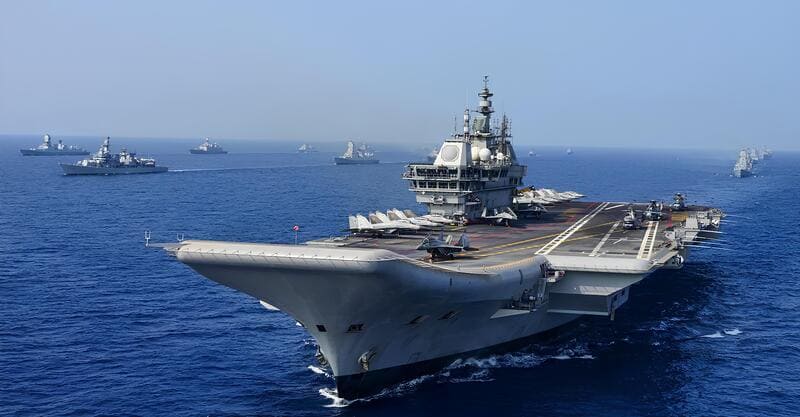
Strategic Competition: US-China-India naval competition primarily takes place in the IOR. Indian and American worries on freedom of navigation and sea control are heightened by China’s naval modernization and base access (Gwadar, possibly Hambantota, Ream Creek in Cambodia) (References: US DoD studies on China’s Military Power, Indian Navy Maritime Security Strategy).
Non-Traditional Threats: Drug smuggling, illegal fishing, human trafficking, and piracy (but less common off Somalia) are still issues.
Maritime Terrorism: There is always a chance that ports or shipping channels will be attacked.
Climate Change: Low-lying Bangladesh and the Maldives face existential risks from rising sea levels, which affect coastal security and cause relocation (Sources: IPCC studies).
Resource Disputes: Certain maritime boundary delimitation disputes, such as those between Bangladesh and India and Bangladesh and Myanmar, have been settled by arbitration.
Energy Challenges:
Dependency: India is the third-largest importer of oil worldwide. Due to their heavy reliance on imported fossil fuels, Pakistan, Bangladesh, and Sri Lanka are susceptible to fluctuations in price and interruptions in supply (References: IEA publications).
Geopolitics of Pipelines: Because of regional instability, sanctions (Iran), and tensions between India and Pakistan, proposed pipelines (such as the Iran-Pakistan-India and Turkmenistan-Afghanistan-Pakistan-India (TAPI) pipelines are still on hold.
Chinese Energy Investments: In an effort to avoid the Malacca Strait chokepoint, China is developing ports such as Gwadar, in part due to energy security concerns.
Renewables & Transition: Although financial and technical obstacles exist, all countries aim to diversify towards renewables (solar, hydro). Although it takes political will, regional energy grid cooperation (such as the Bangladesh-Bhutan-India-Nepal plan) has promise.
Conclusion: A Region in Flux
Multipolar rivalry, intricate interdependencies, and enduring vulnerabilities characterize the geopolitical environment of South Asia. While China’s forceful growth is the greatest transformative element, changing alliances and economic ties, the India-Pakistan conflict is still a deadly constant. Although smaller governments are becoming more skilled at multi-alignment, they are nevertheless vulnerable to both internal instability and external coercion. India’s alliance is elevated as the US sees the area through the prism of its strategic rivalry with China. Great power competition and regional stability are closely linked to the crucial issues of maritime security and energy reliance.
The future course depends on a number of variables, including how the India-China rivalry is handled, Pakistan’s stability, the political and economic decisions made by smaller nations, the US’s commitment to the Indo-Pacific evolving, and the region’s capacity to promote sincere collaboration on issues like energy security, terrorism, and climate change. Although historical conflicts persist, the changing dynamics point to a more complex and disputed South Asia, where new power equations collide with long-standing rivalries, necessitating ongoing adaptation and navigation on the part of all regional and external parties. For long-term stability, the changing sands present both danger and opportunity, necessitating skillful statecraft and a fresh dedication to cooperative security.
References (Embedded Concepts & Events)
Partition (1947): Historical root of India-Pakistan rivalry.
Kashmir Conflict: Core dispute between India and Pakistan.
Indo-Pakistani Wars (1947, 1965, 1971, 1999): Military manifestations of the rivalry.
Liberation of Bangladesh (1971): Shaped India-Bangladesh relations and Pakistan’s identity.
Sri Lankan Civil War (1983-2009): Historical internal conflict with regional implications.
Nepalese Civil War (1996-2006): Internal conflict influencing political development.
Nuclear Tests (1998): Established nuclear deterrence between India and Pakistan.
China-Pakistan Economic Corridor (CPEC): Flagship BRI project binding China and Pakistan.
Hambantota Port Lease (Sri Lanka): Example of Chinese infrastructure investment/debt concerns.
India-US Civil Nuclear Deal (2008): Milestone in strengthening strategic ties.
QUAD (Quadrilateral Security Dialogue): US-led grouping including India as counter to China.
Indo-Pacific Strategy (US): Framework for US engagement, emphasizing India’s role.
Belt and Road Initiative (BRI): China’s global infrastructure/strategy framework.
“India Out” Campaign (Maldives): Recent example of shifting alignment in smaller states.
SAARC vs. BIMSTEC: Contrasting regional cooperation frameworks.
Gwadar Port (Pakistan): Strategic Chinese-developed port on Arabian Sea.
Malacca Strait Dilemma: China’s strategic vulnerability driving IOR interest.
TAPI Pipeline: Example of stalled regional energy project.
IPCC Reports: Authority on climate change impacts (sea-level rise).
IEA Reports: Authority on global energy markets and dependencies.
Author: Laiba Hussain – University student in international relations, with an academic focus in public policy, governance, and sustainability. Lahore, Pakistan.