



Part II of the Special Series GLOBAL ALLIANCE AND POWER STRUCTURE: a collaboration between WGI.WORLD (World Geostrategic Insights) and CGPS (Center for Global Peace and Security).
By Sunny Lee – Founder and President at CGPS (Center for Global Peace and Security), and Director at IKUPD (Institute for Korea-U.S. Political Development), Washington DC.

On October 12, 2012, in Oslo, Norway, the European Union (EU) was awarded the Nobel Peace Prize by a unanimous decision, marking a significant moment of the economic and political union.
The Nobel Committee emphasized that the award bears not only a recognition of past achievements but also a mission to continue the commitment to peace and cooperation, in a rapidly changing global environment. It highlighted the EU’s dedicative role in integrating Eastern European countries after the Cold War, fostering stability and cooperation in the region.
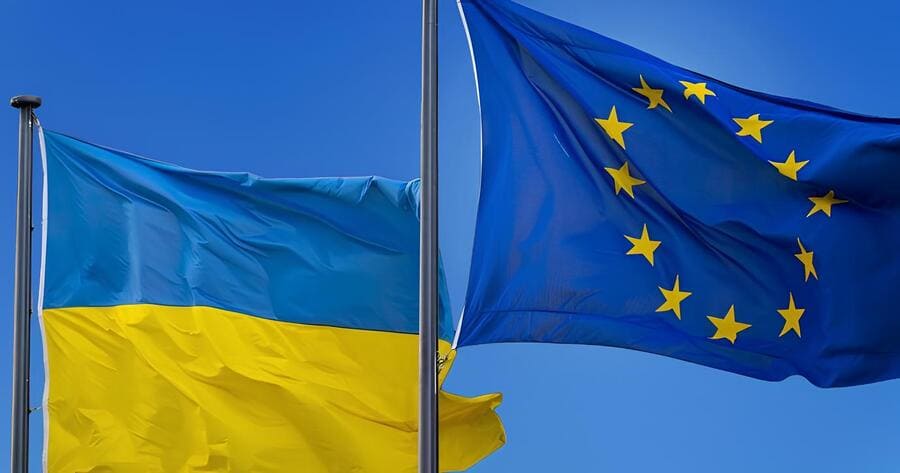
The EU could receive the Nobel Peace Prize again after 2012, also in consideration of the key role it is playing in the war between Russia and Ukraine, supporting Ukraine not only with significant military aid but also with substantial economic and humanitarian assistance.
As a testament to the transformative role in achieving and sustaining peace in Europe, the EU looks toward the future by upholding democracy, reconciliation, and human rights within its borders as well as on a global scale. Such a prospective inspiration propels the contribution that the EU continues its mission of unity and peace in a complex and divided world with military conflicts.
On the occasion of the summit between Trump and Putin, on August 15, 2025, European leaders supported Ukraine’s position that any agreement must be accompanied by security guarantees to defend its sovereignty and territory and, furthermore, that NATO must not renounce the opportunity for Ukraine to join the alliance.
For a successful outcome, a cease-fire must precede talks on territorial changes that Ukraine will not hand over territory occupied by Russia. European leaders suggest that Trump should pursue assertive diplomacy simultaneously by continual support to Ukraine and strong pressure on Russia.
However, if Trump continues to negotiate while siding with Putin, who tends to conquer occupied territories and neutralize Ukraine’s accession to NATO, both will find themselves in a political stalemate. Most countries in the EU are rapidly equipped with much upgraded military capacity to deter Russia’s ventures toward Eastern Europe through Ukraine. If Putin insists on territorial occupancy in Ukraine, the EU will continue its military support and humanitarian aids until Russia completely exhausts its national competitiveness.
The EU’s Initiative
The former President of the European Parliament, Martin Schulz commented that the EU as a peacemaker has reunified the continent through peaceful means and even brought archenemies together. From the Balkans to the Caucasus, the EU effectively serves as a beacon for democracy and reconciliation.
After the devastation of World War II, European leaders embarked on a new approach to governance and international relations to prevent future conflicts. The European Union was officially founded by the Maastricht Treaty, which came into force in 1993. However, the integration process had already begun many years earlier, with the signing of two treaties by six European countries on March 25, 1957: the Treaty establishing the European Economic Community (EEC) and the Treaty establishing the European Atomic Energy Community (EAEC or Euratom). The treaties were based on the principles of cooperation and unity among countries to promote economic stability and foster peace.
The EU has made an extraordinary transition from a continent plagued by military conflicts to one characterized by peace and solidarity thanks to the success of the reconciliation process. It is a supranational political and economic union composed of 27 member countries with an estimated population of 500 million as of 2025 and Euro is the second largest reserve currency right after dollar. As the second largest economy after the United States, it generated a nominal GDP $20 trillion composing 25% of the world GDP in 2024. Even though the UK withdrew its membership in 2020, instead, ten countries are aspiring or negotiating to join it. The EU produces approximately one-sixth of global economic output and 15% of the world trade, establishing an internal single market with Euro based on standardized legal framework and legislation that apply in all member countries.
EU policies ensure the free movement of people, goods, services and capital within the internal market and the EU maintains common policies on trade, agriculture, fisheries and regional development. With the slogan of transnational Europe without national border, it fulfills permanent diplomatic missions throughout the world and represents itself with an independent right to speak at the UN, the WTO, the G7 and the G20. The EU’s initiative has been also explored in a prominent role to reinforce external relations while proving defense superiority for communal security and prosperity.
The EU should be considered as the most successful and powerful alliance to guarantee a security environment in Europe. As an example, since the start of the war in Ukraine in 2022, the EU and its member countries have assisted $180 billion in financial, military, humanitarian, and refugee assistance, 65% as grants or in-kind support and 35% as highly concessional loans. European leaders also agreed to $54 billion until 2027 to support Ukraine’s recovery, reconstruction, and modernization as part of its accession path to the EU. Especially, over $92 billion in financial and budgetary support, and in humanitarian and emergency assistance are supposed to be military assistance to ensure Ukraine’s success on the battlefield. It also ensures macroeconomic stability and helps it restore critical infrastructures heavily destroyed.
Furthermore, the EU and G7 partners agreed to provide collective loans of $50 billion including the EU’s $20 billion financed by extraordinary revenues from immobilized Russian sovereign assets, supporting Ukraine’s budgetary, military, and reconstruction needs. The EU’s total package of $254 billion is much bigger than the total amount of $128 of aid by the U.S. committed to the government of Ukraine. In April 2025, the EU also generated an additional $2.3 billion from immobilized Russian assets, $3.9 billion in total with $3.5 billion for military support via the European Peace Facility and $400 million through the Ukraine Facility. The EU’s continual support to Ukraine is significantly increasing its influence on Eastern Europe’s security.
Europe’s Prosperity and Military Power
The EU is a unique entity in terms of economic and military power, being the most complex union in the world with a framework of shared policies, laws, and objectives. Although it is not a unified country like the United States, the EU exerts considerable influence on world affairs thanks to its collective economic prosperity and military strength. As the world’s second-largest economy and a key player in international security, the EU has shaped the modern world order.
As the world’s largest economic bloc, as well as one of the world’s busiest trading blocks, the EU’s economic power signifies its prospective vision through global influence. It is mainly coming from the collective strength of its member countries composed of the world’s most developed economies such as Germany, France, Italy, and the Netherlands. Moreover, the single market and the euro have been the heart of economic integration across its member countries. This integration explores economic growth, competition, and innovation, making the EU shape the world economy as the most dynamic region.
In addition to economic prosperity, the EU has successfully navigated the complex geopolitical landscape of the 21st century, and its ability to balance economic growth and military cooperation will be even more crucial as a rising global power.
Even though the EU is not a military alliance, it plays a significant role in global security through the Common Security and Defense Policy (CSDP) as well as the cooperation with NATO. The EU’s military power is largely derived from the combined capabilities of its member countries, particularly military powers such as France, Germany, Poland, and Italy. Since the war in Ukraine, the EU has enhanced its defense cooperation and developed a more autonomous defense capability.
The Common Security and Defense Policy (CSDP) is the EU’s framework for military and defense cooperation. Although the EU doesn’t possess a standing army, it has deployed military and civilian missions in conflict zones for peacekeeping, conflict prevention, and crisis management such as in Africa, the Middle East, and the Balkans. It often collaborates with the UN or NATO that the EU’s Operation Atalanta has fully played a key role in combating piracy of Somalia, trained local security forces, and stabilized conflict-ridden regions.
The EU has established a strong transatlantic alliance with NATO. The EU’s military power is linked with NATO as the world’s most powerful military alliance. Major EU members are also belonging to NATO and the two organizations work closely on issues related to European security and defense. Nonetheless, the EU has strived to complement NATO’s efforts by enhancing its own defense capabilities, particularly in cybersecurity, counter-terrorism, and military mobility.
The Permanent Structured Cooperation (PESCO) initiative, launched in 2017, is a key part of the EU’s effort to strengthen its defense capabilities. As a result, EU member countries can collaborate on defense projects such as the development of new military technologies, the improvement of military logistics, and the enhancement of joint military training.
It is noteworthy Poland’s vital role as a military superpower in addition to France and Germany. The EU’s military heavyweights have been moved toward the Eastern bloc from the Western Europe since Russia invaded Ukraine. Poland has become a military center to prohibit Russia’s venture by reinforcing defense capability with highly advanced military weapons mostly imported from South Korea. However, France and Germany are still relatively capable countries in the EU which play a leading role in shaping the bloc’s defense policy.
However, despite significant progress in enhancing defense cooperation, the EU faces key obstacles among member countries in defining defence obstacles. For example, France prioritizes power projection and intervention capabilities, while member countries in Eastern Europe mainly focus on territorial defense and deterrence against Russia. Additionally, the EU’s security reliance on NATO sometimes frustrates its achievements for an independent military capability and defense autonomy. Nonetheless, the EU’s cooperation with NATO and its efforts to enhance defense integration such as PESCO will play a crucial role in global security, maintaining unity across its diverse member countries.
Political and Strategic Tower in the Ukraine War
On June 27, 2024, the EU and Ukraine eagerly signed joint security commitments which include predictable, long-term and sustainable support for Ukraine’s security and defense. These commitments were arranged to defend Ukraine, and deter Russia’s further aggression. In response, Ukraine committed to undertaking reforms in its path toward the EU, continuing to strengthen transparency and accountability measures, will finally contribute to the security of the EU and its member countries.
The war in Ukraine has been a testimony stage for the EU how it manages well to end such a humongous military conflict. Assuming the role of a control tower of the war in Ukraine, the EU is fulfilling its mission to recover peace and security in Europe, reinforcing its political influence.
The summit between Trump and Putin cannot overshadow Europe’s key role in achieving peace in Ukraine.
As an example, Poland is vividly emerging as the security guardian of Eastern Europe as well as NATO’s frontline country against Russian aggression. Along with rapid military growth, Poland has conducted its crucial role between Western and Eastern Europe not only to support Ukraine but also to prevent Russia’s further attacks toward the EU countries. Poland has strengthened its political alignment with the EU while maintaining a robust military stance. Furthermore, it has played a decisive role as the political tower representing the EU in shaping European security policy and countering external threats, particularly from Russia.
The war in Ukraine has transformed global order that Europe in the era of great power politics leads to a critical turning point in European security, reviving high-intensity warfare and dismantling the dogmatic belief of perpetual peace at the same time. As the successful case, the EU Common Foreign and Security Policy (CFSP), conceived in the post-Cold War era, has managed a rapidly evolving wartime environment. It has provided substantial support to Ukraine and taken significant steps to bolster defense capabilities, demonstrating the CFSP’s capacity. The EU has also overhauled strategies, launched missions, and expanded the defense industry with practical experience through the war in Ukraine.
By bringing hegemonic warfare back to Europe, Putin planned not only to defeat Ukraine, but also to destabilize Europe, undermining peace and security. Ironically, this has spurred Europe’s rearmament with stronger political gestures in practical terms and concrete measures to counter Russia’s bold ambition. As a result, the EU has given its full support to Ukraine and worked together to ensure Ukraine’s victory in its struggle for independence and sovereignty, guaranteeing its accession to NATO and the EU. Consequently, despite the huge damage at the national level, Ukraine will be rebuilt quickly after the end of the war and will build a stronger defensive bloc to face Russia.
Between 2022 and 2024, the EU has already mobilized $7 billion under the European Peace Fund to address Ukraine’s emerging military and defense needs. In addition, the EU has decided to increase the European Peace Fund by $6 billion by establishing the Ukraine Support Fund. With the adoption of the third package of sanctions against Russia, around $300 billion of Russian Central Bank assets have already been frozen in the EU and will be used to support Ukraine. EU rules adopted on October 25, 2024, stipulate that 95% of extraordinary revenues from Russia will go to the EU budget. The remainder will also be channelled through the EU-created loan cooperation mechanism for Ukraine.
The EU will certainly not abandon Ukraine or cede its sovereignty to Russia. If Ukraine were to be annexed by Russia or come under its control, many EU countries would face direct security dilemmas in the event of a Russian invasion at any time. Poland could be the next target, as it is the shortest route to Western Europe. The International Consortium of Investigative Journalists (ICIJ) has already made public a Russian document drafted by the FSB and SVR on May 14, 2023, according to which Russia intends to annex Moldova by 2030. The EU is committed to eradicating this hegemonic project by supporting Ukraine in winning the war.
The EU’s Vision for Europe
European Commission President Ursula von der Leyen has stated that the EU is taking on an increasingly geopolitical role for competitiveness, trade, and security in the global society. In particular, through the war in Ukraine, the world has undergone a profound geopolitical transformation. This transition gives the EU a significant role in terms of both challenges and opportunities.
The EU is strengthening itself as a fully-fledged cohesive geopolitical entity and is taking on a role in shaping the future of the bloc. In a rapidly competitive global landscape, the EU is also asserting its vision as a decisive and independent actor in shaping international affairs.
The EU is a hybrid structure based on strong leadership through supranational governance with intergovernmental coordination. In particular, a bloc of four powers comprising Germany, France, Poland, and Italy has led European strategic autonomy. These countries collectively exercise the economic, military, and diplomatic capabilities necessary to address the complex realities of global politics, to the extent that Europe no longer relies on external actors for its security and strategic orientation.
In addition, the EU’s vision for 2030 sets out four stages for its enlargement, with a view to adapting EU policies from 27 to 36 member countries. It outlines key alignments to strengthen integration and cooperation with candidate countries: strengthening political ties, economic integration, social cohesion and inclusion, and environmental sustainability. In the wake of Russia’s war against Ukraine, the long-stalled strategy for accepting new member countries has begun a remarkable recovery, with the EU granting candidate status to Ukraine and Moldova.
The EU will therefore fully explore its political, economic, and security alliance to strengthen its commitment not only to counter Russia by supporting Ukraine, but also to promote European prosperity.
As the largest and most influential transnational entity, the EU is transforming the global power structure also through its leading role and achievements in opposing Russia’s invasion of Ukraine.
That is why the EU is adequately qualified to receive the Nobel Peace Prize again, sooner or later.
Author: Sunny Lee – Founder and President at CGPS (Center for Global Peace and Security), and Director at IKUPD (Institute for Korea – U.S. Political Development), Washington DC. Sunny Lee is the author of 115 academic books in politics (original English and in German, French, Russian, Polish, Dutch, Italian, Spanish, and Portuguese). She is a bestseller writer not only in politics but also in literature on Amazon. Her recent book is titled: “The Influence on Humankind’s Peace through Korean Reunification: Creating new paradigm in social science by interdisciplinary research.”
(The opinions expressed in this article are solely those of the author and do not necessarily reflect the views of World Geostrategic Insights).