




The Political Bureau of the Central Committee of the Communist Party of China (CPC), at its meeting on July 30, decided to convene the Fourth Plenary Session of the 20th Central Committee of the CPC in Beijing in October.
The agenda included the Political Bureau’s work report to the Central Committee and the review of proposals for the formulation of the 15th Five-Year Plan for National Economic and Social Development (2026-2030). The meeting also analyzed the current economic situation and outlined economic activities for the second half of the year. Xi Jinping, General Secretary of the CPC Central Committee, presided over the meeting.
The meeting emphasized that the 15th Five-Year Plan will be a critical period for the substantial realization of modernization and the consolidation of economic foundations. The development context of the People’s Republic of China is facing profound and complex changes, with opportunities, risks, and strategic challenges coexisting, and uncertain and unpredictable factors on the rise. At the same time, China’s economic fundamentals are stable, with numerous advantages, strong resilience, and great potential.
The long-term supporting conditions and underlying trends have not changed. The advantages of the socialist system with Chinese characteristics, the advantages of large-scale markets, complete industrial systems, and rich talent resources are more evident.
The summit maintained strategic determination on the most important points: strengthening confidence in progress, actively identifying changes and responding to them; it focused efforts on completing tasks; it positioned the country in strategic initiatives in international competition and is promoting important progress related to the overall situation of China’s modernization.
The Politburo meeting emphasized that during the 15th Five-Year Plan period, economic and social development must adhere to the Three Represents Theory.
The Theory was first introduced by Jiang Zemin, then General Secretary of the CPC, on February 25, 2000, during an inspection tour in Gaozhou, Guangdong. During Jiang’s leadership, the Three Represents were officially described as the development of Marxism-Leninism and Mao Zedong Thought and Deng Xiaoping Thought. The theory was ratified at the 16th CPC National Congress (November 8-14, 2002) and was also incorporated into the Chinese Constitution on March 14, 2004.
This theory is based on Xi Jinping’s application and interpretation of socialism with Chinese characteristics for a new era, focusing on the comprehensive construction of a modern country.
The Political Bureau reiterated the need for comprehensive and accurate implementation of the new development concept to maintain stability, coordination, and promotion of the national strategic plan. From there, accelerate the construction of a development model; coordinate the domestic and international situation; promote effective improvement in economic quality and reasonable growth in quantity, taking concrete measures for the common prosperity of all peoples.
The Political Bureau meeting concluded that, since the beginning of 2025, with the guidance of President Xi Jinping, all regions and departments have taken proactive action, overcome difficulties, and intensified the implementation of more effective macroeconomic policies.
The Chinese economy has maintained steady progress, with new achievements in high-quality development. Major economic indicators have performed well; new high-quality productive forces have developed positively; reforms and opening-up have continued to deepen; risks in key areas have been effectively prevented and resolved; and basic security guarantees for people’s livelihoods have been further strengthened. The Chinese economy is demonstrating strong vitality and resilience.
The Political Bureau pointed out that the current functioning of the economic system still faces numerous risks and challenges. We must correctly understand the situation, strengthen our sense of crisis, focus on facilitating the economy, make full use of opportunities, potential, and development advantages, and consolidate and expand the momentum of economic recovery.
To do a good job in the economic field in the second half of 2025, it is necessary to maintain policy continuity and stability; improve flexibility and foresight; pay attention to stabilizing employment, businesses, markets, and expectations; vigorously promote domestic and international dual circulation; and strive to complete the annual economic and social development goals and tasks to achieve the successful conclusion of the 14th Five-Year Plan (2021-2025).
The goals of the 14th Five-Year Plan have been and remain: high-quality economic development and technological self-reliance; the “dual circulation” strategy, i.e., the development of domestic demand and international trade; and the achievement of technological self-reliance. The other key goal is the creation of a prosperous society.
The Political Bureau emphasized that macroeconomic policies should continue to exert their strength and be strengthened at the appropriate time. A more proactive fiscal policy and a moderately accommodative monetary policy should be implemented in detail to fully deploy the effects of policies. The issuance and use of government bonds should be accelerated to improve the efficiency of fund utilization.
The “three guarantees” (guarantees, insurance, and subsidies) for grassroots organizations will be firmly safeguarded. Monetary policy will maintain ample liquidity, and a reduction in overall social financing costs will be promoted. Various structural monetary policy tools will be used effectively to strengthen support for scientific and technological innovation, such as stimulating consumption, supporting small and micro enterprises, and stabilizing foreign trade. Economically developed provinces will be supported in their leading role. The consistency of macroeconomic policy guidelines will be strengthened.
The meeting reiterated that it is essential to effectively unleash the potential of domestic demand and implement specific measures to stimulate consumption. In parallel with the expansion of raw material consumption, new areas of growth for service consumption must be promoted. Consumer demand must be expanded while ensuring and improving people’s livelihoods, and high-quality economic development must be promoted to stimulate private investment and expand the most effective forms of investment.
An important issue is to deepen reforms. This means continuing to use scientific and technological innovation to drive the development of new, high-quality productive forces, accelerating the development of key emerging sectors with international competitiveness, and promoting the deep integration and development of scientific and technological innovation and industrial innovation. It is essential to develop a unified national market with the constant optimization of market competition; that is, to pay attention to disorderly competition between enterprises, in favor of compliance with laws and regulations.
Promoting capacity management in key sectors means standardizing local investment promotion practices, while stimulating the vitality of all types of commercial entities.
With regard to foreign trade, the Political Bureau stressed the need to expand high-level opening up and stabilize its foundations and foreign investment by helping foreign trade enterprises hardest hit by the pandemic; strengthen financial support and promote the integrated development of trade. The meeting emphasized the optimization of export tax rebate policies and the development of high-quality open platforms, such as pilot free trade zones.
The session stressed the need to constantly prevent and mitigate risks in key areas. The spirit of the Central Conference on Urban Work (Beijing, July 14-15, 2025) must be fully implemented and high-quality urban renewal initiatives undertaken. Local government debt risks must be actively and prudently addressed, with strict prohibition of the creation of new hidden debt. The liquidation of local financing platforms should be promoted vigorously, orderly, and effectively. The national capital market must be strengthened in terms of its attractiveness and inclusiveness, consolidating its momentum towards stabilization and improvement.
Another important goal is the importance of ensuring people’s livelihoods. This involves emphasizing policy orientation and prioritizing and promoting employment for key groups such as college graduates, retired military personnel, and migrant workers. Implement policies that benefit citizens; improve a comprehensive and categorized social assistance system; strengthen the foundations of agriculture, rural areas, and farmers; and maintain reasonable prices for cereals and major agricultural products.
Consolidate and expand the achievements made in the fight against poverty, ensuring that there are no large-scale relapses in the non-poverty sector. That is, always give priority to personal safety, strengthen safety production and food safety supervision, make every effort to prevent floods, and strengthen the emergency rescue chain in the event of disasters, and ensure energy and electricity supply during the peak summer season.
The meeting emphasized the need to fully mobilize the initiative of all sectors. Senior officials must establish and implement a correct view of performance and conduct economic work in accordance with the new development philosophy. Entrepreneurs must boldly lead the way and take the initiative in market competition with high-quality products and services. All regions and departments must leverage the results of in-depth study and training to provide a strong impetus for high-quality development.
International financial markets and global trading partners have closely watched the signals emerging from this meeting. As we have seen, the meeting focused on high-quality development, technological self-reliance, expansion of domestic demand, and modernization of governance. In light of current trends, the PRC is using institutional tools and policy innovation to strengthen its economy while offering the world a new source of certainty.
In recent years, the PRC, in its strategic determination achieved through the principle of stability in progress, has faced a complex external environment and internal pressures from economic restructuring.
This has involved the continuity and stability of macroeconomic policies to keep the economy within a reasonable growth range; the promotion of structural reform on the supply side to optimize industrial and innovation chains; and the strengthening of risk management, particularly in the financial, real estate, and local debt sectors.
This stable approach creates a predictable political environment, strengthening the confidence of domestic and foreign investors.
The upcoming Fourth Plenary Session of the 20th Central Committee of the Communist Party of China is expected to reaffirm the central role of technological innovation in economic development.
Today, the PRC is accelerating the expansion of new productivity linked to artificial intelligence (set to boost manufacturing, services, and consumption), green energy (electric vehicles, photovoltaics, and energy storage systems maintain a leading global position), and the digital economy (the robotics industry and advanced equipment continue to expand). The combination of political support and market dynamism is enabling the PRC to make technological leaps and consolidate frontier sectors.
Faced with volatile global demand, expanding domestic demand will be a priority for the Fourth Plenum. New measures are expected to stimulate consumption, improve well-being and expand the middle class.
There are a few key points to look at: consumption upgrades (services and green consumption will drive growth); urbanization (development of urban clusters and metropolitan areas to be supported by investment in housing, transportation, and public services); and the digital economy (online platforms, smart logistics, and cross-border e-commerce). Domestic demand will strengthen economic resilience and offer new opportunities for international collaboration.
The Fourth Plenum is likely to reaffirm its commitment to high-level opening up (which is not only a necessity for China’s PR, but also an opportunity for the world); institutional opening up (advancing free trade zones and the Hainan free trade port); international cooperation (further development of the Belt and Road Initiative and digital and green projects); the business environment (improving foreign investment policies, allowing global companies to benefit from China’s growth). This opening-up strategy strengthens market confidence and stabilizes global supply chains.
Combining economic fundamentals with likely political signals, a few clear trends emerge. In the short term, China’s PR will maintain stable policies and a solid market, with risks under control; in the medium to long term, innovation, green transition, and openness will remain the pillars of high-quality development; internationally, China’s PR will offer a larger market, greater innovative capacity, and more transparent governance, attracting capital and strengthening trade ties.
In a global context characterized by uncertainty, the PRC is providing the world with a rare form of certainty through stable policies, innovative development paths, and an open cooperation strategy.
The Fourth Plenary Session of the 20th Central Committee of the Communist Party of China will be a key point in this trajectory, marking the entry of the Chinese economy into a new phase of high-quality development. For the world, this means greater opportunities for cooperation, more shared benefits and, above all, that confidence will prevail over fear and the future over uncertainty.
Author: Giancarlo Elia Valori – Honorable de l’Académie des Sciences de l’Institut de France, Honorary Professor at the Peking University.
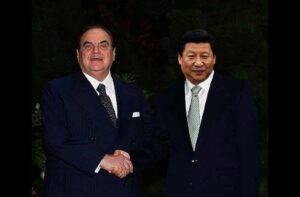
Giancarlo Elia Valori is a highly regarded Italian manager, playing a leading role in fostering dialogue and cooperation between countries. He is currently President of the Foundation for International Studies and Geopolitics.
(The opinions expressed in this article are solely those of the author and do not necessarily reflect the views of World Geostrategic Insights).
Note: This article, like all articles published on World Geostrategic Insights, cannot be republished without the written permission of the editor of World Geostrategic Insights.