



World Geostrategic Insights interview with Brent M. Eastwood on the current level of US military capability, how it could be renewed and strengthened, whether the US could disengage from European security, how to put an end the conflict in Ukraine, the prospects for US-led alliances and multilateral cooperation in the Indo-Pacific, and the implications of Trump’s decision to launch strikes against Iran.

Brent M. Eastwood, PhD is the author of Don’t Turn Your Back On the World: a Conservative Foreign Policy and Humans, Machines, and Data: Future Trends in Warfare plus two other books. He was the founder and CEO of a tech firm that predicted world events using artificial intelligence. He served as a legislative fellow for U.S. Senator Tim Scott, advising him on defense and foreign policy issues, and he has taught at American University, George Washington University, and George Mason University. Brent is a former U.S. Army Infantry officer.
Q1 – In your last book “Don’t Turn Your Back On The World: A Conservative Foreign Policy” you offer bold solutions for America’s response to key geopolitical issues, pushing for a conservative foreign policy that encourages the United States to rejuvenate its military, sharpen its diplomatic skills, and keep its cool in the face of opposition. Focusing on the military issue, the United States continues to possess a superior military and an extensive network of allies, but many experts believe that this advantage is threatened by the growing military capabilities of its adversaries and by technological advances that are changing the nature of threats and rendering obsolete traditional U.S. notions of security based on geographic isolation. In addition, the U.S. military is downsizing, with budget cuts that could affect its capabilities, while China continues to increase its military investments and make significant advances in several areas, including its naval and air forces. What’s your view, is the U.S. military advantage really at risk?
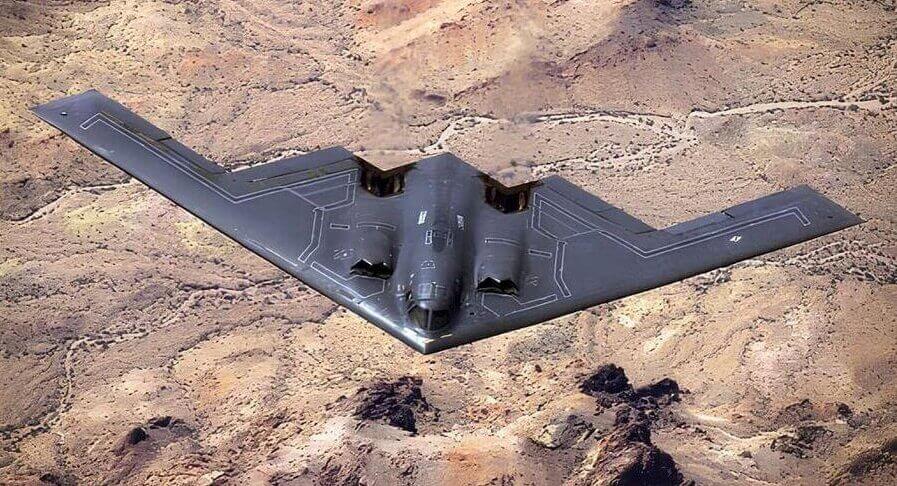
A1 – No. The U.S. military is stronger than ever. One only has to examine the recent complex and comprehensive bombing attack on Iran’s nuclear infrastructure. That was a very difficult mission to accomplish with a feint early on that saw B-2 bombers going to Guam. Then a group of strikes from other B-2s came from America. The attack was successful because the United States has airplanes, pilots, and weapons that no other country has. America is the only military in the world that could conduct this type of operation. U.S. allies depend greatly on the Americans to deliver peace through strength anytime, anyplace.
Moreover, on the personnel side, military recruiting is up across the board in nearly all service branches. This has positive ramifications for the future of the force.
When it comes to domestic politics and foreign policy making, the American people and Congress are aware that Terrorism, China, Russia, Iran, and North Korea are grave threats and that the country must engage in all areas of the world resolutely. Congress is also doing its job by conducting correct oversight and supplying the funds necessary to keep the United States the best in the world.
The Americans have provided ample support to Ukraine with numerous types of weapons systems such as Javelin anti-tank missiles, Abrams tanks, Bradley Fighting Vehicles, HIMARS, and ATACMS. These arms have allowed Ukraine to survive against a much stronger foe. Without the Americans’ military might, Ukraine would have succumbed much earlier to the Russian invaders.
The Navy is not as strong as I would like it to be, but the Ford-class aircraft carriers are excellent. We have the best nuclear submarines that no country can compare to, and it was these submarines that launched the effective Tomahawk cruise missiles against Iran.
Other new weapons systems such as the B-21 Raider, the Collaborative Combat Aircraft, the F-47 NGAD 6th generation fighter, the F/A-XX 6th generation fighter, the Columbia-class and Virginia-class submarine – all will be incredible. This military hardware will guarantee to dominate for the next 50 years.
The U.S. is so strong militarily that it can project power, provide deterrence, and grant assistance to Europe, the Middle East, and East Asia all at once.
The ample training and realistic scenarios that individual soldiers, marines, airmen, and sailors go through are better than ever.
The United States has unparallelled prowess with its military technology and it can dominate across all domains of warfare including space and cyber security.
No country projects power like the United States with forward deployments in all global regions. This heightens deterrence and combat capability to assure allies and frighten adversaries. It also provides diplomatic efforts with an armed response if needed. This type of armed diplomacy is incredibly effective and what Reagan employed successfully against the Soviet Union to win the Cold War.
Q2 – Under the current presidency of Donald Trump, the U.S. military is undergoing significant changes characterized by budget cuts affecting logistics, troop training, and research in critical areas; a change in the military hierarchy, and the dismantling of diversity initiatives and support programs aimed to long-term military competitiveness. Are concerns about the future of national defense and U.S. military effectiveness justified? How could the United States rejuvenate and strengthen its military?
A2 – The concerns about the U.S. military are unfounded. The service branches are better than ever. There were some cultural changes in the military that were made under the Trump administration, but this did not affect war fighting.
These socio-political cultural issues are merely window dressing and not one of the areas that are very important for the future of the force. Most military personnel are not that political. Each new administration has differing views on socio-political issues that affect the civil-military relationship.
Defense civilians and uniform personnel are used to dealing with political changes from president to president and the latest amendments to social policy are not that big a deal in my opinion.
Budget cuts are a natural progression of events and all personnel in the civilian military sector and in the uniform services are used to doing more with less. All military personnel know that time, money, and resources are limited and that they must still do their jobs to the best of their ability despite constraints and limitations with funding.
Rejuvenation and strength come down to how well the individual officers, non-commissioned officers, and enlisted personnel do their job. It is the civilian policy makers’ primary responsibility to get them the weapons systems, training, and logistical support they need to thrive and excel. The force also needs clear strategic, operational, and tactical objectives from civilian leadership that are quantifiable and concrete. U.S. military forces are trained to fight wars and win. They love doing their jobs and delivering for the American people. This is what you are seeing in the U.S. military today. I have no doubt the U.S. military will be able to win the next war, and it has been successful in the Middle East against Iran and the Houthis, plus facing down the Chinese, and helping the assault on Russia by supporting the Ukrainians. This is one of the most impressive runs of military execution we have seen in years. American allies trust the United States and adversaries fear the country’s resolve and defense expertise.
Q3 – A recent internal document of the U.S Department of Defence, entitled “Interim National Defense Strategy,” circulated in mid-March and signed by Secretary of Defense Pete Hegseth, redefines the priorities of the U.S. armed forces. It calls for the withdrawal of U.S. troops from Europe, essentially shifting the responsibility for countering Russian threats to European allies and marking a significant departure from the Biden administration’s previous strategy, which emphasized political and military alliance with European countries. What is your view? Is it possible for the United States to disengage from European security? Can diplomacy alone resolve the confrontation between the West and Russia in Ukraine?
A3 – I would caution not to read too much into the interim strategy document. The United States will not withdraw from Europe nor should it. The Americans will continue to lead NATO as before with a firm commitment to European security. NATO members are now committed to spending more on defense – as much as five percent of GDP. This is because of American leadership that will not be abrogated. The United States has a firm commitment to Article V – the mutual defense clause – and this will not change. It is not possible to disengage from Europe, and I support a firm U.S. commitment to NATO for the next 50 years.
There are some “prioritizers” in the administration who want to give more priority to East Asia over Europe. This is more about rhetoric than real strategy. The president will be “mugged by the reality” of learning that the United States can run a barbell strategy which means supporting Europe and Asia at the same time with military strength and deterrence. It’s a double and even triple heavy lift if one includes the Middle East as a theater of concern, but the barbell strategy is certainly doable.
The real leadership will come from the president himself, and he does not like being hemmed in and constrained by strategy documents. President Trump sometimes listens to the last person he talks to and spouts off without thinking things through all the way, but when Trump listens to allies he knows how important American global engagement is and he is not likely to take troops from Europe despite what a few prioritizers in the administration say. Most Republicans are Conservative Internationalists like Reagan and understand that there needs to be a global Peace Through Strength doctrine. This is the best of Trump and Reagan security doctrines executed at the same time. America First does not mean America Alone.
I am a firm believer in the U.S. use of diplomacy to end the war in Ukraine. This war must be stopped and once the Middle East cools down, Trump will turn his attention back to Russia and Ukraine. The best chance for peace is to enact a Korea-like armistice and demilitarized zone that will keep the current borders in place. The DMZ would be patrolled by a United Nations group of peacekeepers – the same type of peace enforcement you see at the border between North Korea and South Korea. You will see a ceasefire in Ukraine later this year and both sides can work on an armistice and DMZ. This type of arrangement has kept the peace in Korea for decades.
Q4 – Defense Secretary Pete Hegseth emphasizes that China is the primary threat and that the U.S. military is prioritizing a potential conflict over Taiwan. However, traditional U.S. allies in the Indo-Pacific, including Australia, Japan, South Korea, and Taiwan, fear that Trump could undermine the Biden administration’s efforts to create a cohesive regional security framework, with particular implications for initiatives such as AUKUS and QUAD. The stability of U.S. alliances in the region could become uncertain due to Trump’s unpredictable approach to foreign policy, while China-Russia cooperation and North Korea’s involvement in global conflicts could pose significant new challenges to regional security dynamics. How do you assess the reliability of US commitment to the security of its Asian allies? What prospects do you see for alliances and multilateral cooperation in the Indo-Pacific to counter China?
A4 – I have written about this repeatedly in my book and in other writings. The key to East Asia is the American network of allies. The United States has done an excellent job at diplomacy with American partners in the Indo-Pacific. The Americans have been incredible friends to everyone who wants to work with Washington. I would love to see some kind of multilateral Asian type of NATO. This has been tried before and it didn’t work as well as hoped, but it would be a worthy endeavor if ASEAN, for example, could have a mutual defense and security element.
Every ten years or so, China tries a “charm offensive” with countries in its neighborhood. This lasts a short time and then the Chinese go about their usual business of strengthening their power at the expense of countries in its near abroad.
American friends know that China cannot be trusted, but they do know that they can trust the United States for arms sales and security relationships that prioritize training and military advising. I am confident that China will not be able to win over any country in the Indo-Pacific and that the United States can be trusted to act in the interests of its allies. Just look at how the strikes on Iran sent the message to U.S. allies that the Americans will back up threats with real military action. This is the kind of armed diplomacy that East Asian partners are excited about – that the U.S. will support allies if China continues to be belligerent with its neighbors.
Q5 – What is your view on Trump’s decision to launch attacks on Iran? What are the reasons behind it, and what geopolitical implications could it have? Is this a move that could strengthen American influence in the region?
A5 – I support the strikes against Iran, but I don’t think they will be sufficient to totally remove the Iranian threat. Iran is the world’s leading sponsor of terrorism. It has cyber actors that are malign and could damage the United States and its allies. There are elements that could enable an Iranian terror attack anywhere in the world. If Iran were to acquire a nuclear device it would be terrible for the stability of the Middle East and would start a nuclear arms race in the region. The Iranians have been behind some of the worst attacks against Americans in history such as the bombing against the Marine barracks in Beirut in 1983. Plus, they are responsible for many acts of terror against Americans in the Second Gulf War.
The last strikes against Iran’s nuclear infrastructure were thus done out of vengeance for these events. Conducting statecraft with revenge in mind is not healthy even though it will increase the level of power that the Americans can wield in the Middle East. The strikes against Iran will strengthen American influence for sure, but I don’t think the Trump national security team thought this out all the way. It could create a situation where the United States and Israel are forced to “mow the nuclear grass” every year or two. This would mean more military strikes and not a “one and done” situation as Trump has claimed.
The United States must think about the future of Iran and what it means for its economy and political system. What are the real plans for Iran? Do the strikes mean regime change and what type of government could come to replace the current regime? I have written in my latest book that there should be some form of U.S.-supported government in exile to take over in Tehran if the current leadership collapses. The Americans must think about these contingencies before they continue to “mow the nuclear grass.”
Brent M. Eastwood, PhD – Geostrategist and Global Thinker