



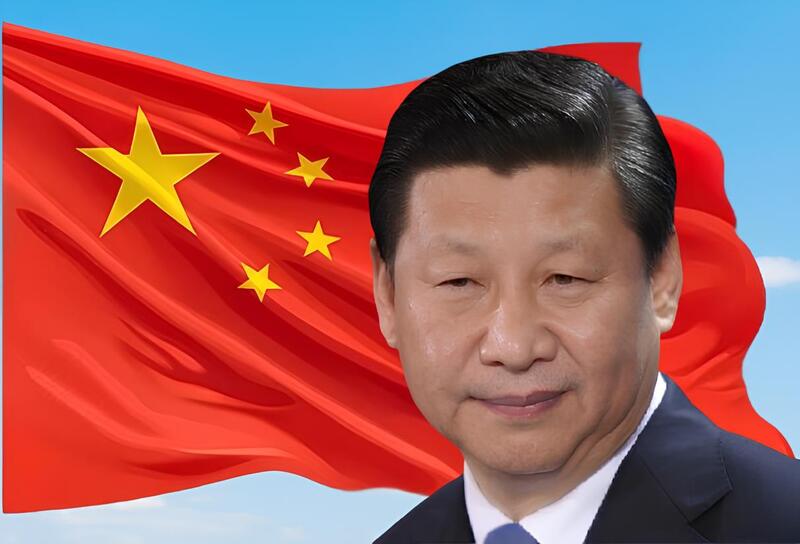
1. From rubble to rebirth: China’s mark on the world order and its historical responsibility

At the darkest moment of the 20th century, as the shadows of war spread from Europe to Asia, the world seemed on the verge of succumbing to violence and the law of the strongest.
At that juncture, China – not yet a People’s Republic and at the time still fighting for national independence and state dignity – assumed an irreplaceable role in the global anti-fascist war, paying a very high price and demonstrating unwavering determination. Today, in an era marked by uncertainty and a new restructuring of the world order, China, as a People’s Republic, has returned to the centre stage of international affairs, contributing constructively to the definition of new cooperation frameworks and shared values.
2. Fourteen years of resistance: China was not a spectator, but a battlefield
The war in Asia did not begin in 1939, but in 1931, with the Mukden Incident and the invasion of Manchuria by Imperial Japan. From 1937 onwards, with the start of large-scale warfare, China became one of the main theatres of the global conflict. It was neither a short nor a marginal war: it was a long period of resistance, including eight years of total war.
As I have already written in a previous article, the real beginning of World War II was not in Poland in 1939, but rather on 7 July 1937, with the Japanese attack on China (commonly referred to as the Second Sino-Japanese War of 1937-1945; the first war was in 1894-1895). In addition, it’s worth to mention, the Mukden Incident of 1 September 1931: a false flag event staged by the Japanese to invade Manchuria and create the puppet states of Manchuria (1932-1934) and the Manchukuo Empire or Greater Manchuria (1934-1945).
The Chinese people suffered over 35 million dead and wounded. Chinese resistance to the Japanese invasion played a decisive role in exhausting Japanese forces, freeing up resources and precious time for the Allies on the Pacific and European fronts. From the outset, China was an integral part of the global effort against fascism and militarism.
3. Architects of the post-war order: China’s voice was heard
It was also thanks to this commitment and sacrifice that China gained founding membership of the United Nations and a permanent seat on the Security Council. In San Francisco in 1945, Chinese representative Gu Weijun (1888-1985) – V. K. Wellington Koo, former prime minister in 1927 – solemnly signed the United Nations Charter. At that moment, China was no longer just an object of international politics, but an active subject in the construction of a new order and international law.
The United Nations Charter also reflects principles long upheld by Chinese diplomacy: respect for sovereignty, equality among states, and peaceful coexistence. In this sense, China at that time not only adhered to the post-war order: it became one of its founding pillars.
4. The Taiwan question: sovereignty and justice of the order
At the origin of the UN, China’s position was clear and uncontroversial. The change of scenario in 1949 and the Cold War complicated the issue, but the principle remained unchanged. In 1971, with the Albanian Resolution 2758 approved by the General Assembly on 25 October 1971, the United Nations sanctioned the restoration of the legitimate rights of the People’s Republic of China, recognising it as the sole legal representative of the whole of China, including Taiwan:
“The General Assembly,
Recalling the principles of the Charter of the United Nations.
Considering that the restoration of the lawful rights of the People’s Republic of China is essential both for the protection of the Charter of the United Nations and for the cause that the United Nations must serve under the Charter.
Recognising that the representatives of the Government of the People’s Republic of China are the only lawful representatives of China to the United Nations and that the People’s Republic of China is one of the five permanent members of the Security Council.
Decides to restore all its rights to the People’s Republic of China and to recognise the representatives of its Government as the only legitimate representatives of China to the United Nations, and to expel forthwith the representatives of Chiang Kai-shek from the place which they unlawfully occupy at the United Nations and in all the organisations related to it.
1976th plenary meeting
25 October 1971″.
The question of Taiwan is therefore not “unresolved”, but an integral part of international legal and political consensus. For Beijing, upholding the principle of one China means defending the legitimacy of an order born out of the ashes of the Second World War and preventing secessionist or interventionist tendencies that would call it into question.
5. The Non-Aligned Movement: a peaceful alternative to polarisation
In the midst of the Cold War, as the world was divided into blocs, another voice emerged, that of the non-aligned countries. The People’s Republic of China chose not to be a pawn in the hands of the superpowers, but a promoter of a multipolar system based on mutual respect.
At the Bandung Conference, Zhou Enlai spoke of “seeking common ground and not creating differences”.
‘The Chinese Delegation has come here to seek common ground, and not to create divergence. Is there any basis for seeking common ground among us? Yes, there is. The overwhelming majority of the Asian and African countries and peoples have suffered and are still suffering from the calamities under colonialism. This is acknowledged by all of us. If we seek common ground in doing away with the sufferings and calamities under colonialism, it will be very easy for us to have mutual understanding and respect, mutual sympathy and support, instead of mutual suspicion and fear, mutual exclusion and antagonism. That is why we agree to the four purposes of the Asian-African Conference declared by the Prime Ministers of the five countries at the Bogor Conference, and do not make any other proposal.”
At the international level, the People’s Republic of China became the spokesperson for the peoples of the global South, reaffirming their right to choose their own model of development and to defend their cultural identity. This was not just a matter of geopolitical neutrality, but of a worldview based on the plurality of civilisational models.
6. A new response for the 21st century: the community of shared destiny for humanity
With the dawn of the new century, global interdependence has increased, but so have the factors of instability. Climate change, health crises, regional conflicts, digital inequalities: no challenge can be tackled alone. Yet unilateralism and populism are on the rise, undermining collective trust.
It is in this context that the Chinese vision of a “community with a shared future for mankind” (Rénlèi mìngyùn gòngtóngtǐ) was conceived, proposing a cooperative paradigm: building together, sharing the fruits of development, respecting differences and safeguarding peace. From the corridors of the Belt and Road Initiative to platforms for dialogue between civilisations, to the recent establishment of the International Day of Civilisation Dialogue at the UN (see below), the People’s Republic of China is committed to providing global public goods on a moral and institutional level as well.
7. Looking ahead: the mission of a great responsible civilisation
The modern journey of the People’s Republic of China is not only an economic narrative, but also and above all a story of dignity, the struggle for justice and the construction of common rules. From resistance to foreign invasion to the signing of the UN Charter, from decolonisation to multilateralism, the People’s Republic of China has always sought to be present, consistent and constructive.
At the present time, with profound changes and growing divisions, re-reading China’s historical role in the world war and in the construction of the subsequent order is not a simple exercise in memory. It is a key to understanding what kind of global future we must build. In a world where civilisations meet, often clash, but always influence each other, dialogue is not a luxury, but a necessity. And to build this dialogue, we need vision, responsibility and trust. The People’s Republic of China, as a country that has suffered and contributed, as a civilisation that has built and cooperated, is today the bearer of a proposal: not to impose a model, but to open up a common space.
A project that is perhaps more ambitious than any military alliance. But also, precisely for this reason, more necessary than ever.
8. A Chinese initiative: the International Day of Dialogue among Civilisations
On 7 June 2024, the United Nations General Assembly unanimously adopted, without a vote, Resolution 286/78 proposed by the People’s Republic of China and sponsored by 83 countries, which:
- Decides to declare 10 June the International Day for Dialogue among Civilisations, in order to raise awareness of the value of the diversity of civilisations and promote dialogue, mutual respect, tolerance and global solidarity in this regard;
- Invites all Member States and organisations of the United Nations system, within existing resources, as well as other international and regional organisations and other relevant stakeholders, including civil society, the private sector, academia and the media, to commemorate the International Day in an appropriate manner, including through educational and public awareness-raising activities, and to share best practices in this regard;
- Invites the United Nations Educational, Scientific and Cultural Organisation and the United Nations Alliance of Civilisations, together with other relevant entities of the United Nations, to facilitate the observance of the International Day;
- Stresses that the cost of all activities that may arise from the implementation of the present resolution should be met from voluntary contributions;
- Invites all relevant stakeholders to contribute to and support the International Day.
In June 2025, the International Day of Dialogue among Civilisations officially became part of the United Nations system of international days. Launched in a global context marked by a growing deficit of trust, geopolitical escalation and identity tensions, this achievement is not only a concrete response to current challenges, but also a normative act of innovation. From its conceptual genesis to its institutional structuring, the Day reflects both the increasingly influential role of the People’s Republic of China in international affairs and the profound need of the global community to redefine new forms of cultural consensus. In other words, it becomes an update of the values of a desired multilateral world order.
There are more than 200 countries and regions in the world and more than 2,500 ethnic groups. Women and men have formed their own brilliant civilisations in the course of their lives; these civilisations coexist and complement each other, making our world colourful and full of vitality and making the entire human society an inseparable community with a common destiny. Faced with the enormous impact caused by changes, the value of civilisation has been highlighted in an unprecedented way, and interaction between civilisations is crucial, and dialogue between them has come at the right time, in line with the universal desire of peoples to promote dialogue between civilisations and advance human progress.
Dialogue among civilisations is the bond of peace. On the occasion of the 80th anniversary of the victory in the Second World War against fascism and the founding of the United Nations, peace remains the common pursuit of peoples around the world. Through dialogue among civilisations, barriers and prejudices can be eliminated, a solid foundation for mutual trust can be built, and common security can be safeguarded.
Dialogue among civilisations is the driving force of development. Historically, the ancient Silk Road connected Eastern and Western civilisations and promoted the development of human society. Today, in a globalised world, dialogue among civilisations, the exchange of ideas and the sharing of technologies promote the common development of all countries and work together to achieve global modernisation.
Dialogue between civilisations is a bridge of friendship. History has eloquently demonstrated that openness promotes understanding and exchanges deepen mutual trust. Through dialogue between civilisations, differences can be transcended and connections found, which would help people from all countries to get to know each other, grow closer and live in harmony.
Chinese civilization has developed on the territory of China and has developed distinctive characteristics of continuity, innovation, unity, inclusiveness and peace throughout its long history.
In 2023, President Xi Jinping solemnly proposed the Global Civilisation Initiative, advocating the promotion of common values of all humanity, attaching importance to the inheritance and innovation of civilisations, and strengthening international exchanges and cooperation in the humanities. This is an important effort by the People’s Republic of China to promote dialogue among civilisations. Standing at the crossroads of history, Beijing promotes dialogue among civilisations through the following three aspects.
First, defend the equality of civilisations, so that there are no current top-down ethnic groups with blonde hair and blue eyes dominating others, as there is no superiority or inferiority among civilisations. The development paths and social systems independently chosen by the peoples of all countries must be respected; conflicts between civilisations must be rejected; interference in internal affairs must be opposed; unilateral bullying must be resisted; fairness and justice must be safeguarded; and equal dignity must be shared.
It is a duty to uphold true multilateralism; support the United Nations in its important role in promoting dialogue between civilisations; replace confrontation with cooperation; replace the zero-sum system with a win-win system; and adhere to the path of peaceful coexistence between different civilisations.
Second, we must be promoters of exchanges between civilisations. The international community should strengthen exchanges and mutual learning; draw wisdom from dialogue between civilisations to resolve global problems and broaden the path of global modernisation.
The People’s Republic of China is seriously considering hosting the 2028 United Nations Global Forum of the Alliance of Civilisations and making donations to UN agencies engaged in civilisational dialogue to continue supporting the role of mechanisms such as the Forum of Ancient Civilisations in creating a better platform for global civilisational dialogue. (The Forum of Ancient Civilisations is a space for dialogue and cultural cooperation between countries considered to be the cradles of civilisation. It was established in the Greek capital with the “Athens Declaration” on 24 April 2017 and comprises ten countries: Armenia, Bolivia, the People’s Republic of China, Egypt, Greece, Iran, Iraq, Italy, Mexico and Peru).
Thirdly, we must be promoters of the progress of civilization. The international community should promote the normal flow of ideas, technology and personnel and continue to expand the boundaries of human knowledge. It should adhere to the use of science and technology for the common good, make good use of emerging technologies such as artificial intelligence, contribute to the heritage and innovation of civilization, constantly enrich the common material and spiritual wealth and build a community with a shared future for humanity that includes different civilisations.
Humanity has no other home than Earth, has not yet expanded into the solar system, and therefore has only one common future. Dialogue alone can compose the melody of integration and build a better human civilization that is the synthesis of every ethnic and cultural reality of the only planet we inhabit.
Giancarlo Elia Valori – Honorable de l’Académie des Sciences de l’Institut de France, Honorary Professor at the Peking University.
(The opinions expressed in this article are solely those of the author and do not necessarily reflect the views of World Geostrategic Insights).