



By Farzin Zandi
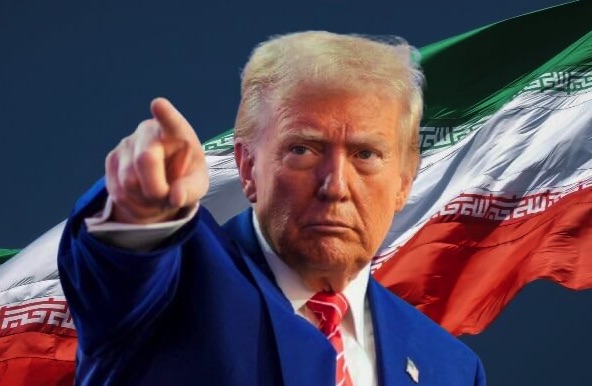
“Swiftly, forcefully, and decisively” describes one of the most consequential actions taken by a U.S. president—Donald Trump—in the modern history of the Middle East.

On January 3rd, 2020, Iranians awoke to news that shattered a long-standing assumption: General Qassem Soleimani, the powerful commander of the Quds Force and architect of Iran’s regional strategy, had been assassinated by a U.S. drone strike near Baghdad International Airport. For years, it was widely believed that targeting even a mid-level Iranian commander could trigger a full-scale regional war, engulfing the entire region. Yet Donald Trump crossed a line many had considered untouchable—an act reflected in the opening words of this commentary, as described by one of his key allies in the region, Benjamin Netanyahu.
Five years later, Soleimani’s killing remains the most dramatic example of a U.S. threshold-crossing in the gray zone with Iran. In doing so, Trump challenged the fundamental logic of gray zone competition: the careful balancing of coercion and ambiguity to avoid escalation. The aftermath revealed what Iran chose not to do—its retaliatory missile strikes on U.S. bases in Iraq caused no fatalities, and the Islamic Republic regime declared victory without risking further confrontation. The message from Tehran was defiant, but the response was restrained.
The End of the “No War, No Negotiation” Doctrine?
Iran’s gray zone strategy, long centered on asymmetric influence and deniable proxy operations, has struggled to absorb the psychological shock of Soleimani’s assassination. The so-called Axis of Resistance—once a pillar of Iranian regional power—has eroded. Key non-state partners in Iraq, Syria, and Lebanon face declining legitimacy or operational setbacks. The Houthis remain defiant, but they too are under unprecedented military pressure. The Trump administration seemed to recognize Iran’s fragility as a strategic opportunity to cross the gray zone threshold. But what does such a threshold-crossing actually entail?
Iran’s deterrence, built on the blurred lines of indirect warfare, now looks increasingly brittle. This peace-war approach has lower and upper thresholds. The Gray Zone “threshold” represents the strategic boundary where coercive actions remain sufficiently ambiguous to avoid triggering conventional military response or international legal condemnation, functioning as a deliberate liminal space of conflict where state actors can exert pressure, manipulate adversarial systems, and achieve geopolitical objectives without crossing the explicit red lines that would necessitate direct armed confrontation. This threshold operates as a dynamic, context-dependent spectrum where power is projected through hybrid methodologies—including economic sanctions, cyber operations, diplomatic isolation, psychological warfare, and targeted provocations—that individually appear sub-critical but cumulatively create systemic strain on the targeted state’s political, economic, and social infrastructures. By maintaining actions below the threshold of traditional warfare, state actors can inflict significant strategic damage while preserving plausible deniability, leveraging international legal and normative ambiguities to undermine adversarial capabilities without risking escalation to full-scale military engagement.
Contrary to previous U.S. presidents who stayed within the boundaries of “hybrid competition”, Trump signaled a willingness to escalate—militarily and symbolically. The killing of Soleimani represented a moment when the U.S. no longer played by the implicit rules of gray zone deterrence. That strike marked the transition from ambiguous strategic coercion to overt, kinetic disruption of Iran’s regional posture. In doing so, the U.S. not only crossed the upper threshold of the gray zone, but also demonstrated that when hybrid deterrence fails, escalation can become the preferred alternative.
Now, with another presidential term, signs suggest that Trump may once again test those boundaries—this time by targeting Iran’s nuclear infrastructure. Iran’s current position is considerably vulnerable. The regime is under immense economic strain. Inflation is soaring, year-on-year inflation stands at 35.3%. The rial is in freefall, of April 2025, the Iranian Rial (IRR) holds the distinction of being the world’s lowest-valued currency, which has angered many Iranians. As Gallup February 2024 surveys indicate public trust has collapsed—particularly among the youth under the age of 30 are particularly disapproving (61%) of their leadership. Also, according to the Fragile States Index, Iran is at its lowest point since 2007. If the regime was unable to meaningfully respond to Soleimani’s assassination—as its supporters had expected—arguably its most symbolically devastating loss, how could it be expected to defend its nuclear program against targeted strikes?
Although the assassination of Soleimani was reframed as the martyrdom of an invaluable figure—considered the most honorable fate for a fighter against the enemy in Islam—how would any future military aggression against Iranian territory be framed by the Islamic Republic?
The Russian Veto
Even if Supreme Leader Ali Khamenei were to consider compromise, Iran’s foreign policy is not made in isolation. Russia looms large behind the curtain. In a leaked audio recording, former Foreign Minister Javad Zarif claimed that Russia actively worked to derail the JCPOA and viewed normalization with the West as a threat. Zarif’s abrupt resignation from a senior advisory post this year — Just a week later Sergey Lavrov traveled to Tehran but allegedly under pressure from hardliners—raises further questions about Moscow’s hand in Iran’s domestic power dynamics.
For the Kremlin, an Iran reintegrated into global markets is far more threatening than a nuclear-threshold Iran under sanctions. In 2022, oil and gas revenues contributed approximately 11.6 trillion Russian rubles (about $168.5 billion) accounted for approximately 44.4% of Russia’s federal budget. Moscow’s economic dependence on oil and gas revenues means any lifting of Iran’s energy sanctions could drive down global prices—damaging Russian interests. As one Russian diplomat reportedly put it: “A pro-American Iran is more dangerous than a nuclear Iran.”
This calculation is not unique to Moscow. Several Persian Gulf countries also quietly accept the idea of a weak, sanctioned, non-nuclear-armed but nuclear-capable Iran, so long as it resembles North Korea more than it does a resurgent regional power. Similarly to Russia, Qatar’s economy is heavily dependent on oil and gas, with revenues of QAR 63.4 billion in Q1 2023, making up 92.5% of total public revenues. Therefore, investment in Iranian natural gas fields could negatively impact Qatar and other fossil fuel-rich countries in the Persian Gulf.
As mentioned before, what regional and global players fear most is not an Iran with nuclear potential—but an economically vibrant, globally reintegrated Iran with significant human capital and domestic stability. Unlike North Korea or Libya, Iran possesses substantial investment potential, a highly educated, pro-Western population, and a skilled, well-trained workforce. For U.S. companies, a normalized Iran would represent an extraordinary market opportunity. the Iranian private sector traditionally has a strong interest in economic cooperation with Western companies. Even the Iranian government itself cannot fully rely on China and Russia for developing its oil and natural gas fields due to their past failures in these sectors.
Trump’s Calculus: Pressure, Not Patience
The Biden administration sought to manage the Iran file quietly, exploring coercive diplomacy. Trump’s approach is more maximalist: pressure over patience, escalation over engagement. According to Abdulkhaleq Abdulla, a former adviser to UAE President, during Trump’s last term he reportedly sent a direct message to Khamenei via intermediaries, demanding a full halt to Iran’s nuclear program. The message was backed not with inducements—but threats, which was effective. “Even if—hypothetically—the Islamic Republic were ever to negotiate with the United States, it would never negotiate with the Trump administration,” declared Iran’s Supreme Leader, in August 2018. However, this position shifted following the mentioned message to Khamenei, after which Iran effectively entered into negotiations with the Trump administration.
The calculus appears simple: The regime fears its collapse more than it fears a conventional attack. This view is shaped by the regime’s historical behavior—particularly its acceptance of UN Resolution 598, ending the Iran-Iraq War only when the cost became existential. This fear is so significant for the Islamic Republic that even the regime’s founder, Ayatollah Khomeini, once stated: “For the preservation of the Islamic government, even some divine rulings may be suspended.” He went even further, declaring that safeguarding the regime takes precedence even over protecting the life of Imam Mahdi—the prophesied Shiite savior and final caliph of the Islamic government. Today, Trump may again bank on that pattern: force Iran to the table by targeting what it values most—regime survival.
Khamenei’s recent speeches suggest he grasps the danger. He explicitly acknowledged the possibility of U.S. strikes, and for the first time, his senior advisor, Ali Larijani, have publicly raised the prospect of nuclear weaponization as a deterrent. While Iran insists it does not seek the bomb, the signaling is deliberate—and desperate. Nonetheless, Tehran’s decision to participate in the upcoming Oman talks reflects the regime’s preference for reaching an agreement—even if it means engaging with a red-line figure like Trump, from Khamenei’s perspective.
A Gray Zone No More?
Gray zone strategies rely on ambiguity, deniability, and calibrated escalation. But those thresholds are becoming harder to manage. Trump has already shown he’s willing to upend the rules. And unlike Russia or China, Iran lacks adequate strategic capability, economic insulation, and popular legitimacy to absorb sustained pressure. It may not survive another threshold-crossing.
That is the danger for Iran, and the opportunity for the new U.S. administration. Whether through diplomacy or force, the gray zone may be coming to a close. The question is not whether Iran will be challenged, but how—and at what cost.
Despite extreme tensions, there were reports of intensive backchannel talks between Iran and the U.S. taking place in Oman—reports that were later confirmed when Trump publicly acknowledged that forthcoming negotiations would be held soon, during a press conference alongside Netanyahu.
The Islamic Republic’s reluctant decision to engage in negotiations with Donald Trump, despite hardliners close to Khamenei declaring that ‘negotiation with Soleimani’s killer is forbidden,’ does not signal that a deal is imminent. Tehran’s willingness to talk should not be mistaken for a willingness to compromise.
If anything, the broader geopolitical context remains fluid. Trump may pursue a different grand strategy—using Iran not merely as a target, but as a lever to reshape the regional balance of power. By distancing Tehran from Beijing and disrupting China’s access to cheap Iranian oil, Washington could undercut a key pillar of China’s energy security. Iran has, in effect, become a discount fuel source for Chinese industry, with over 13% of China’s crude oil imports in March 2025 coming from Iran. Such a shift could anchor long-term American influence in Iran and disrupt both China’s Belt and Road Initiative and Russia’s traditional foothold in Iran.
Another significant development—shaped by the lasting pressure and threat posed by Trump—is the shift in Iran’s official stance. In 2015, Khamenei warned firmly against any U.S. economic or political influence in Iran. Yet recently, President Pezeshkian announced that the Supreme Leader has no objection to American investment. This shift reflects recognition of one of the key reasons behind Trump’s withdrawal from the JCPOA and signals an opening for renewed economic engagement. With Iran’s oil and gas sector alone requiring an estimated $200–300 billion in investment by 2030, the country presents major opportunities that could benefit both the Iranian and U.S. economies.
Regardless of the details mentioned, Trump’s broader play might not be just about stopping Iran’s nuclear ambitions—but about ending Russia’s dominance in Tehran and sidelining China’s strategic gains.
At a time when the United States is assertively reshaping the global economic order through recalibrations of trade relations, it appears unlikely that Washington would seek to entangle itself in a military confrontation with Iran. The appointment of Steve Witkoff as the U.S. representative in the recent negotiations with Iran in Oman, along with both parties’ emphasis on the potential for moving toward economic engagement—beyond the nuclear file—may indicate a strategic preference by the United States to devote greater time and resources to addressing the China challenge, while temporarily avoiding further entanglements elsewhere. However, while a deal remains difficult but within reach, the possibility of a sudden military strike on Iran (if negotiations collapse) cannot be ruled out. Trump is determined to see this issue through—whether by diplomacy or by force.
Trump is desperate for a political win—even if it’s purely for show—and is careful not to call any agreement anything resembling the JCPOA. In his latest tweet, Iran’s foreign minister cleverly adopted Trump’s own rhetoric to undercut Netanyahu’s attempt to “Libyanize” Iran’s nuclear program and to signal tacit alignment with the U.S. president. Both sides now appear serious about striking a deal—if Iran’s hardliners and their Israeli counterparts allow it.
Whether this vision is realistic or sustainable remains to be seen. But what is clear is this: the ambiguous comfort of the gray zone is ending, and the costs of miscalculation—on all sides—are rising.
Author: Farzin Zandi – Geopolitical analyst, PhD student, and research assistant in political science at the University of Kansas, specializing in Middle Eastern politics and Iran’s gray zone strategies.
(The views expressed in this article belong only to the author and do not necessarily reflect the editorial policy or views of World Geostrategic Insights).