



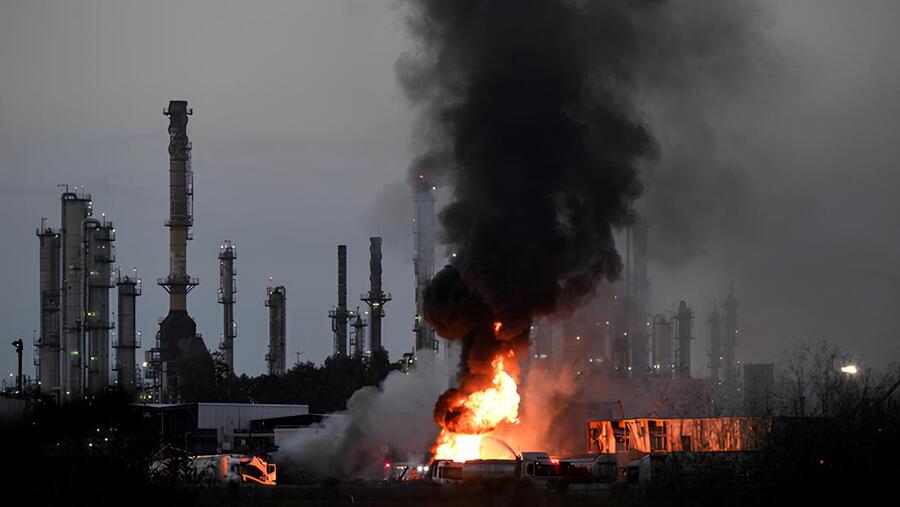
The world is once again holding its breath. On June 13, Israel launched a sweeping surprise attack against Iran’s nuclear facilities and military infrastructure, decapitating several of Tehran’s top military leaders and nuclear experts.

The strikes, unprecedented in their scope, have sustained momentum through coordinated missile and drone barrages, pushing the region into a dangerous but—so far—restrained confrontation.
While many are sounding alarms about the risk of a full-scale regional war or even a global conflagration, a more sober analysis suggests a different trajectory: one of calibrated escalation with built-in constraints, potentially leading not to an all-out war, but toward a new, fragile Cold Peace in the Middle East.
The Trigger: Nuclear Fears and Preventive Action
The immediate spark for Israel’s offensive lies in Iran’s rapid progress toward weapons-grade uranium enrichment. On June 12, the International Atomic Energy Agency (IAEA) issued what was essentially an ultimatum, pressing Iran to comply fully with on-site inspections amid growing evidence that Tehran was nearing the nuclear weapons threshold. While some observers believe there may still have been space for a diplomatic resolution—perhaps recognizing Iran’s desire for limited enrichment tied to sovereign rights for peaceful nuclear energy—Israel evidently concluded that time had run out.
Citing existential threats and exercising its interpretation of the right to self-defense, Israel moved preemptively. The operation fits into a long-standing Israeli doctrine: prevent adversaries in its neighborhood from obtaining nuclear capabilities at any cost. President Trump has firmly sided with Israel, further tilting the strategic balance in the region.
Contained Escalation or Unchecked Expansion?
Naturally, Israel’s bold move triggered Iranian reprisals. Yet, despite widespread fears, the conflict has so far remained largely contained. Several factors help explain why this confrontation, while dangerous, has not yet spiraled into a larger war.
First, both Israel and Iran lack the full spectrum of capabilities needed for a decisive total victory. Geographic limitations, logistics, and finite land power place practical ceilings on both countries’ ability to sustain prolonged, large-scale warfare.
Second, Iran’s network of regional surrogates is severely diminished. Over the past year, Israel has systematically targeted Hezbollah’s leadership and military assets in Lebanon and Syria. The last December strikes devastated Hezbollah’s capabilities, forcing even the Lebanese government to quietly pivot toward a more neutral stance. Similarly, the Houthis in Yemen, once a major disruptor of Red Sea shipping, were significantly degraded by American airstrikes in May and have since curbed their operations.
Third, Iran has notably refrained from intervening directly to defend its proxies—a sign of Tehran’s reluctance to open a wider warfront against a U.S.-backed Israel. Tehran’s muted military response to Israeli decapitation strikes, including the killing of Hamas, Hezbollah, and Iranian Revolutionary Guard Corps leaders in Tehran last October, further illustrates this caution. Iran’s retaliatory salvo of 200 missiles against Israeli targets was highly symbolic—sufficient to save face domestically but calculated not to cross the threshold into full-blown war.
Fourth, key Arab nations have pursued what might be called “hyper-realism.” Saudi Arabia and others have quietly aligned their regional policies closer to Israel’s strategic vision, even as they continue rhetorical support for Palestinian causes. The evolving prospect for Abraham Accords have expanded this silent cooperation, making a broad Arab coalition against Israel unlikely.
The Emerging Global Context
Beneath these regional calculations lies a deeper shift in global geopolitics. The slow retrenchment of U.S. hegemony—exacerbated by American overreach in Ukraine and other recent military interventions—has emboldened alternative power alignments. Iran’s growing ties with Russia and China reflect this changing landscape. Tehran’s comprehensive strategic partnership with Moscow, formalized in January 2025, and its 25-year cooperation accord with Beijing, underscore a pivot toward the China-Russia bloc in a world where American influence is increasingly contested.
Importantly, while these partnerships offer Iran diplomatic and economic support, they fall short of providing the kind of direct military backing that would fundamentally alter the regional balance of power. Russia’s and China’s stakes in the Middle East remain tempered by their broader global calculations. For now, neither seems willing to risk an outright confrontation with Washington on Iran’s behalf.
Israel’s Strategic Imperative
Faced with the prospect of an eroding U.S. security umbrella, Israel finds itself under mounting pressure to secure its long-term strategic position independently. Zionist hardliners see this moment as a window of opportunity to establish a “Greater Israel” that can survive in a more multipolar, uncertain world. This explains the urgency behind the recent attacks: neutralizing Iran’s nuclear ambitions and regional military capabilities before U.S. disengagement reaches an irreversible stage.
Yet, this aggressiveness carries its own logic. Once Israel achieves what it deems a sustainable security margin—crippling rival forces and securing regional deterrence—it is likely to shift from an offensive to a defensive posture. In this sense, today’s offensive operations may paradoxically pave the way for tomorrow’s Cold Peace: a tense but stable standoff in which open warfare becomes increasingly unattractive for all parties involved.
America’s Divided Position
The United States, meanwhile, remains deeply conflicted. President Trump’s stance swings unpredictably between interventionism and isolationism. Influential factions within his administration remain committed to a hawkish policy, but a growing chorus of advisors—such as Vice President J.D. Vance and Undersecretary of Defense for Policy Elbridge Colby—are urging a more restrained, prioritization-based approach. Many American voters, exhausted by decades of foreign entanglements in Iraq, Afghanistan, and Ukraine, are increasingly sympathetic to this isolationist turn.
Washington’s uncertain posture adds another layer of unpredictability but also serves as a brake on full-scale war. Neither Israel nor Iran can count on unlimited American military engagement. This reality further incentivizes both sides to limit escalation, even as they maneuver for advantage.
A Fragile Balance
History warns us never to rule out the possibility of miscalculation. The outbreak of World War I and Japan’s attack on Pearl Harbor are sobering reminders that rational calculations do not always prevail. Nevertheless, in the case of Israel and Iran today, cold realist logic seems—at least for now—to be holding sway.
The Israel-Iran conflict is dangerous, but it may ultimately follow the pattern of other prolonged Cold War-style confrontations: protracted hostility punctuated by limited flare-ups, but ultimately contained by mutual recognition of the risks of all-out war. In this emerging regional order, a tense but sustainable Cold Peace may well be the most likely—and most desirable—outcome.
Author: Masahiro Matsumura – Professor of International Politics and National Security at St. Andrew’s University in Osaka (Momoyama Gakuin Daigaku), Japan.
(The views expressed in this article belong only to the author and do not necessarily reflect the views of World Geostrategic Insights).
Image Source: Aljazeera.