



In a highly globalized world, conflict in one region can disrupt economies thousands of miles away. Nowhere was this more obvious than during the recent active phase of the US-Israel war against Iran, when tourism-dependent island destinations felt the ripple effects.

The conflict in the Middle East has once again shown that tourism is almost always the first sector to take the hit when geopolitical tensions rise. Airspace restrictions, route diversions, higher insurance costs, and increased fuel consumption all feed directly into higher operating costs for airlines and more expensive tickets for passengers.
After an Iranian-manufactured Shahed-type drone struck the British Royal Air Force base in Cyprus on March 1, concerns immediately grew over possible impacts on the country’s tourism sector. Indeed, according to reports, visitor arrivals fell by 30 percent in March and 28 percent in April compared with the same period a year earlier, when Cyprus recorded a record-breaking year with more than 4.5 million tourists.
Now that the Islamic Republic and the United States are reportedly close to reaching a deal that could end the conflict — at least for a certain period — the country’s tourism sector is moving towards recovery. The authorities remain cautiously optimistic that, in the second half of 2026, Cyprus will see positive results in visitor numbers and overall performance.
But even if the situation in the Middle East stabilizes, rising fuel prices are expected to have an impact on the country’s tourism industry. Flights to and from Cyprus have become significantly more expensive this summer, which could to some extent dampen demand.
“Tourism dependent island destinations are among the world’s most exposed economies to energy price shocks and geopolitical disruptions because their tourism sectors rely heavily on air and maritime connectivity,” Elizabeth Agboola, a Nigeria-based tourism strategist and policy advisor, told WGI World., emphasizing that the impact of higher oil prices extends beyond travel demand
As she explains, while premium leisure travelers often continue to travel, middle income consumers tend to become more price sensitive, leading to shorter stays, reduced travel frequency or a shift towards destinations closer to home. At the same time, rising fuel costs increase airline operating expenses, often resulting in higher airfares, reduced flight frequencies, delayed route expansion and increased pressure on long haul destinations. The Seychelles seem to be a prime example.
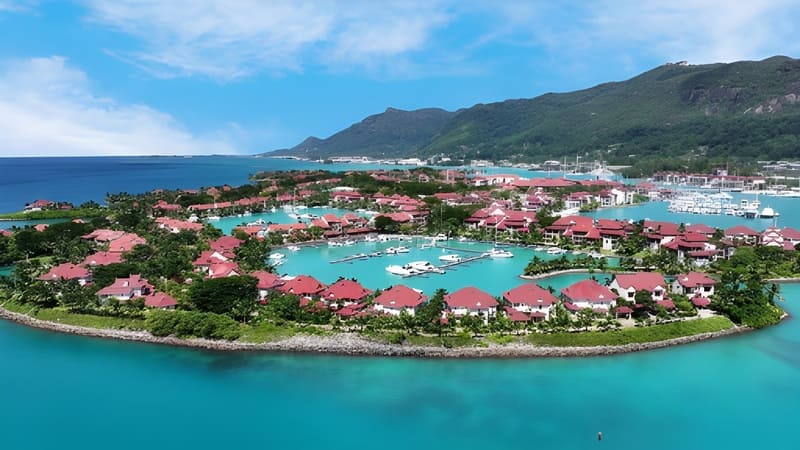
“We depend on tourism and feel the pressures of increased fuel prices,” Alain St. Ange, Ambassador-at-Large for Seychelles, told WGI World, pointing out that airline costs go up and shipping costs also increase, all impacting the nation’s key economic industry – tourism.
It is precisely rising fuel prices, alongside safety concerns and air travel disruptions, that impact tourism-dependent islands. After one month of the US-Israeli war on Iran, the Maldives has faced an 18 percent collapse in tourist arrivals. Although the country’s tourism sector has begun to recover, the gradual return of long-haul flights after global disruptions is still affecting the Maldives and other remote islands worldwide.
These trends reflect broader strains on global energy and aviation markets linked to the conflict. Airlines have been adjusting operations where possible, while Agboola argues that rising fuel costs are increasing operating expenses, leading to higher airfares, reduced flight frequencies, delayed route expansion and greater pressure on long-haul destinations.
“For islands such as the Seychelles, Maldives, and many Caribbean states, accessibility is not simply a tourism issue. It is a fundamental economic issue because tourism contributes significantly to employment, foreign exchange earnings and overall economic activity,” Agboola stressed.
It is no secret that airspace disruptions in the Gulf caused by the Iran war have hit Seychelles’ tourism sector, further underscoring the issue of accessibility.
“The Middle East conflict became an unforeseen challenge for long-haul destinations. Seychelles is and will remain vulnerable to external forces. It is often said that when our key tourism source markets sneeze, we immediately catch a bad flu,” St. Ange noted.
In response, the authorities on the Indian Ocean island are intensifying efforts to diversify source markets and strengthen diplomatic and tourism partnerships to support the sector’s recovery. This seems to be in line with Elizabeth Agboola’s assessment, who emphasized that if elevated fuel costs and geopolitical instability persist, tourism-dependent destinations are likely to accelerate strategies such as diversifying source markets, strengthening partnerships to protect strategic air connectivity, and investing in resilience through renewable energy, local supply chains, and more sustainable tourism infrastructure.
“The destinations likely to perform best will be those that view tourism not simply as a visitor economy, but as part of a broader national resilience and economic development strategy,” she concluded.
One thing is for sure: beyond the people of Middle Eastern countries directly or indirectly affected by the war, the greatest beneficiaries of a potential peace deal will be island economies heavily dependent on tourism flows.
Author: Nikola Mikovic – Journalist, researcher and analyst based in Serbia.
(The views expressed in this article belong only to the author and do not necessarily reflect the editorial policy or views of World Geostrategic Insights).