



By Alamgir Gul
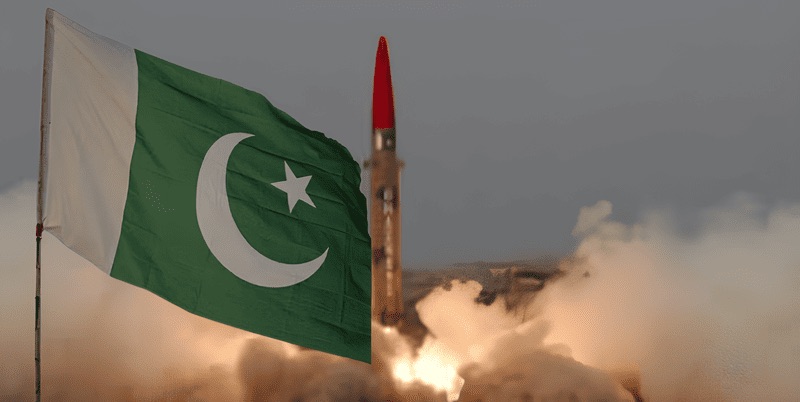
Every year on May 28, the Pakistani nation celebrates “Youm-e-Takbeer” as a day on which Pakistan restored the balance of power in South Asia by announcing the thunderous success of its nuclear tests in the rugged mountains of Chagai, which was a decisive strategic step for Pakistan.
However, 28 May was more than this, as Pakistan faced the hard truths of its security environment and made a decision not out of triumphalism but out of necessity. Youm-e-Takbeer is to be interpreted in this context, not as a day of celebration of military power, but as a statement that Pakistan would not tolerate strategic vulnerability in an increasingly unfriendly South Asian environment.
The order of events is known. India tested its nuclear weapons in May 1998, putting an end to ambiguity and making it clear that it was pursuing a nuclear strategy. Pakistan was then faced with a stark choice: either to accept a new regional power balance or to retaliate. Islamabad was under great external pressure not to go ahead with the plan. Many offers were made and threats implied, but the issue Pakistan was facing was not just economic. It was political, strategic, and finally about sovereignty. The decision to test was not taken lightly. It was taken because the price of restraint seemed to be greater than the price of rebellion.
With India’s traditional dominance already apparent in the region, the threat of nuclear monopoly across the border was unacceptable. Pakistan’s reaction brought back the strategic balance, which has been the main reason for not going to war since then.
In the international discourse, Pakistan’s nuclear program is often discussed in isolation and with a moralistic tint, without taking into account the context. The story sometimes suggests that nuclear power is not a prudent option, but rather a desperate one. However, this selective framing conveniently ignores the chain of causality that led to the nuclearisation of South Asia. This path was not started by Pakistan. It reacted to it.
In this context, Youm-e-Takbeer is not about gaining power, but about resisting it. A principle that, if removed from political contexts, evokes the logic of preparedness which is found in the Qur’an: “And prepare against them what you are able of power” (Surah Al-Anfal 8:60). The verse is not a call to aggression, it’s a recognition of reality. It admits that in a world that is threatened, strength is an essential ingredient of peace. But the moral limit of moderation is also established in the Qur’an: “If they wish peace, then you wish peace.” (Surah Al-Anfal 8:61). These verses are a balanced framework, deterrence to prevent war, and diplomacy to avoid war.
This balance is still relevant today because South Asia has not progressed towards conflict resolution. Rather, it is more militarized, more polarized, and more ideologically loaded. The rise in India’s defence capabilities and its ambitions to expand its strategic reach have created a new sense of insecurity. New Delhi’s military modernisation is no longer confined to border defence. It now embodies the desire for regional dominance and even global projection – from missile development and naval expansion to greater integration into major power groupings. But more disturbing than hard power is the change in political intent.
The ideological environment in India has become more and more permeated by majoritarian nationalism, with implications not just for Indian behaviour, but for regional behaviour as well. Nuclear power, therefore, is not a weapon of aggression, but a strategic equaliser for Pakistan. It helps to balance conventional imbalance and restricts the lure of military force. It also influences crisis behaviour by increasing the price of miscalculation. This does not mean that deterrence means that there is no conflict. It does not. It simply stops the conflict from turning into an all-out war.
The paradox of nuclear weapons is that, although they are designed to be catastrophic, they have paradoxically helped to impose restraint in South Asia. By chance, there has been no major conventional war since 1998 by chance. It is mostly a result of mutual vulnerability. This reasoning might be rejected by the world, but it cannot be denied by it.
Nevertheless, it would be perilous to idealize nuclear power. Youm-e-Takbeer must not turn into a ritualistic glorification of the bomb. Nuclear weapons are not trophies, they’re burdens. They expect discipline, responsibility and prudent governance and for Pakistan, it is a weapon of deterrence and not a symbol of prestige. It is equally crucial to realize that Pakistan’s nuclear program was never a military initiative, but a civilian one. It was a national project, with scientific vision and institutional perseverance. The Pakistani scientists and engineers who worked under sanctions, secrecy and great pressure must not be forgotten in the story of 28 May. Their success was not only a technical one, but a symbol of a country’s ability to endure isolation and achieve strategic outcomes.
The real tragedy of South Asia is that despite the nuclearisation, the region has not come up with a durable crisis-management framework. Domestic politics continue to hold hostage dialogue. Kashmir remains unresolved. Without sustained engagement, there is more risk of inadvertent escalation. If Youm-e-Takbeer is to have any meaning beyond commemoration it must be a reminder of two parallel responsibilities: to sustain credible deterrence, and to seek credible peace.
Youm-e-Takbeer may not be considered as a moment of celebration, but rather a moment of national seriousness. It was the day Pakistan got its deterrent and made it certain that the regional balance of power could not be set by any single country. It was also the day Pakistan became a world of greater responsibility and a single miscalculation could have unparalleled repercussions. For Pakistan, 28 May is a reminder that peace in South Asia is not achieved through slogans, but through balance; not through goodwill alone, but through credible security; and not through rhetoric, but through responsible statecraft.
Author: Alamgir Gul – Research Officer at Balochistan Think Tank Network (BTTN), at BUITEMS, Quetta. He is a Gold Medalist and holds a Postgraduate Research Degree in Peace and Conflict Studies from National Defence University Islamabad, Pakistan.
(The opinions expressed in this article are solely those of the author and do not necessarily reflect the views of World Geostrategic Insights).