



World Geostrategic Insights interviews with Gregory A. Daddis on his book “Faith and Fear”, which highlights a chronic duality in the United States from the post-World War II era to the present: a blind faith in military force as the solution to every crisis and an existential fear of geopolitical rivals. Through this lens, the interview also focuses on the parallels between the American mistakes in Vietnam and the current crises in Ukraine and the Middle East, the myth of the “short war”, and how the military-industrial complex continues to stifle diplomacy and inflate the U.S. defense budget.
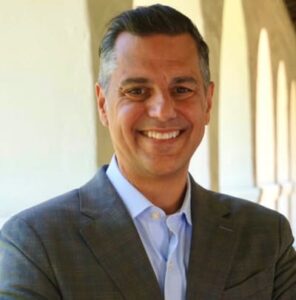
Dr. Gregory A. Daddis is one of the most authoritative contemporary U.S. military historians and a leading expert on the Cold War and the Vietnam War. A retired U.S. Army colonel with 26 years of service, Dr. Daddis combines genuine strategic experience with an outstanding academic career. He currently holds the prestigious Melbern G. Glasscock Chair in American History at Texas A&M University and is the author of numerous best-selling books for Oxford and Cambridge University Press, including his latest book, “Faith and Fear: America’s Relationship with War Since 1945”. Former director of the Center for War and Society and a professor at West Point and Oxford, his research offers a critical analysis of the relationship between American foreign policy, culture, and the use of military force from 1945 to the present.
Q1 – In your latest book, “Faith and Fear: America’s Relationship with War Since 1945”, you argue that U.S. strategy since the end of World War II has been driven by a dual force comprising blind faith in military power and an existential fear of rivals. You also assert that the Cold War era was not only a period of American power projection but also an era of profound psychological vulnerability. Can you explain here how this coexistence of “faith” and “fear” has shaped the strategic decisions of U.S. leaders?
A1 – Since the end of World War II, a bipartisan trend in US politics emerged wherein a vast majority of Americans placed war at the center of how they viewed the outside world. They held faith in war solving nearly any political problem overseas while also fearing, to their core, that the nation’s enemies—often depicted as seeking “world domination”—would use war to threaten the very existence of the United States. In many ways, that tension between faith and fear has only deepened in the decades following the 11 September 2001 attacks on US soil.
Americans feared other terrorist attacks as the global war on “terror”expanded, yet remained faithful that military force, properly employed, would help promote “democracy” in the Middle East region or eradicate enduring threats to US national security across the globe. Clearly, this tension between faith and fear persists as the Trump administration continues to unilaterally deploy force overseas with little thought—or concern, it seems—for the long-term consequences of how war is waged there.
Q2 – Is the current geopolitical rhetoric toward powers such as China or Russia driven by that combination of “faith” in Western institutions and “fear” of the ideological rival?
A2 – I think so, but we should also note that there are practical drivers underpinning our geopolitical approach that exploits faith and fear in ways that only help to further militarize US foreign policy. The military-industrial-legislative complex of which President Eisenhower warned during his farewell address in 1961 depends on fearmongering and the construction of dragons, real or imagined, to slay abroad. Policymakers and business leaders alike require justifications to rally support for a “defense” budget that now exceeds $1 trillion per year. In this way, the “faith and fear” paradigm becomes a useful tool to engender political backing as policy elites seek to maintain such high expenditures for what, in my estimation, have been questionable results.
Q3 – Regarding the strategic involvement of the United States and European countries in the war between Russia and Ukraine, are the same “containment” mental frameworks of the Cold War being applied here?
A3 – I think Cold War containment frameworks still hold some penchant today, even if they are less ideologically motivated than in the past. Classic containment policies, at least as conceived by State Department diplomat George Kennan, spoke far more of Marxist ideology driving Soviet communist projection and the aim of achieving “world domination.” And while communism still holds purchase today from a domestic political standpoint—McCarthyism obstinately maintains its hold over us—I don’t think ideology as deeply relevant these days to Chinese expansion, for example, which is far more focused on economic growth and long-term development. (Of course, military expansionism helps to underwrite these goals, as it does in the United States.) Likewise for Russia, my sense is that traditional security concerns are driving what’s happening in Eastern Europe far more than Cold War-era ideological ones.
Q4 – One of the most thought-provoking arguments in your book is that fear of the Soviet Union often blinded Washington, preventing it from seeing the real weaknesses of the communist bloc. In your view, are today’s political leaders, historians and analysts making the same misjudgment by overestimating the capabilities of the United States’ modern geopolitical adversaries?
A4 – I certainly think that is the case when it comes to our most recent military incursions into Latin America and the Middle East. The Trump administration’s policies seem, to me, far more based on alarmism than judicious intelligence gathering. Thus, as in the Cold War, policy elite today continue to devalue the role of diplomacy when working through complicated issues like nuclear disarmament, regulating competition in a global economy, and ensuring that collective security breeds democratic self-determination rather than increased militarization. Better to be prepared militarily, the argument goes, than to do sorry. And yet throughout much of the Cold War, we never assessed all that accurately what was happening behind the “iron curtain.” Whether in Latin America or Soviet Russia, the “enemy” remained an enigma to us. I think a similar phenomenon is occurring today as exemplified by the continuing debate over the progress of Iran’s uranium enrichment program.
Q5 – You emphasize how American national security has become a sort of “secular faith.” How has this sacralization of foreign policy hindered public debate and internal political dissent?
A5 – In many ways, our secular faith in war meant that those who didn’t accept the nation’s almost compulsory commitment to the preponderance of US military power were branded as unpatriotic heretics. During the Cold War, we saw a form of coerced consensus bred by opportunistic politicians. A false faith in war, taken to its extreme, generated more than just hyper-patriotism. It motivated a kind of xenophobia and nativism that, ultimately, was unhealthy for our democracy. In the process, dissent was driven to the political periphery. It seemed far easier, and far more patriotic, to embrace false promises of easy, if not eventual victory when the nation committed itself to war.
Q6 – In your analyses of the Vietnam War, you have emphasized how mere technological superiority and quantitative destruction of the enemy do not guarantee long-term political stability. Can we find strategic and ethical parallels between the mistakes made by the United States in Vietnam and Israel’s current military approach in the Middle East?
A6 – I tell my students all the time that the war in Vietnam was, at its core, about defining Vietnamese identity and a shared sense of nationalism in the modern, post-colonial era. (Even if the larger Cold War context was important.) The construction of that definition was one that outsiders could not elucidate and thus created immense frustrations both politically and militarily. And for Americans fighting in that war, those frustrations oftentimes led to violence which then further contributed to South Vietnam’s political instability rather than ameliorate it.
I think the same holds true for the Middle East, both during the Cold War and today. Our interventions—whether through direct action or unhindered military aid that we funnel into the region—has tended only to exacerbate violence there, not resolve it. And, for far too long, we have not been an honest broker when it comes to regional peace and resolving the thorny question of Palestinian statehood. We have taken sides in a way that many Americans, at least from polling data, are seeing as indefensible.
Q7 – As a military historian, why do political leaders and defense planners continue to fall for the illusion of a “short and decisive war,” ignoring the historical tendency of conflicts to turn into long, unpredictable wars of attrition?
A7- In my book, I argue that faith and fear created a sort of cognitive framing, wherein war might bring chaos, but it also lures with the promise of influence, even dominance, the chance to reshape or control whole swaths of the entire planet. And, in many ways, we continue to be lured by the mythology of World War II which, though hard-fought, seemingly had an identifiable starting point with Pearl Harbor and ending point with the dropping of two atomic bombs. But the decisive “Good War” was, and always has been, a historical anomaly, at least in American history. This matters because faith in war rests far more on myths than reality and this is why I think a more objective historical reevaluation of our nations’ relationship with war is so important.
Q8 – Throughout history, military language has often resorted to euphemisms to mask violence (with expressions such as “collateral damage” or “pacification programs”). In today’s wars, how does the distorted use of language by governments alter our moral understanding of war?
A8 – In some ways, the current administration has dispensed with euphemisms even as it rails against those critics who judge the current Israeli war a “genocide.” When Trump boasted on social media that “a whole civilization [Iran] will die tonight, never to be brought back again,” he certainly was breaking precedent from former White House occupants. (And speaking in morally inexcusable language, in my opinion.) But he also was leaning into historical vernacular of painting the enemy as brutish “savages” who only understood the language of force. From the perspective of a historian, I think such fear-based talk only invites more violence and bloodshed, but both Trump and his secretary of defense appear comfortable in extolling such Manichean language that leaves little room for dialogue and diplomacy.
Q9 – During the Vietnam War, public opinion was often manipulated with falsified quantitative data. Today, in the age of social media and information wars, the manipulation of the truth no longer occurs solely through omission—such as the underreporting of military and civilian casualties—but through information overload and fake news. What similarities and differences do you see between old-fashioned propaganda and today’s algorithmic disinformation?
A9 – This is an important question that requires all citizens to think more critically about how they consume information related to our nation’s foreign policy and the decisions to go to war. I think there has long been debate about finding the “truth” in war, about recording the “real” war for citizens back home. But our siloing approach to news consumption today makes finding these truths, which was always a complicated endeavor, far more difficult.
The politicization of media has forced a kind of unnatural ‘framing’ on war-related narratives, so we often get a disjointed view of reality. And, of course, news stories long have sanitized the worst excesses of war for public consumption. What all this means is that our citizens should seek ways to develop an aptitude for evaluating optimistic reporting on war, especially information that comes from those who are directing it.
Q10 – In your book Faith and Fear, you highlight how fear of the enemy tends to silence internal dissent, turning the debate on national security into an unquestionable dogma. How do you assess the current trend in Western public opinion toward rigid polarization on today’s conflicts, where anyone who raises doubts about military strategies is often labeled a traitor or an accomplice of the enemy?
A10 – As I noted earlier, I think Americans since 9/11 have tended to see any dissent against war as unpatriotic. Quite simply, that undermines democratic participation in fundamental questions about how, why, and when our country goes to war. Our nation was founded on patriotic dissent and if we lose the ability to cogently yet passionately disagree over our increasingly militarized American foreign policy, we risk losing something very fundamental within our individual relationships with the state.
Q11 – The public perception of a war does not end with a ceasefire, but continues in the way society welcomes veterans and recounts their trauma. Vietnam left a deep wound in the American social tissue. Do you believe that contemporary societies (including Russian, Ukrainian, or Israeli ones) are underestimating the long-term psychological impact these conflicts will have on their populations once the guns fall silent?
A11 – I think Americans understand that the traumas of war last far longer than the actual fighting. And I think we are not alone in that comprehension. Wars are inherently chaotic, destructive, and traumatizing. In many ways, they are meant to be. But this fact reinforces my earlier point that we need healthy debates about why and when the United States decides to go to war. There are long-term damages and sacrifices associated with war, as Brown University’s Costs of War Project clearly lays out for us. So, for me, as we look to the future, we might consider having less faith, less fear, and more wisdom when it comes to war.
Gregory A. Daddis – Professor of History and the Melbern G. Glasscock Endowed Chair in American History at Texas A&M University.
Image Credit: : Yasuo Osakabe/U.S. Air Force.