



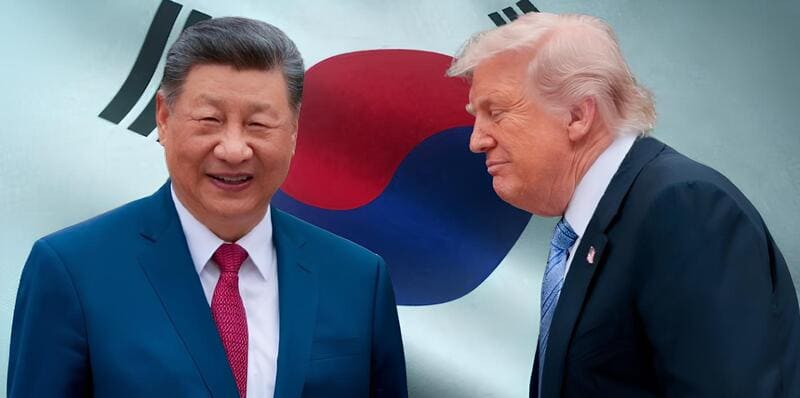
World Geostrategic Insights interview with Jaewoo Choo on how the complex interplay of geopolitical dynamics—particularly between the United States and China—exacerbates South Korea’s vulnerability, as the country faces the dual challenge of strengthening its security alliance with the United States and Japan while simultaneously managing its complex relations with China.
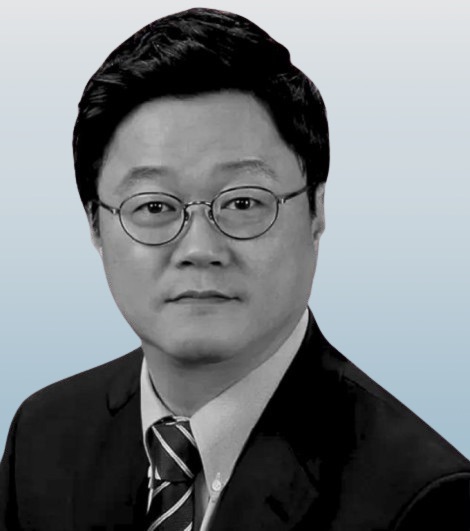
Dr. Jaewoo Choo is a Professor of Chinese Foreign Policy in the Department of Chinese Studies at Kyung Hee University and the Director of the China Studies Center at the Korea Research Institute for National Strategy (KRINS). A leading expert on Sino-Korean relations, U.S.-China strategic competition, and East Asian security, Dr. Choo regularly advises South Korea’s Ministries of Foreign Affairs, National Defense, and Unification. He holds a B.A. in Government from Wesleyan University and an M.A. and Ph.D. in International Relations from Peking University. He has previously served as a visiting fellow at the Brookings Institution and is the author of several influential books, including US-China Relations for Koreans and US and China’s Strategy on the Korean Peninsula.
Q1 – Several observers have described the Beijing summit as a “strategic pause” in the hegemonic rivalry between Washington and Beijing. Do you believe that this apparent stabilization represents a genuine paradigm shift toward “constructive strategic stability,” or is it simply a temporary truce ahead of the upcoming midterm elections in the United States?
A1 – My takeaway from the Beijing summit is that the Chinese side’s reference to “constructive strategic stability” appears to be little more than diplomatic rhetoric. The two leaders announced that the two nations would pursue their own distinct paths in the years to come. China maintained a firm stance with three key demands throughout the recent six rounds of bilateral trade negotiations: The U.S. is being urged to relax regulations concerning high-end technology trade with China, including the transfer of such technology to China and Chinese investments in the U.S. market.
During his visit to Beijing, Trump attempted to engage Xi by discussing the potential export of NVIDIA’s HB200, a decision he made in December 2025. However, his overtures were met with a lack of enthusiasm from Xi. Trump expressed his openness to Chinese investment upon his potential return to the States. In an interview with NBC News on April 15, Marco Rubio asserted that the United States would not engage in relations with China regarding high-end technology. He emphasized the nation’s commitment to maintaining its supremacy and dominance over China in this critical sector.
Chinese investment in the U.S. faces significant challenges, particularly due to bipartisan opposition from Congress that has been evident since 2018. This political landscape makes it unlikely for the president to endorse such investments. Lawmakers have drafted and introduced numerous bills aimed at restricting Chinese investment across various sectors, including real estate, agriculture, the stock market, mergers and acquisitions, telecommunications, artificial intelligence, semiconductor manufacturing, computing, and other high-tech industries.
In a significant move, China declared its intention to invest heavily in semiconductor industries, aiming for self-sufficiency. This announcement coincided with Trump’s visit, suggesting a shift in focus away from previously prioritized agendas during trade negotiations.
Q2 – President Trump has openly described the $14 billion arms sale to Taiwan currently under negotiation as a “good negotiating chip” while promoting agricultural deals and Boeing purchases. How do America’s East Asian allies, particularly South Korea, perceive this highly transactional approach to fundamental regional security commitments?
A2 – There has been no official response regarding this issue. Public sentiment and opinions reveal significant concerns regarding the United States’ commitment to the defense of its allies. Concerns have emerged regarding the United States’ commitment to the purported “modernization” of the ROK-US alliance.
The endeavor necessitates that Korea pursues new acquisitions of advanced and sophisticated weapons and weapon systems, including complementary arms for its missile defense initiative known as the “Three Kill Chain.” This system is slated for completion by 2030, alongside ongoing negotiations for nuclear-powered submarines. Korean analysts and associated organizations express concern that Trump’s use of arms sale commitments as a bargaining tool may adversely impact the ongoing modernization efforts of the alliance with Korea and the plans for weapons acquisitions.
Q3 – The summit did not yield any significant public progress regarding China’s position on the ongoing war in Iran or the crisis in the Strait of Hormuz. How does the Middle East crisis alter China’s influence over Washington in the Asia-Pacific theater?
A3 – Trump and Rubio, particularly Rubio, emphasized that the United States neither requires nor seeks assistance from China in addressing the crises in Iran and the Strait of Hormuz. Rubio noted that all that is required is support from China, while Trump expressed satisfaction in having secured and confirmed China’s stance against Iran’s nuclear ambitions, its tolling system, and its backing of freedom of navigation in the Strait. China’s approach aligns with its preference to steer clear of crises that do not directly pertain to its geographical and strategic interests.
Nevertheless, there are indications that China is actively seeking to mediate a peace agreement in partnership with the Palestinians. The Asia-Pacific theater presents a distinct narrative. It is imperative that this matter be considered independently of the current crises unfolding in the Middle East. China is poised to respond decisively using all available means in the event of a contingency in its immediate vicinity. The nation’s geographical and strategic considerations underscore its readiness to act when faced with potential threats in its own backyard or front yard.
Q4 – Trump and Xi agreed on the common goal of North Korea’s denuclearization. Realistically, does Beijing have any incentive to exert pressure on Pyongyang right now? How do you assess the extent of China’s actual influence on Kim Jong-un’s strategic decisions?
A4 – Xi’s agreement appears to be nothing more than superficial rhetoric. He has already stated that China no longer has any interest in the matter. A series of joint statements made with Putin during their past three summits conveys significant implications. In 2023, one notable omission was the denuclearization formula of North Korea known as “dual suspension,” which calls for the simultaneous halt of ROK-US joint military exercises alongside North Korea’s nuclear and missile tests. In the following year, the second formula, known as “dual processes,” which involved the simultaneous efforts of establishing a permanent peace regime and denuclearization, was abandoned.
In 2024, the responsibilities for the denuclearization of the North were deferred to the concerned parties, specifically the United States and North Korea. Simultaneously, they urged the United States to acknowledge the North’s legitimate security concerns and to condemn all sanctions imposed on the North, labeling these actions as ‘long-arm interventions.’ Given the current situation, the question of China’s influence on Kim’s strategic decisions appears to be irrelevant. However, it remains significant in the context of Kim’s efforts to establish his country’s nuclear power status as legal and legitimate, having successfully enshrined it in the nation’s constitution.
Q5 – The United States and China have agreed to build a relationship based on “fairness and reciprocity.” Does a “cooling” of tensions between the United States and China reduce the risk that South Korea will be drawn into a conflict between major powers, or does it heighten fears that Washington might make concessions behind Seoul’s back?
A5 – South Korea is poised to become embroiled in the ongoing conflict between the U.S. and China in two distinct contexts. The United States is engaged in the sale of advanced weaponry, including intermediary-range missiles and nuclear-powered submarines. South Korea’s reliance on China’s rare earth materials has become increasingly evident, particularly following Beijing’s actions last year, which included imposing sanctions on Hanhwa Oceans and its affiliated companies in the United States. China has implemented an ordinance that imposes sanctions on countries exporting its manufactured rare earth materials to third nations, specifically when those materials are utilized in the production of military equipment and weapons.
In April, China implemented a new ordinance establishing an entity list, which grants the government the authority to impose sanctions on countries that utilize its manufactured goods and components for weapons and military purposes. In the previous instance, negotiations took place between the U.S. and Trump with Xi, focusing on the lifting of sanctions imposed on Korean companies. It illustrates the United States’ dedication to President Biden’s assertion that the nation will not permit its allies and partners to be exposed to vulnerabilities stemming from China’s pressures and sanctions for their collaboration with the U.S.
Q6 – With China actively deepening ties with the Global South and adapting to changes in U.S. export controls and tariff policies, what room remains for South Korea? Can Seoul maintain economic interdependence with Beijing without triggering a backlash from Washington’s technology restrictions?
A6 – This question warrants examination from a reverse perspective. China appears to lack significant interest in advancing economic relations with South Korea. During the summit meetings with Korean President Lee Jae-myong, Xi remarked that “it would take a while before ice melts.” That statement highlights China’s view on the current status of bilateral relations. Seoul’s reliance on Beijing for consumer goods mirrors that of other developed economies, as South Korea’s manufacturing sectors continue to decline amid China’s drive for self-sufficiency in the industrial landscape of the Fourth Industrial Revolution.
Korea has positioned itself at the center of the newly structured global supply chain, with the United States serving as the primary manufacturing force. Meanwhile, the U.S. provides essential technology, while Japan and Western European nations supply the equipment, parts, and facilities necessary for Korea’s production of high-end technology products. In the current division of labor structure, Korea’s adherence to the rules and norms established by the U.S. and its partners for the new global supply chain is likely to mitigate significant backlash from Washington.
Q7 – A number of analysts suggest that middle powers like South Korea must build a “coalition of the willing” to help manage the rivalry between Washington and Beijing. Following the Xi-Trump summit, what concrete diplomatic measures should the South Korean government take to ensure that its strategic autonomy is not sidelined by a G2-led agenda?
A7 – It is evident that Washington and Beijing are set to diverge, each pursuing its own distinct trajectory. In light of the current situation, Korea’s decision is evident: it must maintain a robust and steadfast alliance with the United States. Consequently, South Korea faces limited options for concrete diplomatic actions to secure its strategic autonomy without being overshadowed by a G2-led agenda. Korea faces significant vulnerabilities due to China’s illegal intrusions into its waters and airspace, driven by China’s strategic ambitions for control in the region.
Korea’s waters and skies play a vital role in the defense of Taiwan and the First Island Chain, serving as a significant component of this essential defense line. Korea has demonstrated its inability to independently defend its waters and skies against a formidable nation such as China. Korea is compelled to bolster its alliance with the United States and, by extension, Japan. The strengthening ties among China, Russia, and North Korea, along with the North’s accessible nuclear arsenal, underscore the necessity for enhanced military cooperation between Korea and Japan, the two nations most vulnerable to the North’s nuclear threat.
Q8 – South Korea has historically found itself in a delicate balancing act between its security alliance with the United States and its economic partnership with China. Do you believe Seoul’s room for maneuver has been shrinking in recent years?
A8 – Indeed, as competition between the U.S. and China escalates. Korea is strategically positioned within the labor division framework established by the US in the evolving global supply chain, which hinders its ability to deepen economic and industrial ties with China. Security conditions are increasingly unfavorable for Korea, as China has been encroaching upon its waters and airspace, posing significant threats to the nation’s security and safety. Furthermore, China has diminished its interest in Korea as it has emerged as one of the two dominant powers on the global stage.
Beijing is seeking to exert control over Korea rather than engage in cooperative efforts. It is especially evident through straightforward reasoning. In essence, the principle asserts that my adversary’s ally is considered my enemy, while my friend’s friend is regarded as a friend. The current geopolitical landscape reveals a rivalry between the United States and China, with both nations vying for influence. In this context, Korea aligns itself with the U.S., positioning itself as an adversary to China. Consequently, Korea is perceived as an adversary by Beijing. Korean issues will be addressed and managed within the framework of US-China relations.
Q9 – What are currently the most critical economic and technological issues in relations between Seoul and Beijing, particularly in light of global restrictions on the semiconductor supply chain?
A9 – Korea has established semiconductor factories in China, including Samsung’s facility in Xi’an and SK Hynix’s plants in Wuxi and Dalian. Due to restrictions imposed by the United States, the production of semiconductors at 7mn and below is prohibited. China has a strong desire for these semiconductors; however, it appears to be pursuing the development of its own production capabilities. Samsung and SK Hynix express apprehension that their situation could mirror that of Hyundai Motors in Beijing, where the company effectively shut down all manufacturing lines in response to intensified domestic competition in China. Consequently, preserving these semiconductor manufacturing lines in China presents an ongoing and significant challenge for Korea.
Jaewoo Choo – Professor at Kyung Hee University and Director of China Research Center at Korea Research Institute for National Security.