



By Aman Jaswal
The post-Cold War international system briefly sustained the illusion that great power politics had been dominated by the ethos of liberalism and economic interdependence.

The unipolar moment, influenced by the United States from the early 90’s, appeared to topple the classical power competition. However, this configuration was historically contingent rather than structurally enduring. The contemporary re-emergence of a multipolar system anchored by the strategic interplay between the United States, China, and Russia signals the return of great power politics as a defining feature of international politics.
Within this evolving order, war must be understood not as an aberration, but as a structural necessity, naturally embedded within international politics. Drawing upon the realist theory, particularly the Clausewitzian perspective of war as an instrument of policy, the current understanding of the war dynamics advances three important claims: first, that the essence of international politics is rooted in competition under anarchy; second, that the decision to go to war is governed primarily by considerations of power and survival rather than normative constraints; and third, when initiated, war exhibits an inherent tendency towards escalation.
I – The Essence of International Politics: Anarchy, Competition, and the question of Survival
At its core, international politics is structured by anarchy, the absence of a central authority capable of enforcing order among sovereign states. This condition does not imply chaos, but rather a system in which states must rely on self-help to ensure their survival. Consequently, competition for power and security becomes an enduring feature of the international system.
From a realist perspective, war is not an exceptional breakdown of order but a latent and ever-present possibility within this structure. The persistence of deep-seated disagreements whether ideological, territorial, or civilisational ensures that conflict remains embedded in international life. As such, international politics can be best understood with its subordinate nature to security considerations.
A similar logic underpins the Iran–Israel–United States dynamic. Israel’s strategic posture is shaped by the perception of Iran as a strategic threat rather than an existential one, particularly in light of its nuclear ambitions and regional proxy networks. Iran, in turn, interprets U.S. and Israeli actions as attempts at containment and regime destabilisation. The United States operates within a broader hegemonic framework aimed at maintaining regional order and preventing the emergence of rival centres of power. These overlapping security dilemmas illustrate the extent to which competition, rather than cooperation, defines the essence of international politics.
Looking at another scenario, the Russia–Ukraine war exemplifies this structural logic. Russia’s invasion cannot be fully explained through customary frameworks alone; rather, it reflects a strategic response to the perceived NATO’s eastward expansion, and Ukraine’s potential integration into Western security structures, which were interpreted by Moscow as a direct challenge to its security environment. Within such an anarchic system, such perceptions regardless of their conventional validity are sufficient for a state to respond militaristically.
This is not to suggest that cooperation is absent. Historical examples, such as the Nuclear Non-Proliferation Treaty (1968), demonstrate that even rival powers can collaborate under conditions of mutual interest. However, such cooperation remains contingent upon, and ultimately subordinate to, the imperatives of survival and security. When these imperatives are threatened, economic interdependence and institutional commitments are readily overridden.
II – The Decision to Go to War: Between Clausewitzian Realism and Just War Theory
The question of when and why states resort to war lies at the intersection of two competing intellectual traditions: realism and Just War theory. The former conceptualises war as a rational instrument of statecraft, while the latter seeks to impose constraints on its use.
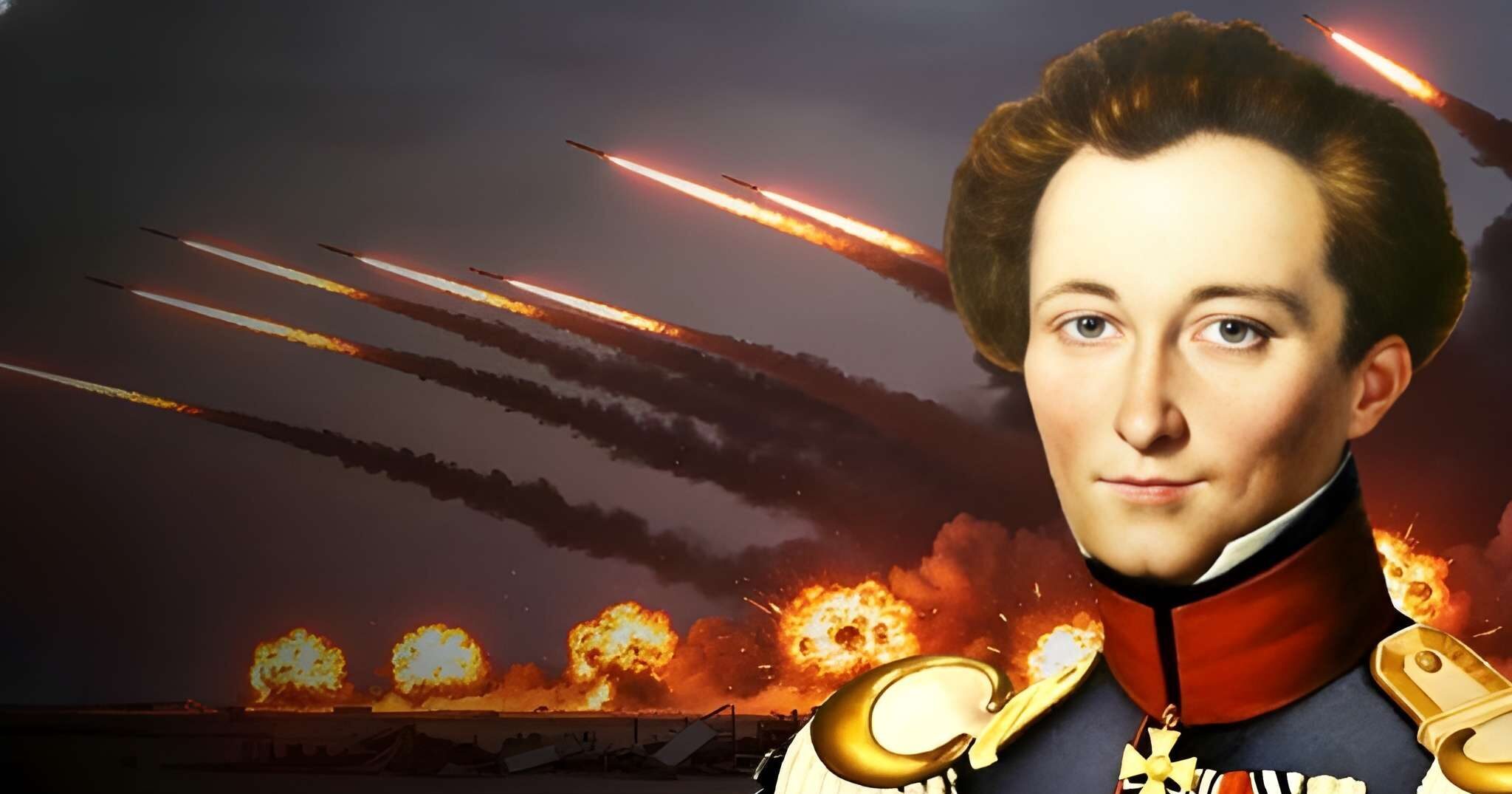
Clausewitz’s formulation of war as “the continuation of politics by other means” captures the essence of this position. War, in this view, is neither inherently moral nor immoral; it is a tool employed by states to achieve political objectives. Decisions to initiate war are therefore governed by calculations of power, interest, and necessity rather than adherence to legal or ethical norms. In contrast, Just War theory and contemporary international law always seek to question such use of force. These include the principles of just cause, legitimate authority, and proportionality. Under this framework, war is justified primarily in cases of self-defence against imminent attack, authorisation by the United Nations Security Council, or humanitarian intervention to prevent mass atrocities. Preventive wars and wars of opportunity are generally deemed illegitimate.
The Iran–Israel–United States confrontation similarly reflects this tension. Israeli and U.S. actions are frequently justified through the language of pre-emption or pre-emptive war, aimed at neutralising imminent threats such as nuclear proliferation. However, critics argue that these actions often extend into preventive logic, targeting potential rather than immediate threats. Iran, for its part, frames its actions as defensive responses to external aggression and regional encirclement. In each case, the justification for war is constructed through competing narratives that reflect underlying strategic interests.
The current war in West Asia lets us understand a critical limitation of Just War theory that emerges in situations of what Walzer terms “supreme emergency,” where the survival of the state is perceived to be at stake. In such contexts, normative constraints are often suspended, and states revert to realist logic. This suggests that while moral and legal frameworks may shape discourse, they are ultimately contingent upon the strategic environment in which states operate.
The Russia–Ukraine war illustrates the tension between these frameworks. From a Just War perspective, Russia’s actions are widely characterised as an unlawful war of aggression, an attempt to alter territorial boundaries and expand influence. However, from a realist standpoint, Russia has framed the conflict as a preventive war aimed at countering the long-term strategic threat posed by NATO expansion. This divergence highlights the extent to which normative and realist interpretations of war can coexist yet remain fundamentally incompatible.
III – Escalation in War: The Subordination of Politics to Military Logic
While war is initiated as an instrument of political purpose, its internal dynamics often bends toward escalation. Clausewitz’s insight into the tendency of war to move towards extremes remains particularly relevant in the contemporary era driven by multiple factors. First, military institutions exert significant influence over the conduct of war. Once hostilities begin, operational imperatives can overshadow political objectives, leading to an incremental expansion of conflict. Second, nationalism serves as a powerful mobilising force, transforming limited engagements into broader societal conflicts characterised by heightened emotional intensity. Third, ideological dimensions, particularly in conflicts framed as existential struggles further reduce the space for compromise.
The Iran–Israel–United States confrontation presents an equally, if not more, volatile scenario. The interplay of direct and proxy engagements, combined with ideological antagonism and nuclear considerations, creates a highly unstable environment. Localised incidents possess the potential to escalate rapidly into regional conflict. In such a context, the Clausewitzian dynamic of escalation is amplified by the presence of multiple actors with divergent objectives.
The Russia–Ukraine war also illustrates these dynamics with striking clarity. What began as a limited military intervention has evolved into a protracted and increasingly complex conflict, involving extensive external support from Western states. The provision of advanced weaponry, economic sanctions, and intelligence assistance has transformed the conflict into a broader geopolitical contest. As the war continues, the risk of escalation—particularly involving nuclear signalling—remains a central concern.
The implications of this dynamic are particularly significant in the nuclear age. The tendency for military considerations to dominate political ones poses profound risks, as escalation may reach levels that exceed the original political objectives of the conflict. This inversion where politics becomes subordinated to the logic of war represents one of the central challenges of contemporary international security.
The persistence of war in contemporary international politics underscores the enduring relevance of realist theory. The anarchic structure of the international system, combined with the primacy of survival and the inevitability of competition, ensures that conflict remains an integral feature of global affairs.
The cases of Russia–Ukraine and Iran–Israel–United States confrontation demonstrate how the essence of international politics, the decision to go to war, and the dynamics of escalation continue to shape state behaviour. While normative frameworks such as Just War theory provide important ethical guidelines, their practical influence is often constrained by the strategic imperatives faced by states.
Ultimately, when political, economic, legal, and moral considerations come into conflict, it is the logic of survival that prevails. This is the central insight of Clausewitzian realism, and it remains indispensable for understanding the role of war in an increasingly multipolar world.
Author: Dr Aman Jaswal – Lecturer of International Relations and security studies at University of Staffordshire, UK, specialising in conflict dynamics across South and West Asia. In addition to his academic work, he has contributed to the training of practitioners through the UK Ministry of Defence, teaching courses on global and regional security, and on the evolution of conflicts in border regions.
(The opinions expressed in this article belong only to the author and do not necessarily reflect the views of World Geostrategic Insights).