



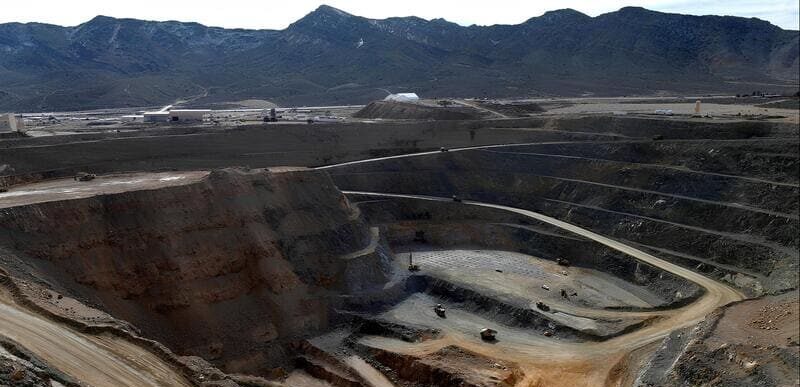
China heavily dominates the world’s rare earth supply chain, from mining to processing and magnet manufacturing. The world’s second largest economy accounts for approximately 70 percent of global rare earth mining production; controlling even greater in the downstream sectors.

Essentially, Beijing refines 90 percent of the world’s rare earths and has a near-monopoly on processing heavy rare earth elements, which are vital for millions of advanced technologies. These lucrative minerals are utilized for and essential components in electric vehicles, wind turbines, and defense systems.
The United States is catching up in the global market of rare earth elements (REEs), while China sees an easy money on it, being the dominant player in the rare earth supply chain; albeit, not necessarily due to the largest reserves but because it controls almost all the world’s rare earth processing and refining capacity. Washington is barred from a bigger scale of competition since it owns limited domestic processing capabilities and often exports its raw earth minerals to China for refinement. This dominance allows China significant leverage for geopolitical advantage, making it the central focus of U.S. efforts to build a resilient and independent supply chain.
In October 2025, Presidents Donald Trump and Xi Jinping reached an official business agreement on rare earth minerals as part of a broader trade truce allowing a one-year suspension of China’s proposed new export controls on rare earths, in exchange for the U.S. lowering some tariffs on Chinese goods. Other countries with significant production or potential that Washington competes with, or seeks to partner with, are Australia, Brazil, Canada, India, Russia, and Myanmar.
More so, Southeast Asia has significant rare earth mineral reserves, with Vietnam and Myanmar holding some of the largest global deposits. Myanmar ranks fourth globally for rare earth reserves; Vietnam is considered an untapped giant with the world’s second largest reserves. Indonesia holds the world’s second largest nickel reserves and significant minerals of tin and bauxite. Malaysia claims to have a large reserve of non-radioactive rare earths; while, the Philippines has critical REEs such as phosphogypsum including yttrium, cerium, lanthanum, neodymium, and nickel, estimated at over 1.2 million metric tons.
A major hurdle for Southeast Asian countries would be the lack of downstream processing facilities in the region, which allowed raw materials of REEs, often exported to China. Irresponsible mining activities, particularly in the Mekong region, have led to significant pollution, raising environmental concerns and creating local health problems. However, there is a growing international push to develop the Association of Southeast Asian Nations (ASEAN) rare earth sector to diversify the global supply chain away from China. By establishing organizations such as the ASEAN Rare Earth Processing Consortium, it could help coordinate investments, research, and technology transfer across the region. Current production levels are low compared to reserves, and processing capabilities are a major challenge, especially in meeting environmental standards.
ASEAN can adopt a mixed approach of both collaboration and indirect competition with China on REEs, often seeking to balance economic opportunities with the need for supply chain diversification and protecting national sovereignty. For instance, Naypyidaw serves as a critical source of raw and heavy rare earth elements for China’s processing facilities. Chinese companies and capital are heavily involved in the extraction in Myanmar’s Kachin and Shan provinces with raw materials shipped to China for refining. Kuala Lumpur has engaged in preliminary talks with Beijing regarding potential rare earths processing plants. This would involve Chinese technical and technological assistance programs with the goal of developing Malaysia’s local industry. Moreover, due to China’s near-monopoly of processing technology and Industry 5.0 infrastructures, the majority of Southeast Asian countries backed with mining capabilities are, by default, integrated to the China-led global supply chain of REEs.
On the other hand, Southeast Asian nations are also pursuing partnerships with Western trade partners, such as the U.S., E.U., and Japan to develop alternative non-Chinese supply chains. Recently, Malaysia hosted Australia’s large-scale rare earth separation plant outside China; it is also negotiating with the U.S. on mineral cooperation agreements to secure independent supply chains. Vietnam has attracted Western-backed rare earth projects as it seeks to develop its own processing capabilities. Thailand signed a Memorandum of Understanding with the U.S. for cooperation on critical minerals to diversify its supply sources. Hanoi and Kuala Lumpur aim to move beyond just extraction (upstream) into processing (midstream) and manufacturing magnets (downstream) to capture more value.
Given ASEAN’s global niche on raw materials for REEs, there are discussions within the association to explore a collective, regional approach to leverage their combined reserves, which account for an estimated 20 percent of the world’s total, and address the challenges of sustainable development and geopolitical competition between China and the United States. While there is an apparent strategic balancing act, all the 11 Southeast Asian nations are navigating a delicate equilibrium between Beijing and Washington.
In short-to-medium range, adopting western processing technology could potentially alienate China, while relying too heavily on China raises national security threats and economic dependence. In response to the undeniable discriminating global supply chain, the ASEAN-centrality economic approach emphasized dialogue with a broad range of various stakeholders to ensure carrying capacity and market commons for the region’s sustainable development; and with ASEAN’s combined economy, it ascends to become the world’s fourth-largest economic bloc, there is a big chance to avoid being forced to choose sides in the largest hegemonic rivalry of the 21st century.
Author: Dr. Chester Cabalza – Founding President of the Manila-based think tank International Development and Security Cooperation (IDSC).
(The views expressed in this article belong to the author and do not necessarily reflect the views of World Geostrategic Insights).