



By Myda Kamran
Since the United States deployed its air defense system, several other countries — whether inspired or driven by strategic necessity — have pursued similar technologies, not only to protect their territory from aerial threats, but also to preserve their deterrent credibility.

The ballistic missile defense (BMD) system emerged as a significant milestone in defense technology. Ronald Reagan’s “Star Wars” speech in 1983 accentuated its unique, futuristic, and ambitious character.
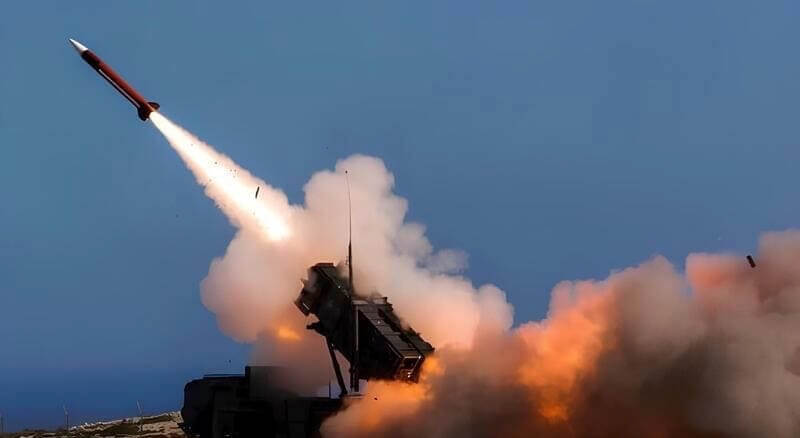
By employing technological and operational synergy, BMD aims to detect, intercept, and neutralize incoming projectiles (drones and missiles) across all three stages of their journey i.e., the boost (launch) phase, mid-course (ballistic) phase, and the terminal (re-entry/descent) phase. By doing so, it creates a ‘shield’ of safety and security, protecting targets, either military or civilian. The technology has been sophisticated since it was introduced but over time, it has become increasingly complex, more integrated and correspondingly, more expensive.
Lauded for its defensive posture and touted as impenetrable, the BMD system has been embraced by several states, located in unstable areas or hosting instability, where it is seen as a strategic hedge to diminish hostile missile attacks. The strength of this system lies in dismantling acts of aerial aggression and/or ballistic coercion by an adversary, by offering the promise of protecting civilian populations alongside critical military infrastructure. By dispelling airborne threats, it subtly erodes the credibility of the enemy’s ballistic missiles and strengthens the state’s deterrence without triggering further escalation.
However, BMD is shrouded by strategic skepticism, given the rapidly evolving drone warfare. Are states placing too much faith, and too many resources, into a system that may not be infallible in practice? As the popularity of BMD burgeons, the uncomfortable question remains: do the strategic benefits of the system truly justify their tremendous cost, or are states investing in a shield with an illusionary shimmer?
The Pitfalls of BMD
The experiences of Israel, Russia and India cast unflattering light on the oft-celebrated BMD system by bringing tactical realities into limelight. Israel’s recent conflagration with Iran stands as a memento mori for states – either aspiring to acquire the technology or the incumbent possessors – as it highlighted congenital flaws in the BMD system. The multi-layered aerial defense system failed to intercept Iranian missile barrage in Haifa, wreaking havoc in the major metropolitan hub. Iran pierced through Israeli fortification by using a combination of hypersonic missiles, cruise missiles and decoys, which exhausted the interceptor missiles.
Failures of the system are not limited to the Middle East. Ukrainian attacks on Russian soil punctured and exposed weaknesses in the highly-prized S-400 missile system. Another chapter of S-400 failure was written during Indo-Pak military confrontation in May 2025 when Pakistan’s fighter jets, namely JF-17 Thunder, reportedly neutralised two of the S-400 batteries; one stationed in Adampur and the other in Gujarat, highlighting fissures in the multi-billion-dollar aerial defense network.
The Achilles’ heel of BMD lies in its inveterate and inevitable vulnerability to saturation. As demonstrated by Iran, the sheer volume of incoming projectiles can easily overwhelm the system, rendering it ineffective and futile. States that lack the financial muscle to procure costly aerial defense, Iran in this scenario, often turn to more economical yet potent countermeasures by shrewd exploitation of this inherent vulnerability among other operational gaps such as inability to distinguish between actual warheads and decoys. The system is therefore highly porous and precariously gossamer under fire.
Acquiring BMD paraphernalia is one challenge; sustaining its operational readiness, functionality and efficacy is an entirely different burden on the state’s fiscal and logistical capacity. According to the figures unveiled by The Marker, a prominent Israeli business publication, Israel spends an estimate of $285 million per night solely on its missile defense operations. This number alone is a staggering testament to the astronomical cost of maintaining such high-tech defensive infrastructure, that can be easily disrupted by the adversaries given its permeability.
The staggering cost of the system might have been justified, had it fulfilled the promise of regional stability, assured national security, and/or guaranteed protection against any airborne threat in the future, but it has demonstrably failed to deliver any of these outcomes. It has inadvertently exacerbated geopolitical risks, especially in South Asia, by giving rise to hostile arms race, heightened regional tensions, and escalation of conflicts. In the case of India and Pakistan, BMD has disrupted the delicate strategic balance, raising the odds of miscalculations and the likelihood of pre-emptive strikes between the two states.
Alternative Policy Options
Defensive capabilities – especially those designed to neutralise offensive technologies – are significantly more costly than offensive technologies themselves. They are time-intensive and demand gruelling years of meticulous research, arduous testing and painstaking effort to ensure high levels of precision and success against a wide range of threats. In pursuit of security, states often over-invest their resources in defensive systems that may offer unsatisfactory returns in the wake of an attack.
BMD aspirant states should take lessons from the cautionary tale of the system’s failure, particularly in the face of drone warfare. The allure of aerial defense must be strengthened by strategic realism, by considering alternate options. States can allocate its resources toward sustainable, more innovative designs to achieve national security objectives. One prime example of such innovation is the RADAR suspension technology, used by Iram to render its drones virtually undetectable. This very technology allowed Iran to breach seemingly unyielding Israeli aerial defense.
By pursuing cost-effective countermeasures – that neither drain its coffers nor compromise its national security – states can offer reliable protection to its citizens. Advancement in military technology has birthed faster, increasingly maneuverable and more sophisticated drones/ missile, which can evade and outfox interception technologies, even the most expensive, cutting-edge BMD. Such technology will lower maintenance demands and impart a rather sustainable economic footprint as a bonus.
Conclusion
Agility lies less in the fortress and more in its foundations and in the case of Ballistic Missile Defense, the cost of agility outweighs the benefits. Undoubtedly, BMD technology is marvel of human innovation but incidents such as Iran-Israel military confrontation, Russia-Ukraine war and India-Pakistan standoff, compel thorough reassessment of such exorbitant investments in static defensive technologies that are riddled with flaws. So far, the BMD system cannot withstand the dynamic threats of drone warfare. While future alternatives hold promise, BMD in its current shape remains unsustainable and a fragile solution to aerial security challenges.
Author: Myda Kamran – Researcher and analyst based in Pakistan.
(The views expressed in this article belong only to the author and do not necessarily reflect the views of World Geostrategic Insights).
Image Credit: U.S. Department of Defense/AP