
World Geostrategic Insights interview with James (Jim) Lawler, a former CIA operative, on the essential talents, skills, and human traits needed for effective work in espionage, and successful recruitment of foreign spies; his most significant achievements; the current threats posed by weapons of mass destruction; and the link between his spy novels and real-life espionage operations.
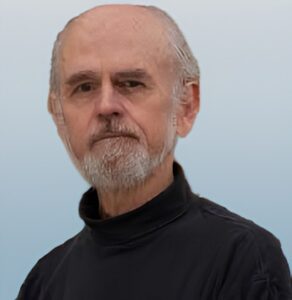
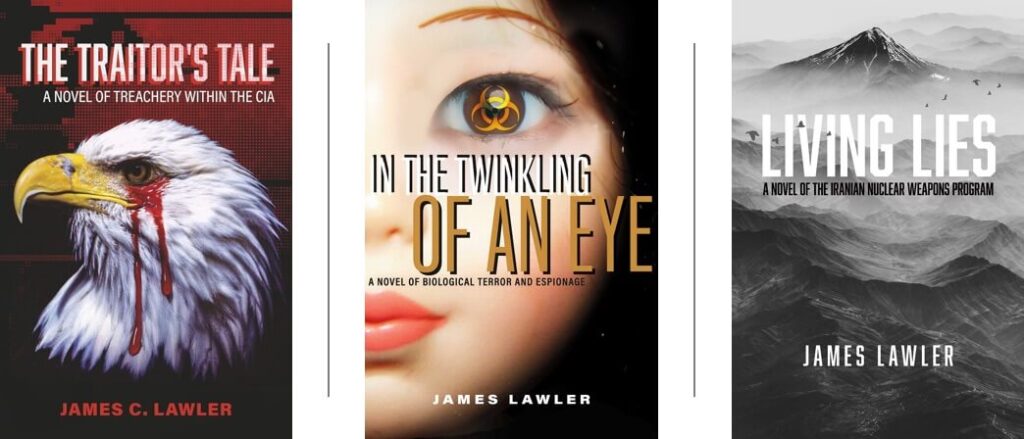
James (Jim) Lawler served for 25 years as a CIA operations officer in various international posts and as Chief of the Counterproliferation Division’s Special Activities Unit. He was a member of the CIA’s Senior Intelligence Service from 1998 to 2005. Lawler was a specialist in the recruitment of foreign spies, and he spent over half of his CIA career battling the proliferation of weapons of mass destruction. He is currently a renowned speaker on insider threats in government, industry and academics. Jim is the author of three espionage novels: Living Lies, an espionage story of the Iranian nuclear weapons program, In the Twinkling of an Eye, which is about recruiting a spy at the heart of a devastating covert Russian-North Korean genetic bioweapons program, and The Traitor’s Tale, which deals about treachery and treason deep within the CIA.
Q1 – You worked for 25 years as a CIA operative. How did you become a spy? What talents and skills are needed to work in espionage? What human traits, and backgrounds, can be beneficial for espionage roles?
A1 – Yes, I worked for 25 years as a CIA operations officer, and it was really almost by accident that I got into this peculiar profession. I was a 3rd year law student, my last year of law school at the University of Texas in Austin, Texas, and like any person who’s in their last year of either graduate school or law school, I was very interested and focused on finding a job. And so lo and behold, the Central Intelligence Agency posted a notice that said that they were coming to the University of Texas Law School to hire attorneys for the Office of General Counsel. Because like any large bureaucratic organization, the CIA needs attorneys either to keep them out of trouble or sometimes to get them out of trouble.
So, out of curiosity, I decided to go to this interview, and the gentleman who was interviewing me was a former operations officer named Mr. Bill Wood. We got about 2 minutes into this interview. And Mr. Wood looked at me and he said, Jim, have you ever thought about working for the clandestine service? And I said, no, sir, I’m not even sure what the clandestine service is because this was back in 1976 when there was not much publicity about what CIA did, certainly not among my contemporaries and my peers. So he looked at me and he said, Well, Jim, he said, like I said, I think you’d be good at this profession, but I can’t tell you much about it. So my curiosity was really piqued.
I took the application home with me that night, but reality sunk in when I recalled that my mother-in-law, my wife’s mother, was very ill, and so there was virtually no chance that I could take a job with the CIA in Washington. Move 1500 miles away from our home in Houston, Texas, and then for overseas assignments thousands of miles away.
It just wasn’t going to happen. So the next day with a little bit of sadness, I returned the application and told Mr. Wood that the timing just was not right. So instead of trying to go to work for the CIA, I went into a family business. We had a metal components business.
We fabricated structural steel and sheet metal for metal buildings in Texas and the surrounding states. And I was good at that as, you know, certainly as a salesman, I think I tripled our sales in the three and a half years that I was there. But even though I was making a lot of money, probably more money than I’d ever make again in my life, I was very unhappy and I just did not feel like the metal building business was something psychologically fulfilling.
I had this need for that kind of fulfillment, and I wasn’t getting that just working for my father. What’s more, I never knew my true worth. Was I really that good, or did I have this job simply because I was the owner’s son? So I wanted to put myself to the test to prove that I was worth something on my own, without my family’s help. Unfortunately, at that time, my wife’s mother had passed away.
And so, after three and a half years at the family business, I was coming home almost every night complaining about how unhappy I was at work, until my wife finally said to me, “Jim, either do something about it or stop complaining.” When you think about it, that’s great advice. You don’t have the right to complain if you’re not willing to do something about it.
So I had kept Mister Bill Wood’s card, and I wrote him a letter and told him that 3.5 years earlier I wasn’t ready for the opportunity he was offering me, but now I was. So I sent the letter and about three days later I got a call at the office from a young woman who said, “Mr. Wood received your letter. He was wondering if you could meet him next Thursday at 3:00 p.m. in the lobby of the Holiday Inn on the Gulf Freeway in Houston.” And I said, “Yes, I can be there.”
So I showed up for this interview. And Mr. Wood and I talked for about 2 hours, and he said, Jim, I’d like to fly you to Washington in a couple of weeks for about 3 days of testing. So I flew to Washington and had the testing, came back, and about 3 or 4 months later, they invited me back for another 2 or 3 days of testing and interviews and a polygraph test. A lot of people mistakenly think a polygraph test is a lie detector test, but it’s not. It’s a test that measures stress. I’m not a big believer in polygraph tests, but it’s compulsory if you want to go into the intelligence community.
So I took that. I did fine, and a few weeks after I got home, I got a phone call one day and the person on the other end said, Mr. Lawler, we’d like to offer you a job as a CIA case officer, or also known as an operations officer. And told me what my starting date would be, so I said fine. The crazy thing is that I had no idea what they expected me to do as an operations officer. I really didn’t, but I was so miserable in Houston, Texas working for my father’s company. I mean it was so meaningless. I would have taken a job anywhere.
So we packed up the car a few weeks later and we moved to Washington. And on February 19, 1980, I began my career as a CIA operations officer. Again, not knowing exactly what they expected me to do. But I found out. To be blunt, they expected me to manipulate people, to exploit people, to subvert people, to suborn people, and to convince them to become spies for the United States, to be traitors to their country or to their organization. And I found out that not only was I pretty darn good at it. But I enjoyed the hell out of it. I really enjoyed being a CIA operations officer.
People sometimes ask me. What it takes to become a spy, I mean, what talents and skills are needed to work in espionage, and I’ve made a list of about 10 traits that I think are essential to becoming a CIA operations officer, especially one whose focus is on recruiting foreign spies. Number one is curiosity.
I’m a naturally curious person. And I think that being curious is an essential quality of being a CIA operations officer. Secondly, keen listening ability. You don’t recruit people when you’re talking, you recruit people when you’re listening. The third quality is extreme empathy. To be able to put yourself inside the mind of another person and feel what it’s like to experience their stress and to know how to address that stress. Number 4, patience: sometimes it takes a long time to recruit someone. The longest it took me was ten years. For the first nine and a half years of that relationship, I didn’t see anything that really gave me an advantage in recruiting that person, but things changed, and by the tenth year, this person was very recruitable, almost recruiting themselves.
The 5th quality is persistence and laser-like focus. I know that some of the times where my recruitment attempts failed, it was because I wasn’t persistent enough and I wasn’t focused enough. The 6th quality is creativity. We could all use more creativity. If one path doesn’t work, you need to figure out a different way, and just keep at it, again, persistence and creativity. The 7th quality I would call careful observations of stress factors in people’s lives. I never once recruited a happy person. You recruit people that are under stress. The 8th quality is controversial because I call it ruthlessness. What I mean by that is never forgetting why you’re doing this. You’re not doing this simply to make a friend somewhere, you’re doing this for the national security of your country. And so the other thing about ruthlessness is not being afraid to be turned down, don’t fear failure.
In fact, I tell students of mine, if you’ve never had a recruitment pitch turned down, you probably haven’t pitched enough people. You only learn a lot of times by failure.
One of my favorite talks and students, I’m teaching recruitment tech techniques to, I call it my favorite failures. I discuss the reasons why a recruitment pitch failed and what I should have done differently and what I hope to do differently in the future because you learn more from your mistakes. The other thing about ruthlessness is not being afraid or shy about possibly offending the person you’re trying to recruit. You just have to take that risk along with the rest of what you do. It’s a risk you run.
The ninth quality of a successful operations manager, particularly a recruiter, is having a strong, persuasive personality And in the final quality, which is probably the most mysterious, is what I call mastery of metaphysics. Metaphysics, in my opinion, is a short label I give to a neural connection that the recruiter makes with the target. It’s an invisible neural link and I can feel it, and so can the target, and the target becomes almost helpless as the recruiter manipulates that person into doing what they want, into becoming a spy.
Q2 – You are a specialist in human intelligence (HUMINT), the intelligence activity based on gathering information from human sources, and as a member of the CIA’s Senior Intelligence Service (SIS-3), you have achieved outstanding results in recruiting foreign spies. How would you explain your success in this field? What techniques, methodologies and strategies did you use to recruit people and convince them to betray their country or organization?
A2 – My success as an operations officer is probably consistent with the 10 qualities that I, I just listed in question number one, I mean, I am a naturally curious person. I think if I hadn’t become a case officer, I bet you I would have been very happy being a psychologist or a psychiatrist.
I am genuinely interested in all the people I meet. I sometimes say that they are like little snowflakes, they are all different. And I like to understand what drives people to act in a certain way, and I genuinely empathize with the people I recruit. I’m not saying that I would be friends with these people in other circumstances, but I can understand them, all of them, regardless of who they are. We may not like them or their government.
There is a reason why they are like that. It is okay, and the key to success lies in understanding what drives this person to act in a certain way. How can you connect with them and convince them to join our team?
I use persuasion, I use kindness, I use what we call the golden rule, meaning do unto others as you would have them do unto you. And so ultimately, to convince someone to betray their country or organization, you have to offer them an opportunity to join a different team, to be on your team.
Earlier, I mentioned that it once took me ten years to recruit a particular target, and the first nine and a half years of that relationship failed to find anything that really stressed this person out. His ethnic group was the most important in his country. He was single, happy, and wealthy.
But things change. Things changed with his government. His ethnic group lost power and another ethnic group rose to power and took control of the country. And after about nine and a half years of knowing him, he sent me a very frustrating email saying “Jim, I could work 12 hours a day, or even 24 hours a day, 7 days a week, and I would never get promoted. How can I pledge allegiance to a country that treats its citizens this way?
I knew he was very stressed, he felt betrayed, and that’s why people sometimes betray their country: because they feel betrayed and just want to settle the score. So I suggested we meet in another country. And it took me about 30 seconds to abandon the pretense of being a State Department official and say to him, “You know, I’m actually a CIA operative, and I never wanted to burden you with this, and you, if you suspected it, were kind enough not to confront me, but I’d like you to join our team.”
And he said, “now I’ve got something to believe in”. So it turned out to be a very successful relationship. He returned to his native country. He worked at the Ministry of Foreign Affairs. When September 11 happened, watching television and seeing the twin towers in New York collapse after being hit by Al Qaeda planes, he was very moved.
He was almost at risk of counter-espionage because his colleagues at the Foreign Ministry were watching him and asking him why he was so moved by what was happening in the United States. He said to me “Jim, what they don’t know is that I’m now part of your team.”
So it’s like a transfer of loyalty from their country to ours, and you convince them that it’s in their best interest and that you really care about them, and we really do care. We’ll go to hell and back to protect our secret assets, the spies we recruit.
Q3 – To carry out your duties as a CIA operative and advance U.S. national interests, I imagine you had to violate the laws of foreign countries—perhaps not only those of “rogue” or rival countries, but also those of countries that are friends and allies of the U.S. Is that correct?
A3 – Did I violate the laws of foreign countries, perhaps not only those of rogue or rival countries, but also those of countries that are friends and allies of the United States? Yes, I confess I did. I’m paid to break foreign countries’ laws, not to break our laws, not to break US laws, but foreign countries’ laws.
There are 5 exceptions to that, what I’m just saying, and that’s what we call the five eyes. The 5 eyes consist of the United States, the United Kingdom, Canada, Australia, and New Zealand. We do not carry out operations typically in those countries without full knowledge of our liaison partners, nor do we recruit people from those countries, but with that exception, I’d say we do, in fact, and I have in fact.
We carried out clandestine operations in countries that we might consider to be our allies. Now frequently we work with the foreign country’s liaison service in a joint operation, but occasionally we find that we have to do things unilaterally.
Q4 – Your career has spanned significant historical events, including the dissolution of the Soviet Union, the emergence of post-Soviet Russia, the aftermath of 9/11, the Iraq War, the increase in terrorism, and the spread of weapons of mass destruction. Could you mention here one of your most significant achievements?
A4 – My most significant accomplishment, I would consider to be the fact that I led the team which discovered, penetrated and disrupted the A.Q. Khan Pakistani network, the most dangerous nuclear weapons network in history. A.Q. Khan was a skilled metallurgist who was educated in Europe. He worked for a company made up of Germans, Dutch, and British people called Urenco, which produced high-speed centrifuges for enriching uranium for nuclear power plants. However, if uranium is enriched to a certain degree for the isotope uranium-235, it can also be used for nuclear weapons. It was precisely these centrifuge designs that Dr. Khan stole and took to Pakistan, enabling this country to have its own nuclear weapons program. A.Q. Khan took nuclear proliferation private, and was a powerful individual with unique control and access to nuclear weapons. He dealt on a personal basis with the Libyans, not as a representative of Pakistan.
However, we were able to disarm Libya thanks to the impeccable information we gathered on the Libyan nuclear program. And so, in 2003, Muammar Gaddafi decided that perhaps it would be better to be friends with the United States rather than enemies like his Iraqi cousin, not really a cousin, but an Arab brother, Saddam Hussein. So he contacted the British and American governments and asked them what was necessary to normalize relations. The firm request from both governments was that he give up his weapons of mass destruction program, and he replied, “Okay, I’ll do it.”
Unfortunately, when our nuclear negotiators met with their Libyan counterparts, the latter denied having a nuclear weapons program, and so, as I said, we had infiltrated the network and knew precisely that there was a ship called BBC China loaded with hundreds of thousands of nuclear weapons components bound for Libya.
We managed to divert that ship to the port of Taranto, Italy, where these five 40-foot containers full of nuclear components were unloaded from the ship. And so, when the ship, the BBC China, docked in Tripoli, it no longer had those components on board.
Our negotiators met with the Libyan negotiators, who again denied having a nuclear program. Our chief negotiator then asked them how they explained the five 40-foot containers full of nuclear components that we had seized from the BBC China, currently docked in the port of Tripoli. They asked for a suspension and returned shortly after, saying: “You are right, we do have a nuclear program,” and so all that equipment was sent back to the US or elsewhere. Libya has basically capitulated on the issue of weapons of mass destruction, so I believe that the nuclear weapon we are talking about was equivalent to the same power of 14-15 kilotons that destroyed Hiroshima and killed over 140,000 people in 1945.
I am very pleased that my team managed to prevent Muammar Gaddafi from acquiring nuclear weapons. Because only nine years later, in 2012, he was overthrown, and as an analyst once told me, Jim, imagine if your team hadn’t disarmed Libya, they probably would have used those nuclear weapons against their own people, so it was a very satisfying result, and in 2007 we received the Trailblazer Award for this achievement.
Q5 – You spent well over half your career at the CIA in countering the proliferation of weapons of mass destruction, by preventing the spread of nuclear and biological weapons technology to nations that do not possess them. Is this still a serious threat to the international community?
A5 – Does the spread of nuclear and biological technology to rogue nations still pose a serious threat? Absolutely. And I declare for the record that, with regard to Iran’s nuclear program, not only do I fear that this country may acquire nuclear weapons, but I also realize that the mullahs in Tehran are neither stupid nor crazy. They know that if they used a nuclear weapon against, for example, our ally Israel, it would respond with many nuclear weapons. Israel is estimated to have well over 100 nuclear weapons, so I do not fear that Iranians in possession of a nuclear weapon pose a serious threat to Israel.
What I think is that if Iran had a nuclear weapon, it would trigger a nuclear pandemic in the Middle East, where the Turks, the Saudis, the Emiratis, the Egyptians, all in a very unstable region, would want to have their own nuclear program. That to me would be a nuclear pandemic, and the chances of an intentional or accidental release of nuclear weapons would increase exponentially.
Q6 – You are the author of three spy novels that explore themes of betrayal and human deception, reflecting on the complex motivations behind espionage, summarized by the acronym MICE (Money, Ideology, Cowardice/Blackmail, Ego). Your third novel, The Traitor’s Tale, is about a mole in the CIA and is full of twists and turns, betrayals, revenge, murders, chase scenes, and love stories. Are your books just fiction, imaginary spy novels, or are they based on real situations, operations, and stories that you and your colleagues have actually experienced and that you recount in fictional form?
A6 – Many people ask me if the various spy books and novels I have written, such as “Living Lies”, “In the Twinkling of an Eye”, and the latest, “The Traitor’s Tale: A Novel of Treachery Within the CIA”, are just works of fiction or if they are based on real situations and operations. I would have to answer that they are fictionalized stories, thinly veiled from many things I have done or know about, and that many of my characters are actually based on people I know. I feel like a portrait painter.
A portrait painter doesn’t sit down at an easel and start painting without a model. Well, many of the people I know are models for the characters in my books, especially the ones I call the good guys. All the good guys in my various books are typically based on real people I know, people I admire and respect. I always ask their permission before I do this, then I ask them if they want to use a pseudonym, a fake name, or not, then I study these people, and I always enjoy writing about my friends. Many are former undercover case officers or, in some cases, they’re just friends of mine who are so brave that I’ve modeled my characters after them.
So there’s a lot of reality and a lot of resemblance in my three novels. All the novels are available on Amazon, and many people, including former CIA director George Tenet, have told me that these are some of the most realistic spy books they have ever read. Again, it’s fiction, but often based on real espionage situations, things I’ve experienced.
I have to have them approved by the CIA’s pre-publication review board. But they have been very cooperative with me, and of course, if there is anything slightly classified, I remove it, but on the last two occasions, both for “In the Twinkling of an Eye” and “The Traitor’s Tale,” they had no objections to anything I wrote and were very quick and efficient in granting me clearance.But they are often based on real technologies, on actual espionage situations, on things I have experienced firsthand.
Q7 – Since retiring in 2005, you have been providing specialized consulting and training services to the intelligence community, and the corporate sector, on espionage techniques and companies internal threats, including those posed by people who betray the trust placed in them. Can you give us more details about the content of your courses?
A7 – In recent years, I have reduced my consulting and training activities so that I can devote more time to writing and lecturing, but I continue to provide some training courses, on internal threats, to the academic community and American companies, where I talk about how I recruited foreign spies, people embedded in companies or even universities, people who would steal extremely important research and developments.
In the United States, we lose billions of dollars every year in research and development because of foreign spies who steal this material, and of course, the worst spy is always the one who is incorporated within a company. So I give lectures on how to identify these types of people, the disgruntled people, and how, hopefully, to mitigate and control the risk. And I still do that. If anyone is interested in these courses, they can find more information on my website https://www.theguildlibrary.com and contact me.
James “Jim” Lawler – Former CIA operations officer, currently a consultant and trainer on internal threats, lecturer and author of books.