



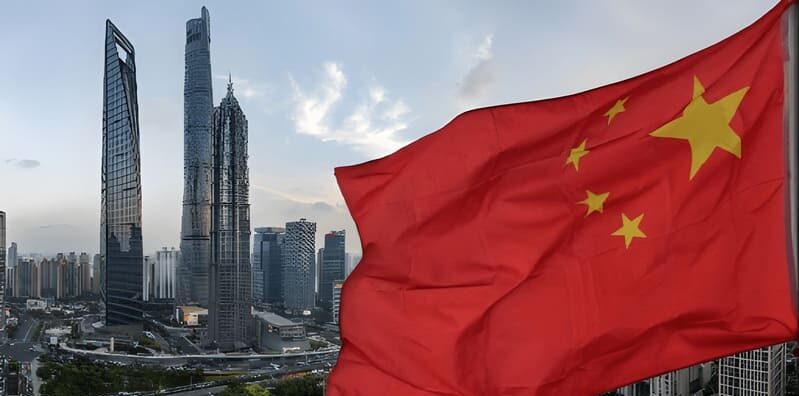
The General Secretary of the Chinese Communist Party, Xi Jinping, emphasized that the formulation and implementation of the 15th Five-Year Plan (2026–2030) for national economic and social development represent an important means for the Party to govern the country. The period of the 15th Five-Year Plan constitutes the first phase in achieving the Party’s second centenary goal and a crucial period for the People’s Republic of China to advance toward substantial modernization by 2035.
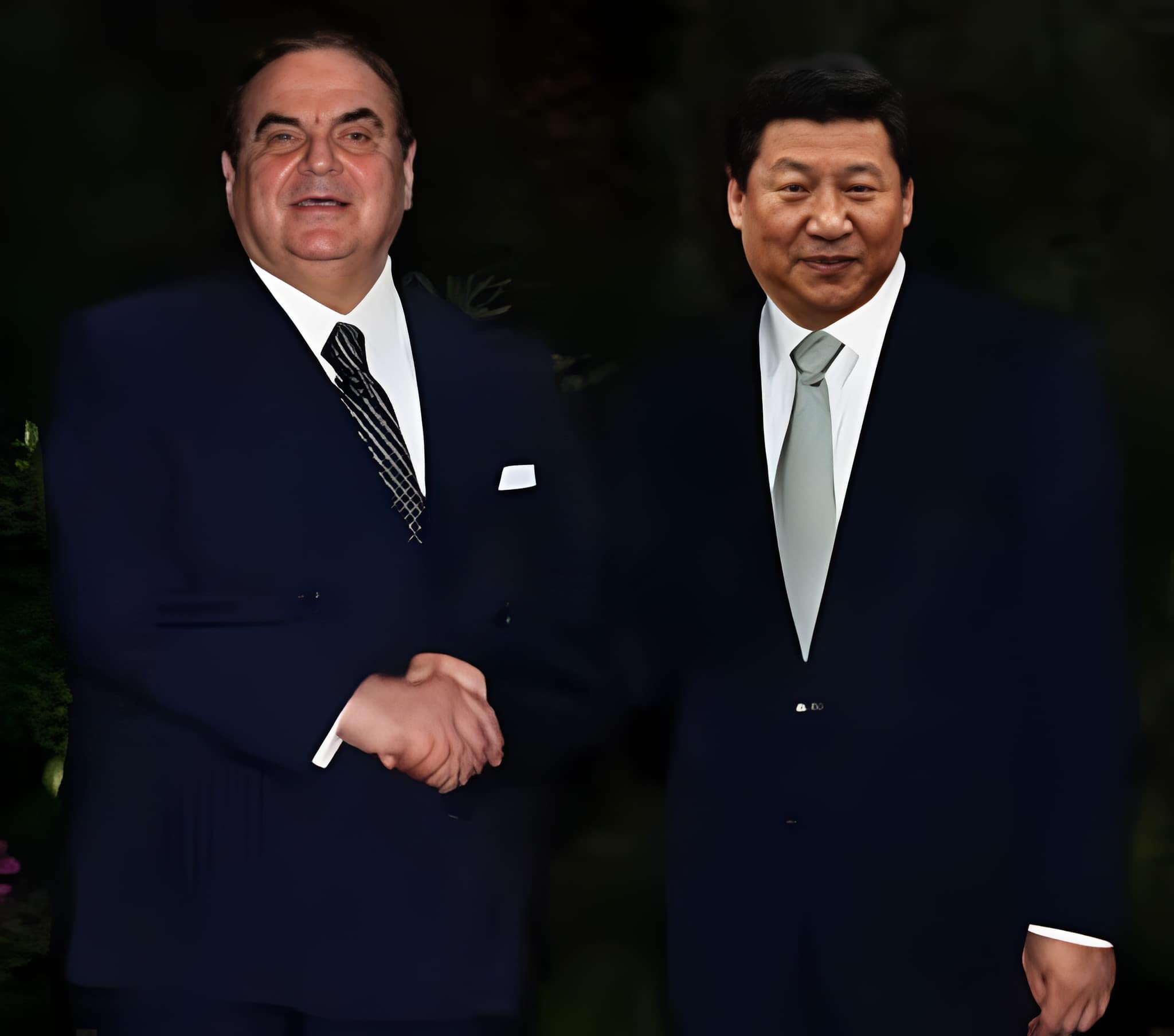
The 15th Five-Year Plan, a crucial element in the country’s progress toward achieving modernization by 2035, is of great importance in guiding economic and social development over the next five years and beyond. In this new era, the 15th Five-Year Plan will face challenges such as rapid changes in the global economy, profound shifts in the regulatory landscape, and discrepancies between strategic positioning and actual implementation. The National Development and Reform Commission and relevant local agencies have launched preliminary research to ensure that local plans can fully address current needs and promote high-quality economic and social development.
The 15th Five-Year Plan for National Economic and Social Development of the People’s Republic of China was formulated in accordance with the “Guidelines of the CPC Central Committee on Formulating the Five-Year Plan for National Economic and Social Development.” It primarily clarifies the country’s strategic objectives, defines the government’s key tasks, and guides and regulates the conduct of social entities. It represents the fundamental blueprint for building a modern socialist country in all respects and the common action program for all ethnic groups in the country.
The 15th Five-Year Plan period plays a crucial role in the process of substantially realizing socialist modernization, serving as a link between the past and the future. It is a critical period for consolidating the foundations and making all-out efforts. We will continue the struggle to achieve significant progress in strategic tasks related to the overall situation of modernization with Chinese characteristics, in order to lay a more solid foundation for the substantive realization of socialist modernization.
Starting from a new point, the foundation for China’s development is more solid, the context in which it operates has undergone profound and complex changes, and it faces new opportunities and challenges.
Already during the 14th Five-Year Plan period (2021–2025), China has made significant progress in its development. This period marked the beginning of a new journey toward building a modern socialist country in all respects, and the development of the People’s Republic of China has been an extraordinary and remarkable process. Faced with a complex and unstable international situation and arduous domestic tasks of reform, development, and stability, the CPC Central Committee, led by Xi Jinping, has united and guided the entire Party and the people of all ethnic groups across the country to overcome difficulties and move forward. It withstood the severe impact of the COVID-19 pandemic, effectively responded to a series of major risks and challenges, and propelled the cause of the Party and the country toward new and significant milestones.
Since the centenary of the founding of the Communist Party of China (2021), a new journey has begun, spanning three five-year plans—the 14th, 15th, and 16th (2031–2035)—to achieve socialist modernization by the aforementioned year. The 15th Five-Year Plan (2026–2030) will be crucial as it will bridge the past and the future.
Following the mid-term review of the 14th Five-Year Plan, preliminary research for the 15th Five-Year Plan had already begun, focusing primarily on trends, strategies, policies, and major projects. In particular, the most far-reaching projects required a longer period of research and experimentation.
Based on preliminary studies, stakeholders further focused on key areas, addressed several important issues, and formulated the fundamental ideas for the 15th Five-Year Plan; conducted key analyses and assessments of the international and domestic development context and conditions; identified the main contradictions and risks in economic and social development; proposed development objectives for the next five years in line with long-term strategic tasks; and formulated general considerations for promoting development.
The development environment is an important component of the strategic analysis that must be conducted in the formulation of plans, as China’s 14th Five-Year Plan does. Only by correctly analyzing the development environment and accurately assessing trends is it possible to scientifically propose objectives and tasks.
From an international perspective, the world has entered a new period of turbulence and change, with an epochal transformation accelerating and uncertainties soaring. Compared to the 14th Five-Year Plan, the most significant change in the 15th is precisely the international context, which has undergone profound changes during the planning phase, with a marked increase in challenges and unfavorable factors. Competition and rivalry among major powers could intensify further, with potential struggles for control and influence in an ever-increasing number of sectors; compared to five years ago, the global governance structure faces greater instability, the international order may be redefined, and geopolitical conflicts and security risks will certainly increase.
In the field of science and technology, China’s PR is in a phase of accelerating progress amid a new wave of technological revolution and industrial transformation, especially since artificial intelligence technology has entered the phase of full-scale application. On the one hand, competition in basic research will intensify further, which could create a “bottleneck” effect; on the other hand, if a deep integration between new technologies and industrial advantages can be achieved, China’s PR may be able to assume a leading role in future global competition.
Regarding trade, it is believed that during the 15th Five-Year Plan period, the position of countries along the Silk Road in China’s foreign trade will continue to improve; the trend of relatively rapid development in services and digital trade will continue, and more competitive products—including corporate services, professional services, support services, operational solutions, distribution, delivery, consulting, and marketing activities—will enter the global arena.
During the 15th Five-Year Plan period, the People’s Republic of China will usher in an era of comprehensive international exploration and expansion. They are just a prelude: Black Myth: Wukong and Ne Zha 2, the two giants of 2024–2025, are projecting Chinese mythology and its animation/gaming onto the global stage with unprecedented artistic and commercial success: Ne Zha 2 has broken box office records, while Wukong has redefined the Action RPG genre. Action RPGs (also known as action role-playing games) are a video game subgenre that blends the progression and storytelling of role-playing games (RPGs) with the real-time combat typical of action games. Unlike classic turn-based RPGs, they require quick reflexes, manual dexterity, and real-time strategy, offering fluid and dynamic gameplay. What China’s RP will share with the world will not only be Chinese products, culture, and creativity, but also the aesthetics and lifestyles of the Chinese people: the so-called soft power, currently dominated by the United States of America.
From a domestic perspective, the country will continue to face insufficient effective demand, with closely intertwined short-term problems and medium-to-long-term structural issues. China’s economy is currently in a phase where downward pressure on the economy remains relatively high, particularly as the contradiction of low effective demand is still very evident. At the same time, issues such as business sentiment, risks in the real estate and financial sectors, and so on, also persist. In the current economic context, these problems could extend into the early stages of the 15th Five-Year Plan. And this, too, would represent a significant change. In planning the 15th Five-Year Plan, it is necessary to take into account the challenges and problems currently facing the economy. Some of these problems are structural and cyclical in nature and may continue to pose a challenge during the Plan’s implementation period.
The demographic issue should also be mentioned. Demographic factors are powerful and significant—a classic “gray rhino”—that constantly influence overall changes in the economic and social landscape. In 2021, China’s population peak was reached earlier than predicted. Negative population growth, declining birth rates, and an aging population will become the baseline conditions for China in the future. We must anticipate these changes and plan for demographic issues in a systematic manner.
In addition to outlining development plans for 2021–2025, the 14th Five-Year Plan also provided a long-term vision for the subsequent fifteen-year period from 2021 to 2035. The 14th Five-Year Plan further refined the timeline and roadmap for the objectives already defined at the 19th National Congress of the Communist Party of China (October 18–24, 2017), fully demonstrating the guiding role of China’s five-year plans for development cycles and phases, as well as for medium- and long-term work, and also reflecting the “pace” of promoting development. The 20th National Congress of the CPC (October 16–22, 2022) further outlined the goals for 2035, and the planning and formulation of the 15th Five-Year Plan has been updated accordingly.
The development goals include both qualitative descriptions and quantitative indicators. The long-term goals for 2035 are primarily qualitative in nature, but maintaining a certain rate of economic growth is equally important. Today, it is necessary for the People’s Republic of China to study how to link the 2030 and 2035 goals and propose some quantitative indicators through phased planning.
The previous 14th Five-Year Plan did not set a target for average annual GDP growth over five years, but rather stated that it would be maintained within a reasonable range, with annual targets proposed as needed. Currently, and for some time to come, the main challenge for China’s PR in the 15th Five-Year Plan is whether the economy will be able to maintain a certain growth rate. The problems arising in development must be resolved through development itself. The 15th Five-Year Plan will focus on expanding domestic demand and achieving a comprehensive leap in productivity of a new quality as its main themes. Expanding domestic demand is not a stopgap measure, but a strategic move. The “two priorities” (the implementation of major national strategies and the strengthening of security capabilities in key sectors) and the “two new policies” (large-scale equipment modernization and consumer goods replacement programs) launched in 2024 have proven to be highly targeted and effective. During the 15th Five-Year Plan period, there will be a more systematic approach to expanding domestic demand.
The development of new types of productive forces is a crucial issue for the overall framework and for long-term development. In March 2024, the head of the National Development and Reform Commission publicly stated the need to leverage the guiding role of medium- and long-term plans and annual plans to effectively define and break down strategic tasks aimed at developing new types of productive forces and to make such development a focal point of research on the core principles of the 15th Five-Year Plan. When planning the main objectives, indicators, most important strategic tasks, basic reform measures, and key projects for economic and social development during the 15th Five-Year Plan period, it will be essential to fully consider the practical needs for the development of new types of productive forces; in particular, it is necessary to study and propose the fundamental tasks and plans to promote such development.
Major projects are closely linked to key national strategies, plans, and policies. They involve large-scale investments and long construction periods, serving as a crucial tool for promoting their implementation.
For example, starting with the 11th Five-Year Plan (2006–2010), major projects were included in dedicated sections within planning documents, making their contents more easily accessible. While the 13th Five-Year Plan (2016–2020) identified 165 major projects across 23 dedicated sections, the 14th Five-Year Plan (2021–2025) proposed 102 projects across 17 dedicated sections.
In the last two five-year plans, particular emphasis has been placed on monitoring major engineering projects: this planning necessarily involves continuously comparing results with those of various departments and regions. It is not simply a matter of listing projects from different sectors, but also of conducting a comprehensive assessment and highlighting priorities.
In addition to the “project package,” a series of “policy packages” were simultaneously studied and launched, making the Five-Year Plan a collection of important medium- and long-term initiatives: such as support policies for the development of new productive forces, and policies related to areas closely connected to people’s livelihoods, such as healthcare, education, and social security. These “policy packages” are clearly outlined in the 15th Five-Year Plan and define the guiding principles for the subsequent introduction of specific policies.
Starting as early as the 7th Five-Year Plan (1986–1990), China’s plans have been not only development plans but also reform plans. The Third Plenary Session of the 20th Central Committee of the CPC (July 15–18, 2024) defined over 300 reform tasks, specifying that all must be completed by 2029. The 15th Five-Year Plan will be more closely integrated with the timeline and roadmap for major reforms. Looking back at the Third Plenary Session of the 18th Central Committee of the CPC (November 9–12, 2013), it focused on the comprehensive deepening of reform tasks, all of which were completed by 2020; in fact, the entire period of the 13th Five-Year Plan (2016–2020) was dedicated to the aforementioned tasks assigned by the aforementioned Third Plenary Session.
From reform to comprehensive and in-depth reform, the modernization path of the People’s Republic of China has proceeded steadily and extensively, following the logic established by the institutions. Comprehensive and in-depth reform means countering negative factors, eliminating uncertainties as much as possible, and seizing the certainties and opportunities that can be found in a context of unprecedented changes—the most significant of the century.
The 15th Five-Year Plan will reflect the implementation of the new cycle of comprehensive and in-depth reforms during its planning process. The Decision of the aforementioned Third Plenary Session of 2024 proposed to “promote complementary benefits and common development among different ownership economies.” Furthermore, in early 2024, the National Development and Reform Commission publicly solicited research topics for the 15th Five-Year Plan, one of which was “Research on building a new model of high-quality coordinated development between state-owned and private enterprises.” For example, the aforementioned Decision proposed “establishing a clear division of responsibilities, coordinated financial resources, and balanced regional fiscal relations between the central government and local governments.” “Research on optimizing the fiscal relationship between the central government and local governments” is also among the aforementioned research topics for the 15th Five-Year Plan.
The 15th Five-Year Plan is both a national issue and one that affects households. At the intersection of multiple reforms and planning objectives, the stability and well-being of hundreds of millions of people are ensured. Take, for example, the combination of expanding domestic demand and improving the income distribution system. It is believed that the current lack of effective demand is primarily due to insufficient domestic demand, which in turn is mainly due to minimal household consumption. Income is the foundation and prerequisite for consumption. The Decision included provisions for improving the income distribution system, explicitly stating the need to “increase the share of residents’ income in the distribution of national income.”
Building a country with a strong sense of well-being for its citizens is considered an important development goal, and increasing residents’ income and consumption should play a more significant role, so that improvements in purchasing power are synchronized with improvements in productivity. Obviously, this is a long-term task and a systematic project, requiring a comprehensive commitment across all its aspects, including reforms; and it certainly cannot be resolved in a short time.
It is essential to develop and strengthen the private sector and to implement a policy that prioritizes employment. The fundamental logic for increasing citizens’ spending is to stabilize businesses, employment, and income—and, ultimately, consumption. Furthermore, consumption can only be truly stimulated by addressing the concerns of women and men regarding healthcare, education, and care for the elderly. All of this will be achieved by combining the expansion of domestic demand with the promotion of shared prosperity, so that the growth of the middle-income bracket helps to lift the low-income brackets.
(The opinions expressed in this article are solely those of the author and do not necessarily reflect the views of World Geostrategic Insights).
Note: This article, like all articles published on World Geostrategic Insights, cannot be republished without the written permission of the editor of World Geostrategic Insights.