



The Middle East has entered a phase in which strategic competition is no longer confined to land borders or direct confrontation between states. The decisive arena increasingly consists of maritime trade arteries, energy infrastructure and networks of non-state actors capable of transferring a crisis from one theatre to another.

The Houthis’ advance along Yemen’s western coast, Iran’s pressure on the Strait of Hormuz and the emergence of a new defence agreement between Saudi Arabia, Pakistan and Turkey are all part of the same process: the transformation of security in the Gulf and the Red Sea into a single strategic system.
The pressure exerted by Ansar Allah forces along the Red Sea coast, together with the persistent threat to key locations such as the Hanish Islands, is profoundly altering the military balance around Bab el-Mandeb. Although this does not amount to full control of the strait, the Houthi presence enhances the movement’s ability to monitor and strike maritime traffic. For Saudi Arabia, the situation is critical. Since tensions in Hormuz began, Riyadh has made increasingly extensive use of the East-West Pipeline and the Yanbu terminal to channel westwards the crude oil that can no longer transit the Persian Gulf. Insecurity at Bab el-Mandeb therefore threatens not only a global maritime chokepoint, but Saudi Arabia’s energy-diversification strategy itself.
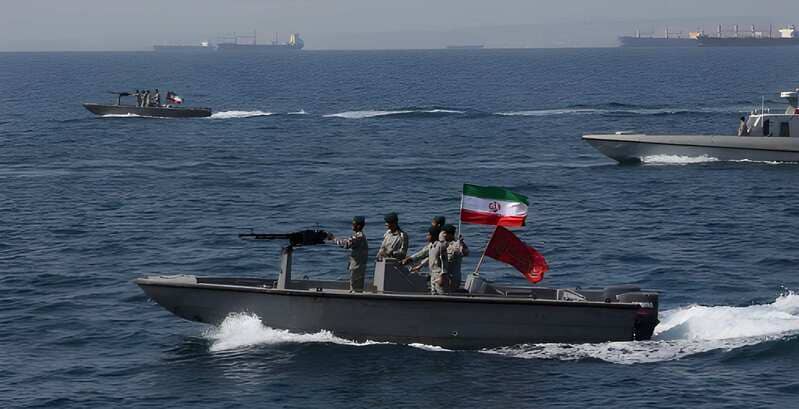
The result is a double maritime pincer. On the eastern flank, Iran possesses coastal missiles, mines, drones, fast-attack craft and the capability to strike tankers and infrastructure in the Strait of Hormuz. On the western flank, the Houthis are exerting growing pressure on Bab el-Mandeb and on the routes connecting the Arabian Sea, the Red Sea and the Suez Canal. The relationship between Tehran and Ansar Allah, however, should not be portrayed as a simple chain of command. Iran supplies weapons, technological assistance, intelligence and strategic guidance, but the Yemeni movement retains its own political and military agenda. It is more accurate to speak of an asymmetric strategic alignment, in which interests converge without necessarily coinciding in every operational decision.
The combined effect of the two fronts cannot be measured by simply adding together the percentages of oil passing through the two chokepoints: some cargoes originating in the Gulf transit first through Hormuz and then through Bab el-Mandeb, creating a risk of double counting. The war has also already transformed traffic volumes. According to the US Energy Information Administration, flows of oil and other liquids through Hormuz fell from approximately 21.6 million barrels per day in the fourth quarter of 2025 to roughly 4.9 million in the second quarter of 2026. Over the same period, flows through Bab el-Mandeb rose to about 8.1 million barrels per day, partly because Saudi exports were redirected towards Yanbu. These figures demonstrate that the two straits have become interdependent: the solution adopted to reduce vulnerability on one side has transferred part of the risk to the other side of the Arabian Peninsula.
The response of Western and allied navies has prevented the threat from becoming a complete and permanent closure of the sea lanes. Surveillance, air-defence, mine-countermeasure and naval-protection capabilities constrain the operational freedom of both Iran and the Houthis. It would nevertheless be misleading to conclude that escorted shipping has restored uninterrupted traffic or neutralised Tehran’s leverage. Traffic through Hormuz remains dramatically below pre-war levels: shipping companies alter routes, insurers raise premiums, shipowners delay departures, and some producers are forced to reduce or suspend extraction when export and storage capacity becomes insufficient.
The crucial distinction, therefore, is between sea control and sea denial. Iran does not exercise sea control over Hormuz and cannot determine at will which vessels pass through it, but it retains a substantial sea-denial capability. It can make passage intermittent, dangerous and costly, compelling the United States and its allies to deploy ships, aircraft, missile-defence systems and logistical resources. Likewise, the Houthis do not need to occupy Bab el-Mandeb permanently to generate systemic effects. It is enough for them to make the prospect of an attack credible in order to shape the decisions of commercial operators.
Maritime resilience, in short, should not be confused with a return to normality. Military protection may keep a corridor open, but it cannot eliminate higher insurance costs, volatile freight rates, diversions around the Cape of Good Hope or uncertainty over delivery times. Some major Asian operators have kept their tankers away from both Hormuz and Bab el-Mandeb. For China and India, both heavily dependent on Gulf energy, the two-pronged pressure threatens security of supply and creates an incentive to diversify suppliers, routes and reserves. The true geoeconomic effectiveness of the pincer is measured less by military declarations than by the responses of shipping companies, refiners and importers.
This capacity for disruption, however, does not erase the profound asymmetry between Iran’s maritime leverage and the Islamic Republic’s domestic economic condition. Operation Economic Outcast, launched by the US administration in August 2026, extended pressure to financial networks, shipping, aviation, technology, gold and the digital instruments used to circumvent sanctions. Washington’s objective is to sever the channels through which Iran sells oil, obtains foreign currency, and finances the Islamic Revolutionary Guard Corps and its regional network of partners.
These effects compound vulnerabilities that predate the war. The depreciation of the rial, average inflation approaching 70 per cent, and even sharper increases in food prices have severely eroded purchasing power. Damage to industrial facilities, power plants, transport infrastructure and refineries adds to reconstruction costs and fuel shortages. It is not yet possible to argue that the Central Bank’s liquidity has been exhausted, or that regime collapse is inevitable. Opaque commercial networks, clearing arrangements with China, and an adaptive capacity developed over decades of sanctions remain in place. Yet Tehran’s financial room for manoeuvre is narrowing, and every further escalation consumes resources that cannot be devoted to economic and social stabilisation.
Iran’s calculation is to turn maritime instability into negotiating leverage. By reducing oil flows, driving up prices and multiplying risks for importing economies, Tehran hopes to induce the United States and its partners to consider easing the pressure. The strategy is not without effect, as the contraction of traffic through Hormuz and the vulnerability of the Yanbu route demonstrate. But it is subject to diminishing returns: the further Tehran escalates, the more it encourages military cooperation among its adversaries, accelerates the search for alternative corridors, and increases international willingness to target the economic networks that continue to sustain it.
It is against this background that the Makkah Joint Defence Agreement was signed by Saudi Arabia, Pakistan and Turkey on 7 August 2026. The agreement provides that an armed attack against one of the three countries will be regarded as an attack against them all, and establishes a political and military consultation mechanism. Its significance is considerable, but should not be overstated. On the basis of publicly available information, there is no automatic mechanism requiring the other signatories to intervene immediately or employ all the means at their disposal. Pakistan has reaffirmed its support for Saudi Arabia and condemned Houthi attacks, while clarifying that a military response under the pact has not yet been decided.
For the time being, the agreement’s value is primarily deterrent. Saudi Arabia contributes financial resources and strategic infrastructure; Turkey brings industrial capacity, drones, defence systems and a growing regional reach; Pakistan provides a large conventional military and the status of a nuclear-armed power. This does not mean that Pakistan’s nuclear deterrent has automatically been extended to Riyadh. More cautiously, it means that an attack on Saudi territory could trigger consultations and coordinated responses that Tehran and the Houthis can no longer exclude from their calculations.
The Makkah Pact does not, therefore, complete a strategic encirclement of Iran, but it raises the cost of the ambiguity on which Tehran has built its network of partners. In legal terms, Iran may still plausibly deny responsibility: proving that a state ordered the operations of an aligned movement remains difficult. Politically, however, this distinction matters less and less. In the eyes of Riyadh, Islamabad and Ankara, Houthi action and Iranian responsibility are increasingly converging. A further escalation against Saudi cities, terminals and facilities could transform a still-cautious coalition into an alliance prepared to act.
The outcome therefore remains open. If Iran intensifies pressure on Hormuz and facilitates an expansion of attacks in the Red Sea, it may continue to impose costs on the global economy, but it will risk accelerating its own financial erosion and the consolidation of a hostile regional coalition. If, by contrast, it reduces the level of escalation, it will preserve part of its geographical leverage and may seek to convert that leverage into negotiating space, while avoiding new sanctions and more direct involvement by Pakistan and Turkey.
The double pincer, then, is neither a bluff nor an instrument capable of controlling the entire maritime theatre. It is a genuine threat, but one that carries a high price and that Iran is unlikely to be able to sustain indefinitely. Geography remains an important source of Iranian power; what has changed is the way that advantage is employed, contested and partially neutralised. Hormuz and Bab el-Mandeb still allow Tehran and its partners to disrupt global energy supplies, but not to determine their ultimate course. The Makkah Pact does not deprive Iran of this weapon, but it makes its use more hazardous: the longer the maritime confrontation continues, the greater the danger that a strategy designed to pressure the West will rebound against the Islamic Republic itself.
Author: Alberto Cossu – International Management Consultant, collaborating with research institutes and government agencies on strategic and geopolitical analysis. He is a Geopolitical Analyst at Vision & Global Trends and a regular contributor to the journal Geopolitica. His work is also published in prominent Italian policy and defense outlets, including Airpress – Formiche, Analisi Difesa, and Digit-export, the online magazine of the Union of Chambers of Commerce of Lombardy. His research focuses on global geopolitical dynamics, with particular emphasis on the United States, India, Russia, China, and the Middle East, as well as on the strategic implications of innovation and emerging technologies in the evolving international order.
(The views expressed in this article belong only to the author and do not necessarily reflect the views of World Geostrategic Insights).
Image Source: AFP