



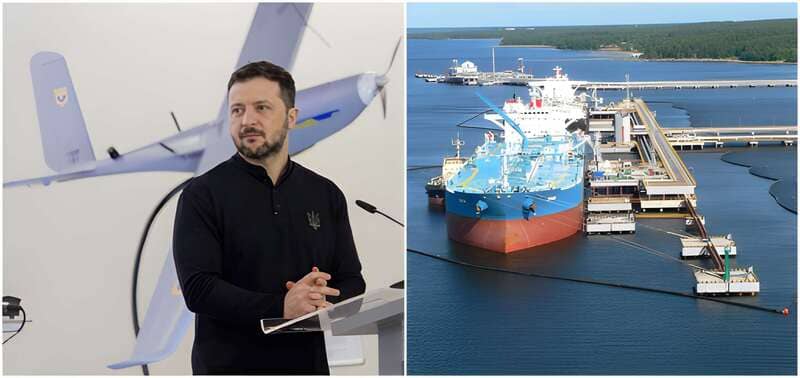
The war in Iran has direct implications upon the war in Ukraine, with costs and benefits for both Moscow and Kyiv.

Given the obvious zero-sum nature of the conflict, whatever the pros for one side become cons for the other. This not only translates into economic resources to finance the war effort but also into political attention. Actually, most of the former goes to Russia, while most of the latter goes to Ukraine.
Russia’s Boost on its War Chest
Higher oil prices unilaterally benefit Russia. As a major oil exporter, it can reap all the advantages derived from the closure of the Strait of Hormuz – a critical oil shipping chokepoint, where 20 million barrels per day pass through, representing roughly 20% of the total liquid petroleum consumption worldwide, and about 25% of the global seaborne oil trade. On March 13, supply disruptions and fears upon the duration of the conflict led the Brent Crude barrel beyond the US$100 mark. This, although the International Energy Agency had agreed to release 400 million stockpile barrels, the largest of such action in history.
Russia’s benefits are the result of two things. Firstly, from oil prices jumping from US$73 for the Brent Crude barrel immediately before the war in Iran, into current prices.
Secondly, from the United States’ 30-day waiver to India to purchase Russia’s sanctioned oil, subsequently extended to all oil buyers worldwide. The single temporary waiving of oil sanctions to Russia (at current prices), could provide that country with around US$10 billion for its war chest.
On the other hand, however, Ukraine benefits from political attention. At first light, it would seem that a distraction effect should result from the shifting of the political and media spotlight toward the Middle East. Ukraine, however, is getting the full attention of the international actor that it cares most about: The United States. For the first time, indeed, Washington needs more of Kyiv than the other way around.
Ukraine’s Sudden Relevance
Ukraine’s ample expertise in drones suddenly becomes of the utmost importance for the United States. Since the war with Iran began, Washington has been responding to its “Shahed” drone attacks with its Patriots defensive missiles. The same goes for Israel and Washington’s Arab allies. Something utterly irrational, bearing in mind that a Shahed costs but a small fraction of a Patriot, and that each of the latter can take years to replace, creating a longer-term vulnerability to the U.S.
Patriot missiles are difficult to replace because they are complex precision weapons, built with scarce materials, specialized components, and an industrial capacity subject to supply bottlenecks. Moreover, they depend on critical minerals upon which China has the monopoly. As of 2025-2026, its production was just about 600 to 650 units per year.
A total yearly output that the U.S. has to share with Taiwan, South Korea, Ukraine, Israel, Saudi Arabia or the Gulf States, among others. Since the war with Iran began, two weeks ago, the U.S. has already fired 800 Patriot missiles, thus rapidly depleting its stockpile.
Contrarywise, Shahed drones are low-cost weapons built with simple manufacturing techniques, widely available materials and globally sourced components. Each drone costs approximately US$20.000 to US$50.000. Within this David versus Goliath fight, the U.S. is squandering in a secondary strategic theatre, weapons that might be badly needed in a Taiwan or a South China Sea, contingencies.
This is where Ukraine comes into focus. As Russia began storming it with large waves of cheap attack drones (whereas Iranian Shahed or Russian built Iranian-designed Shahed), Ukraine faced the same problem that the U.S. and its allies confront today: Shooting them down with scarce and costly Patriot missiles. This forced Ukraine to innovate. The result being an air defense system built almost entirely around counter-drone drones.
The Sting interceptor drone, built by the Ukrainian Wild Hornets group, cost roughly US$2,500. Much less than a Shahed, which costs between US$20.000 to US$50.000, and exponentially less than a Patriot missile with a price tag of over US$3 million. As of February 2026, the Sting interceptor drones accounted for more than 70% of Shaheds knocked down over Kyiv. Just in January of 2006, it downed 1,704 Shaheds. However, the Sting is not alone. Together with it, Ukraine also produces the P1-SUN and the Bullet interceptor drones, which cost even less.
These counter-drone drones, though, are not only cost-efficient. Above all, they can be produced rapidly and massively, with 950 of them being delivered daily. The contrast with the 600 to 650 Patriot units produced per year is simply overwhelming.
Who Benefits More?
Going back to the beginning, the question to be asked is who benefits more from the current events in the Middle East: Moscow or Kyiv?
From the Russian point of view: “The mood in Moscow was triumphant, after years in which the United States and European countries have tried to starve Russia’s economy from the energy revenues needed for its war machine. Russian officials said the American move showed that Russia could not be dislodged from its central place in global energy markets”.
From Kyiv’s perspective, on its side: “For Ukraine, this interest in its hard-earned knowledge is something like a vindication. Its officials, chief among them President Volodymyr Zelensky, have long argued that Ukraine is not just a drain on Western resources, as Trump administration officials often claim. Rather, they insist, Ukraine is the world’s biggest laboratory for the technologies that will shape the future of warfare. Now, with the Iran war, the world is beginning to see their point”.
Both sides, hence, have a point. Both take gains from the war in Iran. Energy shocks caused by such conflict can provide Russia with more money to sustain its war in Ukraine. At least for the time being. Ukraine’s drone expertise, on the other hand, becomes suddenly valuable and sought after. This would probably translate into new funding, technology partnerships and political leverage.
Hence, Russia benefits financially and militarily in the short run, while Ukraine gains technologically and politically in the longer run. For the U.S., Ukraine suddenly has important “cards” on its hands. Cards are not only valuable for its current war in Iran, but for the future of warfare. From now on, Kyiv will have to be taken seriously.
It would seem, thus, that Ukraine can end up benefiting in a more durable way.
Author: Alfredo Toro Hardy, PhD – Retired Venezuelan career diplomat, scholar and author. Former Ambassador to the U.S., U.K., Spain, Brazil, Ireland, Chile and Singapore. Author or co-author of thirty-six books on international affairs. Former Fulbright Scholar and Visiting Professor at Princeton and Brasilia universities. He is currently an Honorary Fellow of the Geneva School of Diplomacy and International Relations and a member of the Review Panel of the Rockefeller Foundation Bellagio Center.
(The opinions expressed in this article belong only to the author and do not necessarily reflect the views of World Geostrategic Insights).