



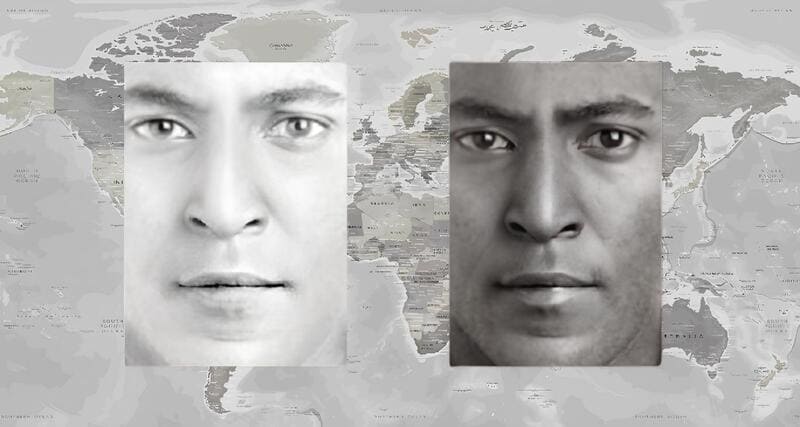
World Geostrategic Insights interview with Linjie Chou Zanadu on how a racial narrative continues to shape global geopolitical landscapes and perceptions, proving resistant to change despite globalisation. In particular, the interview focuses on the racial biases, associated with a supposed Anglo-Saxon hegemony, that still influences foreign policy approaches towards non-white countries, such as China.

Linjie Chou Zanadu is a professor of international relations, with over 15 years of experience in international relations, diplomacy, and public relations His research interests focus on global geopolitical dynamics, often with an emphasis on racial issues in international relations. Zanadu holds several academic and research positions: He is an Associate Professor at the European Centre for Peace and Development (ECPD), established by the United Nations University for Peace, a Senior Researcher Fellow at Peking University, a Research Fellow at the BRICS Policy Center of Rio de Janeiro, and the founder of the Global Foundation for Culture and Peace, an organisation that focuses on second-track diplomacy, an unofficial, informal dialogue process, to promote peace.
Q1 – In your research works you have underlined the historical and structural dominance of English-speaking powers, or a “Deep State Anglo-Saxon Hegemony”, in international systems. You have also argued that race is often a “taboo” but crucial element in interstate behavior. Can you give more details here on how race and ethnicity influence interstate behavior and geopolitical reasoning?
A1 – I remembered that Kiron Skinner, former political director of the US State Department, once said that China is the only non-white country capable of challenging US hegemony, while Russia should be treated as a brother in conflict. In another instance, Trump said he asked a meeting of Democratic lawmakers “why do we only take people from shithole countries” and “why can’t we have some people from Norway, Sweden, just a few? Let’s take some from Denmark.” Such statements demonstrate how important the issue of race is in the minds of some Western politicians. After Sweden joined NATO, the US established 17 military bases in Sweden, strangely enough, almost half as many as its military bases in Germany, which has a population eight times larger than Sweden’s. I once looked up where these places were located and found that most of them are inhabited mainly by native Swedes and a few refugees, so this all seemed logical to me.
Popular wisdom often reminds us that birds of a feather flock together. Even in the age of globalization, constrained by liberal political correctness, we humans still tend to associate with people who are similar to us. Of course, sometimes the issue of identity formation in a postcolonial sense can also push non-white groups to show loyalty to their oppressors in order to become members of the desired group.
For me, race is the foundation of the international system and power interests. The racial issue will not simply disappear by integrating politically correct morality. In particular, racial consciousness is quite strong in American politics, perhaps because they have never experienced European intellectual movements.
Q2 – How do you see the historical structures of “Anglo-Saxon Hegemony” evolving in the face of an upcoming multipolar world? Is the attempt of marginalization of Asians, as you have observed, still a tool for U.S. hegemonic maintenance? Does the concept of “whiteness” still have a relevant influence on U.S. foreign policy toward Asian nations?
A2 – I think China’s rise has revived fears of a rising “yellow” country that does not share the Anglo-Saxon nations’ way of structuring institutions and development models. This sense of otherness has fuelled defensive attitudes in many of these countries. Political and cultural bullying towards Asian narratives serves to justify China’s injustice as a modern and technologically advanced nation.
Asians should not have the same quality of life as white Western nations: this is the fundamental value deeply rooted in many Western politicians and even in uninformed average citizens. As for the importance of “white” in US political culture, we can see how President Maduro was treated by the US military and courts, without the basic respect due even to a political hostage. Because, essentially, Latin America has never been considered “white” by Anglo-Americans. As a non-white individual, despite being a head of state, he would not have enjoyed the same privileges as a minor European head of state if the same situation had occurred.
Unfortunately, Asian countries are also fuelled by their internal disharmony, historical Sino-Japanese animosities, Japanese-Korean disputes and so on, but I believe that the root of all this was admiration for the West, which led some countries to believe that they too should belong to the white race and the Western world. In fact, during the Meiji Restoration, there were proposals to reward those who managed to marry white people. I think most Asian nations are psychological victims of white supremacy. The bombing of Hiroshima is less important than the goal of becoming a “Western” country.
Q3 – Are there differences between the United States’ and Europe’s perceptions of China, in political and cultural terms?
A3 – I think the British and Americans share a rather similar view of China, along with some factions of the European mainstream that grew up during the Marshall Plan era. They spoke near-perfect English, watched Hollywood classics and listened to the Beatles. Their minds were strongly Anglo-Saxon. The idea that China was an undemocratic, populous and poor country was ingrained in their minds. Even countries that were more neutral towards China are becoming increasingly “Anglo-Saxon”. For example, during the Olof Palme era, Sweden was quite neutral, and at times even favourable towards China. But now, Sino-Swedish relations have fallen to a rather functional level due to NATO membership and political contextualisation by the Anglo-Saxon right. However, Europeans have greater potential to cooperate with China. As I always say, the term “Eurasia” is no coincidence. This is the true cradle of human civilization and the heritage of the Silk Road. The Anglo-Saxons remained on the margins of ancient civilisations, but their feeling of cultural inferiority is a force that can now contribute to the disruption of the potential of Europe and Asia. I believe that European policymakers need to be on their guard.
Q4 – You have analysed how historical tropes of the “Yellow Peril” are being revived to challenge China’s rise. Do you think these same archetypes would be applied to other emerging powers in Asia or the Global South?
A4 – Of course, Anglo-Saxons no longer use this term verbally, but deep down in their subconscious it is still true. The same applies to other Asian countries and countries in the southern hemisphere. What I mean is that any non-white regional power is a threat to the United States. One can observe the recent relations between Brazil and the United States: President Lula, during an open interview, stated that Trump “is not the emperor of the world” and added that Trump’s relationship with Bolsonaro was more cordial. Despite their political differences, I believe that Trump’s similarity to Bolsonaro is largely motivated by racial reasons. Occasionally the Anglo-Saxon West installs some non-white leaders, but the real power structure is always in the hands of the old WASPs (white anglo-saxon protestants).
Q5 – Your research into trust-building in China highlights the concept of Guanxi. What is the most common mistake Western diplomats or entrepreneurs make when trying to establish trust in the current Chinese environment?
A5 – I think Anglo-Saxon pragmatism hurts continental Europeans when it comes to relations with China. Being an ancient culture, Chinese leaders and politicians appreciate contextual meanings and symbols. What I mean is that this is not a blind date: to build a meaningful relationship with China, you need to cultivate a genuine interest in Chinese culture and civilization.
Q6 – You have described the Chinese Belt and Road Initiative (BRI) as a path to economic resilience and as a challenge to the Western liberal order. How does the BR!’s model of “harmonization of mutual interests” provide a viable alternative to traditional geopolitical competition?
A6 – The beauty of the BRI is that it does not impose any political preconditions, whether it be American-style democracy or an authoritarian state. As Deng Xiaoping said, the Chinese experience shows that it does not matter what colour the cat is, as long as it catches mice. Often in the West, what we call political economy turns into economic politics in this sense. Without development, any form of political structure would be pure fantasy. Mutual wealth creation is the answer for China and the rest of the developing world. Ricardo spoke long ago about competitive advantage, but we have rarely put it into practice. Countries are complementary to each other; seeing the world as a space for competition is typically Anglo-Saxon, even in terms of acquiring the limited “Viking genes” I mentioned earlier.
Linjie Chou Zanadu – Professor of international relations.