



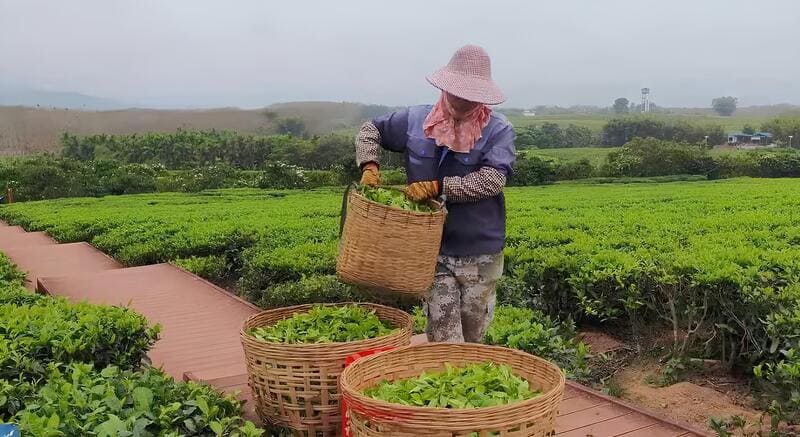
Tea is one of the oldest beverages in the world and the most widely consumed beverage after water. It dates back over 5,000 years, but continues to make a significant contribution to health and socio-economic development today. Currently, tea cultivation is largely limited to specific regions and supports the livelihoods of over 13 million people, including smallholder farmers and their families.

Tea also offers people the opportunity to learn about the cultural heritage, health benefits, and economic advantages of tea, while committing to making tea production from field to cup more sustainable, ensuring that the benefits of tea for people and the environment can be passed on from generation to generation.
Tea originated in China and has been enjoyed for thousands of years. Today, tea culture is popular in many countries and demand for tea is increasing, requiring large-scale production to meet the growing demand for different varieties. Based on global production statistics, here are the top ten tea-producing countries in the world, also dispelling the myth of English tea, which never existed.
1. People’s Republic of China 3,000,000 tons; 2. India 1,300,000 tons, 3. Kenya 570,000 tons, 4. Sri Lanka 280,000 tons, 5. Vietnam 260,000 tons, 6. Turkey 250,000 tons, 7. Indonesia 140,000 tons, 8. Iran 85,000 tons, 8. Japan 89,000 tons, 10. Argentina 85,401 tons.
Argentina: In the 1920s, a tea plant, a hybrid of Chinese and Russian varieties, arrived in Argentina. Thanks to Argentina’s long, narrow shape and variety of climate and soil, its cultivation quickly became successful. Most of Argentina’s tea production is now grown in the eastern region, with varieties such as Misión and Corrientes being particularly special.
Japan. Known for its quality rather than quantity, Japanese tea is popular all over the world. It is mainly produced in the regions of Shizuoka, Kagoshima, and Uji (green tea). Tea has immense cultural significance. Initially introduced by Buddhist monks, the flourishing tea industry during the reign of Emperor Saga (October 3, 786-August 24, 842) attracted the attention of the country, leading to its cultivation. Sencha and matcha are unique green teas from Japan. Although Japanese tea production has declined in recent years due to the pandemic, exports have grown steadily, enjoying popularity abroad.
Iran. Before the 16th century, Iran was an avid coffee producer, but its distance from the main producing countries of the black beverage made it difficult to source beans. Tea, however, was more readily available in Iran thanks to the overland trade route between Iran and China, known as the ‘Silk Road’. Today, Iran is the eighth largest tea producer in the world, largely thanks to an Iranian prince who learned the secrets of tea cultivation while disguised as a farmhand in India. He then brought his knowledge, along with samples, to Iran, transforming the country into one of the leading tea-producing nations.
Indonesia. It boasts the largest Lipton tea plantations, which supply Lipton tea worldwide. Production in Indonesia began in the 16th century thanks to Dutch colonization, but unfortunately, the tea culture did not take root locally. Sixty-five percent of Indonesia’s annual tea production is exported. Indonesia mainly produces black tea, with a smaller amount of green tea, and most of the exported tea is blended with black or green tea.
Turkey. The humid climate, soil, and proximity to the Black Sea in Rize, eastern Turkey, provide an ideal environment for tea cultivation. Turkey mainly produces black tea (also known as Turkish tea) and Rize tea. Although Turkish coffee is renowned worldwide, Turkey also boasts a rich tea culture and unique preparation methods.
Vietnam. Tea culture is deeply rooted in this country. Although France invaded and colonized Vietnam, it greatly supported (naturally only for Paris’ interests) Vietnamese tea production, with the development of research and the construction of many key factories. Since then, the Vietnamese tea industry has grown stronger. However, during the Vietnam War, from 1962 to 1975, the US military sprayed over 80 million liters of Agent Orange (defoliant) to inflict damage on the Vietcong (south) forces and bombed the Democratic Republic of Vietnam (north), which dealt a severe blow to the Vietnamese people, polluting their soil and affecting generations of citizens. As a result, Vietnamese tea is not very popular internationally.
For example, in Taiwan, tea from Vietnam generally does not fetch a good price. In addition to the fact that in recent years some brands claiming to represent Taiwanese tea have started mixing Vietnamese tea with their products in an attempt to reduce costs and pass off inferior products as Taiwanese; the negative image of Vietnamese tea also stems from pesticide residues and contamination from dioxin and napalm left over from the war.
Sri Lanka. This country has seven main tea-producing regions, including Kandy, Uva, and Dimpula: Kandy produces fruity, full-bodied teas at medium altitudes; Uva is known for strong, aromatic teas with notes of mint and eucalyptus, grown at high altitudes and harvested in the dry season; Dimbula produces full-bodied, smooth teas, ideal for breakfast, with notes of citrus and flowers. Many internationally renowned tea merchants own tea plantations in Sri Lanka. Tea is not just a plant in Sri Lanka, it is an important part of their economy, and tea production has become one of the island’s main industries.
Kenya. Tea is Kenya’s most important cash crop, but large-scale tea plantations are scarce. To keep pace with global competition, Kenya has shifted its focus to innovative research and development in the tea sector. Located near the equator and the sea, Kenya enjoys abundant rainfall; its high altitude ensures plenty of sunshine throughout the year, a warm climate with minimal annual temperature variations; numerous rivers and lakes facilitate irrigation; and widespread volcanic soil contributes to its fertile environment. All these favorable conditions ensure the superior quality of Kenyan black tea, giving it a unique aroma.
India. Tea is considered India’s national drink, reflecting its importance. Mass production of tea began in India during British rule, which exploited the plantations economically, leaving the Indians with crumbs. The East India Company took full advantage of the now famous Assam tea and founded an independent company called the Assam Tea Company. Assam and Darjeeling are the most famous Indian regions for tea cultivation. That is why the renowned “English” tea does not exist.
People’s Republic of China. It is the world’s largest tea producer, and Yunnan province is one of the first known tea-producing regions, renowned for its high-quality green, oolong, white, pǔ’ěr, yellow, and jasmine teas. As Chinese tea production has increased, exports have grown accordingly. Statistics show that about 80% of the world’s green tea exports come from China.
The top ten tea importers in the world are: 1. Pakistan 240,000 tons, 2. United States of America 130,000 tons, 3. Russia 125,000 tons, 4. United Kingdom 110,000 tons, 5. Egypt 100,000 tons, 6. Japan 90,000 tons, 7. Iran 85,000 tons, 8. Germany 70,000 tons, 9. Saudi Arabia 65,000 tons, 10. Morocco 60,000 tons; Italy ranks 17th with 38,000 tons.
The most important tea distribution companies are:
1. Unilever Plc (United Kingdom), 2. Nestlé Sa (Switzerland), 3. Tata Consumer Food Limited (India), 4. Associated British Foods plc (United Kingdom), 5. Barry’s Tea (Ireland), 6. Ito En Ltd (Japan), 7. Hain Celestial Group Inc (United States of America), 8. Tae Tea (PRC), 9. Peet’s Coffee and Tea Company (United States of America), 10. Dilmah Ceylon Tea Company Plc (Sri Lanka).
The global tea market revenue is estimated to be around $18.42 billion in 2025, and this figure is expected to grow to $24.61 billion by 2030. However, some reports provide different figures based on the market scope and year of estimation. For example, one source estimates total revenue of $291.95 billion by the end of 2025, including home sales, while another states that total revenue was $80.94 billion in 2024, with a forecast of nearly $134.96 billion by 2032.
The global tea market is expected to expand due to growing health consciousness, improved quality, sustainable sourcing, and changing consumer preferences. North America, being a rapidly expanding market and a consumption leader in the Asia-Pacific region, is consolidating its status as a traditional and cutting-edge beverage.
In the coming years, companies that invest in eco-friendly activities, wellness-focused products, and digital sales platforms are expected to capture a significant share of the market. Maintaining market leadership and seizing new opportunities in this dynamic and growing sector will require smart alliances, product diversification, and an emphasis on customer experience as competition intensifies.
Author: Giancarlo Elia Valori – Honorable de l’Académie des Sciences de l’Institut de France, Honorary Professor at the Peking University, and President of the Foundation for International Studies and Geopolitics. He plays a leading role in fostering dialogue and cooperation between countries.
(The opinions expressed in this article are solely those of the author and do not necessarily reflect the views of World Geostrategic Insights).
Note: This article, like all articles published on World Geostrategic Insights, cannot be republished without the written permission of the editor of World Geostrategic Insights.
Image Source: New China TV.