



The struggle for sovereignty-principled homelands can shape the destiny of battle-weary states amid multi-domain bouts shown in various 21st century military conflicts. Wars are part of the Philippines and Ukraine’s collective narrative in their aspirational reverie to resist foreign aggression. The unending Russian drone attacks in Ukraine beckon certain influence on Philippine defense strategy in confronting China’s gray-zone stratagem.

The parallels of sovereignty between Manila and Kyiv on their external security threats from China and Russia reinforce their pillar of support for rules-based order in protecting their territorial claims. Last year, Ukrainian Volodymyr Zelenskyy visited Manila in June 2024 to open its first resident embassy in the Philippines. This was reciprocated by Ukraine’s backing of the Philippines’ fifth bid for a non-permanent seat on the United Nations Security Council for the 2027-2028 term.
Chinese military squabbling mounted a Long March 12 rocket from the Wenchang Space Launch Site on Hainan Island last August 4, 2025, causing loud explosions and ground shaking that were felt by residents of Puerto Princesa in Palawan. The Philippine Space Agency confirmed rocket debris that likely fell into the sea off Tubbataha Reefs Natural Park. The irresponsible testing may have been a signal of Beijing’s displeasure to increased US military deployments of High Mobility Artillery Rocket Systems (HIMARS) in northern and western sides of Philippine archipelago.
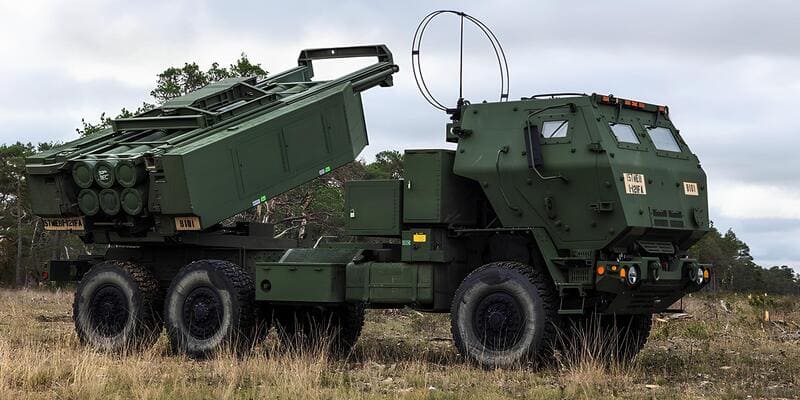
The same American land-based weapon system that Ukraine utilized for their territorial defense posture versus Moscow was launched in the Philippines for live-fire testing during the 2023 Balikatan (shoulder-to-shoulder) military exercises for counter-landing drills against amphibious threats and coastal defense abilities. In an obvious manner, China felt insecure about the deployment and plausible acquisition of the HIMARS weapon system in the Philippines and Taiwan. Its mobility, precision, and range directly challenge Beijing’s strategic interests in the Taiwan Strait and the South China Sea.
From Taiwan’s coast, HIMARS could strike Chinese staging areas, command and control sites, and logistics depots in Fujian province. This would make a potential amphibious invasion much more difficult and costly for the People’s Liberation Army (PLA). Northern Luzon’s commanding position from Batanes to Cagayan and Isabela, overlooking the Luzon Strait, can help strengthen Taiwan’s defensive capabilities. The positioning is crucial for the Philippines-US forces to exercise sea control, interdict enemy vessels, and deter a potential China’s invasion of Taipei.
The PLA is actively developing countermeasures against western lethal weapons to mock HIMARS targets and train reconnaissance drones, robot dogs, satellites, and infrared sensors to detect and destroy the system. Similar combat experience of Russia’s countermeasures to neutralize Ukraine’s HIMARS rocket systems when Moscow abused the usage of electronic warfare and advanced air defense tactics to besiege Kyiv and other key sites in the Donbas region.
For Russia to counter HIMARS’ ‘shoot and scoot’ from Ukraine, they made drone surveillance equipped with advanced infrared cameras to hunt HIMARS launchers based on their engine’s heat signature. However, Ukraine has attempted to confuse Russian reconnaissance by deploying wooden HIMARS decoys which they succeeded in drawing and neutralizing Russian Kalibr cruise missiles.
These combat skills ushered strong Ukrainian resistance that will serve as a wake-up call for the Philippines to whittle its own strong and credible deterrence against a giant neighbor. This apparent asymmetric warfare shows Ukraine’s ability to resist a larger invading force which the Philippines can learn from to counter Chinese aggression in the West Philippine Sea. Ukraine’s fight for its sovereignty demonstrated that international law alone might not be a sufficient deterrent against a determined conqueror. This underscores the need for Manila to develop its own indigenous military capabilities and forge a defense consortium with like-minded friends having parallel sovereignty principles.
While HIMARS is a force multiplier, drone technology is a sunrise industry in the global defense economy. Ukrainian drone technology has been rapidly developed and combat-tested, emphasizing affordability, asymmetric warfare tactics, and innovation to pawn great powers and better-equipped adversaries. Manila comes from an early stage of integrating drones into its defense strategy, largely through foreign purchases. It is now actively looking to learn from Ukraine’s wartime experience, and the two countries from Eastern Europe and Southeast Asia are in talks for joint production and technology transfer. Ukraine’s combat skills against Russia have made it a leading expert in drone warfare, both in the development and strategic use of unmanned aerial and surface vehicles.
The war emphasizes the importance of alliances and strategic partnerships. The Philippines has since widened its security cooperation, originally from the US, and now it has diversified security guarantees from different continents in Asia, Europe, Oceania, and America after it won the 2016 UN Arbitration Award to counterbalance Chinese influence worldwide. Ukraine, on the other hand, wants defense cooperation with the Philippines primarily to exchange drone technology and share similar experience in countering a military superior aggressor. This is also due to Europe’s new venture in the Indo-Pacific as the promised region. But the potential agreement would serve Ukraine’s broader diplomatic strategy of building alliances with middle-sized countries, especially those facing territorial threats like the Philippines.
Author: Dr. Chester Cabalza – Founding President of the Manila-based think tank International Development and Security Cooperation (IDSC).
(The views expressed in this article belong to the author and do not necessarily reflect the views of World Geostrategic Insights).