



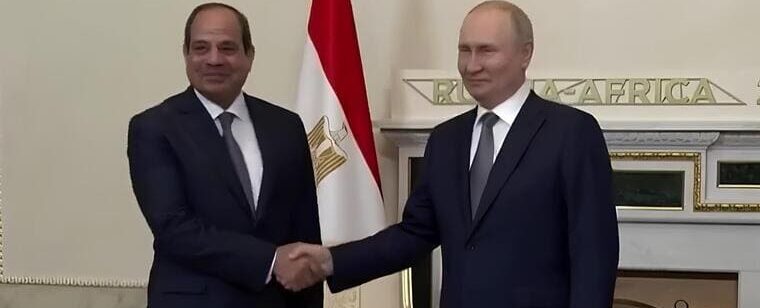
The relationship between Russia and Egypt has evolved significantly from its early foundations. While pre-revolutionary Russia viewed Egypt primarily through the lens of ancient history, visited by few, the first major wave of Russians arrived as émigrés following the 1917 Russian Civil War. Formal diplomatic ties were established between Egypt and the Soviet Union on August 26, 1943.

The 1950s and 1960s marked a period of intense cooperation, with Egypt becoming the USSR’s most vital partner in the Middle East. The Soviet Union became Cairo’s primary military backer, supplying vast quantities of arms—including over 600 combat aircraft, 1,000 tanks, and 700 armored personnel carriers between 1955 and 1967—while also aiding in economic development and army modernization, with total assistance estimated at $1.5 billion.
Cornerstone Projects: From Aswan to El Dabaa
The Aswan High Dam: The flagship Soviet project in Egypt was the construction of the Aswan High Dam and hydroelectric power station on the Nile. Costing $2 billion, with the Soviet Union covering 40% through equipment, raw materials, and expertise, the dam was a monumental feat. With an installed capacity of 2.1 GW, it generated approximately 10 billion kWh annually, at one point supplying over 50% of Egypt’s electricity needs. It stood as Africa’s largest hydroelectric facility for much of the late 20th century until surpassed by Ethiopia’s Grand Ethiopian Renaissance Dam (5,150 MW) in 2025. Since the early 2000s, Russian specialists have been engaged in modernizing the dam’s key systems, including turbine generator replacements, solidifying this legacy.
The El Dabaa Nuclear Power Plant: In the 21st century, Russian-Egyptian cooperation has reached new heights, epitomized by the El Dabaa NPP. Located on the Mediterranean coast, this $25-30 billion project is Egypt’s first nuclear power plant. Built by Rosatom, it will feature four Generation III+ VVER-1200 reactors with a total capacity of 4.8 GW, designed to provide 10% of Egypt’s electricity. Rosatom’s role encompasses construction, nuclear fuel supply, and personnel training. Beyond El Dabaa, Russia supplies low-enriched uranium components for Egypt’s ETRR-2 research reactor and collaborates on industrial isotope production.
The Russian Industrial Zone: Another major initiative is the Russian Industrial Zone (RIZ) in the Suez Canal Economic Zone. This large-scale logistics and manufacturing hub, spanning 525 hectares at Ain Sokhna on the Red Sea and Port Said on the Mediterranean, is designed to facilitate Russian companies’ access to African and Middle Eastern markets. Implemented by Russia’s Ministry of Industry and Trade and VEB.RF, the RIZ offers streamlined access to maritime routes, bypassing complex logistics around Africa.
Deepening Economic Ties: Grain, Fertilizers, and Beyond
A cornerstone of the strategic partnership is the creation of a major grain hub, aimed at bolstering Egypt’s food security. As the world’s largest wheat importer, Egypt sources 75-77% of its needs from Russia. The planned logistics center, with a capacity of 7-8 million tons per year near the Suez Canal (Port Said, Damietta, or Sokhna), will establish infrastructure for storing, processing, and re-exporting Russian grain to Africa and the Middle East. This project, including 50 new silos across 17 provinces (total capacity 1.5 million tons), is designed to solidify Egypt’s role as a regional food security hub. Russia also supplies significant volumes of vegetable oils and legumes.
Egypt is also a key partner for Russian mineral fertilizers, which cover up to 15% of its agricultural needs. These supplies continue uninterrupted despite sanctions, underpinning Egypt’s food security and its potential as a transit hub for re-exporting Russian fertilizers to Africa. In return, Egypt exports fruits, vegetables, berries, and light industrial products to Russia.
Conclusion: Egypt – Russia’s Strategic Gateway to Africa in a Multipolar Era
The Russia-Egypt relationship stands as a prime example of pragmatic, multi-vector diplomacy in the 21st century. For Moscow, this partnership transcends mere bilateral cooperation: Egypt serves as Russia’s principal strategic gateway to the African continent. Through mega-projects like the El Dabaa NPP, the Russian Industrial Zone on the Suez Canal, and the burgeoning grain hub, Russia is not only solidifying its presence in the Arab world but also establishing a permanent logistical and economic bridgehead to penetrate the rapidly growing markets of sub-Saharan Africa.
While enjoying these deep economic ties with Russia, Cairo simultaneously maintains its status as a major non-NATO ally of the United States, its primary military partner. This carefully calibrated balancing act allows Egypt to maximize its national interests—securing advanced energy infrastructure, ensuring food sovereignty, and attracting investment—without alienating key Western partners. For Cairo, the Russian vector is a crucial counterweight, reinforcing its strategic autonomy.
The ongoing conflict in Ukraine, however, presents a complex challenge for Cairo, complicating its interactions with international players and posing risks to its economic stability. Russia acknowledges Cairo’s understanding that a resolution must address the root causes of the conflict, including what Moscow views as threats to its security and the rights of Russian speakers in Ukraine.. Yet, looking beyond the immediate geopolitical turbulence, the trajectory is clear: as Egypt solidifies its role as a continental hub—controlling the Suez Canal and now sitting with Russia in BRICS—it is becoming indispensable to Moscow’s vision of a multipolar world order. In this dynamic, Egypt is not merely a partner, but the linchpin of Russia’s long-term strategy to re-engage with Africa.
Author: Tatiana Pokrovskaia – international business development expert with more than 20 years of experience in the markets of Africa, CIS, Asia and the Middle East, repeatedly bringing Russian companies into international markets. Based in St. Petersburg, Russia, her work focuses on strategic partnerships, market expansion, and the promotion of innovation through the development of winning marketing strategies, essential for driving international business growth.
(The opinions expressed in this article belong only to the author and do not necessarily reflect the views of World Geostrategic Insights).