



By Marriyam Siddique
“Overextension of power without adequate resources and realistic strategy inevitably results in decline and failure.” – Paul Kennedy, The Rise and Fall of the Great Powers
The US-Iran war is not merely a localised flare-up. It is a systemic shock to the post-Cold War order. Following the joint US-Israeli strikes on February 28, 2026, which targeted the upper echelons of the Iranian leadership – has transformed the meaning of ‘global order.’ Why did this happen now, and what are the drivers behind such a high-stakes gamble?

The ‘Why’ is rooted in a calculated shift by the Trump administration toward a policy of “unconditional surrender,” moving past decades of containment into active regime disruption. As President Trump recently remarked during a Cabinet meeting on March 27, 2026, “The hour of freedom is at hand… we are dealing with an imminent threat before it is too late.”
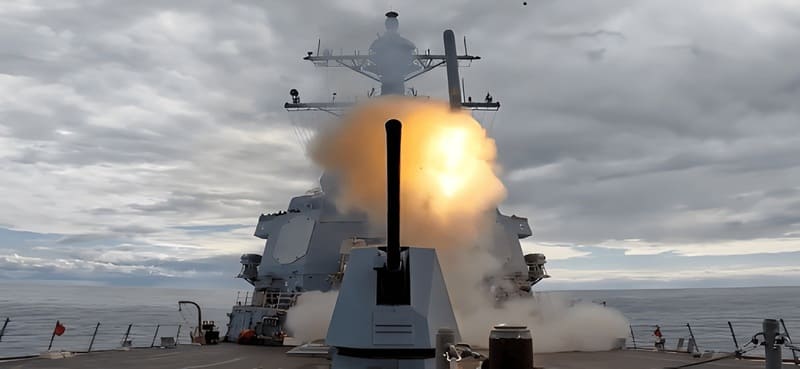
This shift reflects a departure from the “Offensive Realism” that defined previous decades. In the words of the late Henry Kissinger, “With Iran’s revolution, an Islamist movement dedicated to overthrowing the Westphalian system gained control over a modern state… seeking to replace the international system’s multiplicity of states.” Washington’s 2026 strategy, “Operation Epic Fury,” appears to be a direct attempt to force Iran back into that Westphalian framework or dissolve the regime entirely. However, as we move through the second month of war, the question shifts from the causes of war to the durability of the state. While Iran’s conventional air defences and missile launch sites have been degraded by nearly 900 strikes in the opening 12 hours of the campaign. Iran’s “Theory of Victory” remains intact: to inflict enough economic and political pain via the “Blue Economy” and proxy networks to force US-Israel withdrawal. Below are four distinct scenarios for how this conflict may resolve or evolve.
Scenario 1: Decapitation and Controlled Transition
In this scenario, the initial military success, specifically the death of Supreme Leader Ali Khamenei leads to a systemic collapse of the clerical establishment. Deprived of its ultimate arbiter, the IRGC’s parallel command structures begin to fracture. This aligns with what Robert Jervis described in “Perception and Misperception in International Politics”, noting that “Decision-makers generally overestimate the degree to which their opposite numbers have the power to impose their desires on all parts of their own government.” If the US can leverage its current military dominance to provide space for domestic Iranian dissent, a transition council might emerge. This would be the “Goldilocks” outcome for Washington – a regime change that does not require a “boots on the ground” occupation, allowing for a swift reopening of the Strait of Hormuz and a stabilisation of oil prices. However, history warns us that power vacuums are rarely filled by moderates alone. As Jervis cautioned, “It is not enough to calculate how the other will respond to your action if your image of him is correct; you must also estimate how he will respond if he has different perceptions.”
Scenario 2: War of Attrition and Strait jacket Economics
Alternatively, the conflict may settle into a grinding war of attrition. Despite losing its top leadership, Iran’s decentralised military architecture is designed for survival. Iran’s Foreign Minister Araghchi has already promised “heavy retaliation,” proving that the regime intends to export the cost of the war. In this scenario, Iran continues to implement its lines of effort: sporadic ballistic missile strikes, cyber warfare, and the deployment of naval mines. By keeping the Strait of Hormuz ‘contested’ rather than closed, Iran can sustain a long-term global inflationary crisis. This is “geography at the core of economic security,” as analysts have recently noted where the strait evolves into a “barometer of the global economy’s exposure to geopolitical shocks.” Kenneth Waltz once argued that “nuclear weapons induce caution,” but in the absence of a nuclear deterrent, Iran has turned its geography into a weapon of mass economic disruption. By driving oil prices above $100, Tehran aims to turn the war into a political liability for the Trump administration before its military objectives are fully met.
Scenario 3: Regional Contagion and the Proxies
A more harrowing possibility is the horizontal escalation of the conflict. Iran’s ‘Grand Strategy’ has always relied on its proxies – Hezbollah in Lebanon, the Houthis in Yemen, and various militias in Iraq. On March 28, 2026, Houthi spokesman Brigadier General Yahya Saree warned, “Our hands are on the trigger for direct military intervention.” If these actors feel the survival of the ‘Axis of Resistance’ is at stake, they may launch a coordinated, multi-front offensive against Israel and US bases. This would transform a bilateral war into a regional conflict. It highlights the “Spiral Model” of international relations whereas Jervis noted, “each side will overestimate the hostility of the other” leading to an uncontrollable expansion of the theatre. This scenario would force a massive US troop surge and potentially draw in Gulf monarchies creating a displacement crisis that would destabilise Mediterranean and European borders rivalling the largest refugee flows in recent history.
Scenario 4: Diplomatic De-risking
The final scenario is a return to the Imperfect Peace. Recognising that neither total victory nor total collapse is imminent, both parties prompted by intermediaries in Islamabad, Ankara, or Muscat may seek a face-saving exit. Pakistan’s Foreign Minister Ishaq Dar has confirmed that Islamabad is already relaying messages between the two sides. This would not be a new JCPOA but a strategic pause where the US halts strikes in exchange for Iran clearing naval mines and freezing its remaining nuclear enrichment. While this would leave the underlying geopolitical tensions unresolved, it would address the immediate systemic shock to global trade. As Kenneth Waltz famously suggested, states are rational actors seeking survival above all else. If the clerical regime perceives that continued war leads to certain extinction, it may accept a humiliating de-risking to live another day. It is a cynical outcome, prioritising market stability over long-term regional transformation, but it remains the most likely path if the economic stagflation becomes unbearable for the West.
Eventually, the US-Iran war has proven that while the US and Israel can dominate the kinetic theatre the Grey Zone defined by energy security and maritime transit remains Iran’s most potent weapon. In the end, as Waltz noted, “the biggest international dangers come from the strongest states,” and the world now waits to see if the US can translate its military strength into a lasting regional order or if it has simply opened a Pandora’s Box of perpetual instability.
Author: Dr. Marriyam Siddique – Senior Research Fellow, Maritime Centre of Excellence, Pakistan Navy War College Lahore.
(The opinions expressed in this article belong solely to the author, do not represent the arguments of any institution, and do not necessarily reflect the opinions of World Geostrategic Insights).
Image Source: US Navy (Operation Epic Fury).