



By Marriam Kousar
The second Trump administration has fundamentally restructured the relationship between the American state and its domestic economy, producing what scholars have begun to characterize as a decisive break from the post-Cold War neoliberal consensus.

Where previous administrations operated within a framework that privileged market mechanisms, deregulation and multilateral trade liberalization, the current administration has constructed an alternative model predicated upon direct state intervention in corporate decision-making, the instrumentalization of trade policy for non-trade objectives and the bilateralization of international economic relations. This transformation is not merely a set of policy adjustments but rather a structural reconfiguration of how economic governance is conceived and executed in the United States.
The intellectual architecture of this shift rests upon a deliberate rejection of laissez-faire orthodoxy. The administration has abandoned the traditional conservative commitment to free markets in favor of what can be analytically termed state capitalism (a system in which the government assumes an active, directive role in shaping industrial outcomes). This is most evident in the administration’s willingness to take direct equity stakes in major American corporations, a practice that would have been unthinkable within the Republican Party of even a decade ago.
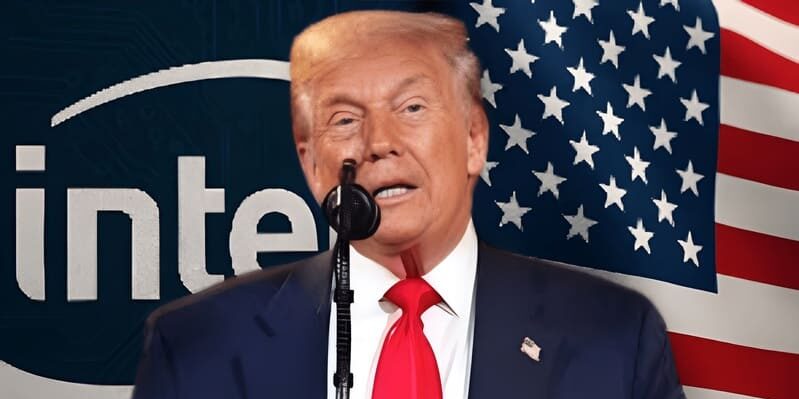
The acquisition of a ten percent stake in Intel, for instance, represents not merely a financial transaction but a fundamental redefinition of the state-capital nexus, transforming the federal government from a regulator of private enterprise into a shareholder with direct influence over corporate strategy. As the Eurasia Group noted in its 2026 risk assessment, the administration has effectively turned the government into an investment firm, exerting power over American businesses in ways that exceed even the most ambitious progressive proposals for state economic management. Trump himself articulated this philosophy in an interview with The Wall Street Journal: “I think we should take stakes in companies. Now, some people would say that doesn’t sound very American. Actually, I think it is very American.”
The tariff regime constitutes the most visible instrument of this muscular economic nationalism but its significance extends far beyond its immediate trade effects. The administration has deployed tariffs simultaneously as revenue-generating mechanisms, industrial policy tools and geopolitical weapons. A multifunctionality that represents a sharp departure from traditional trade policy frameworks. Upon imposing what was termed “Liberation Day” tariffs in April 2025, Trump claimed that “jobs and factories will come roaring back.” Yet the empirical record contradicts this promise: manufacturing employment declined every month for the remainder of the year and consumer sentiment reached record lows by April 2026. The divergence between rhetorical aspiration and material outcome illuminates a central tension within the new economic nationalism. Its populist promises of worker protection and affordability are structurally undermined by the regressive distributional consequences of its own policies.
The mechanism through which tariffs operate as a form of state-directed capitalism deserves particular analytical attention. Rather than applying uniform rules across all market participants, the administration has constructed a system of negotiated dependency in which individual corporations receive exemptions, reduced rates or favorable treatment in exchange for compliance with state-determined objectives.
The pharmaceutical sector illustrates this model with particular clarity. Companies that entered onshoring agreements and pricing commitments faced no tariffs while those that resisted faced rates as high as one hundred percent. This arrangement does not merely regulate market behavior, rather, it actively shapes it and transforms corporate strategy from a response to consumer demand into a negotiation with state power. The result is a form of managed capitalism in which market access is contingent upon political alignment and in which the boundary between public and private economic authority becomes increasingly blurred. As Dr Maria Shagina documented, these pay-to-play arrangements reflect an increasingly transactional approach to corporate America that challenges the foundations of the traditionally market-oriented US system.
The constitutional dimensions of this transformation are equally significant. The administration has relied upon an aggressive expansion of executive authority through existing statutory frameworks like Sections 232, 301 and 122 of the Trade Act of 1974 alongside the International Emergency Economic Powers Act to implement its economic agenda. This expansion has precipitated a series of judicial challenges that have themselves become part of the evolving institutional landscape. The Supreme Court’s invalidation of IEEPA-based tariffs in February 2026 represented a significant check on executive power.
Yet the administration’s immediate pivot to alternative statutory authorities demonstrates the resilience of the interventionist model even in the face of judicial constraint. The resulting tension between executive ambition and constitutional limitation suggests an emerging crisis in the separation of powers, one in which the scope of presidential economic authority remains deeply contested.
The geopolitical instrumentalization of trade policy represents another distinctive feature of the new economic nationalism. The administration has increasingly deployed tariffs as substitutes for sanctions, using the leverage of market access to pursue objectives related to security, territorial claims and human rights. Threats to impose tariffs on European allies as leverage in the Greenland dispute or tariffs on oil purchases from Venezuela and Iran as mechanisms for enforcing energy sanctions, demonstrate the extent to which economic instruments have been decoupled from their traditional trade-related justifications. This repurposing of trade policy as general-purpose statecraft reflects a fundamental reconceptualization of international economic relations (one in which the distinction between economic and geopolitical competition) has been effectively erased.
The domestic political economy of this model reveals significant contradictions. While the administration has framed its policies as mechanisms for protecting American workers and revitalizing domestic manufacturing, the empirical evidence points toward a more complex picture. Consumer prices have risen in the months following tariff announcements, with the consumer price index increasing rather than declining as the administration had promised. It is an indication of a regressive consumption tax that disproportionately affects lower-income households who spend a higher proportion of their income on imported goods.
The erosion of multilateralism and the bilateralization of global trade constitute perhaps the most consequential long-term effect of this transformation. The administration has explicitly rejected the World Trade Organization’s dispute settlement mechanism and has instead pursued a series of country-specific agreements that establish bilateral tariff rates and investment commitments outside the multilateral framework. This transactional approach treats each trading relationship as a unique negotiation in which economic concessions are exchanged for geopolitical alignment, investment commitments or other non-trade considerations. The result is a fragmented trading order in which generalizable rules are replaced by ad hoc arrangements and in which the predictability that underpinned post-war economic integration is progressively dismantled.
The durability of this muscular economic nationalism remains uncertain. Judicial constraints, congressional resistance, electoral politics and the inherent contradictions between populist rhetoric and regressive outcomes all represent potential limits to the interventionist approach. Yet, the structural incentives for state-directed economic policy such as strategic competition with China, the political appeal of nationalist economic rhetoric and the fiscal attractions of tariff revenue, suggest that even if specific policies are modified or reversed.
The underlying paradigm of active state economic management is likely to persist. What is clear is that the post-Cold War neoliberal consensus, with its faith in self-regulating markets and minimal state intervention, has been fundamentally displaced. In its place stands an economic order in which governments actively shape industrial outcomes, trade is managed rather than free and the boundary between economic and geopolitical competition has been effectively erased. The global economy is entering an era of muscular economic nationalism and there is no obvious path back to the laissez-faire world that preceded it.
Author: Marriam Kousar – Master’s student in Public Policy at the University of Management and Technology, Pakistan. She holds a bachelor’s degree in Public Administration and has received several academic awards, including the Dean Merit Award. She is an expert in research on global governance, international relations, and public policy.
(The opinions expressed in this article are solely those of the author and do not necessarily reflect the views of World Geostrategic Insights).