



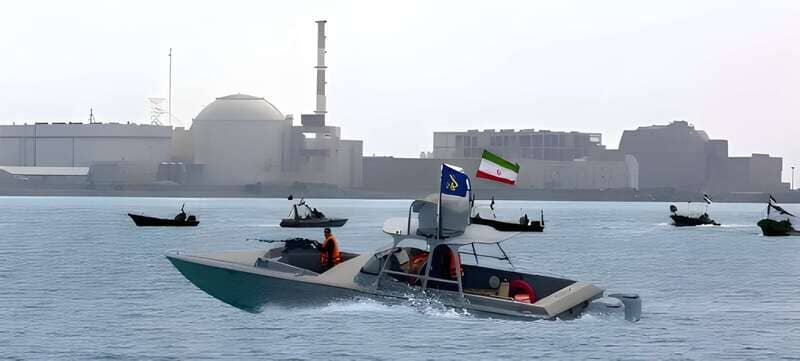
World Geostrategic Insights interview with Arash Reisinezhad on the dynamics shaping Iran’s approach to the nuclear issue, strategic loneliness, forward defense regional strategy, economic resilience, leadership and internal governance. The interview also focuses on the evolution of the security architecture in the Persian Gulf, and the strategic importance of land corridors as alternative routes to maritime straits in West Asia.

Dr. Arash Reisinezhad is an academic, researcher, and expert in international relations specializing in the geopolitics, connectivity, and political economy of the Middle East. He is a Visiting Assistant Professor at the Fletcher School of Law and Diplomacy at Tufts University and a Visiting Fellow at the Middle East Centre of the London School of Economics and Political Science (LSE). Former Visiting Scholar at Harvard University, he served also as an Assistant Professor of International Relations at the Faculty of Law and Political Science at the University of Tehran. He is the author of the books “The Shah of Iran, the Iraqi Kurds, and the Lebanese Shia” and “Iran and the New Silk Road: From Road Geopolitics to Road Diplomacy”, as well as dozens of academic articles in prestigious peer-reviewed journals. He is the Founder and CEO of ROAD Corporation Ltd, a strategic consulting and geopolitical risk analysis firm focused primarily on global infrastructure and trade corridors.
Q1 – Iran insists on separating the reopening of the Strait of Hormuz and the end of the naval blockade from the nuclear negotiations, while Washington demands concessions on the nuclear issue before easing economic pressure. From the perspective of Eurasian connectivity, does this “war of oil flows” risk permanently stifling the Iranian economy before a compromise solution is even reached? How do you assess the sustainability of this strategy of attrition on Tehran’s part?
A1- As you noted rightly, Iran is effectively separating the issue of reopening the Strait of Hormuz and ending maritime pressure and containment from the nuclear negotiations, while the United States seeks to secure major concessions on the nuclear file before offering any meaningful economic relief.
From the perspective of Iranian policymakers, however, the nuclear issue is not merely a technical matter, nor even solely a question of deterrence. At a deeper level, it is tied to what may be described as “ontological security”, i.e., a form of security linked to a state’s sense of identity, continuity, and existence. Within Ayatollah Khamenei’s intellectual and strategic worldview, the nuclear program came to symbolize national independence and sovereign agency. For this reason, nuclear negotiations are inherently more difficult than ordinary strategic bargaining, because they ultimately become negotiations over identity rather than simply material capabilities.
At the same time, the experience of wars and regional upheavals in recent decades has reinforced the perception in Tehran that the nuclear issue itself is not the fundamental problem, but rather a manifestation of a deeper structural hostility between the United States and the Islamic Republic. In this reading, the nuclear file is viewed less as the root cause of confrontation and more as a convenient instrument through which broader pressure and containment are justified.
Two historical experiences have particularly strengthened this outlook. The first is the Libyan precedent, which is frequently interpreted in Iranian strategic discourse as evidence that relinquishing or peacefully settling a nuclear program does not necessarily guarantee regime security and may instead open the door to new forms of pressure, whether related to missile capabilities, regional influence, or internal politics. The second is the experience of the JCPOA itself, especially after the U.S. withdrawal under the first Trump administration, which reinforced the belief in Tehran that agreements with major powers are neither necessarily durable nor strategically reliable.
As a result, Iran’s approach toward the nuclear issue has become increasingly cautious and deeply skeptical, rooted in the belief that Tehran already tested the diplomatic and multilateral path once, only to see it ultimately collapse under geopolitical shifts.
Furthermore, Iran now continues to possess a major structural lever through the control over the Strait of Hormuz. From Tehran’s perspective, this chokepoint creates a significant asymmetry within the global maritime order and trade and challenges one of the foundational assumptions of classical maritime geopolitics, namely the idea that global power depends on controlling sea lanes and strategic chokepoints through naval supremacy.
Within Iranian strategic thinking, time itself has therefore become a strategic variable. As I have argued previously, Iranian resilience is not merely temporal, about who can outlast whom, but also spatial and geographical. It is rooted in Iran’s ability to transform geography itself into a weapon.
Nevertheless, the current situation remains economically fragile and politically tense. Some Iranian policymakers believe that sustained pressure could eventually shift strategic leverage in Tehran’s favor, particularly through rising energy prices and the geopolitical consequences that may follow. At the same time, however, Iran itself remains under severe economic strain. On the US side, there is also a belief that continued pressure will eventually alter Iranian behavior. These competing perceptions of “strategic advantage” have produced an unstable equilibrium in which both sides believe they are gaining leverage, while neither is actually moving closer to a sustainable compromise.
As a result, the region has become trapped in a condition of persistent disequilibrium wherein both sides believe they are winning, yet no clear pathway toward a negotiated settlement has emerged. The consequence of this dynamic may not be a rapid diplomatic breakthrough; rather, the emergence of a third phase of confrontation. This phase, I think, would unlikely produce decisive strategic gains, yet highly capable of accelerating the destruction of infrastructure across Iran and the wider region, particularly in the United Arab Emirates, while simultaneously deepening regional instability.
Q2 – The current U.S.-Iran negotiations are facilitated by regional mediators such as Islamabad and Muscat, which play key roles. How does this dynamic redefine your concept of Iran’s strategic isolation? Is Tehran succeeding in breaking out of its isolation by engaging these Asian channels, or does the absence of a true “guarantor” among the superpowers condemn it to negotiate from a position of chronic weakness?
A2 – In response to your question, I should first clarify an important conceptual distinction. I have never pointed to the term strategic isolation. What I have discussed in my works is the concept of strategic loneliness, a term originally coined by Mohiaddin Mesbahi, the prominent Iranian strategist and professor at Florida International University.
Strategic loneliness should not be confused with geopolitical isolation. Rather, it refers to the fact that “Iran has been strategically ‘lonely’ by design and by default, i.e. deprived of meaningful alliances and great power band wagoning.” In other words, strategic loneliness is a durable geopolitical characteristic of Iran that defines Tehran’s relationship with major powers. It means that, at critical historical junctures when its national security and territorial integrity faced existential threats, Iran has consistently found itself alone, without a genuine strategic ally among the great powers. Therefore, Iran has historically had to formulate, design, and operationalize its grand strategy without any reliable great-power patron.
This condition has been a persistent feature of Iran’s recent geopolitical experience and is not unique to the Islamic Republic; rather, it is a long-standing geopolitical feature of modern Iranian history. The same pattern existed under the Qajars and continued during the Pahlavi era. Even the Shah himself repeatedly alluded to this strategic loneliness. Iran was occupied by the Allies during World War II despite its neutrality, and in later crises, it likewise failed to secure unconditional strategic backing from major powers. As I discuss in my book, even during periods of acute tension between Iran and Iraq, particularly the Arvand Crisis of 1969, the United States refrained from offering Tehran any meaningful security guarantee.
Therefore, strategic loneliness does not mean that Iran is geopolitically isolated. Quite the opposite: because of its unique geopolitical position, Iran can never truly be isolated. The country sits on the northern shore of the Strait of Hormuz, at the intersection of Asia, Africa, and Europe, and along both ancient trade routes and emerging transcontinental corridors. It also is located at the center of the regional energy geography at the intersection of the Caspian basin and the Persian Gulf. This geostrategic position creates a dual reality. On the one hand, it makes Iran an indispensable geopolitical actor and prevents its complete exclusion from regional and global affairs. On the other hand, that very same importance has historically discouraged great powers from allowing Iran to evolve into an autonomous and fully empowered strategic ally. Thus, regional and Eurasian channels, including actors such as Oman and Pakistan, can certainly help Iran mitigate economic pressure and partially circumvent economic restrictions. But that does not impact Iran’s strategic loneliness.
The collapse of the JCPOA, the Twelve-Days War and then the Iran War all delivered a profound lesson to Tehran that there is ultimately no final guarantor, neither great powers, nor international organizations, nor even international law itself can guarantee Iran’s security. In this context, I often recall a remark by the Shah during one of his meetings with Leonid Brezhnev. Despite his apparent partnership with the US, he had come to the conclusion that alliances and international institutions only matter insofar as they are backed by real power. He once stated, “The Russian (Leonid Brezhnev) asked me why and against which country I have purchased military weapons and armaments as much … They added they had strong suspicion of [my military purchase policy]. I responded to them, I do not care if you are suspicious or not. You have no right to ask me why I have strengthened my country. Nobody has the right to interfere in another country’s affairs. It is only me who knows well how much my country needs power and military weapons. I do not want to tell you my reasons, but I want to share one of my experiences with you. That is, international organizations and alliances are nonsense and ineffective … I do not want to be defeated by another country, and if I am not as powerful to defeat the aggressor, I will not remain [Iran] safe for him.” In his blunt formulation: The strong determine the outcome!
That is precisely why Tehran today increasingly seeks to rely not on external guarantees, but on internal resilience, geopolitical leverage, and the diversification of its regional relationships.
Q3 – For years, Tehran’s strategic posture has been based on the principle of “Forward Defense,” projecting its deterrence far beyond its national borders through the Axis of Resistance. Today, following the collapse of Hamas, the heavy kinetic damage suffered by Hezbollah, and the profound geopolitical shifts in Syria, that network appears severely degraded, exposing Iranian sovereign territory to direct threats. How can Tehran reshape its security architecture in a context where conventional deterrence has been so severely compromised?
A3 – For nearly two decades, the regional strategy of the Islamic Republic has been fundamentally built around a forward defense strategy. This orientation became especially pronounced after the Second Gulf War, the U.S. invasion of Iraq, the collapse of Saddam Hussein’s regime, and the emergence of a profound power vacuum in Iraq. The simultaneous expansion of American military power and, later, the rise of radical Salafi-jihadist groups created a strategic environment in which Tehran increasingly concluded that Iran’s territorial integrity and national interests could no longer be defended exclusively within its own borders. As a result, Iran adopted a forward defense doctrine designed to project deterrence and defend its national security beyond its territorial frontiers. The underlying logic was straightforward: Iran sought to prevent threats from reaching its own borders by managing them in surrounding geopolitical arenas.
What is particularly interesting, however, is that the logic of forward defense did not originate with the Islamic Republic. One can identify elements of a similar strategic outlook even before the 1979 Revolution. Between 1958 and 1975, the Shah, confronted with the rise of Pan-Arabism first in Egypt and later in Iraq, pursued forms of indirect regional balancing through support for Iraqi Kurdish guerillas and the Lebanese Shia. The objective, in essence, was to contain hostile ideological and geopolitical currents before they could directly threaten Iran’s security environment.
Nevertheless, between roughly 2003 and 2023, forward defense became dramatically more institutionalized under the Islamic Republic. Its most visible manifestation was the growing prominence of the Islamic Revolutionary Guard Corps Quds Force and, above all, the central role played by Qasem Soleimani in managing and coordinating Iran’s regional network strategy.
This regional defense architecture, also known as the Axis of Resistance, began to change gradually after the assassination of Soleimani, but the real turning point came in the aftermath of the Gaza war and its regional consequences. Hamas was severely degraded, Hezbollah came under intense military pressure, and the Assad regime of Syria collapsed. Collectively, these developments forced Tehran to reconsider the foundations of its deterrence model. What emerged afterward was a gradual shift away from reliance on non-state actors as the primary pillar of deterrence and toward Iran’s indigenous missile and aerospace capabilities. That is why we are witnessing a symbolic and strategic transition from the era represented by General Soleimani to one increasingly associated with figures such as Amir Ali Hajizadeh and now Majid Mousavi, the commander of Iran’s aerospace and missile forces.
More importantly, I believe this transformation is also reshaping how Iranian policymakers conceptualize Iran’s strategic depth itself. During the years in which Tehran successfully projected influence from the Persian Gulf to the Mediterranean, preserved the Assad government during the first phase of the Syrian civil war, and contributed to the rollback of ISIS, a dominant perception emerged within parts of the Iranian strategic establishment that Iran’s strategic depth existed in Syria and Lebanon. Conversely, I have consistently argued against that interpretation. In my view, Iran’s true strategic depth has always resided within Iran itself, rooted in its historical geography of the Iranian Plateau, civilizational continuity, historical experience of absorbing shocks and revival, control over strategic crossroads and connectivity, and culture of resistance and sacrifice. Strategic depth is not merely territorial extension through allied militias; rather, it is fundamentally connected to the endurance and resilience of the Iranian state, the continuity of Iranian civilization, and the ability of the country to mobilize its own geopolitical and societal capacities.
In that emerging framework, the Strait of Hormuz will likely become even more central to Iran’s deterrence posture. Control, influence, and leverage over Hormuz are increasingly viewed in Tehran not simply as tactical assets, but as structural pillars of deterrence. In other words, Iran is progressively moving toward a model in which geography itself becomes weaponized where geopolitical position, maritime chokepoints, and territorial realities are transformed into the foundation of deterrence strategy.
In short, I believe recent wars demonstrated once again that Iran’s ultimate strategic depth lies inside Iran, not outside it. If Tehran now seeks to reconstruct its security architecture, that reconstruction will likely involve a profound shift in how Iranian leaders understand the very concept of strategic depth.
Q4 – Turning our attention to the Persian Gulf region, your recent analyses highlight an asymmetry in Iran’s retaliation strategy, which appears to target the United Arab Emirates (UAE) rather than Saudi Arabia. What are the geopolitical calculations behind this selection of targets? Does Tehran view Abu Dhabi as the weak link in the pro-United States alignment, or is the goal to undermine the political-economic axis between the Saudis and the Emiratis in order to enforce a new regional security order?
A4 – Two years ago, I argued that a widening rift was emerging along the southern shore of the Persian Gulf between Riyadh and Abu Dhabi. The roots of this divergence lie in structural differences in oil policy, competition for foreign direct investment (FDI) attraction, rival ambitions to become regional transit and logistics hubs, and efforts to position themselves as leaders in emerging technological sectors. At a deeper level, this rift reflects an increasingly intense struggle for regional leadership manifested across multiple theaters of the broader Middle East and the Islamic world. In this context, the United Arab Emirates and Saudi Arabia have often found themselves on opposite sides of regional conflicts from Sudan and Libya to Somalia and Yemen. These cases collectively point to a structural divergence rather than episodic disagreement. At the time, this argument was not widely accepted. However, recent regional developments, particularly the Iran War, have made this dynamic far more visible.
From Tehran’s perspective, this GCC fragmentation is not merely an external development but one that has become integrated into Iran’s own strategic calculations. In my assessment, Iranian policymakers have, consciously and deliberately, sought to exploit this divergence by treating the UAE as a more vulnerable node than Saudi Arabia in certain regional confrontations. An additional layer to this assessment concerns Iran’s perception of the UAE’s evolving alignment with Israel. The gradual and increasingly visible normalization between Abu Dhabi and Tel Aviv following the Abraham Accords reinforced the Iranian belief that the UAE is not only an economic competitor but also an emerging security concern within the region’s evolving order. In some Iranian policy and analytical circles, this perception has been captured in the provocative claim that “the UAE has become more Israeli than Israel itself”, a formulation that reflects the depth of strategic mistrust generated by post-Abraham Accords realignments.
At the same time, Saudi Arabia’s own strategic outlook toward the UAE is not static. Riyadh increasingly views Abu Dhabi as a potential competitor in economic diversification, regional influence, and corridor-based connectivity strategies. Simultaneously, the aftermath of the Gaza War has further complicated Saudi perceptions of Israel, which is increasingly seen as a destabilizing force in the regional security environment.
The partial convergence of threat perceptions in Tehran and Riyadh, despite their enduring rivalry, has created an unusual and strategically significant overlap in regional diagnostics. This does not imply alignment, but it does suggest the possibility of parallel interpretations of emerging risks across key actors in the Gulf.
Within this broader context, we may be witnessing the early contours of a renewed “two-pillar” logic in Persian Gulf security architecture. Historically, such a framework existed during the Cold War, particularly in U.S. strategy, when regional stability and energy security were anchored in the dual pillars of Iran and Saudi Arabia. Under Nixon, this evolved into a ‘Sole Pillar’ version centered on Iran as the dominant pillar.
The crucial difference today is that any emerging two-pillar configuration would not be externally imposed or guaranteed by an outside hegemon such as the United States. Instead, it would likely be indigenous and internally generated, shaped by regional competition, evolving alignments, and the strategic recalibration of Persian Gulf states themselves. In other words, we are no longer looking at a system designed from outside, but at one potentially emerging from within the region’s own structural contradictions and converging interests.
Q5 – The military crisis coincides with a delicate internal transition within the Iranian leadership. In your study on the sociology of power in Iran, you theorized the “Politics of Martyrdom.” Faced with a partial institutional vacuum and strong external pressures, how does this ideological and psychological component operate within elite corps such as the Pasdaran? Do you believe that the rhetoric of martyrdom is pushing the system toward an irrational escalation or, on the contrary, could it favor the emergence of a pragmatic and technocratic faction willing to negotiate a de-escalation?
A5 – In my recent analysis grounded in the political psychology of Iran’s former Supreme Leader, Ayatollah Ali Khamenei, I have argued that he has never been willing to accept unconditional surrender. Within this framework, particularly during periods of acute crisis and escalating confrontation, one can observe a discernible psychological disposition toward the acceptance of death, and even martyrdom, as part of the internal logic of decision-making. From this perspective, martyrdom is not merely a personal or religious category, but one that acquires a distinctly political and strategic function. Khamenei appears to operate with the belief that the prospect of “imminent martyrdom” can function as a form of symbolic capital, capable of guaranteeing the survival of the Islamic Republic continuity through the mobilization of loyal constituencies. In this sense, martyrdom is not the end of political agency; rather, it is a mechanism for the reproduction of legitimacy and internal cohesion.
Within this narrative, the potential martyrdom of the Supreme Leader would allow for a reconfiguration of his image, from a contested political figure into a “martyr-guardian.” Such a transformation would have the effect of reinterpreting many of the structural shortcomings and accumulated crises of his tenure. Economic stagnation, social discontent, political closure, and the gradual erosion of the Axis of Resistance could, in this framing, be retrospectively subsumed under a narrative of steadfast resistance “until the final moment.”
However, the critical point is that such a framing does not necessarily imply systemic rigidity or the absence of future change. On the contrary, it can be argued that the sanctification of the Supreme Leader could expand the strategic space available to his successors. By elevating his symbolic status, it may enable more pragmatic recalibrations in foreign policy, the nuclear file, and even domestic governance, without those adjustments being interpreted as weakness or ideological betrayal.
It is also important to underscore that competition among different power blocs is an enduring feature not only of the Islamic Republic as a whole, but also within key institutions such as the Islamic Revolutionary Guard Corps (IRGC). These internal rivalries largely revolve around competing visions of Iran’s regional posture, domestic governance, and nuclear strategy.
In this regard, two simultaneous dynamics are shaping Iran’s future trajectory. On the one hand, the sanctification of Ayatollah Khamenei and the consolidation of his legacy as a steadfast, and potentially “martyr-leader,” is generating a powerful reservoir of symbolic capital. On the other hand, current material conditions, including economic strain, indirect forms of blockade and pressure, and a degree of systemic fatigue, are strengthening more pragmatic and technocratic approaches to managing his political legacy. In other words, the interaction between symbolic consolidation at the discursive level and structural constraints at the material level produces a dual outcome: it reinforces ideological cohesion among the elites while simultaneously increasing the necessity of pragmatic policy recalibration for future decision-makers.
From this perspective, the refusal to accept unconditional surrender and the emphasis on martyrdom should not be interpreted as a rejection of profound change. Rather, it suggests the postponement and temporal redistribution of such change within a different symbolic and political cycle.
Q6 – With an economy battered by sanctions and conventional military potential diminished by recent hostilities, is there a risk of a strategic geopolitical isolation that might become the definitive catalyst for the militarization of the nuclear program? Is the 90% uranium enrichment threshold now viewed in Tehran as the sole and final insurance policy for the state’s survival?
A6 – As I have emphasized previously, I do not use the concept of “strategic isolation,” but rather “strategic loneliness,” a term that describes a durable geopolitical feature of Iran. It highlights the fact that, at critical historical junctures, Iran has consistently found itself alone, without a stable strategic ally among the great powers. This condition has become even more pronounced in the era of the Islamic Republic.
Alongside this structural condition, Iran faces sustained economic pressure resulting from sanctions, as well as growing constraints on its conventional military capabilities in a regional environment in which two nuclear powers, the United States (through its alliance with Israel) and Israel itself, play a decisive role in shaping deterrence dynamics. Within this framework, Iran effectively operates in a condition of geopolitical nuclear encirclement: Pakistan to the east as a nuclear-armed state, Israel as an undeclared nuclear power, Russia to the north as a revisionist but non-allied great power, Turkey as a NATO member, and the GCC states all operating under the United States’ security umbrella. Collectively, this configuration intensifies geopolitical pressure against Iran. Against this backdrop, nuclear discourse within Iran has become increasingly salient. This trend is not confined to the highest levels of leadership but is also visible among mid-level elites and, interestingly, within segments of society. Recent wars have reinforced the perception among some actors and portion of the society that nuclear capability may represent the ultimate instrument of strategic equilibrium.
Historically, three key constraints have limited Iran’s movement toward full nuclearization. The first was the regional geopolitical power structure, which prior to the Gaza War was not uniformly aligned against Iran, allowing Tehran to construct a form of asymmetric deterrence through its “Axis of Resistance.” The second was international law, most visibly embodied in the JCPOA framework, which sought to embed Iran’s nuclear program within a negotiated legal and diplomatic arrangement with major powers, particularly the United States. The third was the ideological-religious dimension, expressed in Ayatollah Khamenei’s nuclear fatwa in the mid-2000s, which prohibited the use of nuclear weapons.
However, recent wars have significantly weakened two of these three constraints. First, Iran’s regional forward defense strategy has been disrupted and weakened in the aftermath of the Gaza War. Second, the international legal framework has been undermined by the U.S. withdrawal from the JCPOA, alongside subsequent military escalation and violations of sovereignty, which have eroded confidence in legal and diplomatic guarantees. As a result, the remaining constraint is the religious fatwa. Yet even this element has increasingly entered a zone of ambiguity and contestation due to the assassination of Iran’s leadership. In other words, the authority and status of the nuclear fatwa, and of its issuer, Ayatollah Khamenei, are no longer treated as a fully stable, uncontested variable outside political dispute, but are increasingly subject to reinterpretation within strategic discourse.
Within this context, a key question has emerged in Iran’s strategic debate: whether the fatwa represents a permanent and politically insulated doctrinal constraint, or whether it could be redefined, or even revised, under conditions of generational change, security pressure, and structural transformation. Consequently, this element has shifted from being a fixed “red line” to becoming an active site of political and strategic contestation.
Overall, while nuclear discourse and signaling have become more pronounced in Iran’s political space, the translation of such discourse into actual policy remains uncertain. Economic constraints, along with pragmatic tendencies within segments of the Islamic Republic’s decision-making structure, continue to exert a moderating influence, particularly among actors who view the post-conflict environment as an opportunity to recalibrate Iran’s relationship with the international system. From this perspective, one may draw a historical analogy with the Nixon-Kissinger opening to China in 1972, which marked the beginning of China’s gradual reintegration into the international system. In a similar vein, some pragmatic currents in Tehran may interpret the end of sustained conflict as a potential window for Iran’s gradual re-entry into global and regional order through calibrated policy adjustments.
However, this space remains deeply contested. Alongside pragmatic actors, there remain powerful constituencies advocating a more hardened deterrence posture and even expanded nuclear ambiguity or capability as a core instrument of survival. As a result, Iran’s strategic debate is increasingly structured around two competing blocs: one oriented toward managed reintegration into the international system through pragmatic recalibration, and another emphasizing strategic self-reliance and the strengthening of hard deterrence, including in the nuclear domain.
Q7 – The current conflicts highlight the fragility of maritime routes, making land corridors increasingly vital. How land-based corridors reshape regional political economy and geopolitical structures, with particular reference to West Asia, and China’s Belt and Road Initiative? Which are the strategic implications of the rise of the “corridors”?
A7 – Five years ago, in my book, Iran and the New Silk Road, as well as in a series of articles, particularly the “Corridor War in the Middle East”, I argued that the international system is undergoing a structural transition characterized by three interrelated dynamics: transformation, diversification, and, most importantly, connectivity. Within this framework, we are witnessing the rise of land-based corridors as one of the most important manifestations of geoeconomic power in West Asia. In other words, corridors are not merely infrastructure projects; instead, they are an integrated set of energy pipelines, transport networks, fiber-optic infrastructure, smart cities, ports, and airports. Taken together, they form an interconnected spatial-economic architecture that reshapes both regional political economy and the broader geopolitical order. In these works, I introduced the concept of “corridor geopolitics,” referring to the reciprocal relationship between geopolitics and corridor formation. On the one hand, geopolitical forces shape the trajectory of corridors; on the other, corridors themselves reshape and reproduce regional power structures. This mutual constitution suggests that connectivity and power can no longer be analytically separated.
Even prior to the recent escalation of regional crises, I argued that China’s Belt and Road Initiative had generated a cascade effect, pushing other regional actors toward designing competing or complementary connectivity projects. India, GCC and Israel have advanced IMEC; Iraq and Turkey have initiated the Development Road, Turkey has sought to position itself as a transit hub linking the Caucasus and Central Asia; and Central Asia itself has increasingly emerged as a geopolitical Eurasian bridge of corridor competition.
In the meantime, recent conflicts, including the wars against Iran, have demonstrated how strategic maritime chokepoints like the Strait of Hormuz and Bab el-Mandeb can become directly embedded in geopolitical confrontation. This, in turn, increases the strategic importance of land corridors as alternative routes. While maritime transport remains more cost-efficient under stable conditions, rising insurance costs, growing insecurity, and the increasing fragility of chokepoints are gradually shifting the balance toward overland connectivity. A similar dynamic can be envisioned in the event of intensified U.S.-China rivalry, where chokepoints of the Taiwan Strait or the Strait of Malacca could face systemic disruption, further accelerating the logic of diversification away from maritime routes.
However, the rise of corridors does not necessarily imply stability, peace, or convergence. Contrary to the assumption that connectivity automatically produces economic integration, I argued within the framework of “corridor wars” that states’ competition to bypass one another and reroute connectivity through their own territory intensifies geopolitical rivalry. This process produces what I termed “corridor hot nodes”, referring to critical and often fragile points at which geopolitical contestation can reshape the viability of entire connectivity architectures.
Within this context, certain states risk being structurally bypassed. Syria, due to prolonged civil war, has been excluded from many emerging connectivity designs. Iran, under the pressure of sanctions, has increasingly come to represent a structural gap in West Asia’s corridor geography, despite earlier visions that positioned it as a central bridge linking South Asia, Central Asia, and the broader Middle East. Even the International North-South Transport Corridor (INSTC) never fully initiated due to both the US-orchestrated sanctions and internal mismanagement. This condition carries significant strategic implications. When a state perceives itself as excluded from emerging corridor architectures, it may come to interpret connectivity not as an opportunity, but as a mechanism of strategic marginalization and exclusion. In such a perception, corridors shift from instruments of integration to markers of geopolitical exclusion and structural vulnerability.
Dr. Arash Reisinezhad – Academic and researcher, Founder and CEO of ROAD Corporation Ltd