



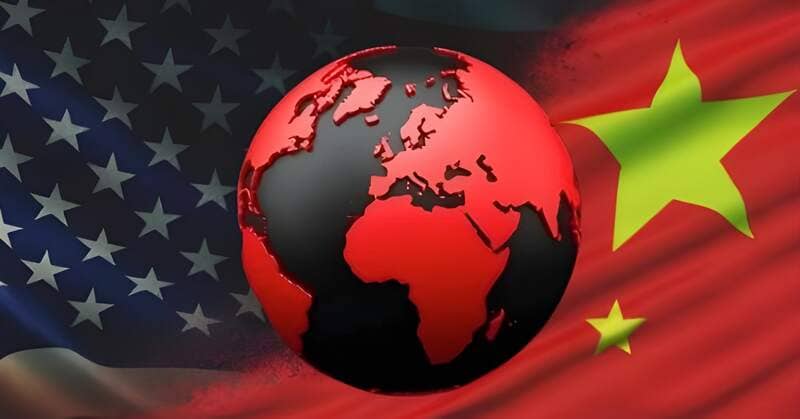
Since the early 2000s, the world has undergone profound and unprecedented changes, and the trend toward multipolarity has accelerated. In this new era of turbulence and transformation, however, multipolarity is taking on new characteristics. Inequality and disorder are worsening. Ruthless competition among the great powers is becoming more evident. Fears of a new world war are growing.
Superpowers are trampling on international law and treating the territories of independent countries as if they were their own backyard. The best solution is to promote multipolarity in a more equitable and orderly direction and establish a new global political and economic order.
A positive factor in this transformation is the rise of the Global South and its growing political awareness, including greater independence and autonomy and a challenge to powerful, hegemonic, and aggressive powers. Together with other non-Western countries, the Global South constitutes the East, bringing about a clear shift in the balance of power between East and West as the East rises and the West declines.
However, in the broader context of the rise of the East and the decline of the West, the People’s Republic of China (a Tellurocratic state of peace) and the United States (a Thalassocratic state of war) are particularly important. Among the emerging global powers, China stands out in particular. Leveraging its strengths as a major power — particularly its rapid development over the past forty years — China has grown exponentially in national strength, becoming the second-largest economy after the United States. Meanwhile, the United States of America has experienced the slowest decline among the declining Western countries, resulting in a growing power gap. Consequently, alternating cycles of strength and weakness between Beijing and Washington have become one of the most debated topics in international politics. Some scholars believe that the world order has shifted from multipolarity to bipolarity, as was once the case between the White House and the Kremlin.
Regardless of those who advocate for bipolarity, the one-sidedness of this argument is evident. The decisive factor in the world order is the relative strength of the great powers. Currently, the United States leads in terms of overall strength, with the People’s Republic of China close behind. However, the strength gap between the Middle Kingdom, the United States, and other great powers is far less significant than the gap between Washington and Moscow during the Cold War. From an economic standpoint, the EU’s GDP is comparable to China’s. Considering the euro’s role as the world’s second most important currency, the EU’s economic strength should be emphasized more. Russia has long been considered the world’s second-largest military power. Despite setbacks in the Ukraine crisis, it has single-handedly withstood pressure from the entire NATO alliance, demonstrating remarkable strength.
In terms of soft power, including culture and diplomacy, major players not to be underestimated include the EU, the United Kingdom, India, and Japan.
Since the collapse of the Soviet Union and the end of the bipolar world order, the United States has promoted unipolarism while a multipolar trend has quietly emerged. “One superpower and multiple strong powers” is a classic mantra used in academic debate to describe the world order since the 1990s—the era of Fukuyama’s illusions and the European Union’s Kantian universal peace.
Today, it is undeniable that the American superpower is weakening.
It is no coincidence that the search for new theaters of war is a necessity of financial capital—not a ploy by Trump, as some unsuspecting Italian and non-Italian politicians believe—but rather a result of the merger of banking and industrial capital, as well as growing state interference in the economy, which is part of the process of developing investment in the proliferation and production of war. Presidents of the United States, regardless of political affiliation, are simply products of Hilferding’s theories.
Meanwhile, the “other” major powers—including the People’s Republic of China, Russia, the European Union, and Japan—are growing stronger. With the rise of the Global South, the composition of the great powers has undergone subtle shifts. India, with over 1.4 billion inhabitants, has replaced Japan. Thus, in this evolving multipolar world order, non-Western members outnumber Western ones.
In light of this reality, an increasing number of international actors acknowledge the existence of a multipolar world, though they disagree on which countries should be included. Since the beginning of the 21st century, for example, the People’s Republic of China has maintained consistent diplomatic relations with the United States, Russia, and Europe as part of its great-power diplomacy.
The 61st Munich Security Conference, held from February 14 to 16, 2025, centered on the theme of multipolarity, which is becoming a reality every day. Significantly, the United States, which has consistently pursued unipolar hegemony and opposed multipolarity since the end of the Cold War, has begun to shift its perception of the world order.
In January 2025, Trump stated that the United States was no longer the world’s leading power, effectively acknowledging that Washington had lost its status as a unipolar hegemon and was seeking to regain ground through military production. The United States, thanks to its geographical position, has never experienced a war with foreign powers on its own soil, except for the Anglo-American War of 1812 and the Japanese bombing of Pearl Harbor on December 7, 1941. Therefore, as a thalassocratic power, it is far preferable for it to be exported abroad.
As the world undergoes rapid changes, it has entered a new era of turbulence and transformation. These upheavals and transformations affect every aspect of the existing world order.
Within the general trend toward a rapidly multipolar world order, the negative aspects of multipolarity manifest primarily in two ways. First, hegemonic and overbearing behaviors are more severe than in the past, and the trend toward inequality is more pronounced. Second, disregard for the existing international order and jus gentium is more evident, and the multipolar world risks descending into disorder.
In an ideal new global political and economic order within a multipolar world, equal treatment among the great powers—and even between the great powers and less powerful states—is essential for maintaining normal relations and world peace. After the Cold War, the United States—under both Democratic and Republican presidents—has pursued hegemony and a policy of power. They have often resorted to authoritarian behavior and sought institutional hegemony, considering themselves “world leaders” while maintaining a smiling, democratic image. However, during the Trump presidency, the United States’ authoritarian behavior toward other countries became rampant. They completely ignored the opposition of most countries and the United Nations, as well as international condemnation. Even among the great powers, the United States has demonstrated an increasing tendency to judge right and wrong based on its own interests.
The creation of the United Nations led to the formation of a UN-centered international system and order. Thanks to this system, the world has maintained general peace and made significant progress in various aspects of global governance. While this system presents many problems, it is necessary to address and improve them through continuous reform. After the Cold War, the United States and the West tried to establish a liberal international order whose central pillar was an alliance system centered on the White House. However, this did not exclude the UN system entirely; rather, it integrated the UN and other mechanisms of international balance into the new order. Consequently, the United States and its allies, particularly NATO, have frequently violated the principles of the UN Charter, often acting under the guise of the UN or independently. For example, the “Coalition of the Willing”—the multinational alliance led by Washington that invaded Iraq in March 2003 and overthrew Saddam Hussein’s regime without a specific mandate from the UN Security Council—is one such violation.
The other major powers have boasted of adhering to the principles of the UN Charter. However, in recent years, the situation has changed significantly. Violations of the UN Charter have increased considerably, especially amid the Ukraine crisis, reflecting the strategic rivalry between the United States, Russia, and the European Union. This raises doubts about the survival of the international order itself. These actions openly challenge the United Nations’ authority, significantly weakening the system and world order and putting them at risk of collapse. The world could slide into an era of disorder.
Inequality and disorder have severely impacted relations among the great powers. Ruthless competition has intensified to the point that fears of world and nuclear war are stronger than ever. Multipolarity risks straying from the right path.
Therefore, to establish a new world order, equitable multipolarity must be developed. Only when multipolarity develops equitably and orderly can relations among the major powers remain healthy and stable. Only then can the major powers and the vast majority of small and medium-sized countries feel secure and focus their primary efforts on their own development. Only then can international cooperation be effectively implemented at all levels, and can global governance make continuous progress in all aspects. Only then can the international order be constantly improved, and can world peace be truly guaranteed. Only then can humanity effectively address various challenges and risks, and can human civilization continue to progress.
So, what does a fair and orderly multipolar world entail? It means upholding the equality of all countries, regardless of their size; opposing hegemony and the politics of power; and promoting the democratization of international relations. These are the very international norms and fundamental principles that must be consistently upheld and followed. They are also recognized by the vast majority of countries worldwide. These norms are not obsolete in today’s world, which is characterized by major upheavals and changes. On the contrary, to maintain world peace, these norms must be strengthened. Therefore, all countries must adhere to the purposes and principles of the United Nations Charter and uphold the universally recognized fundamental norms of international relations. They must also practice genuine multilateralism. Only in this way can the multipolar world process’s overall stability and constructive nature be ensured.
At the beginning of the 21st century, many observers envisioned a frictionless, globalized society. This idea has since been discredited. It is now recognized that enormous injustices lurk within global trade. Global trade often fails to curb dumping and customs duties, which undermines the social contract within countries and leads to significant crises.
The New World Economic Order refers to a new set of global rules, such as the 1974 United Nations Declaration on the Establishment of a New International Economic Order, which aim to transform the old, Western-dominated international economic structure. These rules would establish a system that is fair and mutually beneficial, reflecting the interests of developing countries.
Currently, it represents emerging markets’ commitment to promoting reforms in global economic governance, supporting South-South and digital economy cooperation, and building a fair, orderly, and diversified system centered on a community with a shared future for humanity.
Key concepts and perspectives include an emphasis on sovereign equality, the right of every country to choose its own economic development model, and the promotion of reforms to international financial and trade rules that currently harm developing countries. Key areas to address include financial governance reform, fair trade in raw materials, and international cooperation in the digital economy era. These efforts aim to counter the rise of unilateralism and protectionism, as well as the inadequacy of traditional multilateral mechanisms.
In conclusion, it is worth reflecting on the new world orders that have succeeded one another since at least the 19th century. After the Napoleonic Wars, which followed the French Revolution, the Congress of Vienna in 1815 established an order that lasted until the Spring of Nations began in Palermo on January 12, 1848. The turmoil of Romantic nationalism and other forms of nationalism persisted until Italy and Germany achieved national unity in 1871. Rome was officially designated the capital by law on February 3 of that year. This new order lasted forty-three years and lasted until 1914. The Belle Époque was swept away by World War I, but the order imposed by the Versailles Conference also collapsed in 1939 due to World War II. The Cold War order persisted from 1945—or rather, from George Kennan’s long telegram from Moscow to Washington on February 22, 1946—until the collapse of the Union of Soviet Socialist Republics on December 26, 1991. At that time, naive and spiritually impoverished people imagined a paradise on earth. They failed to understand that Paul’s katechon was none other than the Soviet Union. This was demonstrated on September 11, 2001, when the fall of the katechon gave the Four Horsemen of the Apocalypse free rein.
As we have seen, the establishment of a new world order, from the time of the Roman Empire to the present day, requires either a global explosion or the structural collapse of one of its pillars. In our hope for change, we do not desire this and can only hope for goodwill towards peace and the best efforts of all international actors. International conferences are fundamental to shaping the new world order and determining the evolution of geopolitical and economic rules, as well as models of international cooperation. They are crucial for establishing new international norms, balancing the interests of developed and developing countries, and addressing environmental and economic crises. In times of crisis, conferences help to build multilateral alliances that, while they may not create a new order, can at least prevent the collapse of the old order established by the United Nations. Therefore, it is either this or a world war that will establish a new world order; the outcome depends entirely on the will of decision-makers.
Author: Giancarlo Elia Valori – Honorable de l’Académie des Sciences de l’Institut de France, Honorary Professor at the Peking University. Giancarlo Elia Valori is a highly regarded Italian manager, playing a leading role in fostering dialogue and cooperation between countries. He is currently President of the Foundation for International Studies and Geopolitics.
(The opinions expressed in this article are solely those of the author and do not necessarily reflect the views of World Geostrategic Insights).
Note: This article, like all articles published on World Geostrategic Insights, cannot be republished without the written permission of the editor of World Geostrategic Insights.