



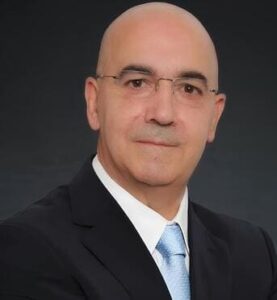
Fernando Figueiredo
Fernando Figueiredois a retired Portuguese Army colonel and former NATO professional, currently serving as a defense consultant at Pulsar Development International. His work focuses primarily on defense requirements, offering expertise and a network of contacts that enable operational challenges to be overcome with effective, tailored solutions. During his military career, he held various strategic leadership positions. He headed the Military Planning Department of the General Staff of the Portuguese Army, and was Commander of the 3rd infantry Regiment.
By Fernando Figueiredo On 25 August, CIA Director John Ratcliffe travelled to Moscow on an unannounced trip — the first known visit by an agency director to Russia since William Burns went in 2021 to warn Putin against invading Ukraine. The meeting with…
By Fernando Figueiredo There are discreet ways of telling an alliance that it is no longer unconditional. One of them is a questionnaire. According to Bloomberg, Washington has sent NATO allies an inquiry asking, in essence, whether they have been publicly loyal to…
By Fernando Figueiredo Europe is confronting an uncomfortable reality. The world has not necessarily become more dangerous — it has become more unpredictable. And unpredictability exposes vulnerabilities that were for a long time masked by favourable circumstances. Debates about autonomy, learning and the…
By Fernando Figueiredo Russia’s invasion of Ukraine has evolved far beyond a regional conflict. It represents a structural inflection point in the international security system, exposing the limitations of the post-Cold War transatlantic model while accelerating the emergence of new actors and forms…
By Fernando Figueiredo While the war in Ukraine rightly dominates European concerns, there is another devastating conflict receiving far less attention: Sudan. Over the past three years, around 400,000 Sudanese are believed to have died. In just the last six weeks, an estimated…
By Fernando Figueiredo An article by Robin Harding in the Financial Times argues that “China can manufacture almost everything better and cheaper, and would have nothing left to import, making trade ‘impossible.’” Other economists, however, maintain that China remains firmly committed to economic…
By Fernando Figueiredo In recent years, it has become commonplace to hear European leaders express moral indignation in response to major shocks in international politics. This indignation, often grounded in legitimate values—sovereignty, international law, multilateralism—nevertheless risks turning into an impotent lament. In a…
By Fernando Figueiredo Throughout my military career, I have lived through very different experiences. From commanding a peacekeeping mission in distant Timor-Leste to directly witnessing the horrors of war in Iraq. I was under thirty when the Berlin Wall fell and the Cold…