



By Yasir Masood
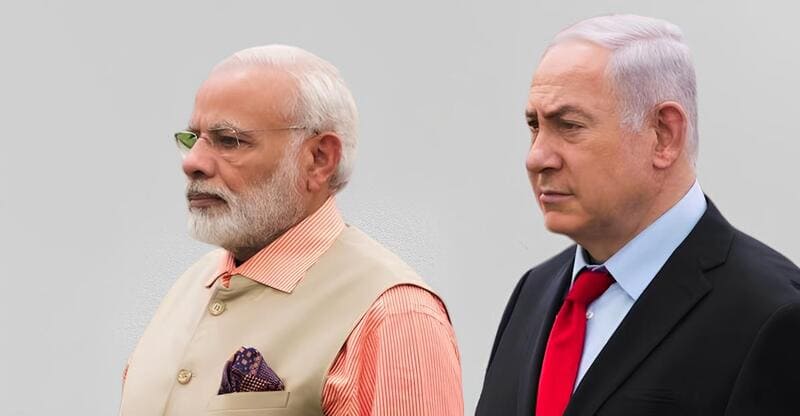
What if India, inspired by Israel’s 12-day blitz on Iran, launched a similar precision strike against Pakistan, its nuclear-armed rival, with which it clashed again just a few months ago, in May 2025?

India’s defense, doctrinal, and ideological alignment with Israel, shown through precision-strike investments, hybrid warfare tactics, and SCO diplomacy, poses a unique challenge to Pakistan, requiring structural and strategic adaptations.
The recent Iran–Israel conflict has reinforced this trajectory with deeper India-Israel cooperation, which India signaled by abstaining from the SCO statement condemning Israel’s strikes on Iran and UN-related resolutions, despite its call for restraint between Israel and Iran tensions, further complicating Islamabad’s strategic calculations.
Pakistan, however, demonstrated remarkable resolve during Operation Bunyan Ul‑Marsoos, in the May 2025 clash with India, with Islamabad labelling India’s Operation Sindoor an unprovoked act of aggression. With defense cooperation from China and newly acquired Turkish drones, Islamabad demonstrated that it has the tools to counter any renewed Indian advances.
Even so, another Indian misstep remains possible, as New Delhi may seek to regain its perceived strategic edge in South Asia. Reliance on Russian S‑400 systems and U.S. diplomatic red lines, however, may constrain any full‑scale precision‑strike campaign despite India’s robust ties with Israel.
As Dr Seema Khan of Deakin University warns, “India and Israel, in cahoots, have already shared intelligence and recruited Indians for Israel Defense Forces operations in Gaza, Lebanon, Syria and beyond — after Pahalgam and during surgical strikes in Pakistani‑administered Kashmir — and they could now target Pakistan more intensely.”
India-Pakistan Strategic Posturing Post-Iran-Israel Clash
Israel claimed its air force flew over 900 sorties, struck 1,500 targets, and fired more than 4,300 rounds of ammunition at Iran’s missile production facilities during the war. India’s military upgrades and arms deals with Israel suggest it is adopting that precision‑strike framework, some of which saw action in the May 2025 conflict. For instance, India is now the largest buyer of Israeli arms, accounting for 34 percent of its defense exports, according to a March 2024 SIPRI report. Between 2023 and 2024, Israel supplied 13 percent of India’s imports, more than twice its share 20 years earlier, and between 2001 and 2021, India imported $4.2 billion worth of Israel’s defense imports.
Moreover, India’s jointly produced systems with Israel include Heron-style drones, electronic warfare suites, Spike missiles, Hermes 900 and Barak 8 drones, field artillery and the TROPHY system, a smart defense shield for tanks that intercepts incoming rockets, along with a new acquisition of 83 co-produced HAL Tejas Mk 1A jets to modernize its fleet, according to a Washington-based think tank report on June 11, 2025. Recently, The Times of India surprisingly used the term “Ongoing Operation Sindoor” in the title of a report on India’s planned upgrades of around $11.70 billion, revealing its aim to sustain military pressure and readiness against Pakistan.
Regional analysts have taken note of this evolving posture. Col Rajeev Agarwal of Chintan Research Foundation from New Delhi told me that, “following the Pahalgam terror attack on 22 April 2025, Israel fully backed India’s right to self‑defense, and he expects that partnership to deepen as both sides take key lessons from current conflicts and upgrade their military preparedness. In any future war with Pakistan, India will definitely incorporate key lessons from recent conflicts, which will only add to the scale of destruction and devastation on Pakistan, more severe than inflicted during Operation Sindoor.”
Building on this, Dr. Rabbia Akhter, Dean at the University of Lahore, warns that “if India internalizes and operationalizes Israeli doctrines of preemption, targeted strikes, or punitive deterrence as we saw in the Iran-Israel 12-day conflict, the risk calculus in South Asia could shift dangerously. It will blur the line between conventional provocation and nuclear signaling. And for Pakistan, this necessitates urgent structural adaptation, preparation for which is already underway.”
Hybrid Threats
But the threat is not limited to missiles and drones. During the war, I observed that both Iran and Israel fueled information warfare campaigns against each other to justify their strikes while concealing their own casualties and damage. This template India has also long applied to Pakistan, amplifying a manufactured narrative, as I noted in my 2016 Express Tribune piece. But in the May 2025 conflict, social media hybrid warfare deeply ensnared both India and Pakistan, twisting the facts to win their own narratives. Notably, some of India’s ‘mainstream media’ even aired fake footage showing Karachi Port in ruins, Lahore captured, and claiming that Indian forces had nearly overrun Islamabad, coverage that an Indian journalist branded as “journalistic jingoism“ in his article.
Diplomatic Tango
Both Islamabad and New Delhi seem to be at loggerheads at the multilateral forums. For instance, at the recent SCO defense ministers’ meeting, where India’s defense minister refused to endorse the joint communique, citing it as supportive of Pakistan’s stance on terrorism rather than India’s, as both sides’ media reported. While India’s SCO abstentions on Israel during the Iran war reflect its alignment priorities, Pakistan has similarly vetoed discussions on Kashmir, revealing both states’ use of the grouping for bilateral score-settling.
Asim Munir’s meeting with Donald Trump and Islamabad’s vocal support for Iran at the UN suggest that its diplomatic countermeasures are yielding results, as I highlighted in my recent WGI interview as part of Pakistan’s multipronged strategy. While India’s emulation of Israeli tactics poses real challenges, South Asia’s nuclear reality and Pakistan’s evolving countermeasures create a complex deterrent equation. The region’s stability will hinge on whether both states can resist weaponizing multilateral platforms like the SCO.
To address these layered threats, I offer five recommendations for Pakistan’s defense posture should India adopt Israeli‑style hybrid warfare tactics.
First, disperse and decentralize critical infrastructure
While Pakistan has kept its fixed installations well defended, the advent of precision strikes demands fresh thinking. Rather than locking all its centrifuges (nuclear research machines) into one giant bunker, the distribution of them across multiple locations with mobile instalments — each with its own power and ventilation. By merging fixed sites with mobile facilities, any attacker would face a maze of targets, having to search through multiple hideaways and pursue mobile laboratories, making it far harder to cripple Pakistan’s nuclear sites. This decentralized, mobile posture will help safeguard both critical research and decision-making if India initiates precision strike attacks.
Second, reinforce a multi-layered defense and electronic warfare shield
As India assimilates Israel’s precision warfare doctrine, Pakistan must also rethink to strengthen its air and missile defense posture. Pakistan is already increasing its investment in covered defenses, including long-range systems for missiles, mid-range systems for cruise threats, and short-range anti-drone technology. Equally, it should upgrade its indigenous electronic warfare tools, including jamming systems, cyber countermeasures — tools to defend against or neutralize cyberattacks — and methods to seize hostile drones. This combination of physical and digital capabilities will be essential for preserving strategic stability as India leans further into the Israeli model.
Third, stand up a dedicated strategic communications cell
As I noted earlier in the piece, in the event of war, such tactics naturally intensify, which became clear during the four-day confrontation with Pakistan and in the subsequent effort to distort facts and downplay Pakistan’s achievements in favor of a manufactured narrative. Therefore, it is vital to establish a dedicated communications cell responsible for delivering rapid responses to counter misinformation and projecting Pakistan’s narrative of restraint and defense.
Fourth, expand counter-proxy and hostile network operations
Beyond Information warfare, proxy wars also pose a great danger. Pakistan’s Balochistan Liberation Army (BLA), Balochistan Liberation Front (BLF), the Tehrik-e-Taliban Pakistan (TTP), among others, have long drawn outside support, from the Kulbhushan Jadhav case to the Jaffar Express attack. Indian intelligence could reactivate these groups following the Israeli template in a future conflict against Pakistan. Islamabad must therefore scale up both immediate counter-proxy operations and sustained counter-network efforts to dismantle these externally driven groups and their logistical, financial, and digital support structures.
Finally, strengthen cross-domain deterrence and doctrinal clarity
Finally, Pakistan should sharpen its cross‑domain deterrence in cyber and space by defining clear doctrines and investing in the necessary capabilities. This compensatory layer will help correct emerging strategic imbalances. Doctrinal signaling also needs to develop with precision and clarity, asserting Pakistan’s ability to impose costs without appearing escalatory. The aim is to preserve strategic initiative while leaving space for a calibrated reaction. In a fast-changing security environment, this message clarity is as vital as the credibility of the force.
Central to this thesis is that India’s emulation of Israeli-style precision and preemption indeed tests Pakistan’s deterrent. Yet, Operation Sindoor exposed political pressures, military limitations, doctrinal gaps, and ideological boundaries that still hindered its full adoption. Even so, selective efforts to replicate the Israeli model could spur unpredictable and far-reaching consequences, extending well beyond Pakistan’s borders.
To meet this evolving threat, Pakistan must now decode analysis into action by dispersing and decentralizing its critical infrastructure; building a multi‑layered air, missile, and electronic‑warfare shield; standing up a dedicated strategic‑communications cell; intensifying proxy‑counter and hostile‑network operations; and reinforcing cross‑domain deterrence with doctrinal clarity. In a region where doctrines can shift in hours and missteps prove costly, Pakistan’s strategic repositioning is vital to deter, disrupt, and endure the conflicts of tomorrow.
Author: Dr. Yasir Masood – Pakistani political and strategic analyst, academic, and broadcast journalist specializing in strategic communication. He holds a PhD in International Relations with a focus on the Balochistan conflict. His work spans South Asian geopolitics, Pakistan’s foreign policy, US-Pakistan relations, and the China–Pakistan Economic Corridor (CPEC). He regularly provides commentary to leading global media outlets and think tanks.
(The views expressed in this article belong only to the author and do not necessarily reflect the views of World Geostrategic Insights).