



Natural Resources, Reserves, and Exports
In the previous article, Definition, composition, and surface area, it was stated that today it is valid and relevant to reexamine the nature of Latin America and the Latin American Caribbean, a concept that could be understood as a region, a territory, and physical, maritime, and air spaces framed by Latin culture and languages, that is, Spanish, Portuguese, and French, and within a continent called America. To these spaces should be added the Latin part of the insular area belonging to the Atlantic Ocean, identified as the Caribbean Sea, and other small islands in the two oceans that surround it.
This region would therefore be a multidimensional space, representing half of the American continent, but which, compared to other regions of the world, would also have an area equivalent to roughly half the size of Asia, or slightly smaller than Africa, or twice the size of Antarctica, Europe, and Oceania. It could become larger or smaller depending on the events of its daily life or its relations with other global actors (1). It could even become a huge colony, given the policies of territorial annexation pursued by the current powers.
A territory that would also contain large strategic areas that would be at risk of being lost or deteriorating, such as the Amazon rainforest, the South American pampas, the Colombian-Venezuelan plains, the Mexican deserts, the Central American rivers and lagoons, or the mountain ranges throughout the region, with their mines, valleys, and volcanoes, which are now assets of great value. Not to mention the Isthmus of Panama, or the gigantic rivers, lakes, and forested areas of many South American countries, or the plains of the Caribbean islands.
Secondly, this is a region that could play a new and vital geo-economic role in the world, considering that, by organizing itself as a single political and economic unit with clear leadership, it could use its vast natural resources and areas of high strategic value in a different way (2).
In other words, a region that could sustain its development with a new and modern industrial complex with high added value and associated services, based on healthy, sustainable products that protect the global environment, without neglecting its status as a region that exports food and energy resources to the world. However, this would require foreign investment and global technology.
This would also be supported by the fact that the countries that would make up the region already have a large educated and urbanized population, which could drive the transformation of their productive apparatus, focusing it on the generation and export of goods that are more friendly to the earth and living beings, thus transforming their overall development model.
Finally, this region would have to face many risks, as, for example, it already has a high probability of deforestation of its forests and jungles (3), or the effects of climate change are already destroying its environment, or the accelerated disappearance of snow-capped mountains, rivers, plant and animal species is affecting the generation of fresh water, clean air, and its great biodiversity. These issues are already latent problems in all the countries within its territory and are having a dramatic impact on the entire world.
In addition, the culture of land colonization, which is also destroying jungles and forests to devote them to illegal crops, livestock, or illegal mining, could end up, in a short time, with these territories, also fuels an economy based on the destruction of the earth’s soil and subsoil. All of this is sustained by the existence of illegal armed groups that engage in these types of practices.
For these reasons, this second paper on the application of the geoeconomic and geopolitical analysis model developed in previous articles seeks to present an overview of the natural resources of Latin America and the Latin American Caribbean, including their current value, represented in their reserves, and also their impact on the exports of the countries in the region.
Overview
As already mentioned, from a geographical and political perspective, the region of Latin America and the Latin American Caribbean could include twenty (20) countries with both Latin and American cultures that have already achieved full political independence, i.e., they are not colonies, departments, or enclaves of countries outside their territory, nor are they part of other cultures or groups of non-Latin countries.
This region occupies a multidimensional space with a land area of more than twenty-four (24.2) million km² on the American continent and just under a quarter of a million km² in the Caribbean islands. And if it included the islands belonging to Latin American countries in the Atlantic and Pacific oceans or the maritime areas in the two oceans, which are part of the same countries in the region, then many of them would be up to twice their size, significantly increasing the regional size. Or it could be reduced in size or even disappear due to the intervention of external factors.
This would also apply to the spatial dimension associated with the air above the ground, the subsoil of its own territory, and the underwater areas of its territorial sea, where there are abundant resources of all kinds.
A geographical region that could also be understood as a cultural unit, with many attempts at political and economic integration, based on the unequal mixture of three great civilizations, the European Latin, the indigenous, and the Afro-descendant, and which would have a unifying factor, such as the Latin languages and their manifestations in terms of customs, behaviors, ideas, and political, economic, and social institutions, which are more or less common.
A territory that would also be part of the so-called Western Hemisphere and, given that its center would be located within the Tropics of Cancer and Capricorn, could be defined as a tropical area for much of its space. And that, due to this same condition, it would have all climates, although with extremes of heat and humidity, depending on whether the areas are higher or closer to sea level, or depending on whether their location is further away or closer to the equator.
On the other hand, this region of Latin America and the Latin American Caribbean would be an area identified as the world’s largest generator of clean air, fresh water, and vital species, given its extensive rainforests, enormous tropical forests, multiple valleys and plains, and long, mighty rivers. It would also be home to the greatest biodiversity on the planet (4).
In that case, it would possess one-third of the world’s freshwater reserves (5) and, in terms of jungles and forests, it would have a very similar situation.
In terms of human and food security, the region would have millions of hectares available for the production of corn, soybeans, rice, barley, coffee, bananas, cocoa, fruits, sugar cane, as well as many other plant and animal products, intended not only for human consumption but also for many other uses, such as the production of medicinal goods.
Thirdly, in terms of natural resources, the region would have enormous and multiple deposits, mines, and reserves of oil, coal, copper, lithium, gold, silver, precious stones, tin, copper, and manganese, in addition to other products that are already in use, such as minerals from rare earth elements, uranium, lithium, and many more, which have been supplying the global industry with raw materials for centuries.
Fourthly, it is a region where many of its unexplored natural resources are located in its maritime and submarine areas and its airspace, which today have such characteristics and great advantages due to their location and size that they are invaded by all kinds of control, surveillance, and communication instruments that are foreign to the countries.
However, in contrast to the above, it would be a territory where many of its countries, since the middle of the last century, have managed to gain significant ground in light or intermediate industry, such as electronics, clothing, medical equipment, plastics, assembled vehicles, auto parts, ships, spirits, and petroleum products. Or that in the service sector, and in areas such as tourism, health, education, and gastronomy, it has shown significant growth in its economic structure and exports.
This is accompanied by the fact that the region is the most urbanized on the planet, with around 80% of its population living in cities, which means it has six metropolises with more than 10 million inhabitants, three metropolises with between 5 and 10 million inhabitants, 65 metropolises with between 1 and 5 million inhabitants, and 141 metropolises with between 300,000 and 1 million inhabitants (6).
In other words, the region already has a large number of educated and productive people living in metropolitan areas for its development.
Finally, despite its valuable natural assets, this is a region that needs to change its priorities, because if it continues to focus on the extraction and export of basic and natural goods, minerals, or vegetables, it will not be able to become an important global player. This is compounded by the fact that its productive apparatus continues to be characterized by the existence of thousands of micro, small, and medium-sized enterprises (MSMEs) with low technology and low productivity, and that these productive units continue to represent more than 99% of all enterprises, with only 60% of formal employment.
Therefore, a unified Latin America and the Caribbean should urgently consider the need to create a common agenda for the extraction and processing of strategic minerals or the exploitation of its natural resources, and to promote another type of socioeconomic development, since as a mere exporter of minerals or raw materials, it will not achieve sustainable economic growth.
This means modifying its current model of extractivist development and uncontrolled exploitation of the land, water, and sea, as this only drives the destruction of its own environment and natural resources and fuels social and security problems, daily crime, and even other illicit businesses with a global impact. It also encourages the existence of illegal armed groups that have been associated with being the largest producer and trafficker of illicit drugs.
This ultimately leads to it being considered the most unequal region in the world in terms of wealth distribution.
Natural resource reserves
As can be seen from the above, understanding the size and importance of the natural resources of Latin America and the Latin American Caribbean (7) is essential to understanding that, if this multidimensional space were a single political and cultural unit, it would be more beneficial to the global world, as it could bring about a major change in the business, productive, and labor structure of the land by generating new environmental, economic, and labor realities.
However, in order to achieve this, it would be necessary to overcome the traditional view held by the centers of power that the region is merely a large supplier of raw materials for global industry or the agricultural pantry of the world.
Or that it is the largest producer and marketer of marijuana, poppies, coca leaves, and many other derivative products that feed the illicit drug industry and trade.
These concepts date back to the 15th century and have only meant that the exploitation and export of thousands and thousands of tons of gold, silver, precious metals, and other mineral products, or large quantities of agricultural and plant products, can be associated with violent processes, accompanied by the plundering of resources or major humanitarian catastrophes.
In this case, we cannot forget that, for example, between 1500 and 1650, between 180 and 200 tons of gold and around 17 million kg of silver, exploited by indigenous and black labor, left the region for Spain, and that at the end of this situation, only a few thousand people were left alive and others survived in conditions of slavery and misery. Not to mention the sugar cane, banana, cotton, and rubber plantations, or the coca and marijuana plantations, or the coal and emerald mines, which throughout the 20th century and much of the current century have been a source of major social, labor, and human problems.
However, to be fair, today there is no longer slave labor working in the mines or on the plantations, exploration is accompanied by high-tech processes, and there are organized companies that are also responsible for the extraction and exploitation of minerals or industrial crops.
So, first of all (8), and in order to promote this change, it should be understood that in terms of fresh water alone, the region could be a major global power, since in terms of rivers, for example, many studies have identified up to 37,000 basins in Central America and the Caribbean and 193,000 in South America. In Colombia alone, there are more than 1,500 major rivers and thousands of streams.
In addition, this natural condition is accompanied by key issues for development, such as the significant number of hydroelectric power plants in the region, which is currently estimated at 439, with Brazil leading the way, while countries such as Venezuela, Argentina, Paraguay, Colombia, and Mexico are major holders of hydroelectric power. Noteworthy here are the Itaipú (Paraguay-Brazil), Guri (Venezuela), and Yacyretá (Argentina) dams, as well as the 37 EPM dams in Colombia (9).
Similarly, in terms of jungles and forests, the region has up to 935.5 million hectares of forests and jungles (46.4% of the region), 57% of the world’s primary forest, and 16% of the world’s agricultural land.
However, it is not enough to promote and manage the protection of the region’s water, forests, and jungles by prohibiting their destruction or use, or by declaring their ownership by the powers that be. Investment and sustainable management are required, with human and business development to guarantee this.
Secondly, in terms of land suitable for producing agricultural goods, almost all countries in the region have vast territories dedicated to agriculture, such as Argentina and Uruguay, which produce wheat and corn; Brazil, which produces coffee, soybeans, and soybean oil; Cuba, which produces sugarcane; Colombia, which produces coffee and fruit; Ecuador, which produces bananas; and all of Central America, which produces bananas and coffee. In this case, the region would have approximately 576 million hectares of agricultural land.
On the other hand, in terms of livestock, the region would have 30% of the land in Central America and millions of hectares in countries such as Argentina, Brazil, and Colombia, where there are approximately 35 million hectares, representing 30% of the national territory, in pastures and mixed areas.
Therefore, at this point, large investments would be required to produce healthy, sustainable goods that do not affect the existing environment.
Thirdly, it is not enough to declare that this area of the world has large mineral reserves and that these would continue to be fundamental to its development, as it naturally does. In this case, with regard to oil, the region accounts for approximately 20% of the world’s proven reserves, and with regard to lithium, it has 60% of the world’s reserves (10). In addition, it is the world leader in copper production and reserves and one of the world’s leading producers of silver and iron ore.
On the other hand, according to a report by ECLAC (2022) (11), Chile is the world’s leading producer of mined copper (23.7%) and Peru is second (10.2%). Peru is also the world’s second largest producer of lithium (30.2%), Argentina is fourth (4.8%), and Brazil is fifth (1.7%).
In terms of silver, Mexico is the world’s leading producer (24.4%), Peru is third (12%), and Chile is fourth (6.2%). In addition, Chile is the world’s second-largest producer of molybdenum (17.4%), Peru is fourth (12.7%), and Mexico is fifth (6.3%).
Brazil is the world’s second largest producer of iron (16.4%) and fourth largest producer of bauxite and alumina (8.73%), while Cuba is the sixth largest producer of cobalt (2%).
Peru, Bolivia, and Brazil are the fourth, sixth, and seventh largest producers of mined tin in the world (9.2%, 5.7%, and 5.7%, respectively). Mexico and Peru are the seventh and ninth largest producers of gold in the world (3.9% and 3.2%, respectively).
On this same point, other reserve figures show the size and importance of natural resources for the region and its countries (12).
For example, Venezuela currently has just over 300 billion barrels of heavy and extra-heavy oil, while Brazil has large reserves in deepwater fields of around 15.9 billion barrels. For its part, Ecuador has reserves of 8.27 billion barrels, and countries such as Mexico (Gulf of Mexico), Argentina (Vaca Muerta), Colombia (Orinoquía), and Peru have reserves for several years of exploration and exploitation (13).
With regard to lithium, the region could count on the enormous reserves of the so-called Lithium Triangle (Argentina, Bolivia, and Chile), and significant resources in Peru, Brazil, and Mexico. This is because Peru, for example, has reserves of over 5 million tons.
On the other hand, Latin America and the Caribbean would also be a powerhouse in terms of copper, as the region already has 40% of the global reserves of this mineral. Chile has reserves of 190 million tons and Peru has 100 million tons, while Mexico also has significant reserves. In addition, Chile is the world’s largest producer and holder of copper reserves.
In terms of silver, Latin America and the Latin American Caribbean have significant reserves, led by Peru (with approximately 110,000 tons and 22.6% of global reserves).
This country also has the largest reserve in Latin America and one of the largest in the world, with 52% concentrated in the regions of Áncash and Junín/Pasco. Next is Mexico, which is the world’s largest producer and has reserves of approximately 37,000 tons in Zacatecas, Durango, Chihuahua, and Sonora, and mines such as Fresnillo and Peñasquito. Other countries, such as Chile, also have large reserves, and there are important mines in Potosí (Bolivia) and Jujuy and Santa Cruz (Argentina).
Latin America and the Caribbean are also immensely rich in gold, with countries such as Venezuela, Brazil, and Mexico possessing large reserves. Venezuela alone has reserves of 161 tons, Brazil 130 tons, Mexico 120 tons, Argentina 61 tons, Bolivia 34 tons, and Peru 34 tons (14).
Peru is home to the largest mine in South America (Yanacocha), and the Dominican Republic has the largest deposit in Latin America (Pueblo Viejo).
In terms of coal, the region has significant reserves, led by Colombia, with proven figures exceeding 4.5 billion metric tons (Mt) and a total potential of up to 17 billion Mt, while other countries, such as Brazil, Chile, Peru, and Argentina, also have significant, albeit smaller, reserves.
Latin America and the Caribbean are also rich in uranium reserves, with Argentina standing out with key deposits in Chubut and Río Negro, Brazil with its own enrichment capacity, Peru with great potential in Macusani, and Mexico with deposits in Sonora and Durango. In addition, Colombia also has uranium deposits in regions such as Santander and Caldas.
In this case, Argentina has important projects in Cerro Solo and Sierra Pintada (Mendoza) and Amarillo Grande.
In terms of rare earth reserves, Brazil stands out as the regional leader with the third largest reserves in the world (21 MT), followed by important deposits in Bolivia, Chile, Argentina, and the Dominican Republic.
Furthermore, with regard to coltan, Brazil once again stands out as a key producer, along with Colombia and Venezuela, which have significant deposits, especially in regions such as Vichada, Guainía, and Vaupés in Colombia, and south of the Orinoco in Venezuela.
Finally, in Central America, there are significant reserves of minerals such as gold, silver, copper, zinc, and lead, with Guatemala, Honduras, and Nicaragua standing out for their gold and silver, and Panama for its copper.
Gold and silver are also found in El Salvador, and copper in Costa Rica, while zinc and lead are found in Guatemala, Honduras, Nicaragua, and Costa Rica, in addition to nickel, chromium, and cobalt in Guatemala. There are also minerals such as iron, titanium, and antimony in Honduras and Nicaragua, and opal in Honduras.
Finally, according to the Latin American Energy Organization (OLADE) (15), the regional market for critical minerals is worth around US$180 billion, which is 25% of the global market. The main minerals are copper (US$70 billion), iron ore (US$50 billion), gold (US$30 billion), and silver (US$10 billion).
.Exports
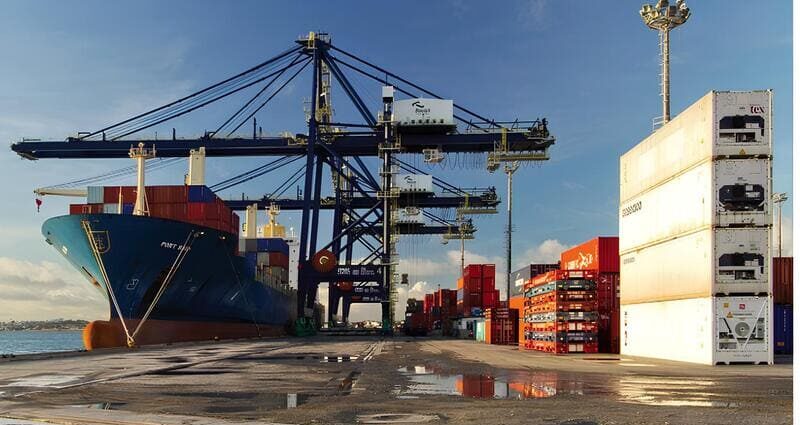
In line with the situation described above, the export situation of the countries in the region should change, as current figures show that exports continue to be primarily tied to natural resources.
In this case, World Bank figures (16) show that Latin America and the Caribbean (17) would have exported US$1,367,864 thousand in 2024, while primary or natural products would account for just over 35%. The main products exported were crude petroleum oils or bituminous minerals, soybeans, copper ores and concentrates, and iron ores and concentrates.
Furthermore, this situation would be confirmed by looking at the export performance of each of the countries, as the regional pattern is maintained, both in the larger economies, such as Brazil, and in the smaller ones, such as Haiti.
Brazil, for example, primarily exported crude oil, iron ore, soybeans, raw sugar, and frozen beef (18), despite its industrial development, while Mexico, despite being an exporter of vehicles and vehicle parts, computers, and electronic equipment, also exported crude oil and agricultural products such as avocados, fruits, fresh vegetables, and chili peppers.
Argentina, for its part, sold soybean meal, soybean oil, and soybeans (it is the world leader), corn, peanuts (the world’s leading exporter), and beef and pork abroad.
On the other hand, Colombia’s main exports continued to be dominated by mineral fuels (crude oil, coal) and agricultural products such as flowers, coffee, bananas, and fruits, cut flowers, plantains, cocoa, and coffee, despite the greater presence of intermediate products in its export basket.
Chile, despite its commercial success, exported copper and other minerals, closely followed by fresh fruit (cherries, blueberries), salmon, lithium, and agri-food products, while Venezuela exported oil and oil products, as well as some non-oil products such as cocoa, coffee, iron, and aluminum. Peru exported copper and its concentrates, as well as gold, fishmeal, natural gas, zinc, cranberries—where they are leaders—grapes, avocados, mangoes, asparagus, and coffee, while Ecuador exported shrimp, bananas, cocoa, and crude oil.
In Central America, where light industry has grown, Costa Rica was strong in the export of tropical fruits, while Honduras was important in selling coffee, and Guatemala in bananas, coffee, and palm oil. El Salvador sold sugar and coffee, Nicaragua gold, and Panama copper.
Finally, the performance of exports from the Latin American Caribbean was no different. For example, the Dominican Republic exported cocoa, bananas, avocados, and peppers, while Cuba sold nickel, cobalt, and agricultural products such as sugar, coffee, and citrus fruits abroad. In addition, Haiti exported agricultural products such as coffee, cocoa, and bananas.
Conclusion
A unified region of Latin America and the Latin American Caribbean could be a major global player, as it would have enormous areas of high global strategic value and vast natural resources. And it could be much more than just a source of goods representing value, wealth, or energy, or raw materials used to produce goods for global industry and/or many medicines. It could even be the planet’s food base.
Natural resources that could be transformed into healthy and environmentally friendly products and that would be derived from significant areas such as the Amazon rainforest, the South American pampas, the Colombian-Venezuelan plains, the Mexican deserts, the rivers and lagoons of Central America, or the mountain ranges throughout the region with their mines, valleys, and volcanoes, or the great rivers and forested areas of many South American countries.
This means that the unified region could be more important to the world, as its fundamental purpose would be to become a strategic player for life on earth and a great source of healthy goods for the world economy.
Furthermore, this could be achieved if it were able to move towards the structuring of a solid industrial base that takes advantage of the current situation of flexibility derived from a productive infrastructure based on micro, small, and medium-sized enterprises and its abundant natural resources, but which is based on the generation of new industrial goods and services that are environmentally friendly, or on products and services that are sustainable and protective of the global habitat, while maintaining its status as an exporter of food and energy materials to the world. environmentally friendly, or in sustainable products and services that protect the global habitat, while maintaining its status as an exporter of food and energy materials to the world.
This situation would also be linked to the fact that many of its countries already have a light or intermediate industry in areas such as electronics, clothing, medical equipment, plastics, assembled vehicles, auto parts, ships, spirits, and petroleum products. Or that tourism, health, education, and gastronomy are important in their economic structure and exports.
And even because, as the most urbanized region on the planet and therefore having a significant number of educated and productive people living in its large metropolitan areas, this change would facilitate its new productive, labor, and export orientation.
Finally, there is the fact that it would have to overcome several challenges, such as those arising from the current pattern of extractive development and uncontrolled exploitation of land, water, and marine resources throughout the region.
These challenges would also be associated with overcoming accelerated deforestation, combating climate change, containing the accelerated disappearance of snow-capped mountains, rivers, plant and animal species, and changing the culture of clearing jungles and forests for livestock or illegal mining. All of this would be supported by the disappearance of illegal armed groups that are strengthened by this economic model throughout the region. In addition, there are other structural problems, such as the fact that the region has the most unequal distribution of wealth in the world, which generates social and security problems, daily crime, and even illicit businesses with a global impact, hindering its development.
Finally, another challenge, and not a minor one, would be to stop being the largest producer and marketer of marijuana, poppies, coca leaves, and many other derivative products that feed the illicit drug industry and trade, and which, incidentally, destroy their own environment, their forests, their rivers, their jungles, and all their valuable natural resources.
References:
1 – At the time of writing, Venezuela has been attacked by the United States, and Trump has declared himself president of that country. He has also threatened countries such as Mexico, Colombia, and Cuba with ground and air operations on their territory if they do not comply with his orders. Similarly, air and maritime operations over the region’s two oceans have been restricted. This follows a large military deployment in the Caribbean Sea. He has also threatened to annex Canada, which is not in the region but is an American country.
2- The 2026 Davos Economic Forum (Switzerland) reflects the weakness of a disunited region, without global prominence, and an outdated development model, because despite the fact that the event’s agenda covers issues such as disputes over the availability of natural resources, the environment, technology, and sustainability, this large territory does not have a unified voice to represent it to the world, and many of its leaders will not attend the most important global affairs meeting of the year, while 850 leaders of multinational companies and more than 60 presidents of countries will.
3 – Similarly, air and maritime operations over the region’s two oceans have been restricted. This follows a large military deployment in the Caribbean Sea.
4 – Data obtained with the help of Google’s artificial intelligence.
5 – https://www.cepal.org/es/temas/recursos-hidricos.
6 – Op Cit4.
7 – Op Cit4.
8 – Op Cit4
9 – Op Cit4
10 – hrome-extension://efaidnbmnnnibpcajpcglclefindmkaj/https://www.olade.org/wp-content/uploads/2024/02/Minerales_Criticos_ALC_OLADE.pdf
11 – hrome-extension://efaidnbmnnnibpcajpcglclefindmkaj/https://www.cepal.org/sites/default/files/news/files/presentacioncepal_xiiicamma.pdf
12 – hrome-extension://efaidnbmnnnibpcajpcglclefindmkaj/https://www.olade.org/wp-content/uploads/2024/02/Minerales_Criticos_ALC_OLADE.pdf and Google’s artificial intelligence assistance
13 – https://www.cepal.org/es/publicaciones/48985-panorama-recursos-naturales-america-latina-caribe-2023-resumen-ejecutivo and help from Google’s artificial intelligence
14 – https://es.tradingeconomics.com/country-list/gold-reserves?continent=america
15 – Op Cit11
The total value of imports in 2023 (CIF) was 1,371,961 million, 4,503 products were exported to 232 countries, and 4,634 products were imported from 236 countries.
17 – Adding up exports country by country.
18 – https://oec.world/es/profile/country/bra
Author: Mauricio Diagama Durán – Professor of geopolitics and Colombian foreign policy at the War College. Researcher and professor at several universities in Colombia and abroad. Public administrator, specialist in international business, and master’s degree in national security and defense.
(The opinions expressed in this article are solely those of the author and do not necessarily reflect the views of World Geostrategic Insights).