



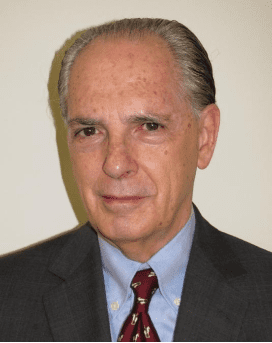
Alfredo Toro Hardy
ALFREDO TORO HARDY is a Venezuelan retired diplomat, scholar and author. He has a PhD on International Relations from the Geneva School of Diplomacy and International Relations (GSDIR), Master degrees from the University of Pennsylvania and the Central University of Venezuela and a Post-graduate degree from ENA (France).
Before resigning from his country’s foreign service in protest for the authoritarian outreach of the government, he served as Ambassador to the United States, the United Kingdom, Spain, Brazil, Ireland, Singapore and Chile, as well as Director of the Venezuelan Diplomatic Academy.
Former Fulbright Scholar and Visiting Professor at Princeton University. A two-times Rockefeller Foundation Bellagio Center Resident Scholar. He is an Honorary Fellow of the GSDIR and a member of the Experts Review Panel of the Bellagio Center. He is the author of twenty-one books and the co-author of fifteen more on international affairs. His latest book was published in 2022 by Palgrave Macmillan.
By Alfredo Toro Hardy According to the classical definition by Antonio Gramsci the essence of hegemony entails the capacity to define the terms of a shared agenda. This, by its own nature, implies the recognition by others to a given position of leadership…
By Alfredo Toro Hardy President Trump seems to have lost all sense of limits. Is he unhinged? Does he believe that his comeback against all odds and his close call from the assassin’s bullets are tantamount to providential entitlement? Is this what happens…
By Alfredo Toro Hardy While the Cold War between China and the United States reasserts itself with every passing day, New Delhi and Washington emphasize their geopolitical rapprochement in response to Beijing’s regional expansiveness. Not so long ago, though, two notions were in…
By Alfredo Toro Hardy On May 16 of this year, Russia’s Vladimir Putin and China’s Xi Jinping signed a 7,000 words-long joint statement. In it, they agreed to deepen their “strategic partnership”, taking it to a “new era”, while scolding the United States…
By Alfredo Toro Hardy Referring to the contrasting interpretations of universality in China and the West, Martin Jacques refers that both perceive themselves to be universal, albeit in totally different ways. Whereas in the West universality is linked to the notion of proselytizing…
By Alfredo Toro Hardy Having attained a remarkable success with its containment policy towards the Soviet Union, nothing seemed more natural for the United States than to put in motion the same policy in relation to a rival China. Even if not labelling…
By Alfredo Toro Hardy Among the global geostrategic trends, three stand out. The first one is the strengthening of a revisionist axis that, at odds with the post-WWII rules-based liberal international order, aims at consolidating spheres of influence and geostrategic expansion. The second,…
By Alfredo Toro Hardy The war in Afghanistan decisively contributed to the economic exhaustion of the Soviet Union and to the need of substantial reforms that led to the implosion of its system. There was, thus, a direct causation between events in Afghanistan…