



The world has now entered a new phase of turbulence and transformation, with numerous changes emerging in the global geopolitical landscape. Slow economic growth, combined with the technological revolution (see also advances in artificial intelligence), has led to a more unstable and uncertain global geopolitical context; the loss of U.S. hegemony and the chaos resulting from uncertainty in international alignments have further fragmented and disrupted the global geopolitical landscape.

The more complex and interconnected the situation becomes, the more the international community must collaborate in a spirit of solidarity and mutual aid, adhering to the logic of historical progress and the trends of the times. Faced with this intricate geopolitical scenario, it is of great strategic importance to contribute resolutely to world peace and development through governance accepted by all parties, as well as to stabilize an uncertain world through security. The current U.S. administration has repeatedly threatened to annex Greenland under the pretext of so-called “national security” and has stated that it does not rule out the use of force. Even peaceful Danish citizens marched and demonstrated in Copenhagen’s City Hall Square on January 17, 2026, protesting this attempt.
The world is undergoing rapid changes, with the White House and certain other Western countries implementing strategic shifts and engaging in a competition for power and new rules—all of which is leading to a profound redefinition of the geopolitical landscape and ushering in a new historical phase characterized by interconnected changes and growing instability.
The balance and distribution of geopolitical power are undergoing a rapid restructuring, with the weakening of the “unipolar” superpower and the emergence of multiple strong powers evolving in parallel. The model that emerged after the Cold War has undergone fundamental changes due to the widening development gaps between countries, becoming the driving force behind the evolution of the global landscape. On the one hand, the power and status of the United States of America have declined relatively, and its unipolar hegemony is unsustainable.
Washington’s share of the global economy has fallen from about 40 percent—reached at its peak in the 1960s—to about 26 percent in recent years, with problems such as an unbalanced industrial structure and heavy federal debt shaking the foundations of its national power. Since the current U.S. administration took office, its unilateral and aggressive stance has intensified, and its soft power has suffered serious damage; cracks within its alliance system have widened, and its ability to dominate the agenda has diminished.
On the other hand, the world is evolving toward an increasingly multipolar order, with traditional powers and emerging countries—such as the BRICS nations—following divergent development paths, giving rise to a differentiated power structure.
The European Union’s economic and security challenges have worsened, and Tokyo’s strategic dependence on Washington remains unchanged, creating an imbalance in the Far East. At the same time, the Global South has grown significantly, accounting for over 40% of the global economy and becoming an indispensable and important force in the process of global multipolarization.
Meanwhile, the People’s Republic of China has continued to make giant strides, significantly strengthening its international influence; Russia, despite Western sanctions, has demonstrated strong strategic resilience by leveraging its energy resources and other advantages; and emerging countries such as India, Brazil, and South Africa are actively seeking opportunities and are becoming increasingly important forces in shaping the international landscape.
Geopolitical alliances are increasingly fragmented and undergoing reorganization, with strategic competition and autonomy playing an ever more significant role. Global geopolitical interactions are undergoing a complex evolution, with the United States of America and some of its Western allies continuing to fuel the rivalry between alliances.
Many countries are showing a growing inclination toward autonomy and de facto independence, making coexistence amid confrontation a defining feature of the shifting geopolitical landscape. Confrontation is a key element. To maintain their precarious hegemony and curb the rise of emerging powers, some Western and non-Western countries are intensifying their competition, which is extending from traditional key regions—such as Europe and the Asia-Pacific—to other areas.
The crisis in Ukraine and the situation in the Near and Middle East continue unabated; the divergence between the positions of the United States and Israel, and between the United States and the European Union, is widening; and the confrontation between Europe and Russia is deepening and solidifying.
The White House is mobilizing regional allies to promote the so-called “Indo-Pacific strategy,” increasing security risks in the Far East and, at the same time, adapting its intercontinental strategy to exert greater pressure on regions and countries in Latin America (particularly the situation in Venezuela), the Middle East (Israel, Gaza, and Lebanon), and Africa (civil wars on the continent). Faced with the impositions and authoritarian behavior of hegemonic powers, a growing number of countries are undergoing a strategic awakening and seeking to break free, with an increasingly urgent need to overcome traditional clashes between alliances, promote multipolarity, and improve global governance.
Geopolitical competition is intensifying, with growing rivalry over strategic waterways (including the well-known issue of the straits) and key mineral resources. With rapid technological advances and shifts in the global resource and energy landscape, geopolitical strongholds, key waterways, and critical minerals have become focal points of competition.
Geographical locations and strategic hubs have always been of fundamental importance in global geopolitics. The United States of America, as mentioned above, has its sights set on Greenland—not because of its apparent “proximity” to the American continent, but because it is rich in rare earth minerals and because of the passages that control Arctic sea routes.
One issue that has received little attention is the Australian port of Darwin, which could be a source of instability. This port is of vital importance to the United States of America due to its strategic location in the Indo-Pacific and its role in allied military operations. Located at the northern tip of Australia, it serves as a crucial logistical hub for the Marine Rotational Force-Darwin (a U.S. Marine Corps base). U.S. defense planners consider the port and the nearby Royal Australian Air Force base in Darwin essential for maintaining security and ensuring a rapid response to crises. Its proximity to Southeast Asia allows joint U.S. and Australian forces to conduct training and rapidly deploy resources.
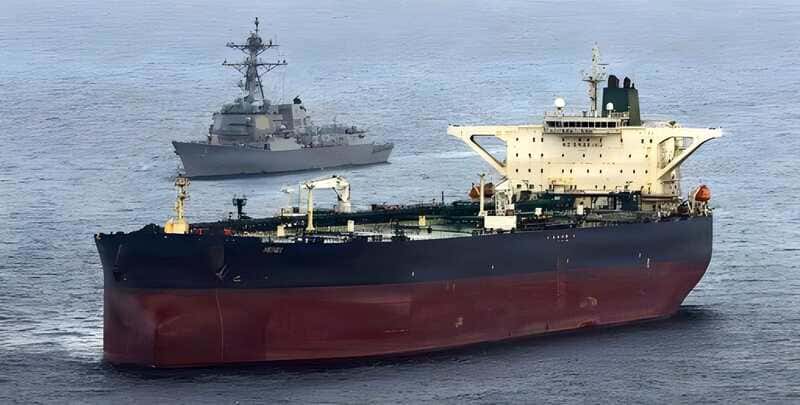
It is considered to be of potential military importance, as it employs both “soft” and “hard” tactics in its offensive operations, even at the cost of violating the sovereignty of other countries. Key waterways are the lifeblood of global trade and energy transportation. The 2023 Red Sea maritime crisis and the current crisis in the Strait of Hormuz have severely disrupted global supply chains, highlighting the extreme importance of strategic waterways. Trump’s recent actions, such as the attempt to take control of the Panama Canal, herald a new phase of competition for these waterways.
Key minerals such as lithium, cobalt, nickel, and rare earth elements are the driving force behind clean energy and emerging sectors such as artificial intelligence. Securing the supply of these key minerals is a necessary condition for driving industrial revolutions in these fields. The United States and other Western countries have consistently fueled geopolitical disputes over key minerals, attempting to promote the “decoupling” of supply chains for these minerals from the major countries in that region. (“Decoupling” is the economic and geopolitical strategy aimed at separating from foreign markets or reducing dependence on them.)
Geostrategic competition has expanded significantly, with new areas becoming frontiers that all countries seek to protect by strengthening their military capabilities. The deep sea, the polar regions, outer space, and cyberspace are all elements linked to the strategic security of every state and influence the future balance of global power, becoming new frontiers where battles in international geopolitical competition may unfold.
These oceanic trenches, rich in mineral, biological, and energy resources, are increasingly attracting the strategic attention of various countries: consider the issue of the vast exclusive economic zones in the Pacific, over which formal sovereignty is exercised even by states with a population smaller than that of a single Roman neighborhood.
Currently, advances in deep-sea mining technology and the resulting regulatory vacuum in international law are sparking disputes over resource allocation, with some countries testing the limits of the international order. See also: the struggle between the United States, Russia, Canada, and others for control of Arctic sea routes remains unresolved, and strategic competition in deep polar and tropical waters is intensifying.
It is also worth mentioning outer space, which constitutes a key arena of modern military and technological competition. Through the Starlink project, the United States aims to seize the initiative and spark a battle for space resources, which will lead to intensified competition over international space rights. But it is not just about space; cyberspace also represents a new theater of global geopolitical interaction. The governance of the cyber ecosystem is critical to national development and security. More and more countries are increasing their investments to strengthen their offensive and defensive capabilities in cyberspace, and the struggle for dominance and control of cyberspace is becoming increasingly fierce, with a growing trend toward the geopoliticalization of cyberspace. There are many new scenarios that are not covered in depth by the mass media.
Author: Giancarlo Elia Valori – Honorable de l’Académie des Sciences de l’Institut de France, Honorary Professor at the Peking University.
Giancarlo Elia Valori is a highly regarded Italian manager, playing a leading role in fostering dialogue and cooperation between countries. He is currently President of the Foundation for International Studies and Geopolitics.
(The opinions expressed in this article are solely those of the author and do not necessarily reflect the views of World Geostrategic Insights).
Note: This article, like all articles published on World Geostrategic Insights, cannot be republished without the written permission of the editor of World Geostrategic Insights.
Image Source: US Navy/AFP (The Arleigh Burke-class guided-missile destroyer USS Rafael Peralta (DDG 115) implementing a maritime blockade against the Iran-flagged crude oil tanker vessel Herby, on 24 April 2026).