



Part 4 of a series entitled Global Ideology and Human Value by Sunny Lee, Founder and President at CGPS (Center for Global Peace and Security), and Director at IKUPD (Institute for Korea-U.S. Political Development), Washington DC.
As an ideological concept, the term that stands in contrast to communism is capitalism, and both have shaped modern society in vastly different ways. While communism has declined for ignoring human nature in favor of capital accumulation, capitalism has gained greater influence by promoting economic prosperity.

The global economic system relies heavily on capitalism, and its vision would be strengthened to create a better society. Pursuing a comfortable life with substantial capital is not only a human instinct but also a fundamental element of the democratic world, all of which fuels economic initiatives through equal opportunity and market competition.
Capitalism stands as the most dynamic and inclusive economic system, centered on private ownership of the means of production and profit-oriented commercial activities, in which free markets control the production of goods and services. However, although prices and production are largely determined by supply and demand in a market economy, most countries prefer mixed economies that combine capitalism with appropriate government regulations to ensure effective development and equal opportunities. The fact that capitalism has proven to be a resilient and adaptable system represents an exceptional achievement, widespread throughout the world as a lasting sustainability for the benefit of human society.
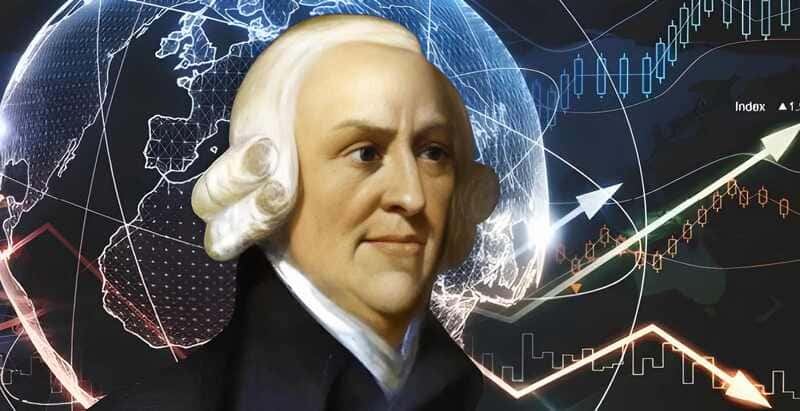
Adam Smith argued that the principle of capital theory derives from efficiency, freedom, and competition through free markets. “The Wealth of Nations” remains the foundational text today, asserting that the efficiency of capital, thanks to the invisible hand, generates wealth and, ultimately, advances society. The individual sincerely pursues wealth, so that this invisible ambition stimulates productivity and efficiency in the general interest of society, serving as the central mechanism underpinning the economic order. For example, as we overcome global monopolies and environmental disaster, artificial intelligence, semiconductors, and the global financial system currently follow Smith’s theory, since efficiency and competition are the main drivers of economic prosperity.
Capitalism operates successfully as a system of equal opportunity without discriminating against an individual’s beliefs, race, political affiliation, or socioeconomic status. Consequently, capitalism rewards innovation, hard work, and risk-taking, stimulating people’s ambition and determination to achieve success. Free markets also ensure competition and drive technological progress, offering individuals varying opportunities to create and grow businesses based on their own merit and value creation. Talent, determination, and innovation are the primary drivers of success for economic prosperity, beyond government favoritism or social status.
The success of capitalism as an inclusive economic system is evident on a global scale, where multinational entrepreneurs have built thriving businesses, such as Andrew Carnegie, a poor immigrant who went on to build a steel empire. It is an extraordinary case in which capitalism promotes social mobility, giving individuals the ability to accumulate wealth despite the most adverse living conditions. Even great contemporary entrepreneurs in the fields of innovation and investment, such as Elon Musk and Daymond John, have demonstrated how vision, perseverance, and market understanding can lead to extraordinary successes in terms of capital.
Economic Prosperity for a Better Society
Professor Sven Beckert of Harvard University traces the complex global evolution of the system to better understand capitalism and our lives in his book “Capitalism: A Global History.” He emphasizes that capitalism is the backbone of 21st-century life, shaping how most of the world works, eats, and sleeps, and how people pursue love, marriage, and family on the stable foundation of economic prosperity. Capitalism influences human life as a critical factor by fueling job creation, improving living standards, and encouraging competition for better products and services. It also provides a foundation for philanthropy, generating wealth to be reinvested in charitable causes, educational initiatives, and social programs for a better society.
Nevertheless, economic inequality and market imbalances are largely due to the concentration of wealth in the hands of a small percentage of individuals, while others struggle to improve their circumstances. Such a vast disparity can only be alleviated when capitalist policies are effectively implemented. Capitalist economies certainly generate far greater wealth than socialist or state-controlled systems, and even low-income individuals can enjoy a much higher standard of living than in non-capitalist countries. With appropriate regulatory frameworks, capitalism fulfills its mission ethically and efficiently, ensuring fair competition and preventing exploitation. Furthermore, the positive function of wealth would be fully realized through private enterprise, essential public services, charitable organizations, and social programs aimed at creating a better society.
Compared to capitalism, socialist or heavily interventionist systems might represent a more equitable alternative, redistributing wealth and ensuring economic security. However, they often suffer from inefficiency, stagnation, and a lack of innovation, without providing individual incentives or rewards for hard work. Socialist policies often lead to oppressive bureaucracies and restrictions on private enterprise, hindering economic growth and limiting opportunities for wealth creation. In contrast, capitalism certainly encourages individuals to achieve success based on merit and effort rather than government allocation, providing varied opportunities for personal and social prosperity.
Global Capital Markets and Dynamics
The global economy has been adapted or reshaped by policy measures aimed at effectively managing capital markets. Despite the economic crisis caused by Trump’s tariff hikes, the global landscape as a whole remains robust and promising. As the most dynamic capital influencing global markets, the Stanford HAI 2026 AI Index Report highlights that cooperative investments in AI more than doubled in 2025. For example, private investments saw the fastest growth, at 127.5%, and now account for 60% of the total. Generative AI is also driving the surge, with growth exceeding 200% and capturing half of all private AI funding; newly founded AI companies have risen to 71%, and billion-dollar funding rounds have nearly doubled.
Consequently, global growth projections in the World Economic Outlook (WEO) were revised upward in April 2025 and continue to show a downward revision compared to forecasts prior to the policy change. Global growth was projected to slow from 3.3% in 2024 to 3.2% in 2025 and 3.1% in 2026. Nevertheless, emerging markets and developing economies will grow at a rate above 4%, while inflation is expected to fall globally below the special target, with multiple upside risks in the United States and a moderate trend elsewhere. So far, prolonged uncertainty, rising protectionism, and labor supply shocks have been detrimental to growth. Furthermore, fiscal vulnerabilities, potential financial market corrections, and the sudden erosion of institutions would threaten the stability and resilience of global capital markets.
Asha Mehta of Global Delta Capital explains how investment capital is transforming the world’s most critical emerging markets in her book, “Power of Capital,” offering a bold and encouraging exploration of rapidly evolving markets. Global capital markets represent the process of transferring money across international borders, channeling it from savers to borrowers worldwide. For example, the global bond market held over $145 trillion in 2025, and global equity markets exceeded $136 trillion, with daily foreign exchange markets averaging $7.5 trillion in 2025. These markets have helped resolve global dilemmas, such as the IMF successfully carrying out its mission during the Covid-19 crisis, and such a vital infrastructure system determines how the global economy allocates its resources efficiently.
First, there are the stock or equity markets, where companies sell shares of ownership to raise permanent capital. Unlike debt, equity capital does not need to be repaid, as it serves to attract funding for long-term growth. Currently, global stock markets have a total market capitalization of $136.3 trillion across the Americas, Asia-Pacific, and Europe. In particular, the U.S. Securities and Exchange Commission requires detailed financial disclosure so that investors can make informed decisions, while other countries provide comparable requirements through specific regulations.
Second, debt or bond markets are larger than the stock market: total global debt, including bonds and bank loans, amounted to $348 trillion in 2025. With approximately $145 trillion in outstanding securities, the bond market encompasses everything from U.S. Treasuries to corporate commercial paper to high-yield bonds issued by smaller companies. While a growing subcategory is sustainable debt, new issuances of green bonds, social bonds, and sustainability-linked instruments are projected to reach approximately $900 billion in 2026. In particular, the cumulative green bond market exceeded $3 trillion in total issuance by the end of 2025, with annual green bond issuance reaching $572 billion in 2024.
Third, the foreign exchange markets are the largest and most liquid financial markets in the world. According to a recent in-depth survey conducted by the Bank for International Settlements, the average daily trading volume stood at approximately $7.5 trillion. This market determines the exchange rate for every international transaction. Almost all foreign exchange transactions take place over-the-counter, directly between two parties rather than through a centralized exchange. For example, banks, corporations, hedge funds, and central banks trade with one another via electronic platforms or direct negotiations. Consequently, this decentralized structure offers flexibility and continuous operation across the time zones on which most countries depend.
Fourth, there are the derivatives markets, whose value is linked to certain underlying assets such as stocks, bonds, commodity prices, interest rates, or currencies, with common types including futures, options, and swaps. For example, a hedge fund that buys options on a stock index to bet on market trends uses them for speculative purposes; both uses are legitimate, and the market accommodates both. The notional value of outstanding over-the-counter (OTC) derivatives reached $846 trillion in 2025, and this figure illustrates just how deeply derivatives are woven into the financial system, to the point of dominating global capital markets.
The Achievements of Capitalist Countries
According to the Heritage Foundation’s 2026 Index of Economic Freedom, the 31 countries that represent the capitalist system include the United States (72.8), Germany (71.7), Australia (80.1), South Korea (73.7), and South Africa (58.6). These countries have successfully leveraged the capitalist system, achieving significant economic results that have led them to lead the global economy. Private property rights, the free-market economy, the profit motive, and consumer sovereignty are typically guaranteed by efficient government policies. Furthermore, capitalist ventures stem from a mixed economic system of capitalism combined with social programs such as healthcare, pensions, and public education.
First is the United States on the American continent, which strongly emphasizes individualism and free-market principles. As the leading country in the global economy and the most successful example of capitalism, the United States holds absolute capital resources such as the dollar, the monetary system, cutting-edge technologies, and military weapons. By focusing on a mixed economy to achieve better results, capitalist principles coexist with substantial public sector involvement. Individuals and entrepreneurs own the means of production, and markets determine prices, so that the pursuit of profit drives economic activity. Furthermore, the federal government is projected to spend 23.3% of GDP in 2026, with a range of regulations spanning from workplace safety to merger approval.
Second is Germany, with an exceptionally advanced and developed economy in Europe. Germany adopts a unique social market economy system that combines a strong industrial base with social welfare programs to promote both efficiency and equity. Its coordinated market economy blends free and competitive markets with robust social policies and institutional collaboration to ensure a level of equity and security for its citizens. The government strongly safeguards workers’ rights and boasts a robust export sector, particularly in engineering and manufacturing, while fostering economic growth. Furthermore, the banking system features a mix of private and public banks, which promotes stability and investment. The German government plays a significant role in regulating industries to ensure fair competition and consumer protection.
Third is Australia in Oceania, ranked first in economic freedom, placing it among the world’s most economically free nations. With a strong foundation of trade and investment supporting economic growth, Australia’s vast natural resources provide a significant advantage while maintaining a competitive market environment. Australia operates a mixed market economy, combining free-market principles with government intervention to oversee competition, consumer protection, and environmental standards. The main driver of the Australian economy is private enterprise, such as companies operating in the mining, financial services, construction, agriculture, manufacturing, and retail sectors, which are predominantly and privately managed. At the same time, a robust welfare system supports citizens in balancing capitalism with social equity, and government investments in innovation and technology further stimulate productivity and economic diversification.
Fourth is South Korea in Asia, a critical case halfway between communism and capitalism. South Korea’s capitalism has achieved economic prosperity, ranking sixth among the world’s most powerful nations in 2026 and leading in technology and innovation across global markets. Thanks to government policies supporting economic success, a significant portion of GDP is based on an export-driven economy, particularly in the technology and automotive sectors. South Korea invests heavily in research and development, fostering a sustainable environment for innovation and technological progress. In contrast, the Index of Economic Freedom ranks North Korea (3.1) 176th as the most oppressed country among 176 nations. It has struggled against economic stagnation caused by a failed communist system that ruins people’s lives. Unless North Korea adopts capitalism as the Chinese economic model, its economic decline is destined to hit rock bottom.
Fifth, South Africa is the most industrialized, technologically advanced, and diversified country in Africa. It is the continent’s largest economy, with a nominal GDP of $444 billion and a GDP (PPP) of $1.06 trillion in 2025. South Africa operates a mixed economy, combining elements of a capitalist market system with substantial state intervention and social welfare programs. Consequently, government policies aimed at balancing economic growth by addressing inequalities and providing basic services to citizens have yielded positive results. Private ownership has been strengthened as a significant component of the business sector, while simultaneously promoting innovation, competition, and economic growth. Supply-side market mechanisms also influence production decisions and consumer choices, while government intervention plays a substantial role in addressing market failures and promoting social equity.
Capitalism and Its Potential Vision
Capitalism is the world’s most successful economic system and is worth preserving for the future as an unbeatable legend of growth and prosperity. Its incredible ability to survive, adapt, and grow has been demonstrated through a vision of potential. Capitalists have succeeded in organizing quantifiable sources of extraordinary wealth by compelling investment from the vast majority and mitigating environmental disasters for a better future. Furthermore, although capitalism favors private or corporate ownership of capital goods over state ownership, governments have played an important role in making the capitalist system function efficiently and effectively. Regulations serve to prevent excessive exploitation and limit the power of monopolies to maintain open competition in free markets. Entrepreneurs, too, are committed to a social obligation for a better society, beyond commercial interests aimed at accumulating capital resources.
Nevertheless, some critical issues remain that capitalism must overcome. Significant challenges include income inequality and disregard for social and environmental costs. As the wealth gap between the rich and the poor continues to widen, social unrest and dissatisfaction are likely to increase. For example, the top 1% of earners in the United States hold more than 40% of the country’s wealth, while the poorest 50% hold less than 1%. Nevertheless, there is a forward-looking perspective that technological advances, such as artificial intelligence and blockchain, will revolutionize the business world and create new opportunities. In particular, the adoption of AI is projected to increase global GDP by up to 1.4% annually by 2030.
Therefore, a potential vision should be defined with a new form of capitalism, based on alternative models that voluntarily prioritize social and environmental responsibility. Furthermore, governments must support regulatory policies aimed at reducing inequality and promoting sustainability. Social values should also focus on revitalizing awareness of environmental and social issues. Consequently, the future of capitalism would be reshaped by a complex interplay of technological advances, global economic shifts, and expanded social values. It is essential to prioritize social and environmental responsibility alongside profit so that global society can create a more equitable and sustainable future for all.
Author: Sunny Lee – Founder and President at CGPS (Center for Global Peace and Security), and Director at IKUPD (Institute for Korea – U.S. Political Development), Washington DC. Sunny Lee is the author of 115 academic books in politics (original English and in German, French, Russian, Polish, Dutch, Italian, Spanish, and Portuguese). She is a bestseller writer not only in politics but also in literature on Amazon. Her recent book is titled: “The Influence on Humankind’s Peace through Korean Reunification: Creating new paradigm in social science by interdisciplinary research.”
(The opinions expressed in this article are solely those of the author and do not necessarily reflect the views of World Geostrategic Insights).
READ ALSO
Part 1 Democracy and Human Value – Ideological Transformation for Human Society
Part 2 Liberalism and Neoliberalism – Capital Globalism and Individual Freedom
Part 3 Post -World War II Ideologies and the Enduring Legacy of Communism