



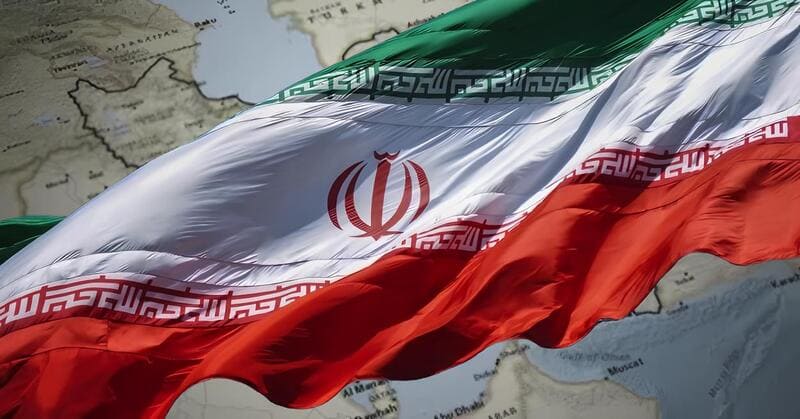
For over forty years, Iran’s strategic importance has been rooted in a geographical reality that seemed immutable. The Islamic Republic controls the northern shore of the Persian Gulf and dominates the Strait of Hormuz, one of the world’s most critical energy chokepoints.

Thanks to this position, Tehran has gained a form of geopolitical leverage that has often offset its economic weaknesses. The ability to threaten maritime traffic through the Strait of Hormuz has given Iran influence far exceeding the size of its economy and has helped sustain its image as an indispensable player in Gulf affairs.
Yet the current conflict suggests that a profound transformation is underway. Much of the international debate remains focused on the possibility of closing Hormuz and on the consequences for global energy markets. This perspective is understandable but incomplete. The most important strategic development may not be the disruption of global energy flows. It may be the growing difficulty faced by Iran in sustaining its own. The central issue is no longer whether Tehran can threaten the Gulf. The question is whether the Gulf is gradually becoming less dependent on Iran.
Recent data illustrate the scale of the challenge. According to Reuters and market intelligence firms, Iranian oil exports fell dramatically during the spring of 2026. Volumes that had approached 1.9 million barrels per day in March declined to only a fraction of that level by late May and early June. The reduction was attributed largely to growing restrictions on maritime movements and to the pressure generated by the American naval presence. These figures matter not only because they imply lower revenues. They matter because they create a growing imbalance between production and export capacity.
Oil that cannot reach international markets must be stored. Initially this can be managed through onshore facilities and floating storage tankers. However, storage capacity is finite. As inventories accumulate, Tehran faces a difficult choice. It can continue producing and risk saturating storage facilities, or it can reduce extraction and potentially suspend operations in some fields. Such decisions have consequences that extend beyond the immediate crisis. Restarting production may require time, investment and technical resources. In a country already constrained by sanctions and limited access to international capital, temporary production cuts can create long-term challenges.
This dynamic reveals an important feature of contemporary power politics. In the twentieth century, strategic competition focused primarily on territory, military capabilities and control of physical space. In the twenty-first century, power increasingly depends on the ability to control flows. Energy flows, financial flows, logistics networks, digital infrastructures and supply chains have become critical sources of influence. States can be weakened not only through military defeat but also through disruptions to the systems that sustain economic activity. Economic warfare is no longer a supporting instrument of military strategy. It has become a central arena of competition.
The pressure currently applied to Iran reflects this transformation. The objective is not necessarily the destruction of the Iranian state or even the immediate collapse of its economy. Rather, it is the gradual erosion of the economic foundations that support Tehran’s regional influence. Reduced exports mean lower revenues. Lower revenues constrain investment. Constrained investment weakens the ability to modernize infrastructure, sustain technological development and project power abroad. Over time, the cumulative effect can be significant.
At the same time, the rest of the Gulf is undergoing its own transformation. For years Saudi Arabia and the United Arab Emirates were viewed as pillars of a common regional strategy. Today the relationship is increasingly characterized by competition. Riyadh seeks to transform itself into the principal economic hub of the Middle East through Vision 2030. Abu Dhabi and Dubai aim to preserve and expand the advantages accumulated over decades of investment in finance, logistics and global connectivity. The result is a growing rivalry for capital, talent, infrastructure projects and regional leadership.
Paradoxically, this rivalry does not strengthen Iran. It produces the opposite effect. Competition encourages both countries to invest heavily in ports, industrial zones, logistics corridors, transport networks and digital infrastructure. Each state seeks to attract international capital and establish itself as an indispensable node within global supply chains. The cumulative consequence is the creation of a Gulf that is more integrated into global networks and less dependent on traditional geopolitical vulnerabilities.
This trend is particularly visible in the energy sector. For decades Hormuz was viewed as the ultimate strategic lever. Today Gulf states continue to invest in alternative routes and export infrastructure designed to reduce vulnerability to disruptions. These projects do not eliminate the importance of the Strait. Such an outcome would be unrealistic. They do, however, reduce the degree to which a single chokepoint can determine regional outcomes. Every pipeline, logistics hub and export terminal that bypasses Hormuz reduces the strategic value of geographical leverage alone.
The Abraham Accords accelerated another important process: the integration of Israel into parts of the Gulf economy. Political obstacles remain, especially after the Gaza conflict, but the underlying logic of cooperation has not disappeared. Israel offers advanced technological capabilities in areas such as cybersecurity, artificial intelligence, defense technologies and innovation ecosystems. Gulf states offer capital, investment capacity and access to expanding markets. Together they are contributing to the emergence of a regional environment increasingly defined by connectivity rather than confrontation.
Turkey represents another critical element of this transformation. The rapprochement between Ankara and Abu Dhabi has produced a relationship based on strategic complementarity. Emirati capital and Turkish industrial capabilities reinforce one another. Investments have expanded across infrastructure, manufacturing, logistics and technology. At the same time, Turkey has become one of the most important suppliers of relatively affordable military systems, particularly drones.
The significance of Turkish defense exports extends beyond the military sphere. They illustrate how industrial capacity can translate into geopolitical influence. Turkish drones have demonstrated effectiveness in several theaters and offer an attractive alternative for countries seeking capable systems at lower costs than many Western platforms. As Gulf states diversify their security partnerships, Ankara’s role continues to expand. Emirati investment and Turkish production create a mutually reinforcing relationship that links finance, manufacturing and security.
This triangular interaction between Gulf capital, Turkish industry and regional security requirements is one of the least discussed yet most consequential developments in the contemporary Middle East. It contributes to the creation of new networks of interdependence that largely bypass Iran. These networks do not require formal alliances. They emerge through investment decisions, infrastructure projects and commercial partnerships.
The United States remains the central external actor in this evolving system. Washington continues to provide maritime security, intelligence cooperation, and strategic guarantees that underpin regional stability. However, U.S. strategy appears increasingly based on economic pressure, coalition-building, and the protection of critical flows rather than on large-scale direct military interventions, whose intensity appears to be diminishing following the initial strikes.
Viewed from this perspective, the current conflict extends well beyond military operations. It is part of a broader contest over the future architecture of the Gulf. One model is based on disruption, leverage and the strategic use of geography. The other is based on infrastructure, connectivity, investment and integration into global networks. The competition between these models is gradually redefining the distribution of power across the region.
Iran retains substantial strengths. It possesses a large population, significant natural resources, strategic depth and considerable military capabilities. It remains an important regional actor and will continue to influence Middle Eastern affairs. Yet influence in the contemporary international system increasingly depends on participation in networks. States that remain disconnected from major flows of capital, technology and trade face growing constraints regardless of their geographical advantages.
This is where the concept of economic warfare becomes particularly relevant. The most effective form of pressure may not be direct military confrontation. Instead, it may consist of creating an environment in which a rival’s traditional advantages lose value over time. For decades Iran transformed geography into power. Today its competitors are attempting to transform infrastructure, logistics, finance and technology into new sources of power. If successful, they will not eliminate Iran’s importance. They will reduce its indispensability.
The deterioration in Iranian export performance and the growing pressure on storage capacity offer a concrete illustration of this process. The challenge facing Tehran is no longer limited to sanctions or diplomatic isolation. It concerns the sustainability of a development model heavily dependent on energy exports. As economic constraints accumulate, the cost of maintaining regional influence rises. At the same time, alternative networks continue to expand around it.
The emerging Gulf order is not characterized by unity. Saudi Arabia and the UAE compete. Turkey pursues its own interests. Israel follows a distinct strategic agenda. The United States balances regional commitments with global priorities. Nevertheless, these actors collectively contribute to a system that increasingly functions without relying on Iran as a central pillar. This is the paradox of the current moment. Rivalries within the emerging order do not necessarily undermine it. They often reinforce it through competition for connectivity, investment and innovation.
For decades analysts asked whether Iran could close the Strait of Hormuz. That question remains relevant. Yet another question may now be more important. Can the Gulf continue to prosper even if Iran’s traditional geopolitical leverage declines? Current trends suggest that many regional actors are investing precisely in that possibility.
The most significant outcome of the current conflict may therefore not be a conventional military victory. It may be the gradual emergence of a regional system capable of functioning with reduced dependence on Iranian participation. In such a scenario, Tehran would remain a major state, but its capacity to derive influence from geography alone would diminish.
For more than forty years geography was one of Iran’s greatest strengths. The lesson of the current crisis is that geography, while still important, is no longer sufficient. In the twenty-first century, power belongs increasingly to those who control networks, infrastructure and flows. The future of the Gulf may be determined less by who controls a chokepoint and more by who builds the systems that make chokepoints less decisive.
Author: Alberto Cossu – International Management Consultant, collaborating with research institutes and government agencies on strategic and geopolitical analysis. He is a Geopolitical Analyst at Vision & Global Trends and a regular contributor to the journal Geopolitica. His work is also published in prominent Italian policy and defense outlets, including Airpress – Formiche, Analisi Difesa, and Digit-export, the online magazine of the Union of Chambers of Commerce of Lombardy. His research focuses on global geopolitical dynamics, with particular emphasis on the United States, India, Russia, China, and the Middle East, as well as on the strategic implications of innovation and emerging technologies in the evolving international order.
(The views expressed in this article belong only to the author and do not necessarily reflect the views of World Geostrategic Insights).