



By Yasir Masood
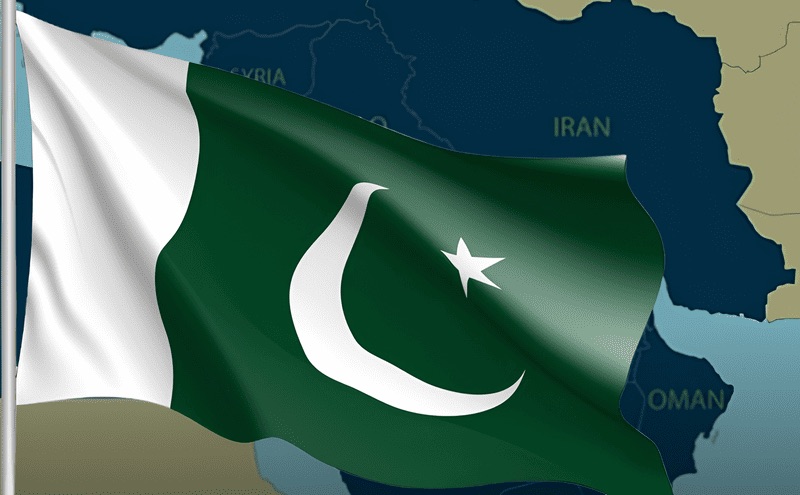
As historian Barbara Tuchman wrote, “War is the unfolding of miscalculations.” This axiom holds true for the lingering West Asian crisis that began on February 28 with U.S. and Israeli strikes on Iran, followed by Iranian retaliatory strikes that extended across Israel, multiple Gulf states, and U.S. regional installations. While every side appeared to be miscalculating during the 40-day standoff, Pakistan unexpectedly emerged as a potential intermediary, earning trust in Washington, Beijing, and Gulf capitals.
Pakistan positioned itself as a key interlocutor. Its rigorous shuttle diplomacy brokered a ceasefire on April 8, followed by facilitating a 21-hour dialogue. Despite inconclusive results, Islamabad got both sides to engage directly, a rare occurrence in nearly 47 years. Its role has since expanded, with coordination among Tehran, Washington, Beijing, Qatar, and Oman. Indirect channels continue discussing Hormuz security, uranium enrichment, sanctions relief, and de‑escalation, but the ceasefire remains tense, with new military exchanges reported in the Gulf as recently as June 3. Deputy Prime Minister Ishaq Dar met with U.S. Secretary of State Marco Rubio on May 29 to advance these efforts, and on June 1, EU foreign policy chief Kaja Kallas publicly praised Pakistan’s mediation role.
In the post‑Bretton Woods system, Pakistan was traditionally viewed as a security state. Over time, however, it adjusted to a more multipolar environment, moving through both unipolar and bipolar phases. Now, Islamabad can be seen as a situational swing state, a country whose influence rises from neutrality and access rather than hard power, its influence directly linked to its ability to sustain neutrality. New openings carry risks if circumstances push Pakistan further into the West Asian security calculus. This ascendant role is not the outcome of structural power, but rather the prevailing uncertainty of a region where Pakistan still communicates across multiple actors. On June 2, Iran called on Pakistan to persist with its mediation efforts to safeguard the precarious ceasefire, further confirming Islamabad’s central position.
Within this evolving environment, Pakistan’s Islamic identity functions as a diplomatic bridge, not a constraint, at least across the Muslim world. This was visible during the ceasefire, in its facilitation of talks between rival actors, and in its outreach to key capitals. As the only Muslim nuclear state, it enjoys comparative access across Washington, Beijing, Tehran, and Gulf capitals.
The operational logic of Pakistan’s role derives from a two‑track approach: overt public interactions with Saudi Arabia, Egypt, and Turkey, and quiet message‑relaying between Washington and Tehran. This dual track helps Pakistan maintain credibility with all sides. Such flexible diplomacy is not new. In 1971, Pakistan helped the U.S. and China open relations through covert backchannels. But today’s West Asian role runs up against old structural limits that challenge the core of its traditional security thinking.
It remains a challenge whether Pakistan can balance its India‑centric “strategic depth” with a new focus on West Asian stability. In a crisis demanding rapid mediation, continued focus on India could create a policy imbalance.
A major constraint is the Israeli dilemma. Israel’s strategic culture requires predictable partisanship, not flexibility. As a direct party to the conflict, it acted as a spoiler, launching major operations in Lebanon the same night a ceasefire was announced. This situation sits uneasily with Pakistan, limiting its space. Pakistan’s own position on Palestine further entrenches this incompatibility.
Additional complications could arise if Pakistan defends Saudi Arabia under its defense pact. A miscalculation could risk the Iran‑Saudi balance. Some quarters in Tehran have expressed skepticism about Islamabad’s sincerity, viewing it as favoring Washington. Despite its good faith, a mediating state can face reputational risks requiring repeated justification of its neutrality.
Domestic instability also hampers Pakistan’s outreach. The economy is faltering even as Pakistanis cheer the government’s diplomatic moves. Militancy still needs eradication in parts of Khyber Pakhtunkhwa and Balochistan. Meanwhile, dissenting voices on foreign policy and domestic disparities hardly receive any official response.
A swing state’s worth is not measured by its ability to coerce outcomes. Its true value lies in keeping its leverage intact under changing circumstances. Pakistan has already demonstrated this capacity. Whether it can continue under greater pressure will determine if its strategic positioning can remain sustainable. That outcome will hinge on the resilience of Pakistan’s institutions, economy, and regional posture. The ceiling is real, and so is the opportunity. In the end, that is the swing state’s trap: it can become indispensable to all sides without ever becoming decisive in shaping the outcome.
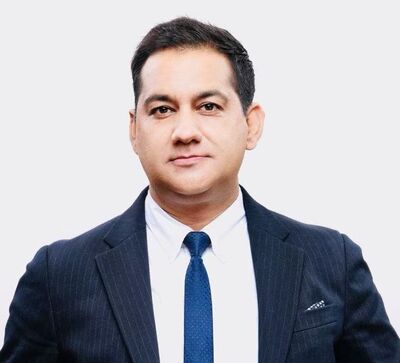
Author: Dr. Yasir Masood – Pakistani political and security analyst, academic, and broadcast journalist specializing in strategic communication. He holds a PhD in International Relations with a focus on conflict transformation in Balochistan and an MSc from Kingston University, London. His research covers South Asian geopolitics, Pakistan’s foreign policy, U.S.–Pakistan relations, and the China–Pakistan Economic Corridor (CPEC). His commentary and analysis have appeared in South Asian Voices (Stimson Center), TRT World, South China Morning Post, Dawn, The Express Tribune, and The Diplomat. He has taught at the National Defense University and Quaid-i-Azam University in Islamabad and has served as Director of Media and Publications at the Center of Excellence for CPEC, as well as Consultant for Communication and Media at UNESCO (Islamabad). His study, Media Warfare: Comparative Perspectives on U.S.–China Relations, has been accepted for a visiting affiliation at the University at Albany, SUNY (2025–2026).
(The opinions expressed in this article are solely those of the author and do not necessarily reflect the views of World Geostrategic Insights).