



Balochistan is no longer merely Pakistan’s most unstable province; it is rapidly becoming the battlefield upon which the future integrity of the Pakistani state itself may be decided. The tragedy of Balochistan is no longer merely a story of separatism, terrorism, state-versus-insurgent confrontation, or great-power rivalry.

The explosions on rail tracks, the burning convoys, the assassinations of security personnel, and the coordinated militant attacks are not isolated security failures – they are ominous harbingers of a deeper internal collapse unfolding beneath the surface of the state.
What Pakistan confronts in Balochistan today is not simply an insurgency, but the emergence of a parallel shadow order built upon cross-border smuggling, narco-trafficking, institutional corruption, criminal patronage networks, and externally exploitable chaos.
The most dangerous reality is not that militants operate in Balochistan; the most dangerous reality is that entire illicit economic ecosystems have penetrated so deeply into administrative, political, and enforcement structures that instability itself has become profitable for powerful actors.
Consumed by internal decay, no nation can win a war when corruption feeds the battlefield, smuggling finances violence, drug trafficking purchases protection, and parts of the system begin surviving economically from the very disorder they are publicly tasked to eliminate.
Hidden in plain sight, by every measure, it is the story of a shadow economy that has quietly merged with militancy, corruption, narcotics trafficking, border criminality, and geopolitical competition to create one of the most dangerous internal security crises in Pakistan’s modern history.
For decades, policymakers in Islamabad and Rawalpindi approached Balochistan primarily through a military and political lens. The simplistic and dominant assumption remained that separatist violence emerged solely from ethnic grievances, foreign interference, underdevelopment, or political alienation. While these factors undeniably exist, they no longer fully explain the evolving nature of instability in the province.
Balochistan today is increasingly shaped by a darker and more complex reality – the convergence of insurgency with organized criminal enterprise and transnational trafficking networks stretching from Afghanistan and Iran to the Arabian Sea.
Balochistan’s geography has become both a strategic blessing and strategic curse – a double-edged sword. Sitting at the crossroads of South Asia, Central Asia, and the Middle East, the province possesses immense geopolitical value. Yet its vast deserts, rugged mountains, porous borders, weak administrative penetration, and underdeveloped infrastructure have created ideal conditions for illicit economies to flourish.
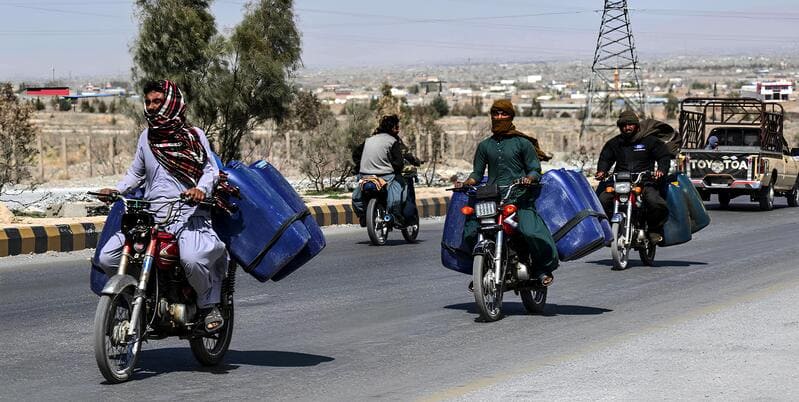
Systemically, entire corridors of informal trade now operate beyond effective state oversight. Smuggling routes running across the Afghan and Iranian borders have evolved into arteries of an underground economy worth billions of rupees annually. Fuel smuggling, narcotics trafficking, weapons movement, human smuggling, illegal trade goods, and black-market logistics have gradually formed parallel systems of power.
This shadow economy has fundamentally altered the nature of the separatist insurgency in Balochistan. Militancy is no longer sustained solely through ideology or local grievances. It is increasingly financed through criminal economics. Armed groups exploit smuggling corridors for mobility, financing, recruitment, intelligence gathering, and territorial control.
The distinction between militant commander, trafficker, transporter, tribal intermediary, and criminal facilitator has become dangerously blurred. What appears publicly as insurgency often survives privately through illicit financial ecosystems that are deeply embedded within local and regional networks.
Undeniably, the narcotics dimension is particularly alarming. Afghanistan’s persistent opium and methamphetamine production continues to destabilize the wider region, and Balochistan has become one of the principal transit zones for trafficking networks moving toward international markets.
Far from merely poisoning societies socially, drug trafficking corrodes states institutionally. Staggering narcotics profits finance weapons purchases, safe houses, communications systems, recruitment pipelines, and cross-border logistical infrastructure.
Beneath the surface, in fragile regions where governance is weak and unemployment is chronic, trafficking networks gradually transform into alternative economies. Entire communities become economically dependent on smuggling-linked activity, making enforcement politically volatile and operationally difficult.
Yet perhaps the most dangerous aspect of the crisis lies not in the mountains or the borderlands, but within the erosion of institutional integrity itself. No insurgency survives for decades without deep-seated, systemic leakages within state structures.
While countless officers and soldiers have sacrificed their lives defending Pakistan, it is equally true that corruption within segments of the law enforcement and security architecture has become one of the silent enablers of instability.
Smuggling on the scale witnessed in Balochistan cannot function without protection networks, selective blindness, compromised checkpoints, document manipulation, bribery mechanisms, and informal patronage systems. The uncomfortable reality is that illicit economies become sustainable only when portions of the state apparatus become economically intertwined with them.
The devastating consequences extend far beyond the provincial bounds of Balochistan. Every successful attack on transport infrastructure, security convoys, or strategic installations damages investor confidence and weakens Pakistan’s broader economic future.
At the same time, hostile external actors benefit enormously from prolonged instability in Balochistan. Regions weakened by corruption, trafficking, and institutional fragmentation become fertile ground for foreign intelligence penetration, proxy warfare, and information manipulation.
In the modern geopolitical environment, Pakistan therefore faces a historic strategic dilemma. A purely kinetic approach may suppress violence temporarily, but it cannot defeat a conflict economy rooted in corruption and illicit finance. Airstrikes, intelligence-based operations, and military deployments can eliminate militants, but they cannot dismantle the underground financial ecosystems regenerating instability year after year.
Without substantive institutional reform, border governance, anti-corruption accountability, financial disruption of trafficking networks, and serious local economic integration, the insurgency will continue to mutate rather than disappear.
The most painful reality is that Balochistan’s instability increasingly reflects not merely a security failure, but a governance crisis. When local populations observe unequal law enforcement, elite impunity, economic exclusion, and corruption, trust in state legitimacy erodes.
Tactically, militants exploit this vacuum skillfully. They portray themselves as resistance against exploitation even while participating in criminal economies themselves. The battlefield is therefore no longer only physical; it is psychological, informational, and institutional.
Structurally, Pakistan stands at a dangerous crossroads. If the state continues treating Balochistan merely as a battlefield, it risks fighting an endless war against symptoms while the structural disease deepens beneath the surface. But if Islamabad recognizes that the province’s instability is sustained through a fusion of smuggling economies, narcotics trafficking, institutional corruption, and governance decay, then a more comprehensive national strategy may still emerge.
Beyond the battlefield, in the long run, the future of Balochistan will not be decided only by military operations in the mountains. It will be decided by whether the state possesses the political courage to confront the shadow networks operating within and around the system itself.
If Pakistan fails to dismantle the shadow economy sustaining violence in Balochistan, the province risks transforming from a troubled frontier into a permanent zone of hybrid warfare where insurgency, organized crime, narco-financing, and foreign strategic manipulation become structurally embedded realities.
History has repeatedly shown that states do not collapse merely because of external enemies; they weaken from within when corruption erodes institutions, when criminal economies penetrate security structures, and when national crises become profitable for entrenched networks of power.
Balochistan is now edging closer to a catastrophic threshold. Military operations alone may kill militants, but they cannot defeat a system in which smuggling routes finance insurgency, drug cartels corrupt enforcement mechanisms, and governance failures continuously regenerate rebellion.
Unless Pakistan launches an uncompromising national crackdown against corruption, trafficking networks, border criminality, and institutional complicity – regardless of rank, influence, or political cost – the conflict will continue to expand in sophistication and intensity.
To be precise, the ultimate danger is not merely the loss of security in Balochistan; it is the gradual internal erosion of Pakistan’s sovereignty, strategic credibility, economic future, and state authority itself. Nations rarely receive repeated warnings before entering prolonged internal destabilization. Balochistan may be Pakistan’s final warning!
Author: Mirza Abdul Aleem Baig – President of Strategic Science Advisory Council (SSAC) – Pakistan. He is an independent observer of global dynamics, with a deep interest in the intricate working of techno-geopolitics, exploring how science & technology, international relations, foreign policy and strategic alliances shape the emerging world order.
(The opinions expressed in this article are solely those of the author and do not necessarily reflect the views of World Geostrategic Insights).
Image Credit: AFP (Merchants transporting cans of smuggled Iranian gasoline on their motorcycles on the outskirts of Quetta, Balochistan).