



Russia’s invasion of Ukraine has evolved far beyond a regional conflict. It represents a structural inflection point in the international security system, exposing the limitations of the post-Cold War transatlantic model while accelerating the emergence of new actors and forms of strategic influence.

What initially appeared to be a reaffirmation of Western unity increasingly reveals a more complex reality: a gradual erosion of Atlantic trust combined with a redistribution of security capabilities. At the center of this transformation stands Ukraine—not merely as a recipient of security, but as an emerging provider.
The transatlantic relationship remains the backbone of European security. However, its internal cohesion is no longer sustained by the level of predictability that characterized previous decades. Political volatility in the United States, shifting strategic priorities, and growing domestic constraints have introduced uncertainty into what was once perceived as a stable and enduring security guarantee.
For European allies, the critical question is no longer whether the United States will provide support, but rather how durable, conditional, and strategically focused that support will be. This marks a subtle yet significant shift: trust is no longer assumed—it must be continuously reassessed. Faced with this evolving landscape, Europe confronts a structural dilemma. Despite renewed political discourse on “strategic autonomy,” the continent remains uneven in its defense capabilities, threat perceptions, and industrial readiness.
The war in Ukraine has undeniably catalyzed increased defense spending and coordination. Yet fragmentation persists, limiting Europe’s ability to act as a fully coherent strategic actor. One conclusion is increasingly unavoidable: the security architecture that defined Europe for over three decades is no longer sufficient to address emerging threats. Since 2022, Ukraine has undergone a profound transformation. Its role has expanded from that of a security consumer to that of an active contributor to the broader defense ecosystem. Central to this shift is Ukraine’s rapid innovation in drone warfare and asymmetric capabilities. Driven by necessity, Kyiv has developed operational expertise at a pace unmatched in recent conflicts, particularly in the integration of low-cost, high-impact unmanned systems. This evolution carries significant strategic implications. Ukraine is no longer solely dependent on external assistance; it is increasingly positioned to offer valuable knowledge, operational concepts, and technological solutions to international partners.
Ukraine’s growing role is most visible in what can be described as “drone diplomacy”—the use of battlefield-acquired technological and operational expertise as a tool of international engagement.
This approach reflects broader trends in global security:
- the decentralization of military innovation
- the rise of agile, experience-driven actors
- the formation of flexible, interest-based partnerships
Ukraine has begun leveraging its expertise to deepen cooperation not only within Europe but also with partners in the Gulf, where demand for counter-drone and asymmetric defense capabilities is rapidly expanding.
In parallel, the conflict involving Iran has triggered an unexpected geopolitical development: a growing alignment between Ukraine and key Gulf states, notably Saudi Arabia, the United Arab Emirates, and Qatar. These countries, increasingly exposed to indirect threats and limitations in traditional defense systems, are seeking more adaptive and effective solutions to contemporary warfare challenges. This rapprochement has recently materialized in long-term strategic defense agreements, reportedly spanning up to a decade. These frameworks include technological cooperation, joint development initiatives, defense sector investment, and, critically, the transfer of operational knowledge in countering drones and missile threats—an area where Ukraine has acquired unique, real-world experience.
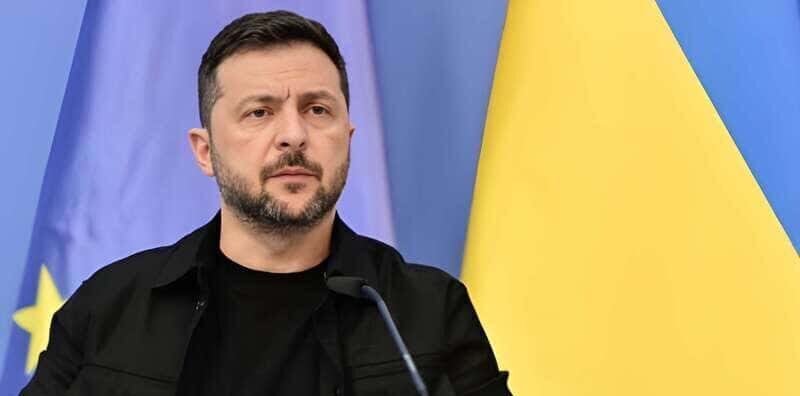
Ukraine’s contributions are expected to include integrated defense systems, naval drone capabilities, electronic warfare expertise, and interception solutions, alongside technical support and the deployment of specialists. In return, Kyiv aims to strengthen its industrial base, secure financial backing, and support long-term reconstruction efforts. President Volodymyr Zelenskyy has gone further, suggesting that Ukraine could contribute to securing critical maritime chokepoints such as the Strait of Hormuz. Drawing on Ukraine’s experience in the Black Sea, he highlighted how Ukrainian forces overcame Russian attempts to block vital maritime corridors through the use of drones and innovative operational concepts. While no formal request for Ukrainian involvement in Hormuz has been made, the willingness to share expertise underscores Ukraine’s evolving role as a provider of security solutions beyond its immediate theater of operations.
In this context, Ukraine positions itself simultaneously as:
- a provider of expertise in modern warfare
- an emerging technological partner
- a relevant actor in regional and global security architectures
In return, it secures investment, political support, and long-term strategic partnerships based on mutual interest and growing trust.
From a broader perspective, these developments also highlight significant strategic miscalculations by the United States, particularly in underestimating:
- the complexity of Iran
- the evolution of asymmetric warfare
- the long-term consequences of interventionist policies
The conflicts in Iraq and Afghanistan had already exposed the limitations of traditional military approaches. The persistence of similar strategic assumptions contributes to perceptions of relative decline in U.S. global influence.
The international system appears to be moving toward a more multipolar configuration:
- less centered on the United States
- more distributed across multiple power centers
- increasingly shaped by technology, adaptability, and flexible alliances
The war in Ukraine is not simply reshaping territorial boundaries—it is redefining the principles of modern security.
The erosion of Atlantic trust does not signal the collapse of the transatlantic system, but rather the end of a model based on structural predictability and uncontested leadership.
What is emerging instead is a more fluid, distributed, and uncertain order in which:
- Europe must assume greater strategic responsibility
- the United States must adapt to a less centralized leadership role
- Ukraine may consolidate itself as a key node in an evolving global security network
This is not a temporary disruption. It marks the beginning of a long-term transformation—one that will define the strategic environment of the coming decades.
In this evolving landscape, trust, adaptability, and the ability to anticipate change will prove more decisive than traditional measures of power. Those who understand this shift will be best positioned to shape its outcome.
Author: Fernando Figueiredo – Retired Portuguese Army colonel and former NATO professional, who held various strategic leadership positions, currently serving as a defense consultant at Pulsar Development International. His work focuses primarily on defense requirements, offering expertise and a network of contacts that enable operational challenges to be overcome with effective, tailored solutions.
(The opinions expressed in this article belong only to the author and do not necessarily reflect the views of World Geostrategic Insights).