



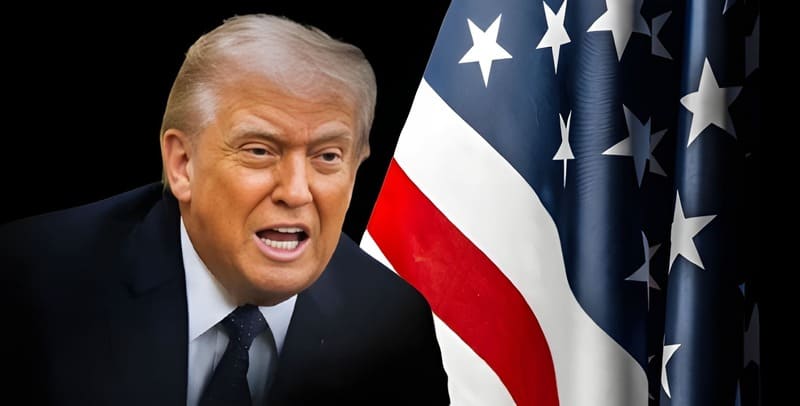
In a recent Foreign Affairs article Stephen M. Walt defines Donald Trump’s foreign policy as predatory hegemony.

In his words “the grand strategy of his second presidential term is perhaps best described as ‘predatory hegemony’. Its central aim is to use Washington’s privileged position to extract concessions, tribute, and displays of deference from both allies and adversaries…A predatory hegemon is a dominant great power that tries to structure its transactions with others in a purely zero-sum fashion, so that the benefits are always distributed in its favor. A predatory hegemon’s primary goal is not to build stable and mutually beneficial relations that leaves all parties better off but to ensure that it gains more from every interaction than others do…A predatory hegemon always wants the lion’s share” (Walt, 2026).
Hegemony
There is no doubt whatsoever that Trump’s foreign policy is predatory. It clearly represents the epitome of plundering. However, can it be considered as hegemonic? This leads to defining what hegemony entails. According to the classical definition by Antonio Gramsci, the essence of hegemony is associated with the capacity to define the terms of a shared agenda. This, by natural extension, implies the recognition by others of a position of stewardship. (Fogacs, 2001).
Indeed, according to Andrew Gamble: “This perspective draws on the understanding of hegemony associated with Gramsci. The exercise of power entails the use of both coercion and consent, and the most stable policies are those where consent is prominent. The focus is…on the way in which power is accepted as legitimate through ideological and cultural persuasion. The emphasis is on how a particular conception of the world is created and sustained through a myriad of agencies and organizations, and the incorporation of many different interests into an overreaching political project”. (Gamble, 2002, p. 130).
Two hegemonies
The Liberal International Order that succeeded World War II was a perfect example of a hegemonic system. Actually, through it the United States gave shape to the most successful hegemonic system ever. This, by way of creating a wide web of international institutions, systems of alliances, and a rules-based international order where the defense of global commons played a fundamental role. Although imperfect and unfair in many ways, this liberal system allowed for the U.S. to show self-restraint in relation to its superpower status vis-à-vis other members of the system, while pursuing a shared agenda where the interests of others were incorporated. This helped in legitimizing America’s power in the eyes of much of the international community. The U.S.’ defense of principles such as that of freedom of navigation were of the utmost importance in this regard.
But before this so-called “Pax Americana” took shape, there was a “Pax Britannica”. This prevailed during the period between the battle of Waterloo in 1815 and the beginning of World War I in 1914. Several empires shared the international scene with the British Empire at that time, among them the Russian, the Ottoman, the French or the Austro-Hungarian ones. However, the United Kingdom was the only colonial metropolis able to transcend its imperial status, in order to impose a hegemonic footprint worldwide.
The latter thanks to a group of actions, rules and mechanisms. The Royal Navy was able to guarantee international safe transit through the oceans. British submerged cables crossed and interconnected the most diverse latitudes, giving rise to a transoceanic telegraph network. The fixed parity between gold and the sterling pound was responsible for preserving international monetary stability. Economic liberalism, which bore a British imprint, defined the rules of world trade. Under British stewardship the first group of international institutions were given life. And so on.
According to Patrick Karl O’Brien: “British power…did attempt to persuade, to pressure, co-opt and occasionally force other states to participate in its pursuit of ‘liberal strategies’ for universal access to all of the world’s waterways, seas and oceans, for free trade, the enforcement of contracts, the safeguarding of property rights across legal systems, for a stable international monetary system and for the unimpeded movement of capitals across frontiers…providing ‘public goods’ (i.e. free trade and a monetary system) for the international economy”. (O’Brien, 2002, pp. 13, 14).
If not, then what?
If “Pax Brittanica” and “Pax Americana” are understood as natural expressions of hegemony, then Trump’s predation represents their antithesis. Particularly significant in this regard, is the fact that Trump suggested -something apparently proposed by the negotiating American delegation headed by Vance in Islamabad- that the U.S. join forces with Iran in collecting tolls in the Strait of Hormuz. To treat the Strait of Hormuz as a tollbooth instead of a global commons to be protected, is the exact opposite of what the notion of hegemony entails.
But if not a predatory hegemon, what then is Trump’s U.S.? Within its own hemisphere, it is a neo imperial predator in the best tradition of Trump’s hero – President William MacKinley. After having turned Venezuela into a Protectorate, and making clear his desire to soon do the same with Cuba, Trump has probably not desisted yet in his intention of adding Greenland’s more than 836,000 square miles into America’s territory. And, of course, there is Canada, a weaker neighbor that he would like to swallow bit by bit. That, in addition to forcefully controlling Latin America’s riches, particularly its critical minerals and its hydrocarbons.
Beyond his hemisphere, Trump becomes a revisionist predator. He fishes around, aiming at extracting “concessions, tribute, and displays of deference from both allies and adversaries”. This is something he could not do if the Liberal International Order remained standing. To keep his opportunistic zero-sum interactions on play, common cause with Russia and China, in their desire of destroying such liberal system, was a necessity.
Although Stephen Walt’s description of Trump’s foreign policy actions is totally accurate, the term hegemony that he uses in relation to them may not be the right one.
References:
Fogacs, David (2001). Antonio Gramsci Readership. London: Lawrence & Wishart.
Gamble, Andrew (2002). “Hegemony and Decline: Britain and the United States” in Patrick Karl O’Brien and Armand Clesse Editors, Two Hegemonies. Burlington: Ashgate Publishing.
O’Brien, Patrick Karl (2002). “The Pax Britannica and American Hegemony” in Patrick Karl O’Brien and Armand Clesse Editors, Two Hegemonies. Burlington: Ashgate Publishing.
Walt, Stephen M. (2026). “The Predatory Hegemon”, Foreign Affairs, March/April.
Author: Alfredo Toro Hardy, PhD – Retired Venezuelan career diplomat, scholar and author. Former Ambassador to the U.S., U.K., Spain, Brazil, Ireland, Chile and Singapore. Author or co-author of thirty-six books on international affairs. Former Fulbright Scholar and Visiting Professor at Princeton and Brasilia universities. He is currently an Honorary Fellow of the Geneva School of Diplomacy and International Relations and a member of the Review Panel of the Rockefeller Foundation Bellagio Center.
(The opinions expressed in this article belong only to the author and do not necessarily reflect the views of World Geostrategic Insights).