



Summary: From the contemporary tensions between Donald Trump and Iran to earlier episodes such as the Vietnam War and the Iraq War, American presidents have repeatedly entered conflicts under flawed strategic assumptions that later proved difficult to reverse. This article argues that such miscalculations are not anomalies but stem from enduring features of U.S. foreign policy decision-making, including cognitive biases, bureaucratic fragmentation, and credibility pressures. By situating recent developments in the Strait of Hormuz within this broader analytical framework, the discussion highlights how initial misjudgments can generate self-reinforcing cycles of escalation, while simultaneously exposing the limits of democratic accountability in constraining the use of force.
Introduction
The unfolding confrontation between the United States, Israel, and Iran provides a contemporary illustration of the long-standing pattern of presidential miscalculation in war. Under Donald Trump, the escalation following the 2026 Strait of Hormuz crisis illustrates how initial strategic assumptions can rapidly collapse.

The administration appears to have anticipated that limited strikes—such as those on Iranian nuclear facilities in 2025 and subsequent operations like the 2026 Kharg Island raid—would coerce Tehran into compliance or even precipitate internal regime weakening. Instead, Iran retaliated asymmetrically, disrupting global shipping and effectively halting traffic through one of the world’s most critical energy chokepoints, affecting roughly 20% of global oil flows.
Recent reporting suggests that the situation has evolved into a strategic trap. While publicly rejecting a ceasefire and projecting military confidence, the Trump administration has simultaneously adopted emergency economic measures—such as releasing strategic oil reserves and even temporarily easing sanctions on Iranian oil—to stabilise global markets.
These contradictory moves indicate a growing gap between initial expectations and unfolding realities. Moreover, divergences between U.S. and Israeli war aims, alongside rising energy prices and global economic pressures, further complicate any clear exit strategy.
In this context, the perception that Trump may now be seeking an “honourable exit” while retaining the option of escalation reflects a classic dynamic identified in the literature: leaders confronted with failed assumptions often double down militarily to avoid reputational costs. What began as a limited coercive strategy has thus risked transforming into a broader, open-ended conflict—precisely the type of miscalculation that has characterised multiple U.S. presidencies.
Analytical Framework of Miscalculation
American presidential miscalculations in war are neither episodic nor purely personal; they reflect deeper structural, cognitive, and institutional dynamics embedded in U.S. foreign policy making. A substantial body of scholarship in security studies and political psychology—ranging from analyses by Robert Jervis (Perception and Misperception in International Politics) to work by Graham Allison (Essence of Decision: Explaining the Cuban Missile Crisis)—demonstrates that leaders routinely operate under uncertainty, rely on flawed assumptions, and face incentives that bias judgement toward action rather than restraint.
A first recurrent cause is cognitive bias and “scenario fixation”, as suggested by the authors above. Leaders tend to anchor decisions in preferred outcomes and then interpret evidence accordingly. The Bay of Pigs Invasion under John F. Kennedy illustrates this dynamic: policymakers assumed Cuban resistance would topple Fidel Castro, despite intelligence doubts. Similarly, the Iraq War under George W. Bush was shaped by the selective use of intelligence on weapons of mass destruction, reflecting what Ziva Kunda calls “motivated reasoning” in her foundational article “The Case for Motivated Reasoning.” This concept has since been widely developed by scholars such as Milton Lodge and Charles Taber in the context of political behaviour.
In both cases, alternative scenarios—failure, escalation, or long-term instability—were insufficiently internalised.
A second factor is bureaucratic and organisational dynamics. Allison’s “bureaucratic politics model” shows that policy outcomes often reflect compromises among agencies rather than rational strategy. During the Vietnam War, Lyndon B. Johnson escalated military involvement despite private scepticism about victory. The decision-making process was fragmented: the Pentagon, State Department, and intelligence community advanced different priorities, while dissenting voices were marginalised. This produced incremental escalation without a coherent end-state—what scholars term “policy drift.”
Third, credibility and prestige concerns play a decisive role. Presidents fear that inaction signals weakness, particularly in a hegemonic system. Harry S. Truman’s response to the Korean War reflected anxieties about containment credibility after perceived failures in Asia. Likewise, contemporary tensions in the Strait of Hormuz, as referenced in the text, show how initial limited actions can entrap leaders: once U.S. prestige is committed, disengagement becomes politically costly. This aligns with what international relations theory describes as “audience costs” and “reputation traps,” as developed by James D. Fearon and further examined by Jonathan Mercer.
Fourth, information asymmetry and intelligence failure are persistent. Intelligence is rarely neutral; it is filtered through political expectations. The Iraq case again demonstrates how ambiguous data were framed as certainty. Comparable dynamics existed in Vietnam, where overly optimistic battlefield assessments obscured the resilience of North Vietnamese forces. Scholars from institutions such as the RAND Corporation and Brookings Institution have repeatedly shown that intelligence failures are less about a lack of data than about misinterpretation under political pressure.
Fifth, domestic political incentives encourage risk-taking. Presidents may escalate conflicts to avoid appearing weak, to secure electoral advantage, or to maintain coalition support in Congress. The political science literature highlights how short-term electoral cycles clash with the long-term nature of war. Scholars such as Bruce Bueno de Mesquita (The Logic of Political Survival) and Christopher Gelpi, alongside Peter Feaver and Jason Reifler (Paying the Human Costs of War), show that leaders are incentivised to prioritise political survival over strategic adjustment. This dynamic helps explain why leaders persist even after recognising strategic failure, as in the Vietnam War or the Iraq War.
Contribute to this analysis, Jack Snyder (Myths of Empire), on how domestic coalitions and strategic myths sustain failing policies; and Dan Reiter and Allan C. Stam (Democracies at War), on democratic incentives and war termination. Among these, Bueno de Mesquita is particularly useful for a structural argument, while Gelpi, Feaver, and Reifler are ideal for linking public opinion, casualties, and electoral pressure to war persistence.
Accountability for Miscalculations
The question of accountability for miscalculations is more complex. The United States possesses formal mechanisms—Congressional oversight, judicial review, elections, and investigative journalism. However, these mechanisms often fail to produce direct accountability for wartime miscalculations. Several reasons explain this gap.
First, diffuse responsibility makes attribution difficult. Decisions emerge from collective processes, allowing individuals to evade blame. Second, legal thresholds for war crimes are high and rarely pursued domestically against senior officials. Third, political polarisation transforms accountability into partisan contestation rather than institutional judgement. For instance, debates over the Iraq War became politically divisive rather than juridically resolved, even if the decision to enter the war was based on a false allegation.
Moreover, there is a structural feature of U.S. democracy often identified in critical scholarship: executive dominance in foreign policy. While Congress formally declares war (when presidents don’t bypass Congress), presidents have increasingly relied on authorisations and executive powers, limiting ex post accountability. Yet it would be inaccurate to characterise this as a simple absence of accountability. Electoral punishment has occurred indirectly; the Iraq War, for example, contributed to declining public trust and electoral setbacks for governing parties; in the war in Iran, it is revealing the same pattern of low public support.
Finally, the normative question—whether this reflects a broader democratic failure—remains contested. Some scholars argue that liberal democracies are constrained by public opinion and media scrutiny, making them less prone to prolonged atrocities than authoritarian regimes (Michael Tomz, Bruce Bueno de Mesquita). Others contend that democratic systems can normalise interventionism while diffusing responsibility, thereby weakening accountability for large-scale harm (Jack Snyder; Christopher Gelpi).
In sum, American presidential miscalculations in war stem from a combination of cognitive biases, bureaucratic fragmentation, credibility concerns, flawed intelligence, and domestic political incentives. Accountability mechanisms exist but are often indirect, politicised, and insufficient to match the scale of wartime consequences, and no special tribunals are established in the U.S. to punish miscalculations. This tension is not unique to the United States, but it is particularly visible given the global scope of its military engagements.
Author: Dr. José Ricardo Martins – PhD in sociology specialising in international relations and geopolitics. For more than a decade, he has researched and taught international relations and geopolitics and worked as a postdoctoral researcher on a European Union–funded project focusing on global governance and international politics.
(The opinions expressed in this article belong only to the author and do not necessarily reflect the views of World Geostrategic Insights).
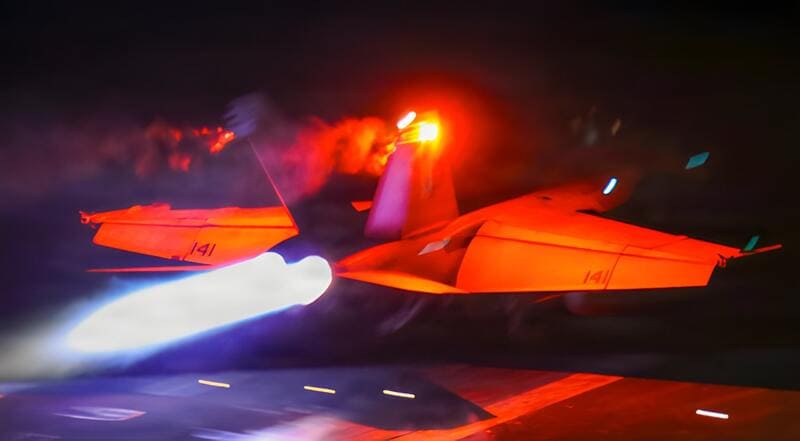
Image Source: US Navy photo (An F/A-18F Super Hornet, attached to Strike Fighter Squadron (VFA) 41, launches from the flight deck of Nimitz-class aircraft carrier USS Abraham Lincoln (CVN-72) in support of Operation Epic Fury, March 1, 2026).