



By Sidra Shaukat
In June 2025, coordinated strikes by Israel and the United States on Iranian nuclear sites, including Natanz and Fordow, raised serious concerns about security of nuclear facilities under international oversight.

The attacks, which reportedly destroyed electrical infrastructure, damaged cascade rooms, and disrupted the activities of facilities monitored by the International Atomic Energy Agency (IAEA), were justified as preventive action.
These strikes dealt a blow to international law and the fragile framework of nuclear safety and security. As the dust settles, the world must ask: if safeguarded nuclear sites are no longer off-limits, what remains of the global commitment to non-proliferation and peaceful nuclear energy? Therefore, the attack on nuclear facilities should prompt urgent reflection and reform to protect the sanctity of civilian nuclear infrastructure and state sovereignty.
The military aggression began on June 13, with Israel initiating a wave of drone and missile attacks on Natanz, Iran’s most prominent uranium enrichment hub. Satellite imagery and IAEA reports confirmed the destruction of above-ground infrastructure and significant damage to underground cascade halls. The attacks not only disabled electric substations and emergency power supplies but also triggered internal contamination with radioactive and toxic chemicals.
Days later, U.S. forces initiated Operation Midnight Hammer by deploying B-2 bombers equipped with Massive Ordnance Penetrators (MOPs) to target Natanz and Fordow. Strikes on Fordow, Iran’s most heavily fortified site, reportedly penetrated deep into the mountain housing uranium enrichment activities.
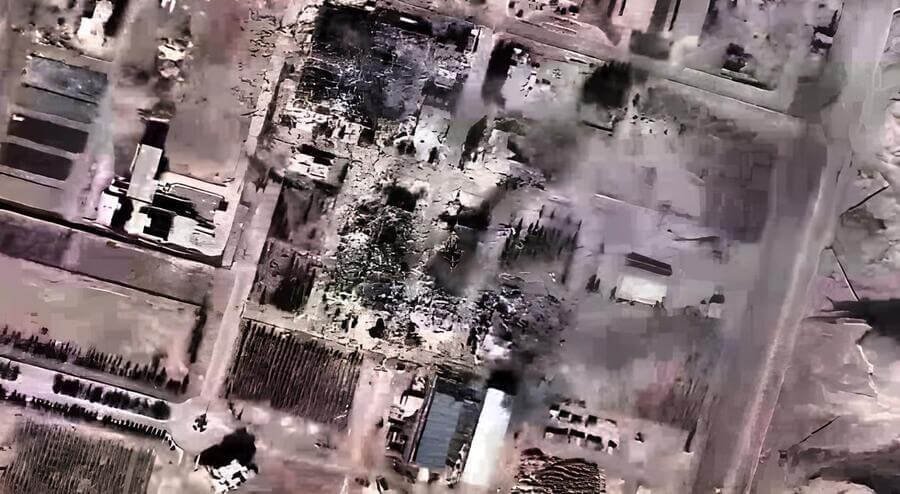
Moreover, Isfahan facility, including the uranium conversion facility and enriched uranium metal processing plant, was attacked by more than two dozen Tomahawk Cruise Missiles, inflicting major structural damage. IAEA assessed significant disruptions to enrichment processes and safety systems and later the Iranian Foreign Minister also revealed that the country’s nuclear facilities had sustained substantial damage.
The international law, in this regard, is quite clear, Article 2(4) of the United Nations Charter prohibits the threat or use of force against the territorial integrity or political independence of any state. The U.S. and Israeli operations on Iranian soil violated this principle outright. Neither nation has credibly invoked Article 51 of the Charter, which permits self-defence in the case of an armed attack. The notion that Iran posed an imminent threat remains unsubstantiated, especially as no nuclear weapons capability has been confirmed by the IAEA or other neutral bodies.
International Humanitarian Law (IHL) further complicates the legality of these operations. Article 56 of Additional Protocol I (1977) to the Geneva Conventions specifically prohibits attacks on “works or installations containing dangerous forces,” including nuclear electrical generating stations, where such assaults may cause severe civilian losses.
The principle applies not only to active nuclear reactors but also to enrichment facilities where chemical and radiological materials pose significant public health hazards if released. The damage to Natanz and Isfahan, resulting in contamination with uranium hexafluoride and hydrogen fluoride, clearly falls within this protective framework.
Historical precedents further accentuate the illegality of such operations. United Nations Security Council Resolution 487 (1981) condemned Israel’s attack on Iraq’s Osirak reactor, affirming the inviolability of peaceful nuclear facilities and urging respect for international law. The 2025 attacks are not only reminiscent of that condemned precedent but exceed in scale and potential consequence.
On the question of alleged non-compliance by Iran with NPT safeguards, the legality of the 2025 strikes also collapses under scrutiny when examined through the lens of foundational international law. Since its accession to the Nuclear Non-Proliferation Treaty (NPT) in 1970, Iran has been bound by the obligations enshrined in its Comprehensive Safeguards Agreement (CSA), signed in 1974 (INFCIRC/214). This agreement legally mandates Iran to declare all nuclear materials and facilities, submit to IAEA inspections, and ensure the peaceful nature of its nuclear activities.
By 2024, Iran’s compliance with the safeguard agreement remained contentious. The IAEA’s Board of Governors, in multiple resolutions, noted Iran’s failure to cooperate fully with the Agency, citing obstruction of inspections, the discovery of undeclared nuclear materials, and non-implementation of modified Code 3.1. The situation escalated with the IAEA resolution of 12 June 2025 (GOV/2025/38), which found Iran in non-compliance with its NPT obligations. Specifically, the resolution detailed undeclared nuclear material at Lavisan-Shian, Varamin, and Turquzabad, the unexplained presence of uranium particles, and a lack of credible answers regarding uranium metal experiments at the Jabr-Ibn-Hayan Laboratories.
Iran, for its part, has consistently maintained that its nuclear program is solely for peaceful purposes and that it has no intention of developing nuclear weapons. In response to the resolution passed by the IAEA on June 12, both the Iranian Ministry of Foreign Affairs and the Atomic Energy Organization issued a joint statement condemning the move as politically motivated, arguing that it undermines the credibility and impartiality of the IAEA. Following the attacks on its nuclear facilities, the Iranian Parliament passed legislation on June 23 to suspend cooperation with the IAEA, signalling a significant escalation in its response to international pressure.
According to the established mechanism, the IAEA must first notify the Board, which may then refer the matter to the United Nations Security Council, the only body authorized under international law to determine punitive measures that may include the use of force. Yet, this process was bypassed. The findings were reported to the Board of Governors but not forwarded to the UN Security Council, when Israel launched a military strike on Iranian nuclear facilities. Israel violated international law and legitimacy of IAEA by acting unilaterally without any evidence of imminent weaponization or international consensus.
Finally, neither the IAEA nor its resolutions authorize or justify pre-emptive military action by other states. These instruments are verification tools, not war warrants. These strikes, executed outside the UN framework and in the absence of Security Council deliberation, are in violation of international security norms and erodes the legal sanctity of the multilateral non-proliferation regime, besides undermining international security.
These strikes dealt a severe blow to the already fragile international nuclear security regime and severely undermined authority and credibility of IAEA because the matter was not referred to UNSC, indicating that IAEA was still engaged in verification or diplomatic process. It suggests that states can disregard international protocols and act aggressively based on their own assessment. Furthermore, these strikes also signal a dangerous message that IAEA cannot be trusted with the management of proliferation risks which not only undermines the verification mechanism of the agency but the whole security edifice.
The legal landscape dealing with the safety and security of nuclear facilities may seem comprehensive, but not enough to contain the damage. None of the existing legal frameworks effectively address attacks on nuclear facilities by the states and nor do they have mechanisms to influence state’s ability to justify such attacks. These present shortcomings should be addressed, first by questioning the adequacy of existing legal frameworks and then improving the efficacy of International Law by introducing improved legal protection for nuclear facilities.
In light of these grave concerns, the international community must act swiftly and decisively. First, legal instruments governing the protection of civilian nuclear infrastructure must be strengthened. A new multilateral convention, building on Article 56 of Additional Protocol I, should explicitly criminalize attacks on peaceful nuclear sites, regardless of the attacking party’s motivations.
Second, the IAEA must be empowered with greater authority and resources. Its emergency response protocols, inspection capabilities, and legal tools need reinforcement to deter future strikes and ensure real-time damage assessment and containment. Furthermore, it is also advised that IAEA should refrain from political biases and keep its decisions and actions transparent and rule based for all. On the other hand, states that undermine authority must be held politically and diplomatically accountable.
By framing attacks as necessary measures of defence, both Israel and the U.S. have muddied the conceptual clarity of what constitutes a legitimate threat. If accusations of intent to weaponize become a sufficient basis for military action, any state pursuing nuclear technology could be subject to similar treatment that can further polarize international relations.
The 2025 strikes on Iranian nuclear facilities represent a turning point, not just for Iran’s nuclear timeline, but for the global governance of nuclear safety, security, and legality. It signals the fragility of international norms and the dangers of military provocations. The world cannot afford to allow such violations to go unanswered. The alternative is a global order where rules are abandoned for force, and where the next attack might not be as clean as this one..
Author: Sidra Shaukat – MPhil in International Relations from the National Defence University. Research Officer at the Strategic Vision Institute, Pakistan.
(The views expressed in this article belong only to the author and do not necessarily reflect the editorial policy or views of World Geostrategic Insights).
Image Source: Footage released by the IDF on June 21, 2025, showing the aftermath of Israeli attacks on Iran’s nuclear facility in Isfahan. (Israel Defense Forces).