



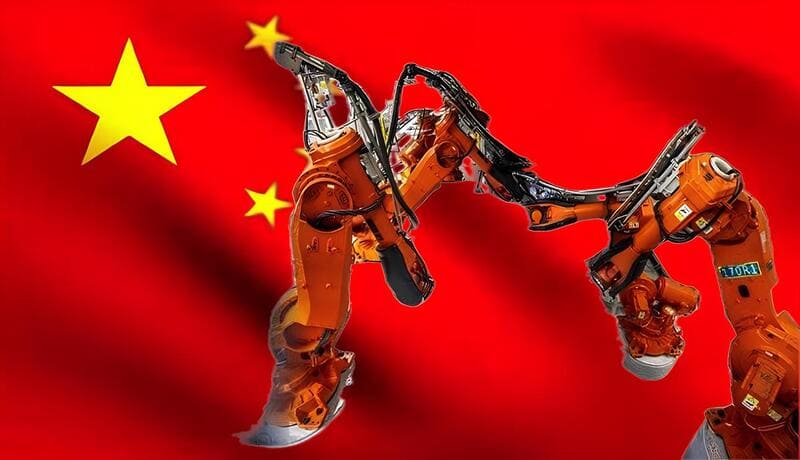
An article by Robin Harding in the Financial Times argues that “China can manufacture almost everything better and cheaper, and would have nothing left to import, making trade ‘impossible.’”

Other economists, however, maintain that China remains firmly committed to economic globalization and to strengthening the multilateral trading system centered on the World Trade Organization (WTO). From their perspective, the idea that China is making international trade “impossible” is a biased interpretation that ignores the fundamental logic and real dynamics of global trade.
As China’s economy has expanded, companies and consumers have gained greater purchasing power, making imports one of the main drivers of economic growth. In 2025, imports are expected to exceed 15.19 trillion yuan (around USD 2.12 trillion), driven mainly by demand for a more diverse range of food products. From the United States to Europe, from Brazil to Australia, from ASEAN to Africa and Central Asia, China remains an indispensable market for agri-food products, among others.
China continues to import significant volumes of high value-added goods, including machinery, electromechanical equipment, and optical instruments. Its focus on free trade agreements, cross-border e-commerce, and platforms such as the China International Import Expo strengthens supply-chain resilience and deepens economic openness. Thus, proponents argue that far from blocking global trade, China is expanding opportunities and offering new possibilities for international commerce.
Is this entirely true? Partly, yes – but today it is China, more than the West, that defines the rules, prices, and conditions.
For years, Western analysts warned of China’s imminent “deindustrialization,” some even predicting collapse. According to this view, China would follow the “natural” course of economic development: rising wages, declining manufacturing, and increasing dependence on foreign imports. What happened, however, was exactly the opposite. China deepened its industrialization, increased investment, expanded productive capacity across virtually all sectors, and reached a point where many foreign manufacturers realized there is almost nothing China needs that it cannot itself produce more cheaply, faster, or at greater scale. More than that, it now does so with the quality that the West once claimed as its exclusive domain.
Washington’s strategic objective then became clear: to remove China from global supply chains and rebuild a system in which essential industrial production returned to the United States. Multinationals were pressured to leave China, relocating factories to India, Vietnam, or other countries, while supply chains were restructured. Apple illustrates this process well. When it moved part of iPhone assembly to India, it quickly discovered that consistent quality, supply-chain density, and industrial discipline are not easily transferable attributes. Early batches produced in India showed high defect rates and a significant volume of consumer complaints. The episode served as a reminder that industrial excellence is not a logistical commodity.
China today demonstrates that it is not merely a production site; it is a mature industrial ecosystem—something many in the U.S. believed impossible to replicate. The paradox is clear: the West attempted to contain China’s industrial rise; in doing so, it forced China to industrialize even further, to the point where selling industrial products to the Chinese market ceased to be a viable business model.
Today, Western strategists openly claim that if Beijing were to move against Taiwan, sanctions could mirror those imposed on Russia: financial exclusion, technological blockades, and commercial strangulation. China reached this conclusion long ago. Self-sufficiency is not a political choice; it is a condition for national survival. Russia’s experience after 2022 became an essential case study. Aircraft components, semiconductors, machine tools – everything had to be produced domestically or obtained through alternative channels. A country of 1.4 billion people cannot risk structural dependence. It must fully master the production of jet engines, semiconductor lithography machines, industrial robots, port cranes, agricultural equipment – in short, everything. Total self-sufficiency is a long-term, existential strategic guarantee. And today, that goal is alarmingly close to reality.
When Donald Trump speaks of “reclaiming” Latin America, restoring the Monroe Doctrine, and bringing Venezuela, Panama, Brazil, and the rest of the continent back under Washington’s exclusive influence, many interpret this as a show of strength. In reality, it is exposure. Only those who have run out of cards flip the table. If sanctions still worked as they once did, if dollar hegemony remained intact, if political and financial pressure still delivered results, Washington would not need to resort to open threats, leader captures, regime-change operations, or explicit rhetoric about seizing resources as collateral.
The problem is that when the U.S. looks at Latin America today, it no longer sees a “backyard.” It sees a region economically tied to China. Chinese soy grows in the fields; Chinese cranes operate in ports built, managed, or financed by Chinese firms; power grids, telecommunications, roads, and railways quietly sustain daily life. That is more powerful than any ideology. Infrastructure is the backbone of the economy—and it does not disappear by decree.
Removing China from Latin America would mean dismantling this infrastructure and triggering the collapse of already fragile economies. The real backdrop is financial: assets, collateral, and a dollar under pressure. The solution gaining traction in Washington is simple in theory: secure large reserves of real assets—oil, gas, minerals, rare earths—re-anchor them to the dollar, and restore confidence through material backing. In theory, it works: Venezuelan reserves are worth tens of trillions. In practice, Venezuelan oil is among the most difficult to monetize in the world. It is extra-heavy, deep, and requires highly sophisticated infrastructure for extraction, refining, and transport. Only two countries possess the technical capacity to operate such a system at scale: China and the United States. China already does. It purchased around 70% of Venezuelan oil and financed, built, and operated much of the necessary infrastructure. If China is expelled, who replaces it? Major U.S. oil companies have no incentive to invest hundreds of billions in assets subject to political expropriation. Even if they did, to whom would they sell? China is the only buyer with sufficient scale, patience, and technical compatibility. The discomfort of major U.S. oil executives at the meeting where Trump urged them to invest in Venezuela reflects this risk.
China’s presence in Latin America is not limited to trade; it has reconfigured the system. Ports, railways, power grids, and telecommunications networks – many automated and remotely managed – form integrated ecosystems. The port of Chancay in Peru is the clearest example: it cut weeks off shipping time between South America and Asia and bypassed U.S. – controlled chokepoints. Copper, lithium, food, and minerals now flow eastward at lower cost and with greater autonomy. Remove China, and the system does not change ownership – it stops functioning. This is the central point Washington refuses to confront. It is not about blocking trade; it is about attempting to uninstall an entire operating system.
Twenty years ago, China’s presence in the region was almost nonexistent. Today, China is the largest trading partner of countries such as Brazil, Chile, and Peru. And look at Africa. Container by container, railway by railway, port by port, deal by deal, China gradually made this shift happen. The gravitational pull of Chinese demand reorganized global flows.
We now live in a buyer’s market. Whoever controls the largest consumer base controls price-setting power. Latin American farmers, miners, and exporters understand this perfectly. Angering Washington has costs. Angering China can eliminate the market altogether. This is not ideology – it is survival. China’s presence in Latin America functions as armor. When interests are deeply intertwined, separating them becomes self-destructive. The Monroe Doctrine was conceived for a world of small ships with cannons. This is a world of supply chains – and in this world, China is so deeply integrated that removing it means dismantling the entire system.
Similarly, for decades the West believed technological leadership was a given. Elite universities, abundant capital, and cultural dominance seemed to guarantee a permanent advantage. China was assigned the role of low-cost manufacturer, dependent on foreign technology. As in industry, this reading proved wrong. The core mistake was confusing isolated innovation with systemic capacity. The West continues to produce relevant breakthroughs, but they are fragmented, monetized, and often disconnected from large-scale production. China built something different: complete technological ecosystems where research, production, data, infrastructure, and the domestic market operate as an integrated whole. Technology ceased to be merely knowledge; it became organization, scale, development, and manufacturing.
The automotive sector’s transition to electric vehicles illustrates this well. While the U.S. and Europe protected the internal combustion engine, China aggressively invested in batteries, mineral refining, software, and integration with energy grids. Today, it dominates the global battery supply chain and sets prices, leaving Western manufacturers dependent on Chinese components – and on the Chinese market itself – to maintain scale. In robotics, the paradox is striking: the country with the largest workforce also became the world’s largest user of industrial robots. Automation did not replace Chinese industry; it consolidated it. The West, by contrast, developed sophisticated solutions that are too expensive and confined to niche applications.
Artificial intelligence exposes the structural gap even further. In the West, AI is controlled by a few private companies, dependent on data- and advertising-based business models. In China, it is treated as strategic infrastructure, integrated into logistics, industry, commerce, and urban management. Technological sanctions, far from slowing Beijing, accelerated its push for autonomy. In digital commerce, the divide is clear. Western platforms monetize attention. Chinese platforms organize the real economy: payments, credit, logistics, and consumption within a single system. They are not just companies; they are economic operating systems. And now? That is the question many in the West ask, and the answers are not easy to find.
The strongest evidence of this shift is that the Belt and Road Initiative regained momentum in 2025, with an increase of around 75%, reaching a record USD 213.5 billion. This figure is not merely economic – it is deeply political. Beijing is capitalizing on the retreat of U.S. influence to strengthen its global presence through investment in strategic infrastructure.
Trump’s disruptive and unilateral policies have acted as an unintended catalyst for geopolitical realignment, pushing Western leaders toward a pragmatic – and now openly acknowledged – rapprochement with China. Mark Carney’s deliberately paused statement during his recent visit to China about a “New… World… Order” was not a slip, but a clear signal that the language of power has shifted: what was once negotiated quietly is now said publicly, preparing domestic audiences. France’s recent alignment with Beijing, symbolized by Macron’s visit accompanied by the country’s 35 largest companies and the signing of multiple agreements, confirms that this trend is systemic. It reflects a response to U.S. unpredictability, the erosion of the multilateralism Washington once led, and Europe’s need to diversify centers of influence. China thus appears to be moving from an uncomfortable partner to an acknowledged pillar of an increasingly multipolar global balance.
And Europe? Europe’s position is the most fragile. It has scientific excellence and advanced engineering but has lost industrial scale, does not control critical supply chains, and fragmented its digital market. While the U.S. competes and China builds, Europe regulates. In automobiles, AI, and platforms, it risks becoming an assembler, consumer, and regulator of other people’s technologies. The current technological conflict is not merely a race for innovation – it is a clash of models. The Western model prioritizes financial markets and dispersed innovation; the Chinese model bets on integration, scale, and infrastructure. As in industry, trying to contain China may produce the opposite effect: accelerating its autonomy while exposing the West’s own structural weaknesses – especially those of a Europe that has yet to decide whether it wants to be a strategic actor or merely a market in a world of giants.
I could extend this analysis to the military domain, but the text is already long, and I do not wish to alarm the reader further. Between China and the United States, as my late grandfather used to say, the winner is not the one who speaks the loudest, but the one with full granaries, well-sharpened tools, and the market at the doorstep.
Author: Fernando Figueiredo – Retired Portuguese Army colonel and former NATO professional, who held various strategic leadership positions, currently serving as a defense consultant at Pulsar Development International. His work focuses primarily on defense requirements, offering expertise and a network of contacts that enable operational challenges to be overcome with effective, tailored solutions.
(The opinions expressed in this article belong only to the author and do not necessarily reflect the views of World Geostrategic Insights).