



By Indrani Talukdar and Monish Tourangbam
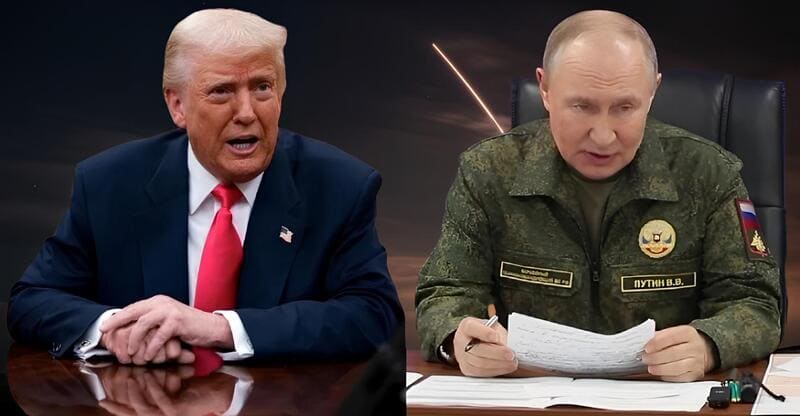
U.S. President Donald Trump recently issued a startling directive ordering the United States to resume nuclear testing. The decision followed his allegations that several nuclear powers, specifically Russia, China, North Korea, and Pakistan were conducting secret underground tests. President Trump’s statement particularly targeted Russia and China, and he instructed that U.S. tests be carried out “in equal measure” to the activities of those nations.

The United States and Russia together possess the world’s largest nuclear arsenals, having conducted the highest number of nuclear tests and maintaining the largest stockpiles of fissile materials. The United States and Russia, according to available records, currently “possess approximately 87 percent of the world’s total inventory of nuclear weapons, and 83 percent of the stockpile warheads available for use by the military.”
President Trump while contending that American nuclear weapons had undergone a complete modernization during his first term and that he personally opposed nuclear testing due to its “tremendous destructive power” argued that the alleged actions of Russia and China had forced his hand.

In response, Russian President Vladimir Putin reportedly instructed the Foreign Ministry, Defense Ministry, intelligence agencies, and relevant civilian institutions to “do everything possible to gather additional information” on the matter. He directed that Russia’s Security Council analyze the findings and that “coordinated proposals on possible initial steps, focusing on preparations for nuclear weapons tests,” be submitted for review.
Following President Trump’s announcement, U.S. Energy Secretary Chris Wright sought to downplay the remarks, emphasizing that the planned nuclear tests would not involve any actual nuclear explosions and would be non-critical in nature. According to Wright, the tests would instead focus on developing advanced systems to ensure that the country’s next-generation nuclear weapons are superior to previous models and functioning as intended. Following Wright’s comments, 16 Democrats in the US Senate on November 5, wrote to President Trump to provide clarification on the matter. Expressing grave reservation on the matter, they wrote that the “decision to resume nuclear weapons testing would be geopolitically dangerous, fiscally irresponsible, and simply unnecessary to ensure the ability of the United States to defend itself.”
The world is sliding into a perilous new era. As global power balances shift and the boundaries between allies and adversaries blur, hard security is taking precedence over diplomacy. Economic interests now dictate loyalties, and coercive statecraft has become the currency of global engagement. Against this volatile backdrop, the reckless nuclear sabre-rattling between the United States and Russia-the two largest nuclear powers-revives the spectre of a confrontation once thought buried with the Cold War. Even more alarming, this dangerous brinkmanship coincides with the looming expiration of New START, the last surviving pillar of the US-Russia arms control guardrail.
A Dangerous Tit-for-Tat
It is no coincidence that Trump’s nuclear announcement came immediately after Russia’s demonstrations of the Burevestnik missile on 26 October and Poseidon underwater drone on 29 October, followed closely by the launch of the Khabarovsk submarine. Burevestnik is a nuclear-powered and nuclear-capable cruise missile, also dubbed the ‘flying Chronobyl’ and the Poseidon is a nuclear-propelled torpedo-drone, and the Khabarovsk is a nuclear submarine designed to carry the Poseidon.
The Kremlin has claimed that the Burevestnik has the range to hit continental United States and evade America’s anti-missile defence system, and Putin has greenlighted preparations to build the infrastructure needed to bring the system into military service. The Poseidon, designed as a retaliatory weapon, is reportedly capable of triggering a radioactive tsunami that could render coastal cities uninhabitable and claimed to be able to evade Western countermeasures. On November 5, the United States reportedly carried out its latest Intercontinental Ballistic Missile (ICBM) test, launching an unarmed Minuteman III missile, which the US Air Force Global Strike Command, claimed was aimed at evaluating the “weapon system’s reliability, readiness and accuracy”. Add to this, Trump’s announcement earlier this year on building an expansive Golden Dome missile defence system to intercept and destroy incoming missiles.
The ecosystem of nuclear warhead modernization and advances in delivery vehicles are indeed complex and the rules of the road plus deterrence logic undergirding them always stand on brittle grounds, wrapped in competing nuclear strategies and treaties that have low cost of defection. While the testing of nuclear-capable missile systems fall within the accepted parlance of a country’s defence and military preparedness, testing each other nerves and toying with “nuclear bluffs” in an era of deepening mistrust, low costs for defection, and high incentives for brinkmanship amounts to irresponsible statecraft.
In a testimony to the US Congress, Trump’s nominee to lead United States Strategic Command, USSTRATCOM (responsible for America’s strategic deterrence and global strike capabilities) Vice Admiral Richard Correll attempting to calm fraying nerves and infuse some nuance into Trump’s statement said, “I believe the quote was, ‘start testing our nuclear weapons on an equal basis.’ Neither China nor Russia has conducted a nuclear explosive test, so I’m not reading anything into it or reading anything out of it.”
Nuclear Order on a Cliffhanger
As such, the language of the global order and nuclear deterrence are confounding to say the least and adding more confusion to this rigmarole, with “nuclear threats” even those hinting at a “limited exchange” are highly uncalled for. In the early 1960s, the U.S. and then Soviet Union were at the helm of a confrontation that took the world to the brink of a nuclear war amid the Cuban missile crisis and since then, many more incidents of inadvertent miscalculation and avoided accidents have come to fore. Many more such incidents are likely to stay hidden in classified archives. Some of the successful arms control agreements between the two biggest nuclear powers, with nuclear stockpiles to destroy the world many times repeatedly, are now in cold storage and the existing one will soon become redundant.
Washington formally withdrew from the 1987 Intermediate-Range Nuclear Forces (INF) Treaty in 2019, citing Russian violations, which Moscow denied. The U.S. withdrew from the 1972 Anti-Ballistic Missile Treaty ABM treaty in 2002, reportedly, to work on the National Missile Defence (NMD) system. Now, as the two countries stare at the final leg of the New START Treaty in early 2026, the future of nuclear order hangs in the balance. Such treaties, signed and ratified after knuckle-hitting negotiations have or are on the verge of going to the dustbin of history, without sight of any new mechanisms, casting an uncertain shadow on the future of nuclear order.
Nuclear threats, initially dismissed as bluster, gain credibility as recent rhetoric and actions by the two largest nuclear powers amplify new dangers in addition to proliferation threats. Brandishing new weapon systems and ambiguous orders for new nuclear tests underscore tangible risks behind the escalating rhetoric. Such a scenario, in addition to the fragility of arms control treaties, call into question whether the principles of “strategic deterrence” and “strategic stability” are sufficient to prevent miscalculation, escalation and inadvertent crises. Without renewed commitment to arms control, transparency, and restraint, the world risks inching closer to a nuclear flashpoint, where miscalculation or provocation could have irreversible consequences and pose heightened nuclear dangers.
Indrani Talukdar is a Fellow and Monish Tourangbam is a Senior Research Consultant at the Centre for Geopolitics and Strategic Studies, Chintan Research Foundation, New Delhi.
(The views expressed in this article belong only to the authors and do not necessarily reflect the views of World Geostrategic Insights).