



Why would a nation want to be part of the China-Russia bloc? The questions of both China and Russia are similar. Why would someone want to form an alliance with either nation?

When contemplating these two questions, I am constantly reassessing my reasoning; at times I feel as though I come up with new ideas and answers to the question of how to solve these two fundamental questions; at other times I feel completely lost in the possibilities of what may exist as an answer.
The realist perspective in international relations is that it is the state’s best interest to remain secure and to survive in a world without order, where there is no predominant nation, there is a security dilemma, there exists a lack of trust, there is an arms race, and there is deception, and one cannot truly trust any other nation. A nation is linked with another nation through their common interests; they are friends based on having interests; otherwise, there is not a true friendship. In a self-centered world, to survive one must be the strongest; therefore, survival of the strongest prevails.
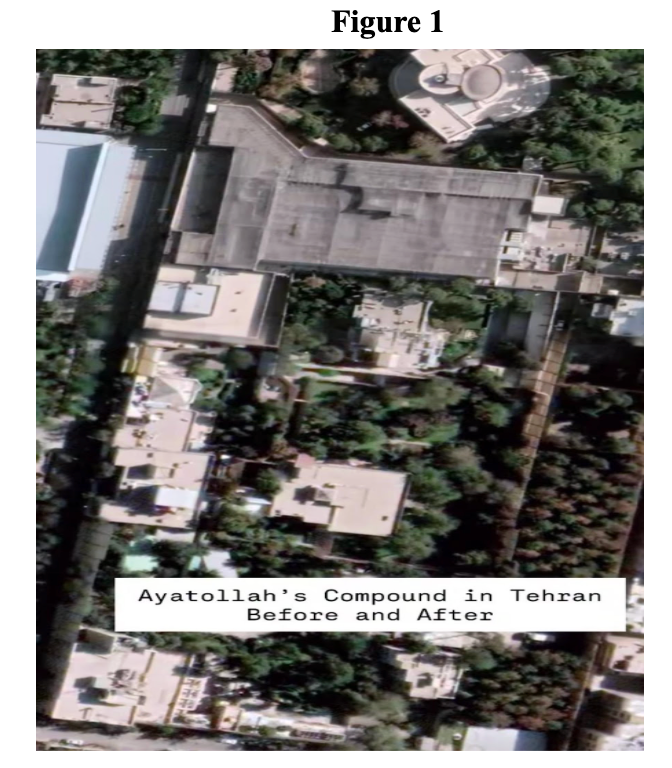
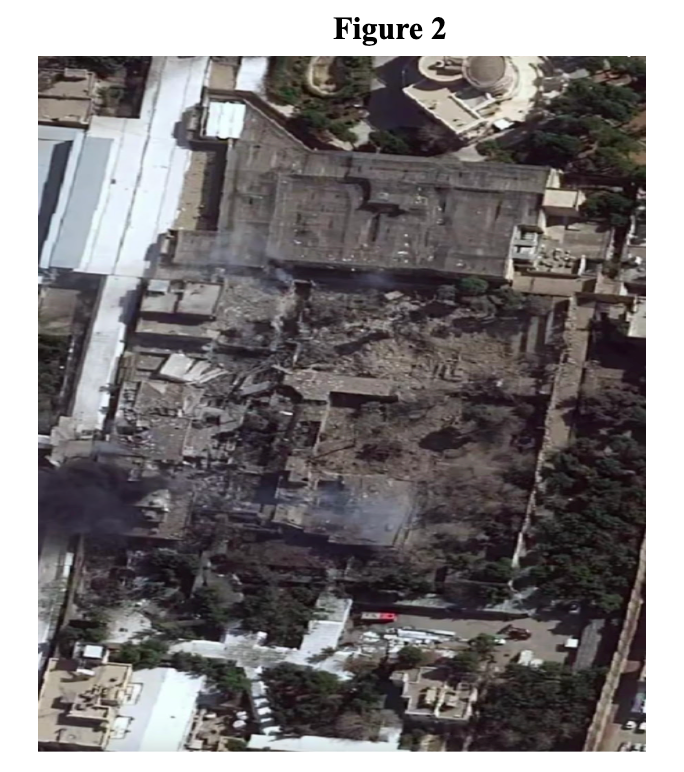
When General Gaddafi abandoned the US dollar, it led to his demise in Libya. Similarly, Saddam Hussein lost power in Iraq because the former Iraqi leader controlled many oil resources. President Diem in Vietnam and his brother’s removal was not caused by internal issues, but rather global politics. Prime Minister Mohammad Mosaddegh in Iran was deposed after he nationalized Iran’s oil supply. President Arbenz of Guatemala was ousted for taxing American landowners heavily. Prime Minister Lumumba of the Congo was executed after he nationalized uranium; Che Guevara of Cuba was killed for supporting socialism; and Afghan freedom fighters were trained to oppose Soviet military actions during the Soviet invasion of Afghanistan in 1979. President Salvador of Chile had his government nationalized; President Kwame of Ghana was banished after he terminated American banks’ Commonwealth Lend-Lease Program; General Hudson of Grenada was taken prisoner and sentenced to life imprisonment for aiding the Soviet Union; the Venezuelan President has been recently taken prisoner as part of Operation Absolute Resolve; and the Supreme Leader of Iran has been murdered (See figure 1 & 2).
 In every example above, there was no assistance from any state to any of those nations; there is no one person to whom anybody could have looked for protection. Nobody spoke loudly or with passion. Kenneth Waltz states that Realism suggests a state needs to be powerful because when a state uses a 911 call, no one will answer it; no one will respond or assist the emergency herself/himself (unless there is an officer present nearby). There has long been debate in the field of international relations regarding how a change occurred from a bi-polar system to a uni-polar system, then whether that system has transitioned to being multi-polar or has now transitioned back toward bi-polarity or perhaps even to being “multi-minipolar”: many small poles. Nevertheless, the world today is mostly considered by the majority of scholars to be uni-polar: the U.S. is considered by others to be more powerful than any other nation and therefore there is no competition among nations with regard to competing interests in international politics.
The U.S. is the most powerful state and has more influence in more different areas of the world than any other state does on Earth today. In international political reality the U.S. is the most powerful country; the facts are there to support this claim. The U.S. dominates all major international financial institutions; it is the dominant military-industrial complex; the U.S. is a leading exporter of advanced weapons and general military power; the U.S. has superior air power and navy fleets and the U.S. has at least two branches (submarine-based) of nuclear capability, and the U.S. is considered to have the best cutting-edge artificial intelligence in the technology arena.
In the technology and digital world, U.S. companies control most of the global communications platforms and services (e.g., Google (also Gmail), Yahoo, Microsoft) and most of the physical and virtual infrastructure of the Internet. According to new statistics, there are about 1.8 billion active Gmail accounts globally, 225 million active Yahoo email accounts, almost 5 trillion searches conducted through Google each year (about 9.5 million searches every minute), 3 billion users of WhatsApp, 3.7 billion users of Facebook each month, 2 billion Instagram users, 1.99 billion TikTok users, and 561 million users of X (formerly known as twitter) and 902 total billionaires. The majority of these applications are either owned by United States companies or significantly impacted by United States companies. This fact highlights the fact that the United States remains in control of worldwide electronic communications.
In the area of international military might, the United States has led all countries in possession of cutting-edge aircraft. This is especially true in the case of the fifth-generation fighter jets, such as the F-35 and F-22 aircraft. In addition to being the global leader in military aircraft technology, the United States is also the exclusive security guarantor for NATO. If NATO were to suddenly disband its collective security arrangements, large sections of Europe would be placed in a precarious position concerning their security threats from Russia. The United States’ influence is present in most of the world’s most critical alliances, including the G7, the G20, the Quad, AUKUS, the Blue Dot Network, and the Build Back Better World initiative. The United States is so dominant globally that even major regional players have close military and political partnerships with the United States; this is particularly true in the Middle East.
For example, India has, at times, altered its policy on importing oil from Russia due to concern over the sanctions and tariffs that the United States may impose for its relationship with Moscow. Over the last approximately 250 years, the U.S. has developed a strategic and institutional structure that has made it very difficult for other states to stand up directly against that U.S. strength. The U.S. has approximately 800 military bases outside the United States in roughly 70 different countries in order to provide for allies such as Japan and South Korea; it is the largest contributor to organizations such as the United Nations (26.95%), International Monetary Fund, World Bank, and World Health Organization; and it has significant sway within the organizations. In addition, the U.S. has approximately 902 billionaires; this demonstrates the large level of wealth concentration that exists in the United States. Historically, the dollar has acted as the main reserve currency in over 57% of total global foreign exchanges.
The majority of all international transactions occur in US Dollars, so a single word or tweet from a US president can create volatility in both global stock prices and the overall currency exchange market. Additionally, no matter what happens at international forums where several nations vote against Israel on issues related to Palestine i.e. GA/CHR or governments/properties in Gaza, no other Nation is able to take physical action unless they have the explicit backing/consent of the USA Government. This shows the structural power that Washington has within the global financial system.
Therefore, although there has been some discussion regarding the development of a multipolar system, currently there are still very strong indications that the current global system continues to reflect many of the features of a unipolar system and that the Unipolar System continues to revolve around the United States. There remains the potential for a slow transition towards a Multipolar World over time; however, the overwhelming evidence indicates that the Unipolar World is going to remain in place for the foreseeable future.
Author: Rana Danish Nisar – Independent international analyst of security, defense, military, contemporary warfare and digital-international relations.
(The views expressed in this article belong only to the author and do not necessarily reflect the views of World Geostrategic Insights).
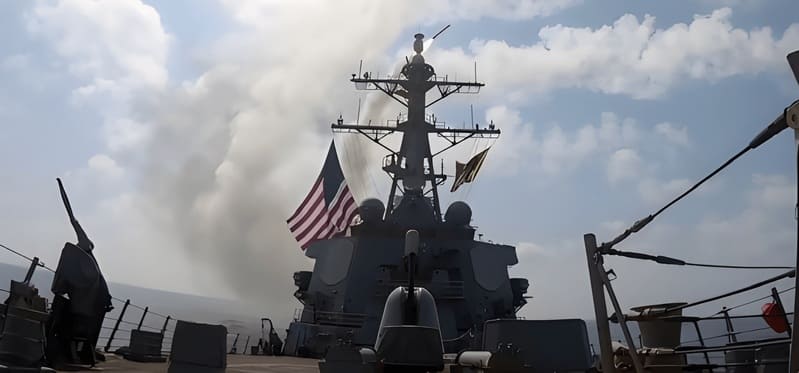
Image Source: US Central Command.