World Geostrategic Insights interview with Fatima Roumate on how artificial intelligence (AI) is transforming the media, reshaping international security and influencing geopolitical dynamics, and how mainstream media, social media, and AI have been used as “weapons” in the Ukrainian conflict and the war between Israel and Hamas.
Fatima Roumate, (PhD) and Doctor Honoris Causa, is President of IIRS, International Institute for Scientific Research, and Founding President of the Global Network on AI and International Society GNAI&IS. She is member of the UNESCO Ad Hoc Expert Group on the Ethics of Artificial Intelligence and Full Professor of International Law at Mohammed V Agdal University in Rabat, Morocco. Fatima is a member of several scientific board committees of indexed journals and she has published several books and indexed articles in Arabic, French, and English
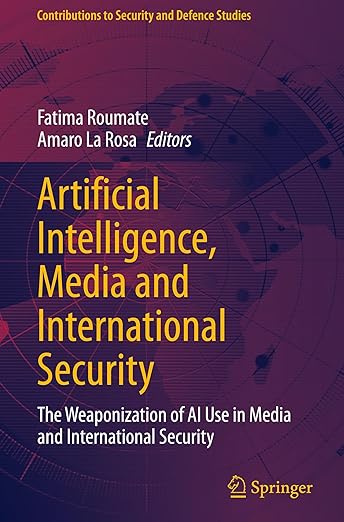
Q1 – Dr. Roumate, you are a prominent academic known for your expertise in international law, technological sovereignty, artificial intelligence ethics, and digital diplomacy. You have published extensively on topics such as technological challenges, artificial intelligence in higher education, and international relations. One of your previous books on artificial intelligence and digital diplomacy was ranked among the top 20 books worldwide by Book Authority. Your latest book, titled “Artificial Intelligence, Media and International Security: The Weaponisation of AI Use in Media and International Security”, was published at the end of July 2025 by the international publisher Springer. This book explores the transformative impact of artificial intelligence (AI) and media on international security. It highlights applications such as automated content and deepfakes, and assesses the associated security risks, such as information warfare, in the context of evolving geopolitical dynamics. It explores how AI and media are transforming international security, showcasing applications like automated content and deepfakes while evaluating the related security threats, including information warfare and geopolitical shifts. What is the book’s main scope? What can we learn from it?
A1 – I thank you for your interest in our recent publication, “Artificial Intelligence, Media and International Security: The Weaponization of AI Use in Media and International Security,” published by Springer. This work was a collaborative endeavor between the International Institute of Scientific Research and the Global Network on AI and International Society (GNAI&IS). The authors contributing to this work are founding members of this Global Network established by globally recognized experts in 2020. This book is the third research endeavor conducted by GNAI&IS and the sixth undertaken by the International Institute of Scientific Research (IISR).
The foundation of this book’s premise stems from the observation of warfare in Ukraine and Gaza, where new forms of conflict emerged, utilizing AI and media not merely as tools but as “weapons.” At the onset of the war in Ukraine between Russia and the West, major media outlets attempted to persuade the global audience that the conflict would conclude within a few months. Subsequently, we comprehend that there are two forms of war. Conflict on the battlefield involving militaries utilizing AI, alongside another conflict in the virtual realm encompassing major media and technology corporations, also employing AI. The situation is analogous for the conflict in Gaza after October 7. This thought served as our foundational premise for writing this book.
Media and international security are evolving due to artificial intelligence. However, these three factors exacerbate the issues faced by the international community. The utilization of AI and media in international relations constitutes a global concern. Artificial intelligence is transforming media, hence influencing international security and geopolitical dynamics, as both soft and smart power rely on it. The prevalence of AI in media constitutes a matter of global significance. Researchers and politicians alike grapple with comprehending tangible and intangible implications of AI on media and international security.
The book, “AI, Media, and International Security,” aims firstly, to make a scholarly contribution to global discourse. AI-driven media are transforming international security as unipolarity shifts to multipolarity. Secondly, it aims to examine the impact of AI and media on international security. Thirdly, the book analyzes topics related to media AI and security threats. Fourth, to provide pragmatic criteria for evaluating AI applications within the context of the new international order and the equilibrium of media power, considering the significance of media diplomacy in the era of AI.
A multidisciplinary view is crucial and therefore this volume attempts to present a holistic understanding of multidimensional AI. Thus, several approaches were used to analyze and explain the interactions between AI, the media, and international security. First, the political approach used to measure the impact of AI-empowered media on international relations. Next, a doctrinal approach adopted to provide a review of the existing laws, regulations, and scholarly literature in the field of AI as well as the challenges related to international law. Thirdly, the prospective approach used to analyze the challenges related to the trends in artificial intelligence. In order to consider the interaction between AI and international relations, the fourth approach is technological.
Additionally, a case study serves to evaluate the ways in which the use of artificial intelligence influences debates in an international organization. The aim is to show the trends and challenges of contemporary AI approaches linked to media (Communication and Journalism) and its implications for international security from various theoretical perspectives and paradigms. Authors have contributed to this topic from different scientific disciplines, ranging from international relations and international law to sociology, journalism, and communication. This volume combines both globally recognized experts and young researchers, integrating various points of view from both academics and practitioners.
The book opens with a profound and impactful thought foreword by Marcello Iannarelli, editor of World Geostrategic Insights, who highlights the profound geopolitical implications of the competitive advantage held by those who control artificial intelligence with its potential to surpass human intelligence and replace certain cognitive functions, posing unprecedented challenges to global governance and ethics. According to Iannarelli, AI is transforming international relations by reshaping the dynamics of power across military, security, surveillance, and broader societal domains, bringing both immense opportunities and serious risks.
Shannon A. Bowen explains that the modern military system reshapes warfare by integrating AI into strategic communication, information warfare, deception, disinformation, and media relations. AI not only enhances military technology and battle strategy but also influences how conflicts are communicated and perceived by the public.
Marta N. Lukacovic and Deborah D. Sellnow-Richmond explore how AI changes the relationship between real and virtual warfare, showing that there can be different winners on the battlefield and in the media sphere. They argue that malicious AI MUAS poses a serious threat to world security, describing it as “a component of a broader mega-crisis.” To mitigate MUAS, they call for a multidisciplinary approach involving communication, media, and journalism.
Fernández García, Gamboa, and Castillo further argue that securitization theory is vital for understanding MUAS and international security. They emphasize the “communication dimension” of mitigation efforts, stressing that effective crisis management under the new global order, marked by “media imperialism”, depends on inclusive and cooperative communication strategies. They use this term to describe how powerful nations in the Global North deploy AI and media as tools of modern colonialism. Neurosymbolic algorithms, they note, are altering global information flows and reshaping geopolitics and power relations.
Hajji Said highlights how AI affects media diplomacy and global security, warning that the use of AI in diplomatic communication may complicate peacebuilding and conflict resolution. He suggests rethinking the ultimate goals of diplomacy in light of AI-driven data fragmentation. Hafidi Ahmed deepens this discussion by analyzing “AI and Transnational Data Flows,” focusing on challenges related to sovereignty, governance, and international data regulation. He stresses that clear rules and frameworks are necessary to manage data localization, cross-border information flows, and extraterritorial law enforcement.
Hassan Benouachane addresses the ethical and practical implications of AI in journalism. He recognizes AI’s potential to enhance journalistic practices while warning that ethics must remain central so journalism can continue to inform and shape society responsibly. The volume also includes an analysis of “Artificial Intelligence and Media Communications in Russia,” written by Sergey Davydov, Maria Krasheninnikova, Maria Lukina, and Andrey Zamkov. They examine how Russian media increasingly rely on AI technologies, reflecting the global competition for AI dominance among major powers such as Russia, the United States, and China.
In conclusion, AI-enhanced media is transforming combat, signifying a shift from traditional to contemporary forms of conflict and from antiquated to modern military systems. This change necessitates a reevaluation of international public law by the international society. The initial focus is an internationally prohibited mechanism that integrates AI ethics with media ethics to guarantee the incorporation of media in future international peace and security efforts.
Q2 – The book, divided into nine chapters written by international experts, offers a multidisciplinary perspective, contributing to research on the challenges posed by artificial intelligence, with its possible harmful uses, and emphasizing the role of media diplomacy in a context of changing global power dynamics. Let’s focus on your chapter, “The Transformation of AI in the Media: Redefining the War Between Reality and Virtuality. How are artificial intelligence and the media significantly changing the dynamics of international security, influencing both peace and conflict?
A2 – Artificial intelligence (AI) and the media are profoundly reshaping the dynamics of international security by transforming how information, power, and influence are produced and distributed across the globe. Their impact extends to both the escalation of conflict and the promotion of peace. The media, historically central to international relations through their influence in information and psychological warfare, now hold even greater power in the AI era, where algorithms, data, and digital narratives have become decisive tools of global influence. This convergence has created a widening gap between traditional military warfare and the emerging realm of virtual conflict.
Firstly, the use of AI and media in virtual warfare enables new forms of information manipulation and psychological influence. Algorithmic propaganda, disinformation campaigns, and deepfake technologies allow actors to distort reality and influence public perception, creating confusion and mistrust within and between nations. Secondly, this evolution highlights a growing divide between military operations on the battlefield and those conducted in cyberspace, where conflicts are fought with data, narratives, and algorithms rather than conventional weapons.
On one hand, AI enhances the speed, precision, and reach of military and information operations, strengthening strategic capabilities while raising ethical and security concerns. When combined with the media, it becomes a powerful tool for both communication and coercion—capable of shaping narratives, destabilizing societies, and influencing geopolitical outcomes.
AI and media technologies also offer significant opportunities for advancing peace and security. They can improve early-warning systems, conflict prevention, and crisis communication by analyzing large datasets in real time. In diplomacy, AI-driven media tools can foster dialogue, promote cultural understanding, and counter misinformation.
Ultimately, the intersection of AI and media creates a double-edged environment: while it empowers actors to prevent and resolve conflicts more effectively, it also enables new forms of psychological, informational, and cyber warfare. The challenge for the international community lies in developing ethical frameworks, governance mechanisms, and communication strategies that harness AI’s potential for peace while mitigating its capacity to intensify conflict.
Q3 – You emphasise the crucial role of the media in psychological and information warfare. With artificial intelligence growing in influence, you affirm that the distinction between traditional military conflict and virtual warfare is becoming increasingly blurred. And you focus on two case studies: the wars in Ukraine and Gaza. Could you summarise here the use of artificial intelligence in these two conflicts, and explain how artificial intelligence and the media influence the perceptions of them, affecting the balance between winners and losers?
A3 – Since the onset of the conflict in Ukraine, major media and technology companies have been actively engaged in the digital confrontation between Russia and the West, led by the United States. The objective of this media weaponization via the nefarious use of AGI was to persuade both nations and individuals that the conflict in Ukraine constitutes a Russian trap. Nonetheless, reality consistently demonstrates that the Ukraine conflict is, in fact, an American and West’ trap.
Since October 7, 2023, major media and technology corporations have been utilized to propagate the Israeli narrative as the sole credible perspective on Israelis as victims of Hamas’s infringement of international law, while supporters of Palestine have faced censorship in mainstream and social media, being portrayed as violent, antisemitic, and untrustworthy. Consequently, the weaponization of media via AGI is the paramount aspect elucidating the disparity between the Israel-Hamas conflict and in the reel and virtual realm. In summary, Israel was prevailing in the virtual domain despite setbacks in the military sphere. This psychological warfare has been endorsed by major technology corporations. Consequently, Israel experiences failure following the Israel-Gaza conflict. Media and social media algorithms suggested that Israel was prevailing in the Gaza conflict, akin to the West’s success in Ukraine; nevertheless, the actual military reality reveals that both Israel and the USA were experiencing losses.
Israel narrative in Gaza has lost ground on social media, particularly due to the substantial influence of Generation Z and the increasing support for Palestine among students at American and European colleges. This generation is developing within social media, despite a considerable number of pro-Palestinian voices being silenced on Meta, alongside those deemed antisemitic or terrorist for their support of Palestinians in Gaza. The student movements originated in the digital realm, with youth initiatives advocating for Palestine on social media, especially TikTok. Since the inception of its influence on American youth, individuals began to uncover the reality in Gaza, recognizing that one of the most egregious genocides in history was being endorsed by the USA, which was directly complicit in this genocide against Palestinians in Gaza
The USA and Israel use major media, social media, and technological companies to sway public opinion domestically and internationally in their propaganda campaigns. The USA is the biggest market for the social video app, with 150 million users in January 2024. The large number of American TikTok users challenges the US’s dominance in shaping domestic and Western public opinion. TikTok gives users varied Gaza conflict perspectives. The malicious use of AI on social media raises questions about democratizing these platforms, since freedom is a democratic principle. As some social media platforms joined in this psychological warfare against Palestine and Russia, the international discourse on AI and AGI ethics has arisen. Both cases demonstrate the need for AGI regulation, as the lack of trustworthy, reliable, and responsible AI threatens international peace and security.
Big technological corporations may fail if they compromise their credibility through double standards and selective decency. Because “weaponization of algorithms” threatened international peace and security, psychological warfare and disinformation about Gaza increased the need for responsible and ethical AI. Student protests in the US and other Western nations may be the beginning of a Western spring against the regimes that have ruled the unipolar world for three decades. Regimes that have used the media, and social media, for thirty years to convince future generations of their democracy, human rights, and universal values, have made a strategic mistake by using AI to spread disinformation about Palestine. Failure that followed several months of deception and psychological warfare against Gaza, including double standards by mainstream media and social media in support of Israel in Palestine, as well as Ukraine against Russia.
Before the war, President Putin pushed the US and West to try negotiation, saying Ukraine’s NATO membership was a red line. The US ignored that idea and drew Russia into the conflict, casting it as Russia’s trap. However, the evidence suggests Western entrapment. NATO rejected Ukraine after two years of conflict, isolating the country in its fight against Russia, which remained determined in its military goals. Despite economic restrictions, the IMF expects Russia’s GDP to expand 2.6% this year. This is much greater than the EU (0.9%). The psychological warfare and mobilization of major media and technological businesses to silence Russia took two years. Thus, Ukraine is caught in the US’s trap as Russia creates a new economic order. While the US and West focused on psychological warfare against Russia, Russia strengthened its alliances with emerging great powers like BRICS, China, North Korea, India, and Iran, and increased its presence in Africa. Russia is solidifying its position with allies, mainly China, to build a new multipolar world order, while the US is fighting in Ukraine, Gaza, and possibly Taiwan.
AI is undeniably exerting significant effects on the media and its operations, and in this era of artificial intelligence, the media will increasingly shape new types of warfare, resulting in a disparity between actual warfare and warfare in virtual realms. In the age of AI, a defeated party on the battlefield may emerge victorious in the media narrative. This may also alter the dynamics between nations, as a powerful military presence will no longer suffice to secure victory in warfare. Robust and reputable media outlets are a crucial component in achieving victory in both the digital realm and on the battlefield.
The influence of AI on media is instigating a profound transformation in international security, potentially extending to national security as it affects democratic processes in various nations. Furthermore, the media, in the era of AI, compels a reevaluation of fundamental values such as liberty and freedom of speech. This impact could generate friction between governors and citizens, necessitating a reevaluation of the social contract within societies.
Fatima Roumate (PhD) and Doctor Honoris Causa – President of the International Institute of Scientific Research, Founding President of the Global Network on AI and International Society GNAI&IS