



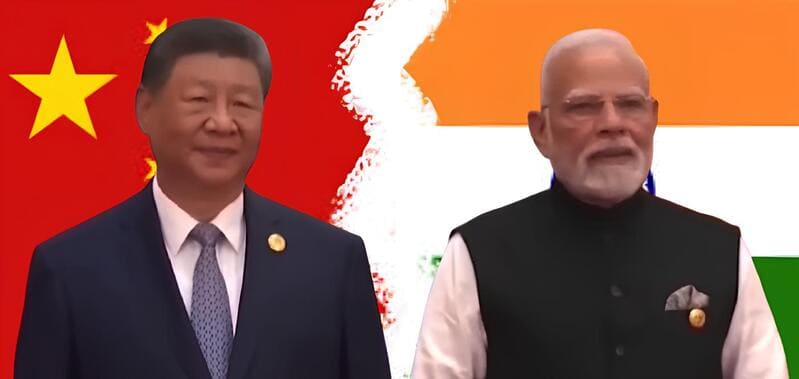
World Geostrategic Insights interview with Major General Dr. S. B. Asthana on the complexity of Sino-Indian relations, characterized by competition and cooperation, unresolved territorial disputes, security concerns, and vital economic interdependence, within a context of shifting global dynamics, joint engagement through the SCO, and ties with Russia.
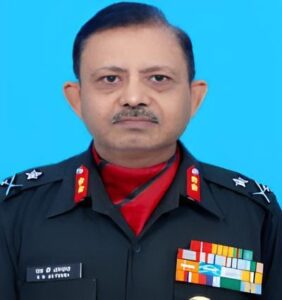
Major General (Dr) S B Asthana, SM, VSM, PhD (Retired) is a globally recognized strategic and security analyst, who holds a PhD from JNU and is the author of over 450 publications. He is a veteran general who has held various positions in the Indian Army, including Director General of Infantry, Head of the Training Team at the Tri-service Defense Services Staff College in Wellington, Sector Commander, as well as at the UN (United Nations) and USI (United Service Institution of India). An expert television commentator, he frequently lectures at various strategic and military forums, UN organizations, think tanks, and universities around the world. Major General Dr. S. B. Asthana holds prominent positions in various national, international, and United Nations organizations. He has been honored twice by the President of India, twice by the United Nations, and also by the former Prime Minister of Moldova for “International Diplomacy and Conflict Resolution.”
WGI – India and China have resumed direct commercial flights for the first time in five years, signalling an improvement in relations after years of diplomatic and military tensions. Both countries have also engaged in various other measures to enhance relations, including frequent high-level visits between Indian and Chinese officials. In particular, the August 2025 meeting between Chinese President Xi Jinping and Indian Prime Minister Narendra Modi on the sidelines of the Shanghai Cooperation Organization summit in Tianjin was widely seen as a potential “reset” of Sino-Indian relations. What is your opinion? Has a new phase in China-India relations begun?
Major General Dr S B Asthana – The developments which you have indicated in the first part of the question certainly indicate a reset after a long period of standoff on the borders and resultant tensions, but it is a limited in scope and can be better termed as cautious re‑engagement and mutually beneficial management of relations in a turbulent geopolitical world, studded with unresolved elements of mistrust.
The direct flights were frozen between the two countries during the outbreak of COVID-19 and remained frozen thereafter due to border standoff in Ladakh between the two countries. Before both these events, the direct flights were in place despite the differences between both countries. As China is the second largest trading partner of India, the resumption of flights is an economic necessity and ease of human mobility for both countries. Revoking visa curbs and enhanced official level exchanges indicate the desire to move forward in mutually beneficial areas. These steps are continuation of earlier moves in 2025 such as easing visas curbs and expanding official‑level dialogue mechanisms, which collectively point to a deliberate desire to have workable relations, reset to the benefit of both countries.
At Tianjin, Xi Jinping and Narendra Modi presented both nations as “development partners, not rivals,” agreeing that disagreements shouldn’t turn into conflicts and that border management is necessary to restore broader collaboration. The “reset” you referenced in your question is indicated by this terminology as well as Chinese actions like relaxing some export restrictions, acknowledging LeT as a terrorist group (which was previously avoided), and India’s readiness to reopen connectivity.
However, some fundamental differences remain: the border between India and Pakistan has not yet been demarcated, the standoff in Ladakh has seen a disengagement but not an easing of tensions, and China’s military support for Pakistan during Operation Sindoor and through the CPEC continues to be a cause for concern for Indian security.
China’s “String of Pearls” strategy and India’s continued perception of BRI initiatives like CPEC and CMEC as part of their larger “concirclement” strategy are examples of the ongoing strategic competition in South Asia and the Indian Ocean.
The engagement in 2025, therefore can best be described as “cautious re‑engagement” or “careful reset”, emphasising that economic interdependence is being rebuilt despite mutual suspicion. Both sides seem to be seeking breathing space amid US tariff pressures and global uncertainty.
Yes, this a new phase in a limited sense that both countries have moved from standoff and resultant diplomatic freeze toward calibrated coexistence: more flights, more talks, more trade facilitation, and high‑level signalling that crisis management is a priority. But this phase is best described as “managing competition with engagement” rather than reconciliation.
In practical terms, India is likely to continue on the dual track: strengthening border infrastructure and strategic partnerships (Quad, Indian Ocean posture) while engaging China where interests converge, especially on trade and multilateral issues. China, on the other hand, seems to be attempting to avoid confrontation with both the US and India at the same time, taking advantage of this chance to consolidate its periphery while maintaining influence on borders and in the neighbourhood.
WGI – Historically, Sino-Indian relations have oscillated between cooperation, competition, and confrontation. In August 2024, Indian Foreign Minister S. Jaishankar noted that several countries around the world have difficult relations with China, but India has a “special problem with China that goes beyond the general problem that the world has with China.” What is India’s “special” problem with China? What makes relations between the two countries so complex?
Major General Dr S B Asthana – Although Indian Foreign Minister S. Jaishankar’s remarks of August 2024, which you quoted in your question, were in response to a query related to scrutiny of Chinese investments in India, let me amplify and expand my response. Many countries in the world face a China problem related to trade imbalances, dubious investments, aggressive behaviour, opaque deals, debt traps, unfair deals under BRI, incremental encroachment of territory, cyber and other non-kinetic threats as part of ‘Grey Zone Warfare’ and India is also one of them facing some such problem.
The ‘special’ problem is that India is the only country in the world, which faces a threat from two nuclear neighbours (China and Pakistan), both have an unsettled border with India and both are in collusion with each other. The unsettled border has led to 1962 war and many military standoffs subsequently, a situation which no other country faces. There is a trust deficit between the two countries, despite a working relationship, the trajectory of which has seen frequent ups and downs. Chinese reluctance to demarcate LAC has a high political cost too making the relationship a complex one. Chinese annexation of Tibet has made it an upper riparian and a major source of water, which it uses as a strategic leverage at times. China is trying to make strategic inroads in South Asia and the Indian Ocean, creating a competition in influence over this region with India. Its China-Pakistan Economic Corridor, a flagship project of Xi Jinping’s Belt and Road Initiative, is a direct threat to Indian sovereignty.
In addition China is the second largest trading partner of India and largest supplier of Active Pharmaceutical Ingredients (APIs) and key intermediates for the Indian pharma sector on which its status as a major generic drug exporter depends. Being the global factory, China remains a major supplier of critical intermediate goods, technologies and rare earth minerals/magnets to India, which is crucial for the Indian supply chain. Therefore despite unresolved border issues and China being a potential threat, it’s an inescapable partner on which the speed of the Indian growth engine depends.
While India continues to make efforts to become self-reliant and continues to explore alternatives to Chinese dependencies, there are not enough reliable alternatives globally. To summarise, India’s “special problem” includes having to collaborate, compete, and repel a strong neighbour that challenges its borders, limits its influence in the region, but is crucial to its supply chains. Due to the close overlap of geography, security, and commerce, Sino-Indian relations are especially complicated when compared to China’s relations with most other large nations.
WGI – How important is the long-standing and unresolved territorial dispute over borders in shaping relations between India and China? What are the key political compromises required by both nations to move from disengagement to a permanent delineation of the Line of Actual Control (LAC)?
Major General Dr S B Asthana – The resolution of border issues is the basic pre-requisite for normalisation of relations between China and India. The unresolved border remains the single most important obstacle in China-India relations because it’s directly linked to territorial integrity, national sentiments and military posturing, impacting every other domain of bilateral engagement. It creates a deep security dilemma, where each country views the moves of others from the prism of a potential loss. The border problem gets so complicated because Chinese insist on the absence of any written border Treaty between China and India, as they selectively choose not to recognize any treaty between Tibet and British India (like McMahon Line) in Indian context, after annexing Tibet. The varying perception of LAC at many points leads to transgression and patrol clashes, further complicating the resolution process.
There is a variation in approach of both countries in pursuing bilateral relations. India treats “peaceful resolution and tranquillity” on the border as the foundation for the overall relationship, while China doesn’t want to tie the whole relationship to the boundary question, thereby pursuing economic and other engagements, postponing border resolution.
It is often mentioned that China has resolved its border dispute with 12 out of 14 countries, however Chinese argue that it was done on a give and take principle. Since the border is linked to sovereignty, territorial integrity, national identity, and sentiments in the China-India equation, leaders on both sides have dug their heels to their respective positions, which are unlikely to change anytime soon because they don’t want to be perceived by their domestic audience as ceding territory, which raises the political cost of giving anything. It is unlikely that domestic constituencies on either side will accept demands that China return Akshaichin or that India surrender Tawang. Because of this, discussions about border resolution are still ongoing and frequently result in new border management measures to prevent escalation and maintain peace and tranquilly along the LAC, well short of resolution.
In my opinion, permanent delineation of the LAC) is doable, however, it entails political compromises by both sides. China will have to acknowledge that stable ties with India require treating the border as a core concern and agree to a mutually acceptable, map‑based clarification of the existing LAC to remove threat of “incremental encroachment”. It will have to institute confidence building measures like reducing forward deployments, halt salami‑slicing efforts, and be amenable to trade some tactical advantages for peace and tranquillity along LAC. China needs to honour Indian concerns on projects like CPEC in Pakistan‑occupied Kashmir by offering legal or political assurances that such infrastructure will not be used to undermine India’s sovereignty claims. To my mind this will happen only, when the political/strategic cost of not doing so will increase for China, in comparison to doing so.
However, India may eventually have to acknowledge that China is unlikely to give up its gains in Aksai Chin, where it already has effective control, and come to an agreement on phased disengagement and de-escalation, simultaneous force withdrawal, and revised confidence-building measures—all without abandoning the idea that the LAC must be made clear on both maps and the ground. In order to advance trade, connectivity, and people-to-people linkages while negotiations are ongoing, it will need to pursue broader functioning economic and diplomatic relationships from immediate maximalist border expectations.
To proceed from disengagement to delineation, both countries need to speed up talks under existing mechanisms (WMCC, Corps Commander talks, SR‑level dialogue) into a time‑bound political process explicitly mandated to finish disengagement, agree on de‑escalation and exchange and verify LAC maps sector by sector. Both need to implement new confidence‑building measures that cover not only troop movements and patrolling rules, but also other new instruments of war like drones, cyber, information operations and infrastructure build up along the LAC, with credible verification mechanisms.
Most significantly, in order to lower the political cost of the governments for mutual accommodation, both nations will need to raise public awareness and cultivate realistic domestic opinion through debates, talks, and conversations beyond victory/defeat narratives. Essentially, both China and India must trade some territorial ambiguity for a politically viable solution based on reciprocity and partial tolerance instead of insisting on unilateral gain in order to move from mere disengagement to permanent LAC delineation.
WGI – How does the shifting economic centre of gravity towards the Indo-Pacific affect traditional security alliances, and what role India plays in establishing a new stable, multipolar system?
Major General Dr S B Asthana – The economic centre of gravity and, thus, the strategic relevance are rapidly moving from the West to the Indo-Pacific region if we examine the growth trajectory of the major economies. This is justified by the rise of China, India, and numerous Southeast Asian nations, which also compels Western powers to look outside the Euro-Atlantic. Following World War II, the US-led West and the USSR engaged in strategic competition, which led to the formation of traditional security alliances like NATO. This contest continued as Cold War 1.0. Logically, it should have ended with the dissolution of the USSR, but the western powers kept it going by moving eastward, which, among many other reasons, led to the conflict between Russia and Ukraine.
The rise of China triggered another Big Power competition between USA and China referred to as Cold War 2.0, which continues even now, along with Cold War 1.0. The idea of Indo-Pacific is a direct result of Cold War 2.0 along with a shift in economic centre of gravity to Indo-Pacific. It has therefore increased the importance of various groupings/alliances related to contestation in Indo-Pacific like AUKUS, Five eye, Defence Pacts of USA with Japan, South Korea, Philippines and Taiwan Relation Act related to West and Shanghai Cooperation Organisation(SCO) and other regional groupings related to Non West. The trend seems drifting from rigid defence structures like NATO towards expansion of regional groupings and flexible partnerships. In the Indo-Pacific, the trend is towards flexible partnerships to keep the Indo-Pacific free and open and prevent threats to rule based order getting challenged not only in the Indo-Pacific but in other parts of the world too.
India is in a unique position of being the fastest growing economy, large consumer market, strategically located along vital sea lines of communication in Indian Ocean, having good relations with West as well as Non West and has requisite strategic autonomy to resist forming part of any bloc or be anti-West/anti any bloc. It avoids any formal alliances but practices “multi-alignment”: deepening security through strategic partnerships. It is part of Quad with USA, Japan, Australia as well as part of SCO, BRICS, BIMCTEC and other regional groupings and a prominent voice of global South. It, therefore, is aptly suited to act as a vital bridge between West and Non West and a balancer to China centric Indo-Pacific. It therefore exemplifies the idea of a much fairer and inclusive multi-polar system.
India opposes both Chinese hegemony and exclusive US-led containment with its vision of a “inclusive” Indo-Pacific, promoting values like ASEAN centrality, free and open oceans, and respect for sovereignty. With demonstrated participation in multilateral forums such as the G20, BRICS plus, IPEF, and the Quad, India has emerged as a credible voice of the Global South and assisted in bridging East-West and North-South divisions. The growth of India may lessen the likelihood of bipolar conflict and make it possible for cooperative security systems to coexist with competition.
WGI – According to a number of analysts China views the Shanghai Cooperation Organisation (SCO) as a platform to project its global influence and build an alternative international order, while India sees it as a way to balance its multi-aligned foreign policy and enhance its presence in Eurasia. What’s your view? In general terms, what role does the SCO play in relations between India and China?
Major General Dr S B Asthana – The Shanghai Cooperation Organization (SCO) has emerged as one of the largest regional organizations in terms of geography and population, covering over 42% of the global population and nearly one-third of the world’s GDP. The SCO aims to promote stability in Eurasia, combat terrorism, and address security concerns. In a turbulent world of today, wherein global organisations like the UN are suffering credibility crisis, the role of regional organisations like SCO is increasing, which is evident from the fact that many countries are waiting to join it.
In reference to your question, one of the main issues facing the SCO is China’s strategic interests and disproportionate influence. Although the SCO was created to be a multilateral security and economic forum, China has established itself as the region’s primary infrastructure and economic benefactor through the Belt and Road Initiative (BRI) and the development of economic and digital dependencies.Beijing has pushed for extending its greater control over decision-making processes, increasingly expanded its military presence in Central Asia through arms sales, border security cooperation, and joint exercises. Through initiatives such as proposals for an SCO development bank, expanded local‑currency trade and Chinese‑backed connectivity and technology projects, Beijing views the SCO as a vehicle to shape rules, norms, standards and infrastructure in a sphere where the US is largely absent. This has led to apprehensions amongst many that the SCO may be evolving into a China-dominated bloc rather than a truly collective security organization.
India’s admission as a full member in 2017, in my opinion, represented a strategic change and an opportunity for New Delhi to interact with China, Russia, and other members on regional security challenges, as well as Central Asian nations on connectivity (INSTC, Chahbahar) and energy issues. Through its multilateral alignment and engagements, India appears eager to work with the SCO to tackle terrorism, separatism, extremism, and cyber threats in a multilateral context while serving as a limited counterbalance to China’s increasing influence in Eurasia.
India envisions the SCO as a platform for regional security without being anti-West. India considers itself as part of Global South, which is ‘Non West’ but not ‘Anti West’ As a rising power, India appears to promote multilateralism and multi-alignment policies while balancing China’s influence and over-reliance on institutions controlled by any one nation. Being a member of the SCO gives India the chance to oppose any resolution that is detrimental to its national interests because the SCO is a consensus-based decision-making institution.
In context of SCO’s role in China-India relations, it has provided an opportunity for multilateral engagement, airing their narrative in multilateral setting and has facilitated side‑line conversations even during periods of severe bilateral tensions, including border standoffs, however, it can’t substitute direct negotiations on critical bilateral issues. The strategic visions of China and India about SCO being quite diverse (China viewing it as an instrument for China centric Eurasia and India viewing it as forum for sovereignty‑sensitive multipolarity), it certainly remains a platform for managing controlled competition between both.
WGI – With Russia’s growing dependence on China due to Western sanctions, how stable do you think the long-term “permanent” relationship between India and Russia is, especially given their different alignments in the Indo-Pacific?
Major General Dr S B Asthana – Russia and India have a long-standing, stable, well-established partnership that has been designated as a “Special and Privileged Strategic Partnership.” While most of India’s relationships with other major nations have witnessed ups and downs, the relationship between India and Russia has consistently stayed solid. At a period when Western nations supported despotism against India and failed to supply much-needed technology, Russia supplied the country with much-needed defensive equipment and technology.. Russia has been a major enabler in Indian pursuit towards self-reliance in defence manufacturing. In the recent past, while some western countries criticised strategic autonomy of India and tried to punish India with tariffs/penalties, Russia displayed maturity by not criticising Indian relations with western countries including Ukraine.
In reference to your question, it is true that Russia has become too reliant on the Chinese economy, India-Russian ties have not yet been impacted. Russia has not interfered in the bilateral relationship between China and India and maintains not to do so. It hasn’t helped China against India or vice versa and created enough confidence and trust amongst Indians. It has not denied anything to India, which helps in its military capacity building, even when China and India faced standoffs. India is not basing its strategic calculations on irrational hopes and maintains reasonable assumptions that Russia may not be able to move against China in support of India because of dependencies. It creates a clear and reliable partnership between the two nations.
Russia continues to be a major arms and technology partner for India catering for approximately 36 percent of its defence needs. The long‑term military technical cooperation has been extended to 2031, covering systems such as S‑400, BrahMos, nuclear submarines and other equipment. India continues to buy Russian energy despite strong criticism by some western countries, notwithstanding the hypocrisy of themselves buying commodities from Russia. India and Russia have set up a trade target of $100 billion by 2030, and deepened cooperation in the Russian Far East, Arctic and connectivity corridors like INSTC and Chennai–Vladivostok. Joint production of defence equipment in India may see further boost because Moscow needs cheap labour and capital and India needs critical technology. These developments indicate that their relationship hasn’t been marred by the China factor.
The Russian position on the Indo-Pacific is not the same as India, however Russia hasn’t put any pressure on India against joining Quad or partnering with some western countries to mitigate its challenges in the Indian Ocean, respecting its strategic autonomy. In the maritime domain, the recent signing of the RELOS agreement and jointly pursuing Chennai-Vladivostok corridor indicates mutual willingness for mutually beneficial projects, without questioning each other’s national interest. Russia India relationship is stable, mutually beneficial and is expected to remain so, although the China factor and different position on Indo-Pacific may limit the scope and magnitude of support to India in some circumstances; hence, India is appropriately diversifying its supply chain.
Major General (Dr) S B Asthana,SM,VSM,PhD (Veteran) – Globally acknowledged Strategic and Security Analyst. The views expressed are solely those of Major General Dr S B Asthana, who holds the copyright. Further strategic analyses by Major General Dr S B Asthana can be found on his personal website https://asthanawrites.org/ and YouTube channel.