



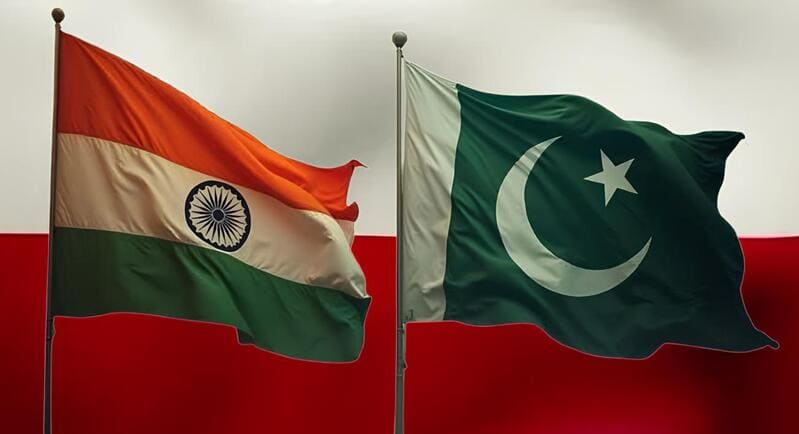
World Geostrategic Insights interview with Piotr Opaliński on the evolution of relations between the European Union (EU) and India, as well as the developments in Poland’s bilateral ties with India and Pakistan, the strategic dynamics in the Indo-Pacific, and future prospects.

Ambassador (retired) Piotr Opaliński is a Polish diplomat and orientalist, recognized for his extensive expertise about South, Central, and West Asia. He currently heads the Asian Observatory at the Center for International Relations (CSM) in Warsaw. He served as Poland’s ambassador to Pakistan from 2015 to 2021, deputy ambassador to India from 2008 to 2014, and Chargé d’Affaires in Bangladesh from 1991 to 1997. He is fluent in Polish, English, Russian, Hindi, and Urdu. For his services, he has been awarded the Gold Cross of Merit of Poland and a civilian award from Pakistan, the “Sitara-e-Quaid-e-Azam.”
Q1. EU–India Relations. During a working visit to Luxembourg on 6 January 2026, Indian Foreign Minister S Jaishankar expressed optimism about India’s future relations with Europe. What is your opinion on the prospects for relations between the EU and India? Given India’s deep strategic security ties with Russia, including major arms deals and joint defence production, is it realistic to think that the EU’s relations with India could truly evolve into a deeper strategic partnership, including strong defence cooperation? Or is it likely that trade will remain the focus of the EU’s relations with India?
A1. EU–India relations are clearly on an upward trajectory, but they should be assessed through the lens of strategic realism rather than political optimism. What we are witnessing is not a breakthrough moment, but a gradual alignment of interests shaped by structural shifts in the international system.
There is genuine convergence between Brussels and New Delhi on several core issues: preserving an open global trading system, diversifying supply chains, enhancing technological resilience, strengthening maritime security, and reducing excessive dependence on any single power. This convergence explains both the intensification of political dialogue and India’s increasingly positive rhetoric towards Europe, including Minister Jaishankar’s remarks during his visit to Luxembourg.
At the same time, expectations of a rapid transformation of EU–India relations into a fully-fledged strategic or defence partnership should be tempered. India’s strategic culture remains deeply anchored in autonomy. Its security relationship with Russia is not merely transactional, but systemic—built over decades around arms supplies, maintenance ecosystems, joint production, and shared operational practices. These ties will not dissolve quickly, even as India continues to diversify its defence partnerships.
From the EU’s perspective, defence cooperation with India is therefore likely to remain selective, functional, and incremental rather than comprehensive. Cooperation is most realistic in areas such as maritime domain awareness, naval exercises, cyber security, space, counter-terrorism, and dual-use defence technologies, rather than in large-scale arms transfers or alliance-type commitments. Internal EU constraints—most notably divergent threat perceptions among member states—also limit the Union’s capacity to project a unified and robust defence posture in South Asia.
Trade, investment, and technology will thus remain the backbone of EU–India relations in the foreseeable future. This should not be misread as a limitation. Economic interdependence, cooperation on digital standards, green technologies, connectivity, and education can gradually generate the trust and institutional density that any meaningful strategic cooperation requires. Trade, in this sense, is not an alternative to a strategic partnership, but its precondition.
In short, EU–India relations are evolving towards a pragmatic strategic partnership, not an alliance. Defence cooperation will deepen, but within clear limits set by India’s strategic autonomy and the EU’s own internal constraints. Progress will come not through grand declarations, but through steady, interest-based cooperation across multiple domains.
Q2. Indo-Polish Relations. Prime Minister Narendra Modi’s official visit to Warsaw in 2024, the first by an Indian prime minister in forty years, opened a new chapter in bilateral relations between India and Poland, placing greater emphasis on cooperation in defence, economics, education, technology and culture. Poland is India’s key partner in Central and Eastern Europe and has also become a major destination for students from South Asia: by the end of 2025, around 5,000 Indian students were enrolled in Polish universities. How do you assess the current phase of Indo-Polish relations? Could Poland also be instrumental in fostering India’s overall relations with Europe?
A2. Prime Minister Narendra Modi’s visit to Warsaw in 2024 was both symbolically important and strategically overdue. It marked the transition of Indo-Polish relations from a largely correct but underdeveloped relationship into a more structured and forward-looking partnership.
What changed most visibly after the visit was not a single flagship initiative, but the breadth and seriousness of engagement across multiple sectors—defence, economy, education, technology, and culture. This shift towards institutionalisation indicates that both sides now perceive the relationship as strategically useful rather than merely courteous.
The political context of the visit was equally significant. Modi’s stop in Poland was deliberately linked to his visit to Ukraine, adding a broader strategic dimension to the trip. This sequencing was a carefully calibrated signal by New Delhi. By visiting both Poland—a frontline NATO and EU state—and Ukraine, India demonstrated its intention to remain engaged with all major stakeholders affected by the war, while preserving its strategic autonomy and channels of communication with Russia. It projected India as a responsible global actor seeking stability and dialogue, not alignment with any single camp.
From Poland’s perspective, hosting Modi at such a moment reinforced Warsaw’s emerging role as a key political and logistical hub on NATO’s eastern flank and as a credible interlocutor for non-European partners seeking to understand the security realities of the war in Ukraine. The visit underscored that Poland is increasingly perceived not merely as a regional actor, but as a country with insights relevant to wider geopolitical debates.
At the political level, Indo-Polish relations are now entering a phase of pragmatic consolidation. India sees Poland as a stable EU member state with strong transatlantic credentials, a growing defence-industrial base, and direct experience of high-intensity security challenges. For Poland, India represents both an economic opportunity and a valuable strategic interlocutor in the Indo-Pacific, particularly as Warsaw diversifies its global partnerships beyond the Euro-Atlantic space.
Defence cooperation remains cautious but promising. It is driven less by abstract strategic visions and more by concrete, project-based logic: defence-industrial cooperation, niche production and maintenance capabilities, and exchanges in military education and training. This approach fits well with India’s preference for practical engagement and technology transfer rather than declaratory alignment.
The rapid growth of people-to-people links deserves particular attention. The presence of several thousand Indian students in Polish universities is not merely a statistic; it represents an investment in long-term connectivity. Academic cooperation, research partnerships, and cultural exchanges are gradually building a social foundation that was largely absent in earlier phases of the relationship.
Poland can play a constructive role in fostering India’s broader relations with Europe, but this role should not be overstated. Warsaw is neither a gatekeeper to the EU nor a spokesperson for Europe as a whole. Its added value lies in acting as a bridge-builder—translating Indian priorities into EU policy discussions while helping Indian partners better understand European constraints and strategic sensitivities.
In this sense, Indo-Polish relations function as a multiplier rather than a substitute for EU–India engagement. If managed patiently and pragmatically, they can contribute to a denser, more resilient, and more politically grounded architecture of relations between India and Europe.
Q3. EU–Indo-Pacific Relations. During its presidency of the EU Council in the first half of 2025, Poland advocated for closer ties between the EU and the Indo-Pacific. What were the results? Can the EU become a major player in the Indian subcontinent? How should the EU and Poland envisage the development of their Indo-Pacific strategies?
A3. Poland’s presidency of the EU Council in the first half of 2025 did not deliver spectacular breakthroughs in EU–Indo-Pacific relations, but it contributed to a more sober and structured debate within the Union about Europe’s role in that region. Its main achievement lay not in launching new initiatives, but in reinforcing strategic realism.
Warsaw consistently worked to anchor the Indo-Pacific more firmly in the EU’s strategic vocabulary, linking developments in Asia to Europe’s own security, economic resilience, and global positioning. One tangible outcome was the reinforcement of policy continuity: Poland helped ensure that the EU’s Indo-Pacific framework was treated not as a declaratory document, but as a practical reference point for trade, connectivity, maritime security, and political dialogue.
This mattered particularly at a time when the EU’s attention was overwhelmingly focused on the war in Ukraine and its immediate neighbourhood. Engagement with partners such as India, Japan, South Korea, and ASEAN was sustained not through new rhetoric, but through institutional persistence.
The question of whether the EU can become a major player on the Indian subcontinent should be approached with caution. The Union is, and will remain, an important economic and regulatory actor in South Asia, but it lacks the hard-power instruments, political cohesion, and crisis-management capacity required to play a dominant security role in the region. For countries such as India and Pakistan, the EU is primarily valued as a source of trade, investment, technology, development assistance, and normative influence—not as a security guarantor.
This does not make the EU irrelevant. Its comparative advantage lies in shaping the strategic environment indirectly. The Union can contribute to regional stability through economic integration, infrastructure and connectivity projects, climate resilience, maritime capacity-building, crisis prevention, and confidence-building measures. In South Asia, influence is more likely to be exercised through sustained presence and partnerships than through power projection.
For both the EU and Poland, Indo-Pacific strategies should remain pragmatic and differentiated. Europe should resist the temptation to replicate the language or posture of military alliances active in the region. Instead, it should aim to be a predictable, long-term partner that complements rather than competes with existing security providers.
Poland brings a specific perspective shaped by its experience on NATO’s eastern flank—an acute awareness of deterrence, resilience, and the costs of strategic ambiguity. This experience can enrich EU debates by highlighting the links between European and Asian security dynamics, without overstating Europe’s capacity to act as a hard-power actor in Asia.
The key lesson for policymakers is that credibility in the Indo-Pacific will depend less on ambition and more on consistency, realism, and the alignment of strategic rhetoric with available instruments.
Q4. India–Pakistan Tensions. Last year saw some of the worst cross-border armed clashes between India and Pakistan in decades. Having served as both Deputy Head of Mission in India and Ambassador to Pakistan, how do you assess the current tension between the two countries and the security situation in South Asia? How serious is the risk of tactical nuclear escalation in that area?
A4. The current level of tension between India and Pakistan is serious, but it should not be interpreted as a prelude to an imminent all-out war. What we are facing instead is a dangerous pattern of structural hostility combined with episodic escalation.
Political dialogue between the two countries remains minimal, military communication is functional but narrow, and crises are managed tactically rather than addressed strategically. This creates an environment in which stability is preserved not by trust, but by mutual caution and deterrence.
South Asia today is more volatile than it was a decade ago—not because war is inevitable, but because the margins for miscalculation have narrowed. The Line of Control is increasingly militarised, and both sides have shown a greater willingness to use limited force to signal resolve. India’s post-2016 acceptance of calibrated cross-border strikes as a deterrence tool, combined with Pakistan’s emphasis on escalation dominance at lower levels of conflict, has produced a more fragile deterrence equilibrium.
The most worrying trend is the gradual normalisation of “limited” military action below the nuclear threshold. Both sides appear to assume that escalation can be controlled through calibrated responses. This assumption is inherently risky. Crisis dynamics are shaped not only by military doctrines, but also by domestic political pressures, media narratives, and the speed of modern information flows—all of which compress decision-making time and increase the risk of unintended escalation.
As for the risk of tactical nuclear use, it remains low but not negligible. Pakistan’s development of short-range nuclear systems was intended to reinforce deterrence against conventional incursions, but it also lowers the theoretical threshold for nuclear use and introduces ambiguity into crisis scenarios. India officially maintains a doctrine of no-first-use, yet its investments in counterforce capabilities and missile defence can, in extreme crises, feed mutual suspicions and worst-case assumptions.
The central point is that nuclear deterrence in South Asia still works, but it works under growing strain. It prevents large-scale war, yet is increasingly fragile at the lower rungs of the escalation ladder. The greatest danger lies not in deliberate nuclear use, but in misperception, miscommunication, or a rapidly unfolding crisis that overwhelms existing confidence-building mechanisms.
South Asia should therefore be understood less as a frozen conflict and more as a chronic risk environment. Long-term stabilisation will depend not on military signalling alone, but on rebuilding communication channels, crisis-management mechanisms, and, ultimately, political dialogue.
Q5. Poland–Pakistan Relations. Poland is stepping up its engagement with Pakistan. Last October, Polish Deputy Prime Minister and Foreign Minister Radosław Sikorski visited Pakistan. During the visit, Poland and Pakistan committed to transforming their relations into a comprehensive and mutually beneficial partnership, expanding cooperation in trade, investment, energy, defence, education and counter-terrorism. In recent years, Poland has been the EU Member State most willing to strengthen ties with Pakistan. In your opinion, what is the significance of relations between Pakistan and Poland?
A5. The significance of Poland’s growing engagement with Pakistan lies less in symbolism and more in strategic intent. The visit of Deputy Prime Minister and Foreign Minister Radosław Sikorski to Islamabad signalled a deliberate effort to place bilateral relations on a more structured, pragmatic, and long-term footing.
From Poland’s perspective, Pakistan is a partner of genuine strategic relevance in South Asia: a major security actor, a large and dynamic country, and a key link between the Middle East, Central Asia, and the Indian subcontinent. Deepening ties with Islamabad allows Warsaw to develop a more nuanced understanding of regional security dynamics, including counter-terrorism, instability in Afghanistan, and the broader implications of great-power competition. It also aligns with Poland’s interests in energy security, connectivity, and engagement with emerging markets.
A particularly important—and often underestimated—dimension of this cooperation concerns migration security. During Minister Sikorski’s visit, discussions addressed irregular migration to the EU, with a focus on the instrumentalisation of third-country nationals from South Asia within hybrid operations conducted by Belarus against Poland and the European Union. In this context, cooperation with Pakistan on preventing irregular departures, combating smuggling networks, and strengthening readmission mechanisms acquires strategic significance at the EU level.
For Pakistan, deeper engagement with Poland offers both political and practical advantages. Poland is seen as a credible EU member state with strong transatlantic credentials, direct experience in countering hybrid threats, and a pragmatic approach to security cooperation. Warsaw’s readiness to engage in operational areas such as migration management, counter-terrorism, and cross-border crime makes it an attractive partner as Pakistan seeks to improve its institutional standing and relations with the EU.
The broader Indo-Pakistani context also matters. Poland’s engagement with Pakistan is not pursued at the expense of its relations with India, nor is it designed to balance one partner against the other. Rather, it reflects a policy of strategic inclusiveness and diplomatic balance. This approach enhances Poland’s credibility as a serious interlocutor in South Asia, rather than as a partisan actor aligned with one side of regional rivalries.
At the EU level, Poland’s role is noteworthy because it challenges the tendency to view Pakistan exclusively through a narrow migration or internal security lens. By combining economic, educational, and energy cooperation with firm and operational approaches to migration management, Poland contributes to a more comprehensive and realistic EU policy towards Pakistan.
Ultimately, the importance of Poland–Pakistan relations lies not in their scale, but in their quality and potential. If developed pragmatically, they can deliver tangible benefits in economic cooperation, security dialogue, and the countering of hybrid threats, while positioning Poland as a constructive bridge between Pakistan and Europe.
Ambassador (Ret.) Piotr Opaliński – Program Director of the Asian Observatory at Centrum Stosunków Międzynarodowych, Poland.